Massive 68 Million Year Old Soft Shell Egg Discovered in Antarctica Defies Evolutionary Rules
A mysterious 68-million-year-old fossil egg discovered in Antarctica is challenging everything scientists knew about the reproduction of ancient reptiles.
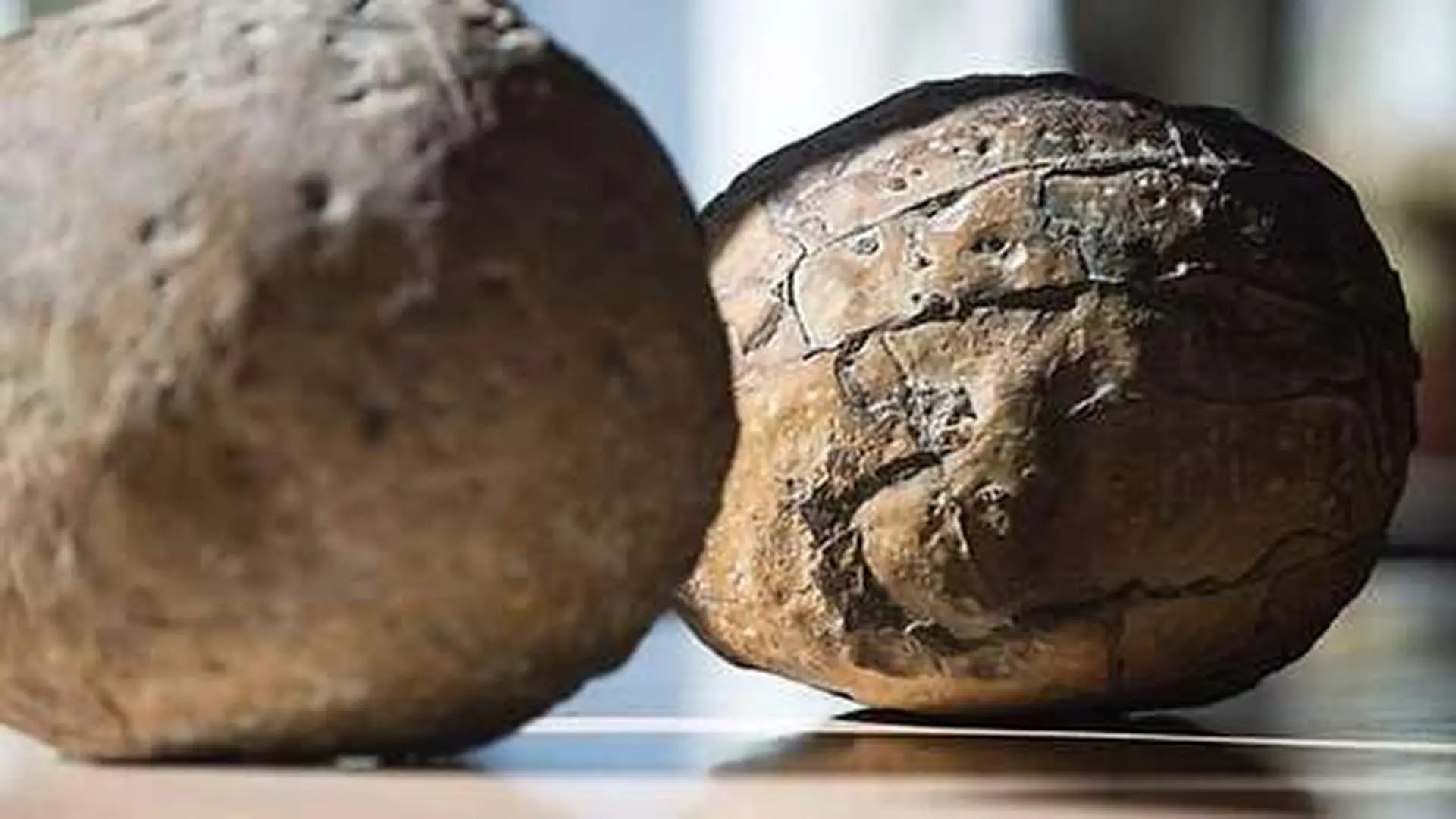
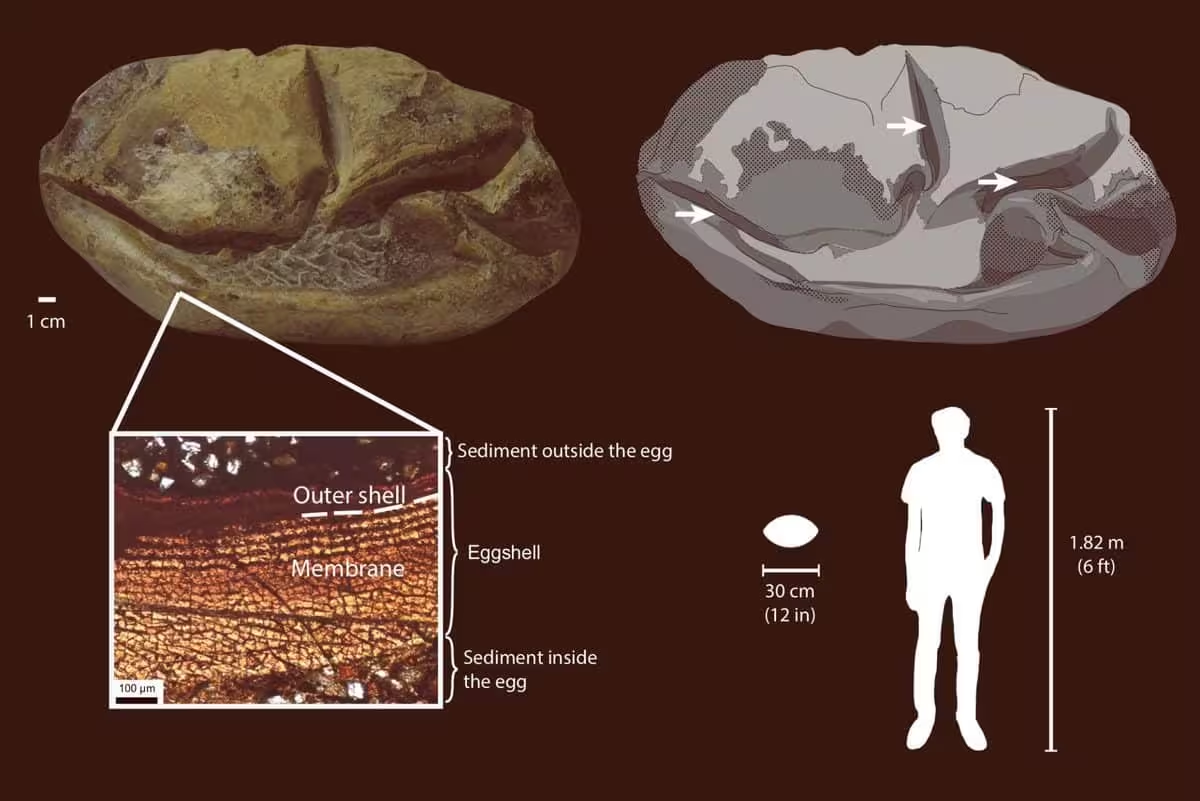
Paleontologists have uncovered an extraordinary fossil in Antarctica that challenges our understanding of prehistoric reproductive strategies. Measuring a massive 11.4 by 7.9 inches, this 68-million-year-old specimen ranks as the largest soft-shelled egg ever identified and stands as the second-largest egg in the known fossil record, surpassed only by those of the extinct elephant bird.
The artifact, which dates back to the Late Cretaceous period, was discovered in coastal sediments that once formed the edge of a temperate Antarctic landscape. Unlike the rigid, calcified shells typically associated with dinosaur eggs, this specimen is thin and leathery. Its discovery provides a rare glimpse into the life of marine reptiles that navigated the ancient southern seas.
An Evolutionary Puzzle
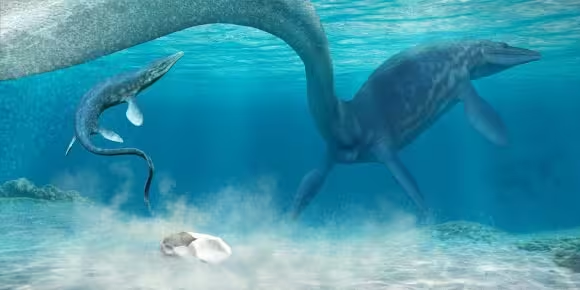
Because the egg was found devoid of any embryonic skeletal remains, its biological origin remained a mystery. Led by Lucas Legendre of the University of Texas at Austin, a research team formally classified the find under a new taxon, Antarcticoolithus bradyi. While the identity of the parent remains unconfirmed, the morphology of the shell aligns closely with the remains of mosasaurs, the apex marine reptiles of the Cretaceous period, rather than the hard-shelled eggs produced by dinosaurs.
“The identity of the animal that laid the egg is unknown, but these preserved morphologies are consistent with the skeletal remains of mosasaurs (large marine lepidosaurs) found nearby,” Legendre and his colleagues noted in their study published in Nature. “They are not consistent with described morphologies of dinosaur eggs of a similar size class.”
Rethinking Reptilian Reproduction
The existence of such a soft, parchment-like egg provides compelling evidence regarding the reproductive habits of mosasaurs. Scientists have long debated whether these creatures were entirely viviparous (giving birth to live young) or if they laid eggs that developed primarily within the mother. A thin, poorly mineralized shell would have been insufficient for long-term incubation in the harsh external environment, suggesting it served more as a protective barrier during the final moments before hatching.
This biological strategy mirrors that of modern, cold-blooded lepidosaurs—the group containing snakes and lizards—which produce similar soft-shelled eggs. However, the sheer size of the Antarcticoolithus specimen indicates that while mosasaurs may have adapted toward live-birth strategies, they still retained the capacity to produce exceptionally large, singular offspring.
A Rare Window into Deep Time
Soft-shelled eggs are highly susceptible to decomposition and rarely endure the fossilization process. The preservation of this particular specimen was made possible by the unique geochemical conditions of its burial site. Analysis of the surrounding material revealed deposits of apatite and pyrite, which only form in low-oxygen, or anoxic, marine environments. This lack of oxygen prevented the egg from decaying, allowing it to remain intact for tens of millions of years.
“The limited oxidation indicated by the presence of apatite, followed by the net-reducing conditions indicated by the pyrite framboids in Antarcticoolithus. [It] may be key to this preservational mode,” the research team explained.
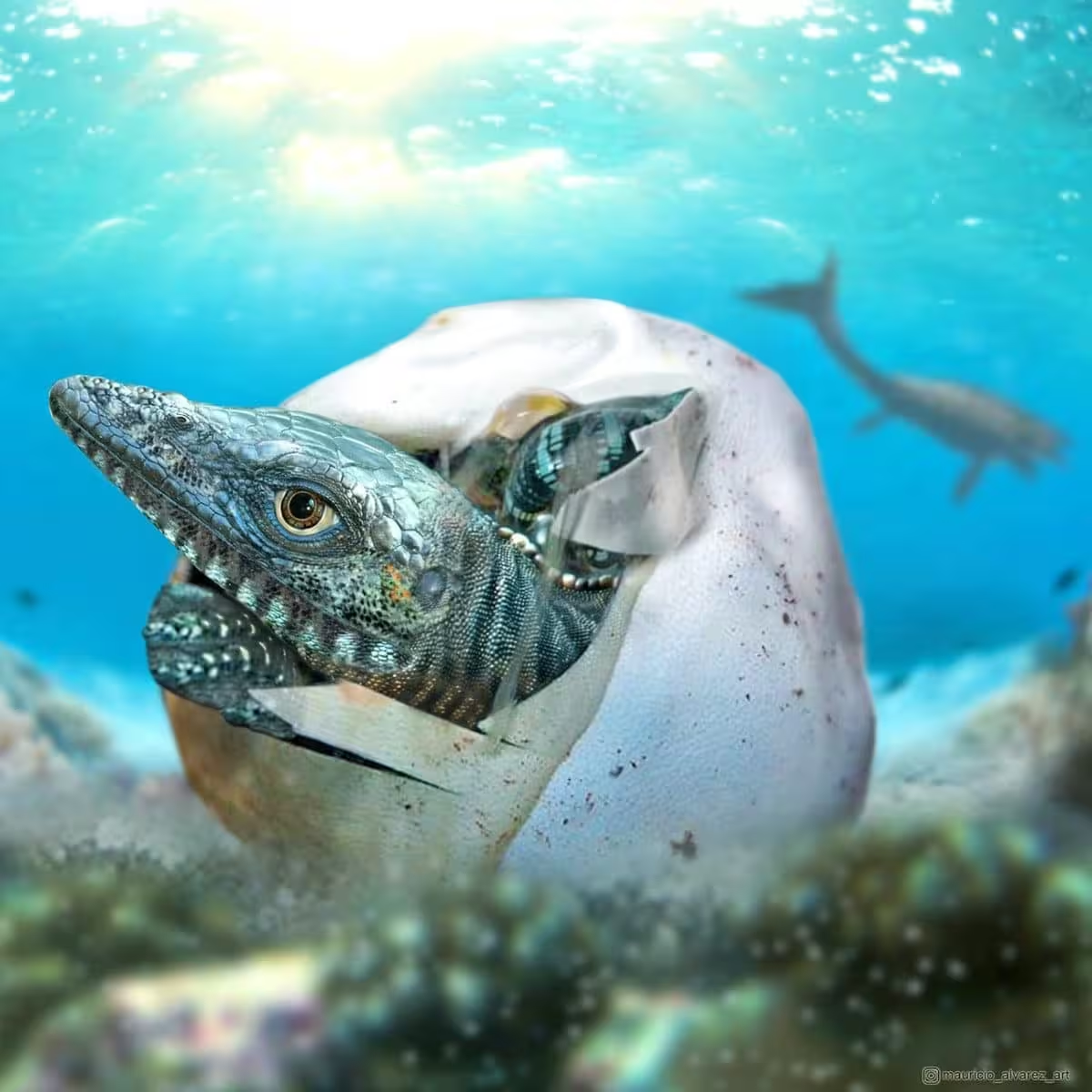
By comparing the find to modern sea snakes, researchers hypothesize that these ancient marine reptiles may have traded large clutch sizes for the production of fewer, significantly larger eggs, an adaptation that may have assisted their survival in the turbulent, competitive ecosystems of the Cretaceous oceans.
This article has been fact checked for accuracy, with information verified against reputable sources. Learn more about us and our editorial process.
Last reviewed on .
Article history
- Latest version
Reference(s)
- <https://lucasjlegendre.weebly.com/>.
- Delbert, Caroline. “Animals Keep Evolving Into Crabs, Which Is Somewhat Disturbing.”, July 7, 2026 Popular Mechanics <https://www.popularmechanics.com/science/animals/a71852570/crab-evolution-carcinization-animals-research/>.
- Legendre, Lucas. “A giant soft-shelled egg from the Late Cretaceous of Antarctica - Nature.”, vol. 583, no. 7816, pp. 411-414. Nature, doi: 10.1038/s41586-020-2377-7. <https://go.redirectingat.com/?id=74968X1525083&url=https%3A%2F%2Fwww.nature.com%2Farticles%2Fs41586-020-2377-7&sref=https%3A%2F%2Fwww.popularmechanics.com%2Fscience%2Fa73491293%2Fmystery-egg%2F&xs=1&xcust=%5Butm_source%7C%5Butm_campaign%7C%5Butm_medium%7C%5Bgclid%7C%5Bmsclkid%7C%5Bfbclid%7C%5Brefdomain%7C%5Bcontent_id%7C8106f5b9-4aac-474c-b580-48575a18a495%5Bcontent_product_id%7C854e46b3-fbfa-4cfe-8574-924158385847%5Bproduct_retailer_id%7Cb72da4de-c459-4e4b-8083-00c4689a356e%5Blt%7C%5Baxid%7Ca00915b1-a499-4947-9150-6b82d7641fbb%5D>.
Cite this page:
- Posted by Bilal Abbasi