NASA Is Assembling the Nervous System of Its Next Alien Explorer for Titan
NASA’s Dragonfly mission is taking physical shape as engineers begin wiring the spacecraft destined to explore the mysterious dunes of Saturn’s moon Titan.

NASA’s Dragonfly mission has reached a pivotal stage in its assembly, with engineers successfully installing the complex electrical network that will serve as the spacecraft’s central nervous system. This achievement at the Johns Hopkins Applied Physics Laboratory (APL) in Laurel, Maryland, marks a transition from a structural frame to a fully integrated, functional vehicle capable of navigating the dense, frigid atmosphere of Saturn’s moon, Titan.
The mission has also officially secured a destination marker on the lunar surface. The International Astronomical Union (IAU) has formally designated the landing site as Ahmakiq Undae. The name, derived from a Mayan term meaning “the one who locks up the wind,” reflects the unique atmospheric conditions of the dune fields that the rotorcraft will traverse after its planned 2028 launch and 2034 arrival.
Engineering a Nervous System for the Outer Solar System
The installation of the electrical harness, completed in July, is a feat of precision engineering. These silver-coated copper cables are the vital conduits for power and data transmission, linking every onboard sensor, computer, and instrument. “The harness doesn’t do anything by itself, but it is necessary for everything else to function,” said Jackie Perry, the lander’s harness lead at APL. “It’s critical hardware that exists only to serve the rest of the lander.”
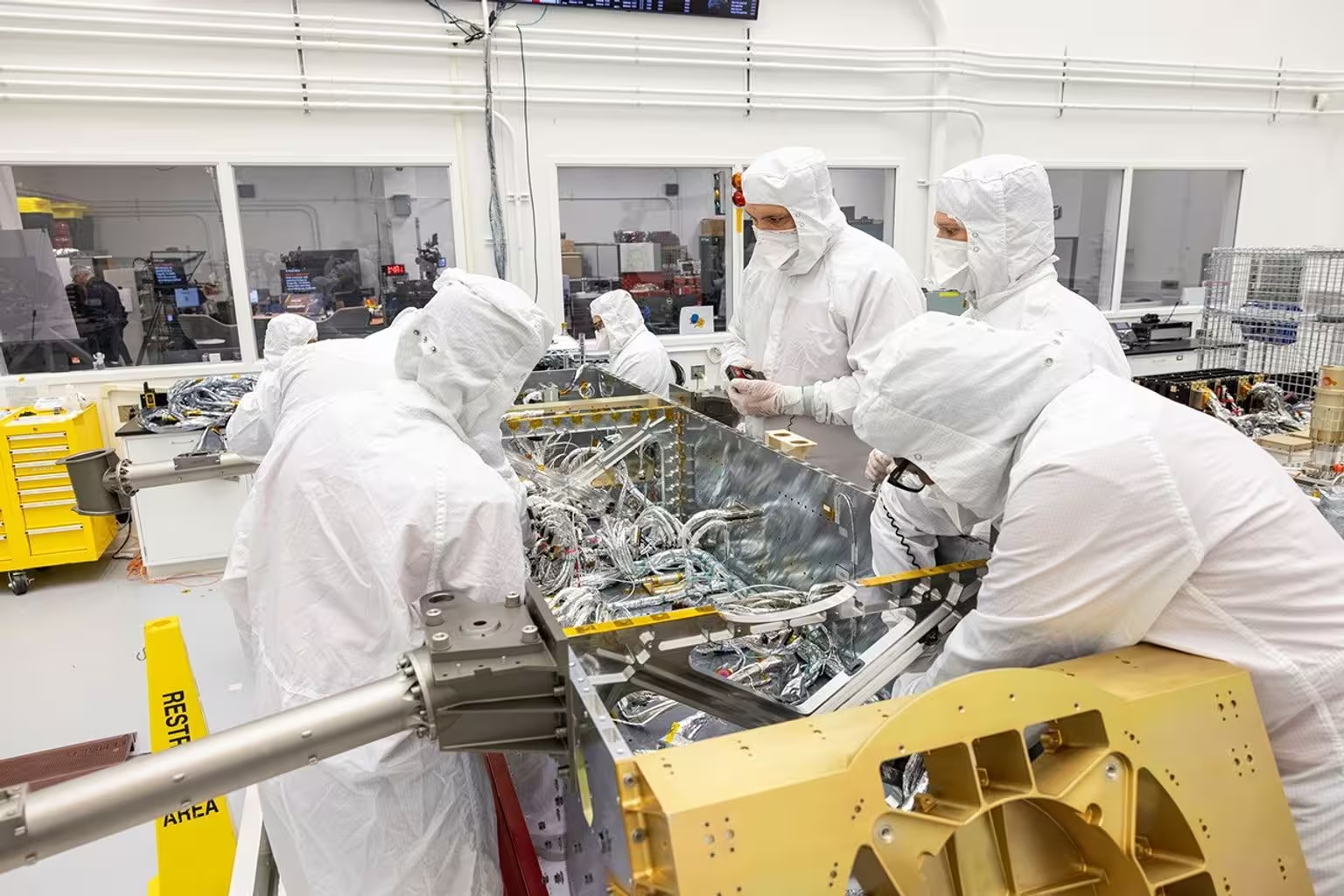
Designing these cables required balancing the raw power needs of the lander with the extreme thermal constraints of the Saturnian system. Dragonfly operates on a “thermos bottle” principle, using internal heat from its nuclear power source to stay operational. The wiring must be routed carefully beneath dense insulation to maintain thermal equilibrium, requiring a combination of robust 4- and 8-gauge cabling that remains flexible enough to navigate the tight confines of the lander’s core, which houses a 300-pound battery and various scientific payloads.
A Target for Prebiotic Investigation
The selection of Ahmakiq Undae as a landing site is rooted in high-stakes scientific ambition. Situated near the prominent Selk Crater, this region provides a window into the chemical evolution of Titan. Researchers believe the impact event that formed the crater likely melted the moon’s icy crust, potentially creating transient pools of liquid water that could have persisted for millennia.
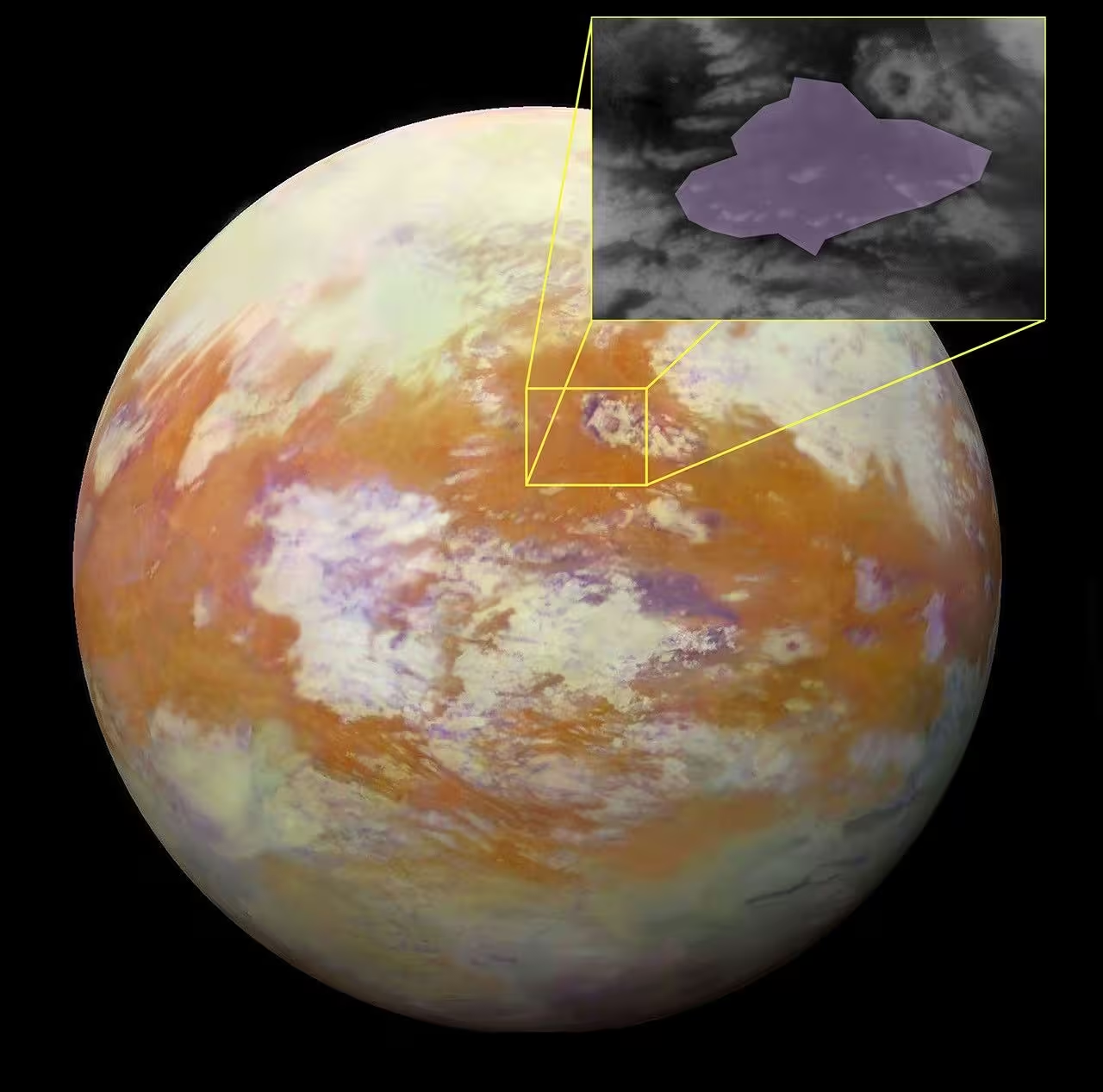
By studying the interplay between these ancient impact-melt environments and the abundant organic compounds found in Titan’s dunes, the Dragonfly mission aims to map the limits of prebiotic chemistry. The mission is not designed to hunt for life itself, but rather to characterize the complex organic reactions that occur in an environment where carbon-rich materials and liquid water once converged. According to NASA’s September 2 mission update, the integration phase continues as the team prepares to add scientific instruments to the now-wired fuselage, bringing the mission closer to its goal of aerial exploration on an alien world.
This article has been fact checked for accuracy, with information verified against reputable sources. Learn more about us and our editorial process.
Last reviewed on .
Article history
- Latest version
Reference(s)
- Morton, Erin. “NASA’s Dragonfly Gets Wired Up While Titan Landing Area Is Named - NASA Science.”, September 2, 2026 NASA <https://science.nasa.gov/blogs/dragonfly/2026/09/02/nasas-dragonfly-gets-wired-up-while-titan-landing-area-is-named/>.
Cite this page:
- Posted by Bilal Abbasi