Scientists Caught Two Satellites Burning Up in Rare Mission to Track Atmospheric Impact
Scientists tracked two ESA satellites burning through Earth’s atmosphere, capturing rare, high-stakes data on spacecraft reentry and atmospheric interactions.
Credit: Image credit: ESA/ROSIE/University of Stuttgart (HEFDiG) | Dungrela Publishing
Researchers have successfully executed one of the most high-definition observation campaigns to date of satellites incinerating in Earth’s atmosphere. By tracking two European spacecraft during their final, controlled descents, the team gathered rare data that could prove critical to understanding the environmental impact of the burgeoning satellite industry.
Watching Spacecraft End Their Lives In Real Time
The mission targeted the ESA’s Tango and Samba satellites, two veterans of the historic Cluster mission, which spent over two decades mapping the interactions between the solar wind and Earth’s magnetic field. After 25 years of service, the pair were guided into the southern Pacific near Tonga for intentional reentries on August 31 and September 1, 2026. This precise scheduling allowed scientists to position themselves for a front-row seat to the dramatic disintegration.
A specialized business jet served as the primary observation platform, equipped with an array of 30 cameras and spectrometers fitted with custom filters. By flying above cloud cover and outside the thickest parts of the atmosphere, the researchers captured high-fidelity imagery and chemical data that ground-based stations simply cannot reach.
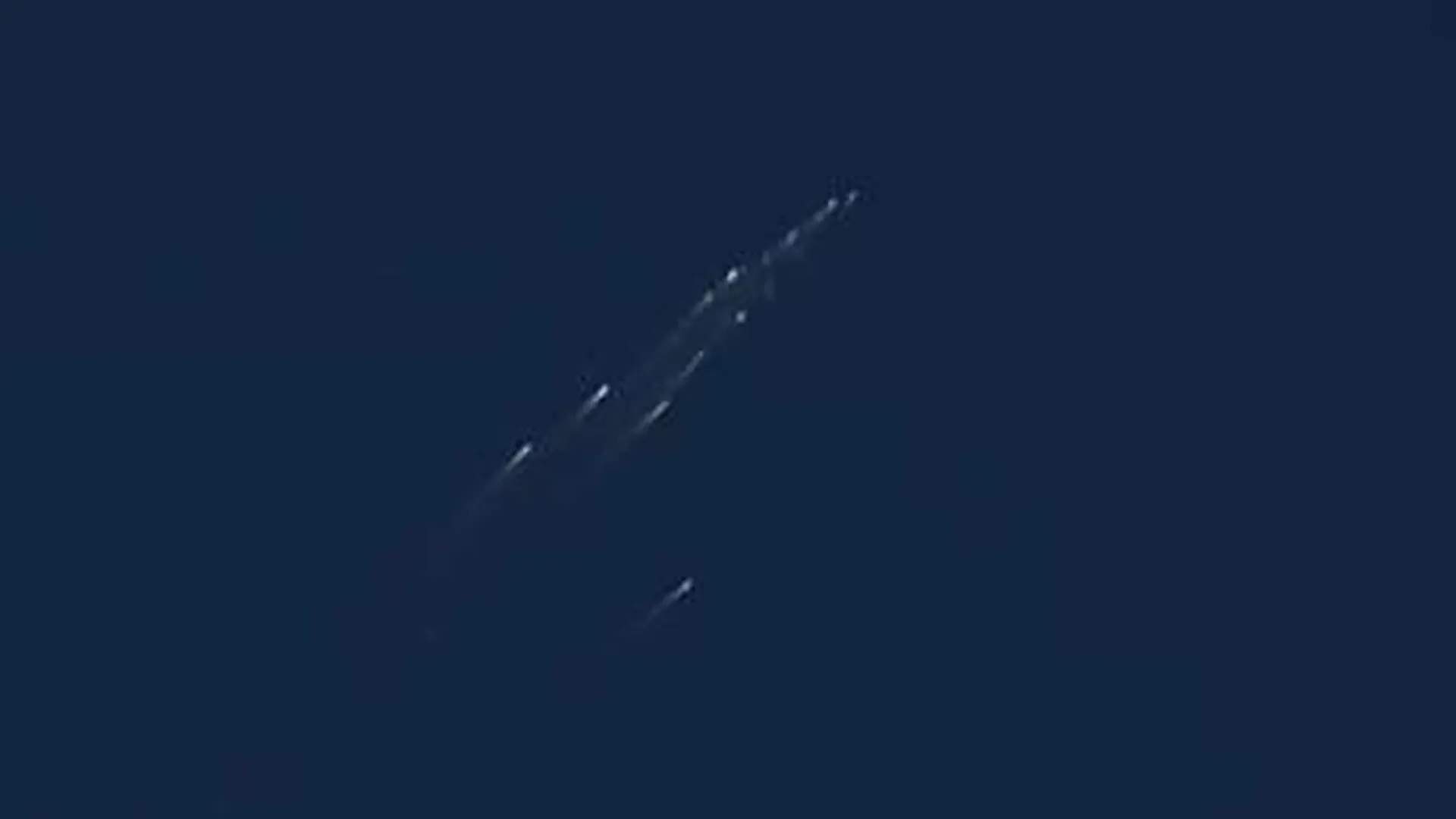
Samba’s reentry was recorded! There is fire streaking across the sky in this first image from the ROSIE plane campaign.
The team flies out again today for the final Cluster reentry of Tango, with the promise of video footage once they’ve completed their task. Credit:… pic.twitter.com/nFXTLppUu3
As private entities like SpaceX, Amazon, and Blue Origin rapidly expand their orbital footprints, the frequency of deorbiting satellites is set to skyrocket. This trend has raised urgent questions regarding the atmospheric consequences of recurring reentry events, specifically regarding which materials survive the heat and what chemical byproducts are left behind in the upper atmosphere.
Jiří Šilha, CEO of Astros Solutions, emphasized the necessity of these observations to Space.com, noting that while the basic physics of thermal ablation are understood, the transition from a solid spacecraft to a cloud of vaporized metal remains complex and poorly documented.
Analyzing the Mechanics of Atmospheric Destruction
From a vantage point roughly 120 kilometers (75 miles) away, the team observed the satellites piercing the upper atmosphere at speeds reaching 36,000 kilometers per hour (22,370 mph). Unlike the ephemeral streak of a meteor, the satellites descended at a shallower angle, providing a prolonged, multi-stage breakup process.
Šilha explained that the process begins as a bright, singular point of light during initial ablation, eventually leading to a dramatic, explosion-like fragmentation as the structural integrity of the craft fails. The researchers tracked the debris field for nearly 40 seconds as the remnants continued to burn and scatter, a visual sequence that provides researchers with a new baseline for validating reentry models.
A primary objective of the campaign was to identify the specific chemical footprint left by these burning structures. As spacecraft composed of aluminum, titanium, and potassium melt under extreme thermal stress, they release vapors that could potentially alter atmospheric composition.
Of particular concern is the production of aluminum oxide, a substance not naturally prevalent in the upper atmosphere. By using spectrometers to catch the chemical signatures of these materials in real-time, the team hopes to quantify the amount of aluminum oxide generated during the destruction of a standard satellite. This data will be instrumental in determining if the projected volume of future reentries could trigger unforeseen atmospheric shifts.
The Cluster campaign builds on the 2024 reentry of the mission’s first satellite, Salsa. With each successful observation, the scientific community moves closer to establishing clear guidelines for space debris management and environmental safety in the age of massive satellite constellations. As these final mission components vanished, they provided the essential data needed to safeguard the atmosphere for future generations of space exploration.
Fact Checked
This article has been fact checked for accuracy, with information verified against reputable sources. Learn more about us and our editorial process.
Abbasi, Bilal. “Scientists Caught Two Satellites Burning Up in Rare Mission to Track Atmospheric Impact.” BioScience. BioScience ISSN 2521-5760, 09 September 2026. <https://www.bioscience.com.pk/en/subject/chemistry/scientists-watched-two-satellites-explode-over-earth-what-they-found-could-change-spaceflight-rules>.
Abbasi, B. (2026, September 09). “Scientists Caught Two Satellites Burning Up in Rare Mission to Track Atmospheric Impact.” BioScience. ISSN 2521-5760. Retrieved September 09, 2026 from https://www.bioscience.com.pk/en/subject/chemistry/scientists-watched-two-satellites-explode-over-earth-what-they-found-could-change-spaceflight-rules
Abbasi, Bilal. “Scientists Caught Two Satellites Burning Up in Rare Mission to Track Atmospheric Impact.” BioScience. ISSN 2521-5760. https://www.bioscience.com.pk/en/subject/chemistry/scientists-watched-two-satellites-explode-over-earth-what-they-found-could-change-spaceflight-rules (accessed September 09, 2026).