NASA Picks Blue Origin to Build a Dedicated Communications Network for Mars
NASA has awarded a $700 million contract for an untested spacecraft platform that could determine the timeline for the first human mission to Mars.
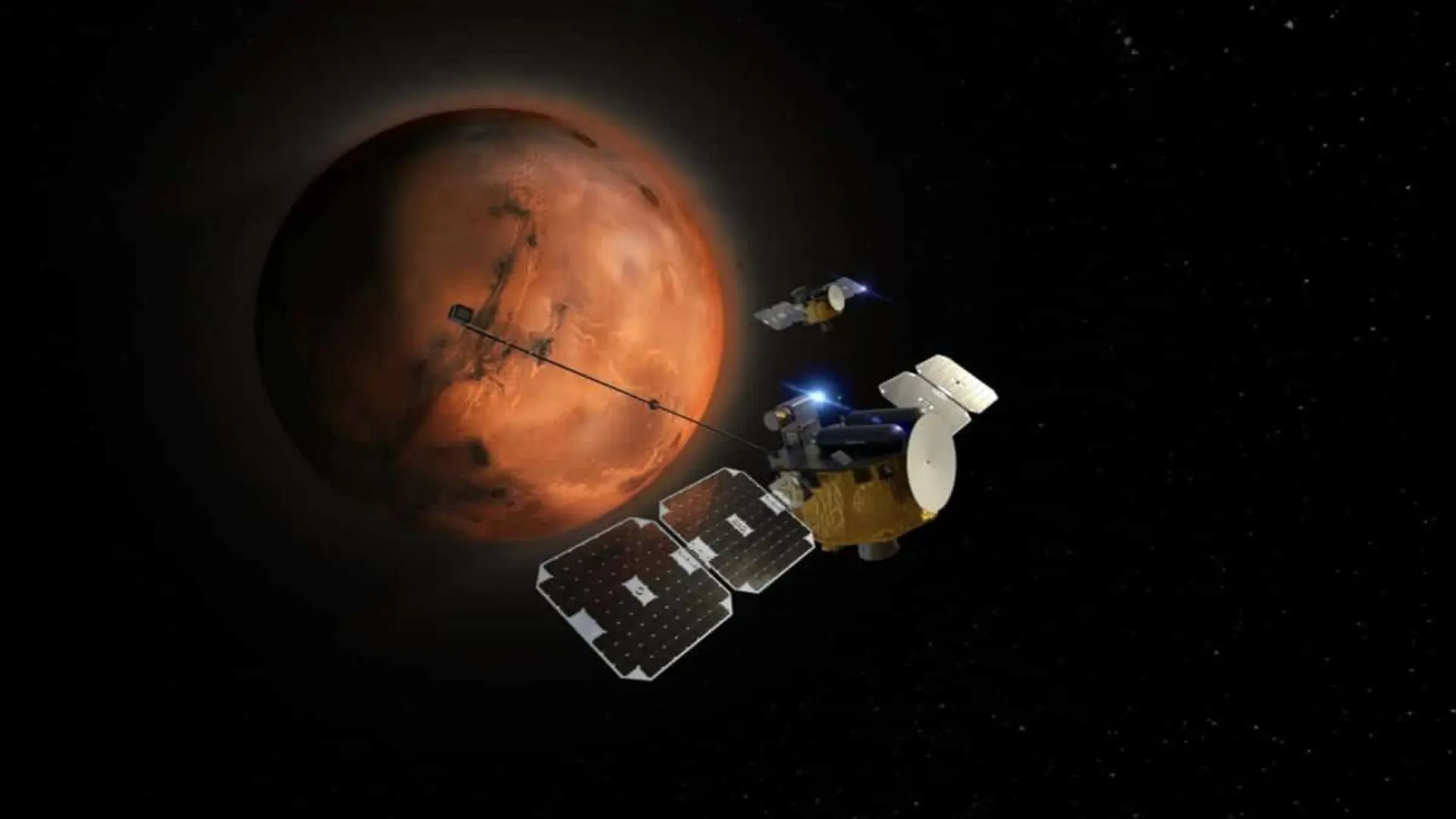
NASA has tapped Blue Origin for a $700 million contract to develop a dedicated telecommunications orbiter for Mars. The project, officially designated the Mars Telecommunications Network (MTN), is tasked with creating a robust data relay infrastructure essential for future planetary exploration. Under the terms of the agreement, Blue Origin is responsible for the design, construction, and operation of the spacecraft, which must be ready for delivery by December 31, 2028. The agency anticipates the system will be active and orbiting the Red Planet by 2030.
Addressing a Growing Connectivity Gap
The mission addresses an increasingly precarious situation in Martian communications. Currently, NASA relies on a network of aging assets, including the Mars Odyssey and Mars Reconnaissance Orbiter, both of which launched over two decades ago. While international partners provide supplementary support, these spacecraft were primarily designed for scientific observation rather than serving as dedicated data relays. As NASA sets its sights on human missions to Mars—tentatively scheduled for the late 2030s or early 2040s—the demand for a high-bandwidth, reliable communication backbone has transitioned from a convenience to a critical prerequisite.
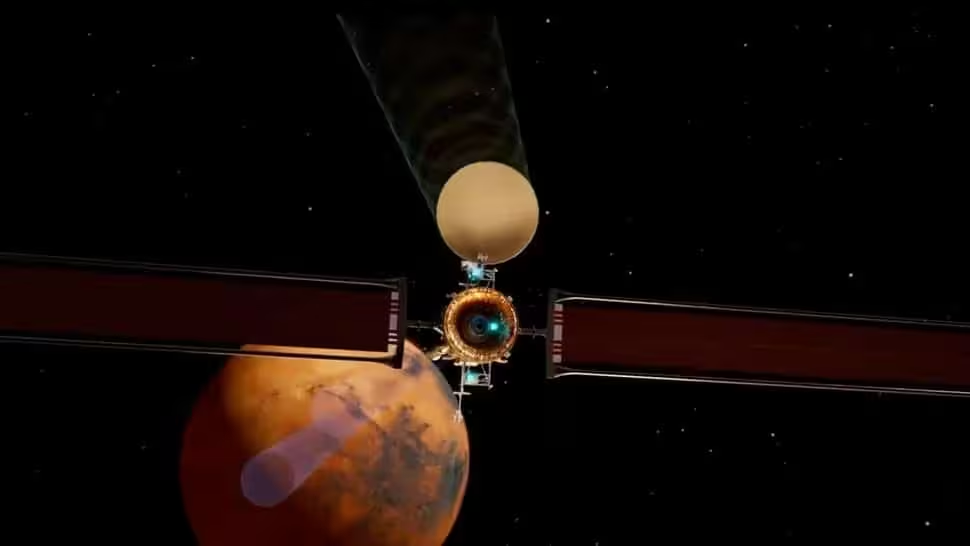
According to NASA’s official announcement, the MTN represents a strategic shift toward establishing permanent, specialized infrastructure for deep-space missions. Unlike its predecessors, the MTN will be unburdened by scientific instrumentation, allowing it to function exclusively as a high-speed orbital relay for rovers, landers, and future human crews.
Securing the Contract
The project moved forward following a $700 million congressional appropriation in July 2025. After formalizing mission requirements in early 2026 and issuing a request for proposals, NASA evaluated bids from several aerospace players, including Rocket Lab. Ultimately, the agency selected Blue Origin to manage the entire lifecycle of the mission, from development to orbital operations.
Leveraging the Blue Ring Platform
The core of the new orbiter will be Blue Origin’s Blue Ring platform. Designed as a flexible, hybrid spacecraft, the platform features a mix of solar-electric and chemical propulsion systems, which the company claims offers significant maneuverability and payload capacity. Although the technology is still in its early stages—with a prototype having participated in a New Glenn flight test in early 2025—it serves as the centerpiece of the MTN strategy. Given that Blue Origin is responsible for the launch, industry analysts expect the company to utilize its own New Glenn rocket for the journey to Mars.
Our Mars Telecommunications Orbiter, built upon the Blue Ring platform, will strengthen the communications backbone at the Red Planet while creating new pathways for science. Capable of delivering multiple payloads to the surface and orbits of Mars, it drives discovery today and… pic.twitter.com/nCN8zMAWCk
— Blue Origin (@blueorigin) March 5, 2026
With the 2028 delivery deadline approaching, the focus now shifts to engineering and integration. If successful, the MTN will become the first dedicated communications hub for the Red Planet, providing the essential connectivity needed for a new era of human and robotic exploration.
This article has been fact checked for accuracy, with information verified against reputable sources. Learn more about us and our editorial process.
Last reviewed on .
Article history
- Latest version
Reference(s)
- “NASA Selects Blue Origin as Mars Telecommunications Network Provider - NASA.” NASA <https://www.nasa.gov/news-release/nasa-selects-blue-origin-as-mars-telecommunications-network-provider/>.
- <https://rocketlabcorp.com/missions/mars-telecommunications-orbiter/>.
- <https://www.blueorigin.com/blue-ring>.
- “https://twitter.com/blueorigin/status/2029608989013504497/video/1.” <https://t.co/nCN8zMAWCk>.
Cite this page:
- Posted by Karan Das