ESA Just Released The Most Detailed True-Color Map Of Mars Ever Seen
A stunning new global map from the ESA reveals Mars is far more complex than its iconic red surface suggests, unveiling hidden secrets of the planet.
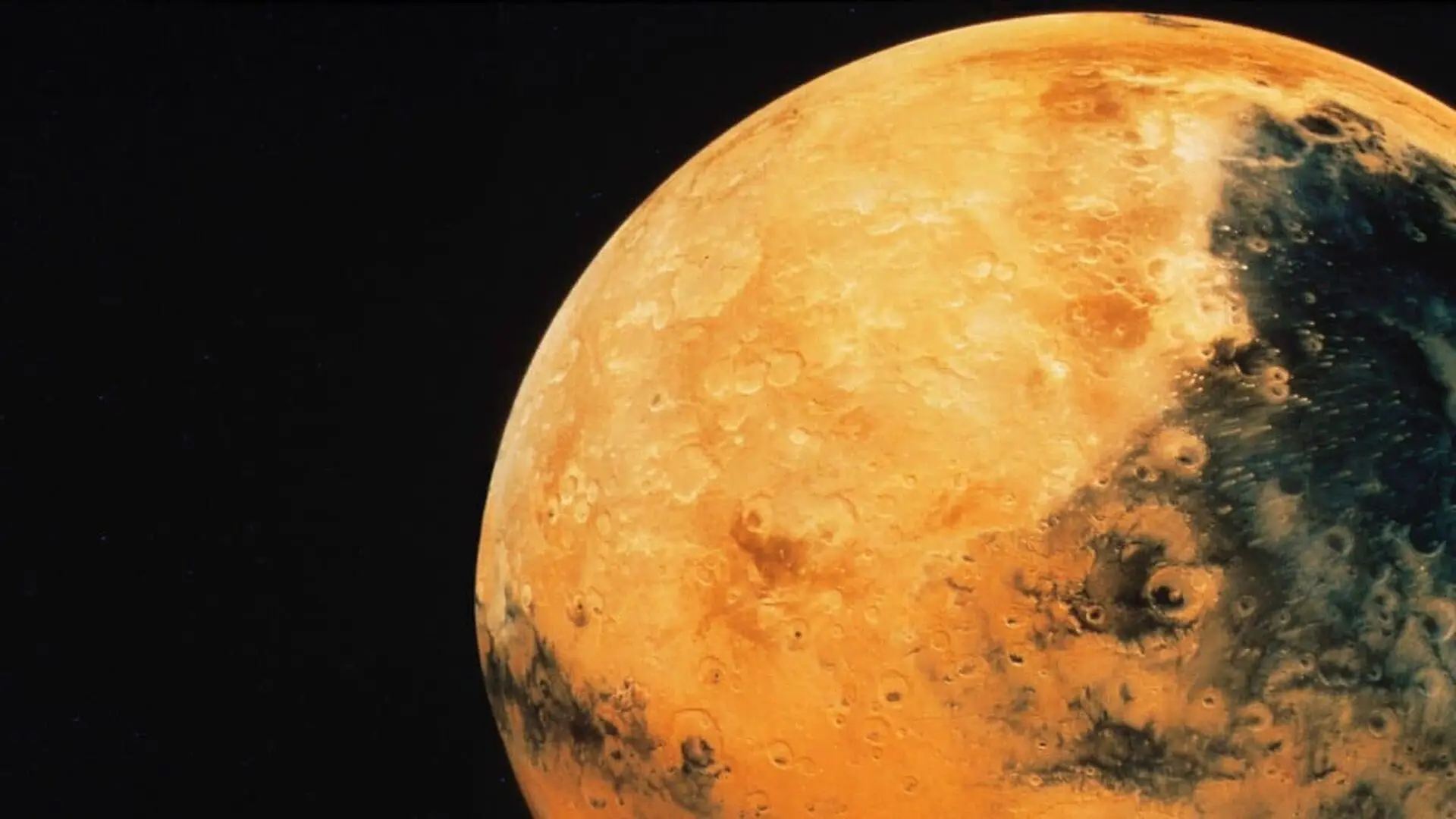
Two decades of orbital observation have culminated in an unprecedented visual record of the Red Planet. The European Space Agency (ESA) has unveiled a global, true-color mosaic of Mars, synthesized from years of data collected by the long-running Mars Express spacecraft. This detailed composite offers researchers and the public a high-fidelity look at the Martian surface, mapping out geological diversity with a clarity previously unattainable.
The findings, detailed in the journal Icarus, rely on the High Resolution Stereo Camera (HRSC) onboard the Mars Express. By stitching together numerous imaging passes, scientists have produced a comprehensive portrait that spans the planet while omitting the polar regions, providing an unobstructed view from roughly 1,550 miles above the iconic Valles Marineris canyon system.
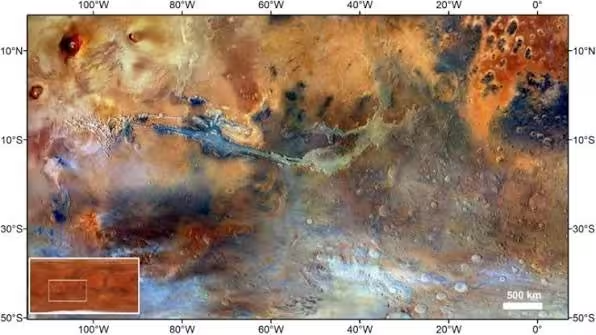
Mapping the Martian Terrain
Every pixel in the new mosaic corresponds to approximately 1.24 miles of the surface, revealing a complex tapestry of topography. The imagery highlights a variety of features, including wind-eroded ridges, expansive lava fields, impact craters, and tectonic fissures. According to the ESA, the level of detail allows for a comprehensive study of the planet’s morphology, from the depths of its canyons to the slopes of its massive shield volcanoes.
Overcoming Atmospheric and Lighting Challenges
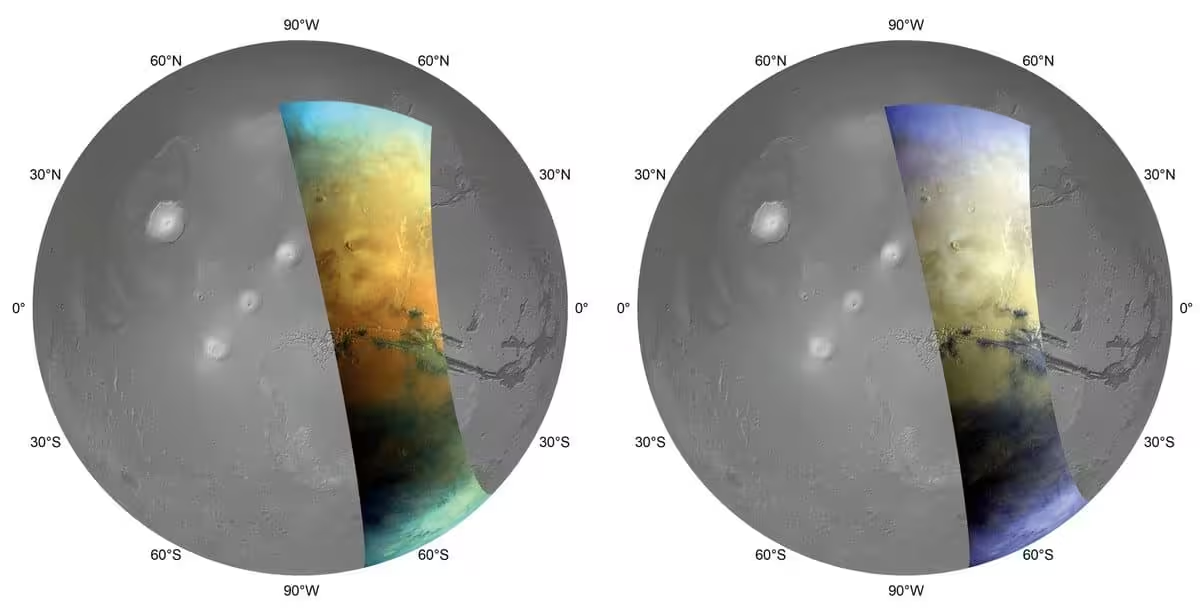
Generating a consistent, color-accurate global map required significant data processing. Mars’ notorious dust storms and the shifting nature of its thin atmosphere create substantial obstacles for orbital imaging. Additionally, lighting conditions vary significantly based on the angle of the sun, which can artificially inflate the brightness of slopes and ridges. To correct these discrepancies, the research team performed careful radiometric adjustments, ensuring that the final output accurately reflects the composition of the surface while maintaining the natural shadows that define the Martian landscape.
Geochemical Clues in the Colors
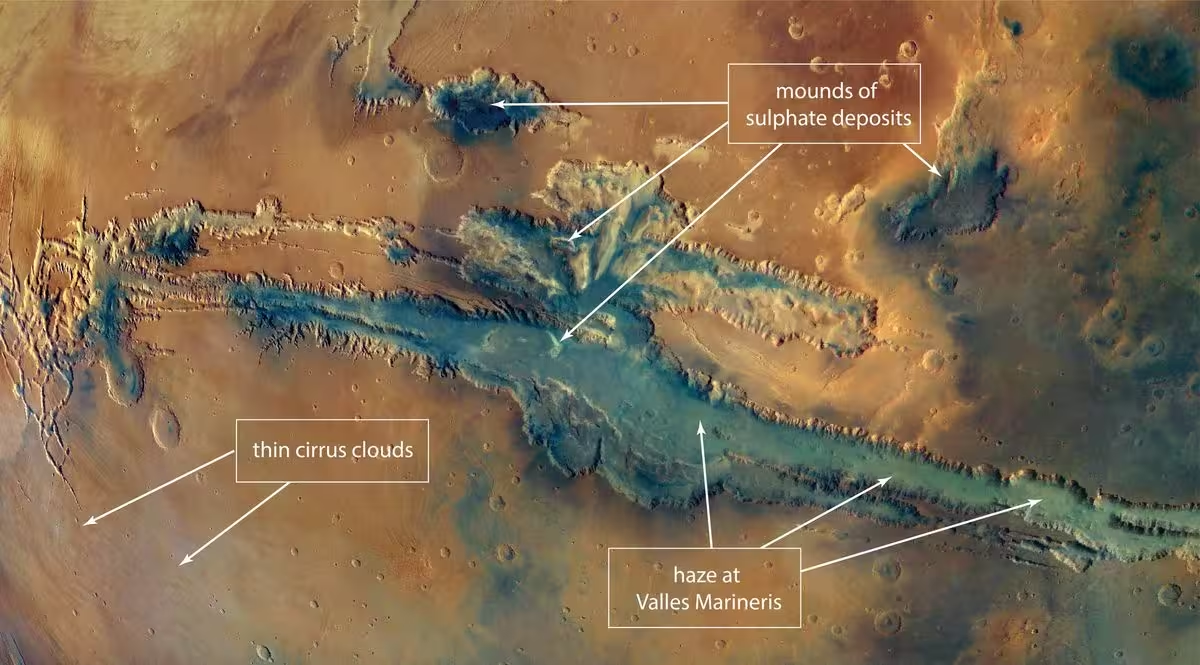
The resulting color palette provides more than just aesthetic appeal; it serves as a proxy for surface composition. The mosaic displays a spectrum of yellows, greens, and blues, which point to specific mineralogical signatures. For instance, dark, grey-black patches correspond to basaltic sands indicative of past volcanic activity, while lighter tones highlight regions enriched with sulfates and clays. These markers offer scientists vital clues regarding the ancient presence of liquid water and the evolutionary processes that have governed the planet’s surface chemistry over billions of years.
With the mission extended through at least 2026, the scientific community expects further high-resolution insights from the Mars Express platform, ensuring that our understanding of the Red Planet’s complex history remains an active and evolving field of study.
This article has been fact checked for accuracy, with information verified against reputable sources. Learn more about us and our editorial process.
Last reviewed on .
Article history
- Latest version
Reference(s)
- Michael, G.G.., et al. “A global colour mosaic of Mars from Mars Express HRSC high altitude observations.” Icarus, vol. 425, January 1, 2025, pp. 116350 Elsevier BV, doi: 10.1016/j.icarus.2024.116350. <https://www.sciencedirect.com/science/article/abs/pii/S001910352400410X?via%3Dihub>.
Cite this page:
- Posted by Karan Das