Hubble Detects Mysterious 10 Sided Structure Forming Over Saturns South Pole
Years of Hubble data reveal an unexpected, long-term atmospheric shift occurring on Saturn that scientists are only now beginning to understand.
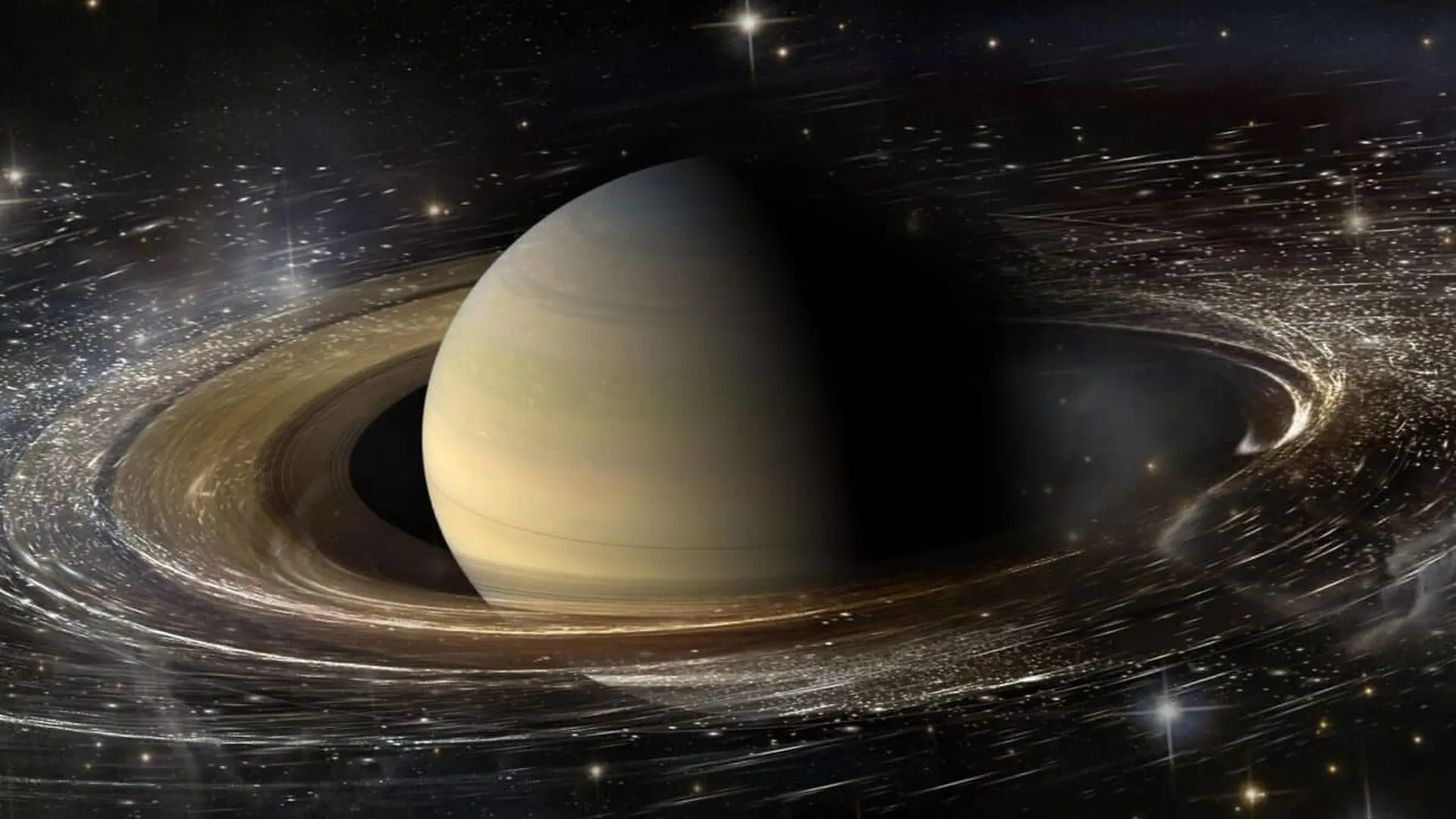
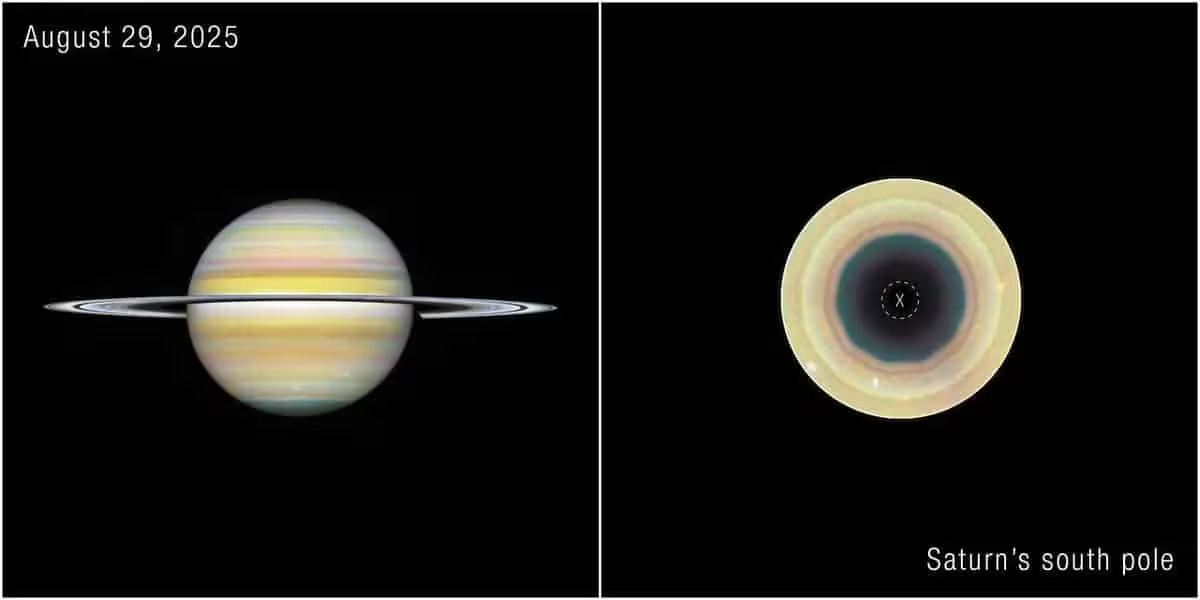
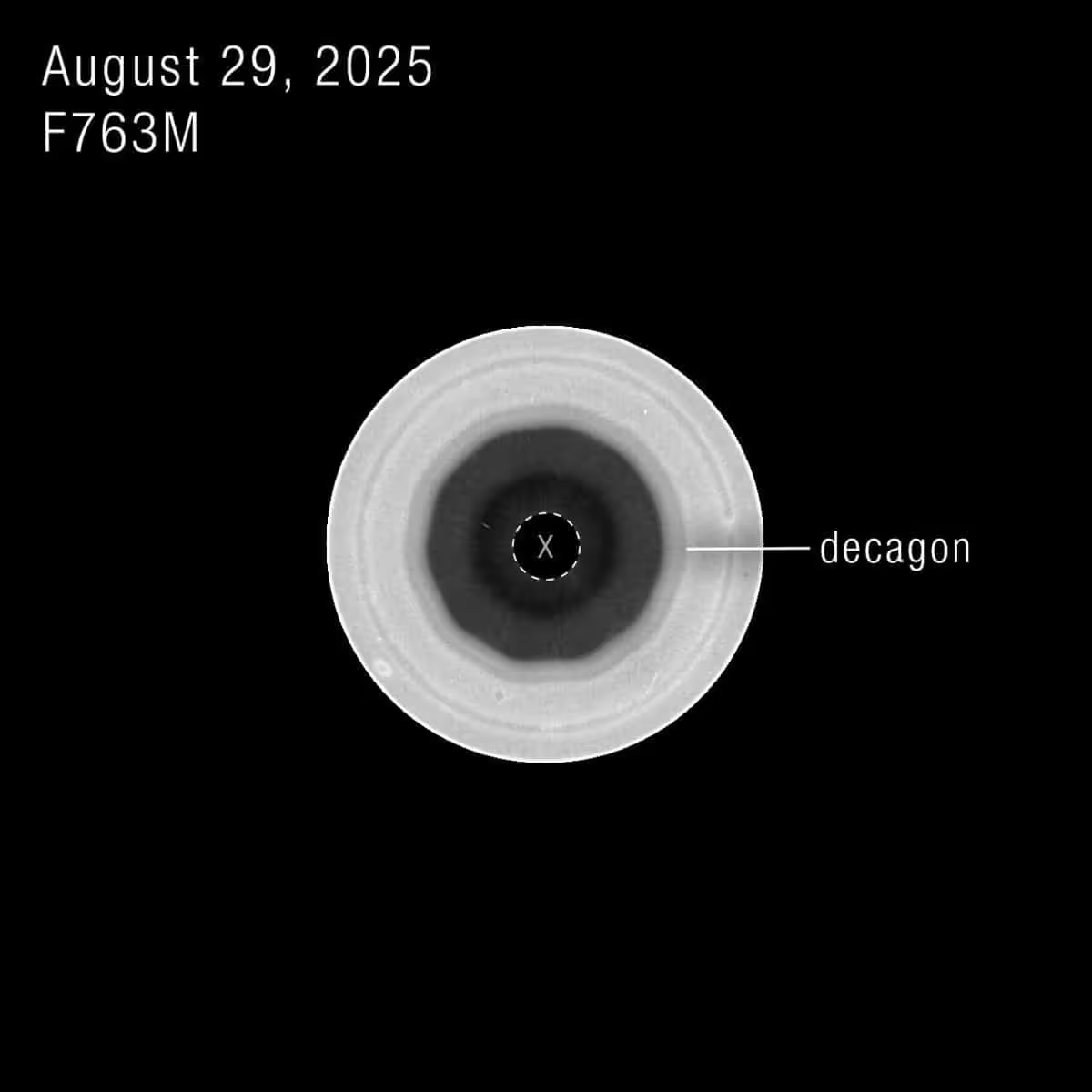
Astronomers have identified a mysterious ten-sided atmospheric wave swirling above Saturn’s south pole, a discovery that challenges current understanding of planetary meteorology. Captured by the Hubble Space Telescope, this newly emerged decagonal feature appears to be a recent atmospheric development, marking a significant departure from the phenomenon observed on the gas giant’s opposite pole.
An Evolving Atmospheric Puzzle
The discovery, detailed in a study published in Science Advances, highlights a structure that began to take shape in 2023. By the late summer of 2025, the wave had matured into a distinct geometric pattern. While Saturn is renowned for its complex weather systems and high-velocity storms, this decagonal wave presents a unique set of questions regarding how large-scale, organized structures form within the fluid dynamics of a gas giant.
The emergence of this feature is particularly striking when compared to the well-documented hexagonal wave discovered at Saturn’s northern pole during the 1980s. Despite decades of study on the northern hexagon, the origins of its southern counterpart remain elusive, and researchers are currently unable to explain why such disparate geometric structures occupy the planet’s two hemispheres.
Lead author Agustín Sánchez-Lavega, a physicist at Spain’s Bilbao School of Engineering, noted that there is no terrestrial equivalent to this phenomenon. “We do not yet know for certain,” Sánchez-Lavega stated. “There is no single model to explain it. It may be the result of an instability in the jet stream in which it is situated or a wave forced from deeper levels of the atmosphere.”
Charting the Development of a Southern Feature
By scrutinizing archival data from both the Hubble Space Telescope and NASA’s Cassini spacecraft, researchers confirmed the absence of the decagon in earlier years, suggesting the feature is a relatively new development. According to an ESA/Hubble press release, the feature transitioned from early, faint signs in 2023 to a fully realized structure observed by August 2025. During these observations, researchers analyzed the southern hemisphere using specialized filters, including red wavelengths at 763 nanometers and methane absorption bands at 889 nanometers.
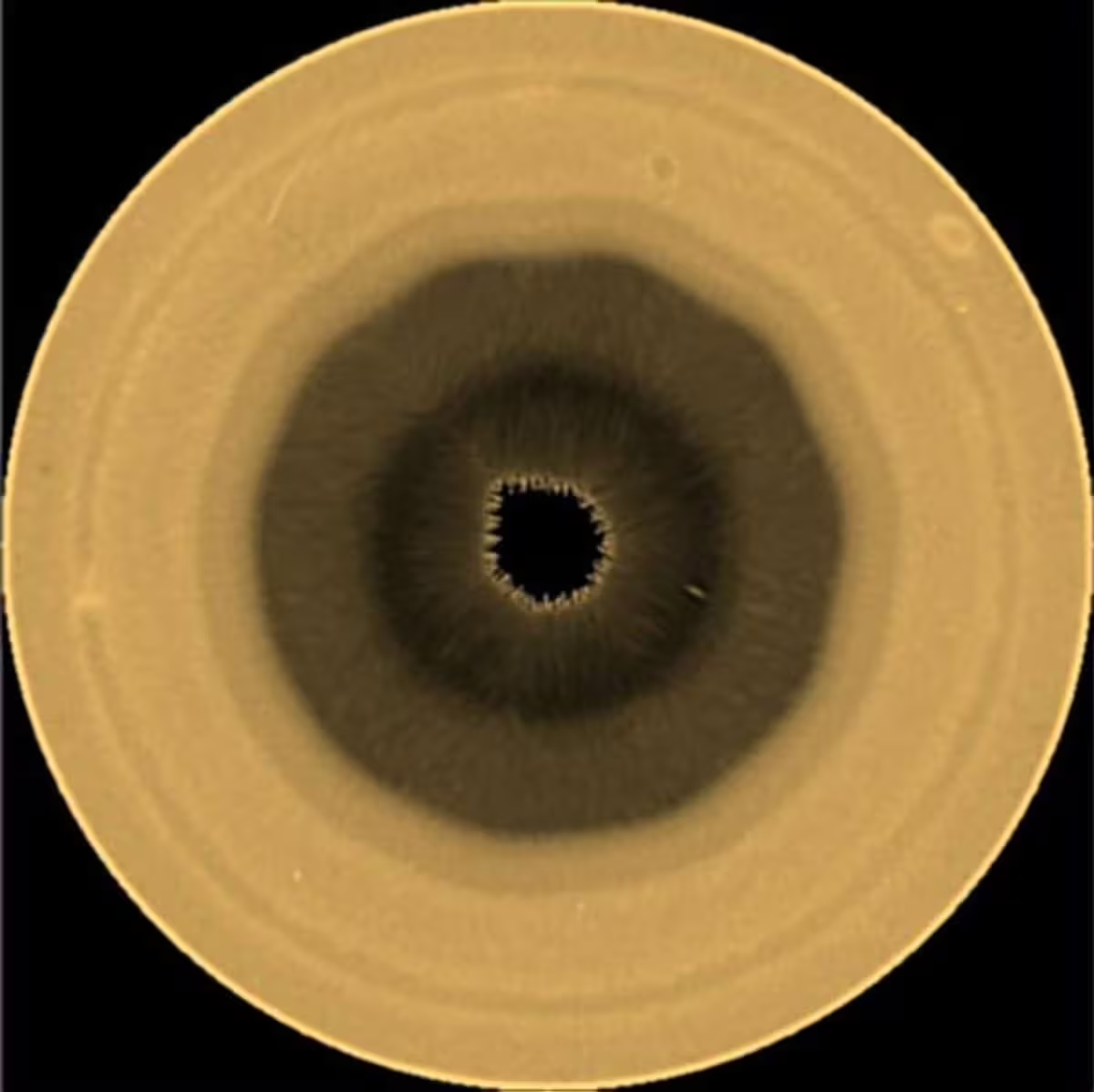
Despite the clarity of the imagery, the edges of the decagon remain somewhat indistinct, leading the team to theorize that the wave may still be evolving. Furthermore, the absence of similar polygonal patterns on Jupiter, another massive, turbulent gas giant, continues to baffle planetary scientists.
Unanswered Questions in Planetary Science
The discrepancy between the northern hexagon and the southern decagon remains the subject of intense investigation. While the difference in latitude is a primary variable, the potential impact of seasonal sunlight cannot be ruled out. Sánchez-Lavega posits that if solar insolation is a driving force, the southern decagon could become significantly more defined as the region approaches peak exposure around 2032.
“What causes one hemisphere to have six sides and the other 10—perhaps this is related to the difference in latitude between the two cases,” Sánchez-Lavega concluded. “There are many unanswered questions, which we hope future observations and models will help to clarify.”
This article has been fact checked for accuracy, with information verified against reputable sources. Learn more about us and our editorial process.
Last reviewed on .
Article history
- Latest version
Reference(s)
- Belleville, Michelle. “Hubble Space Telescope - NASA Science.”, May 10, 2023 NASA <https://science.nasa.gov/mission/hubble/>.
- <https://www.researchgate.net/scientific-contributions/Agustin-Sanchez-Lavega-2241719281>.
- Cermak, Alicia. “Cassini-Huygens - NASA Science.”, June 16, 2023 NASA <https://science.nasa.gov/mission/cassini/>.
- “Hubble tracks new decagon encircling Saturn’s south pole.” www.esahubble.org <https://esahubble.org/news/heic2612/>.
Cite this page:
- Posted by Karan Das