NASA Reveals A Month Of Stunning Night Sky Events You Can See Without A Telescope
From a brilliant Venus to a Harvest Moon near Saturn, discover the spectacular celestial events NASA says you shouldn’t miss in September 2026.
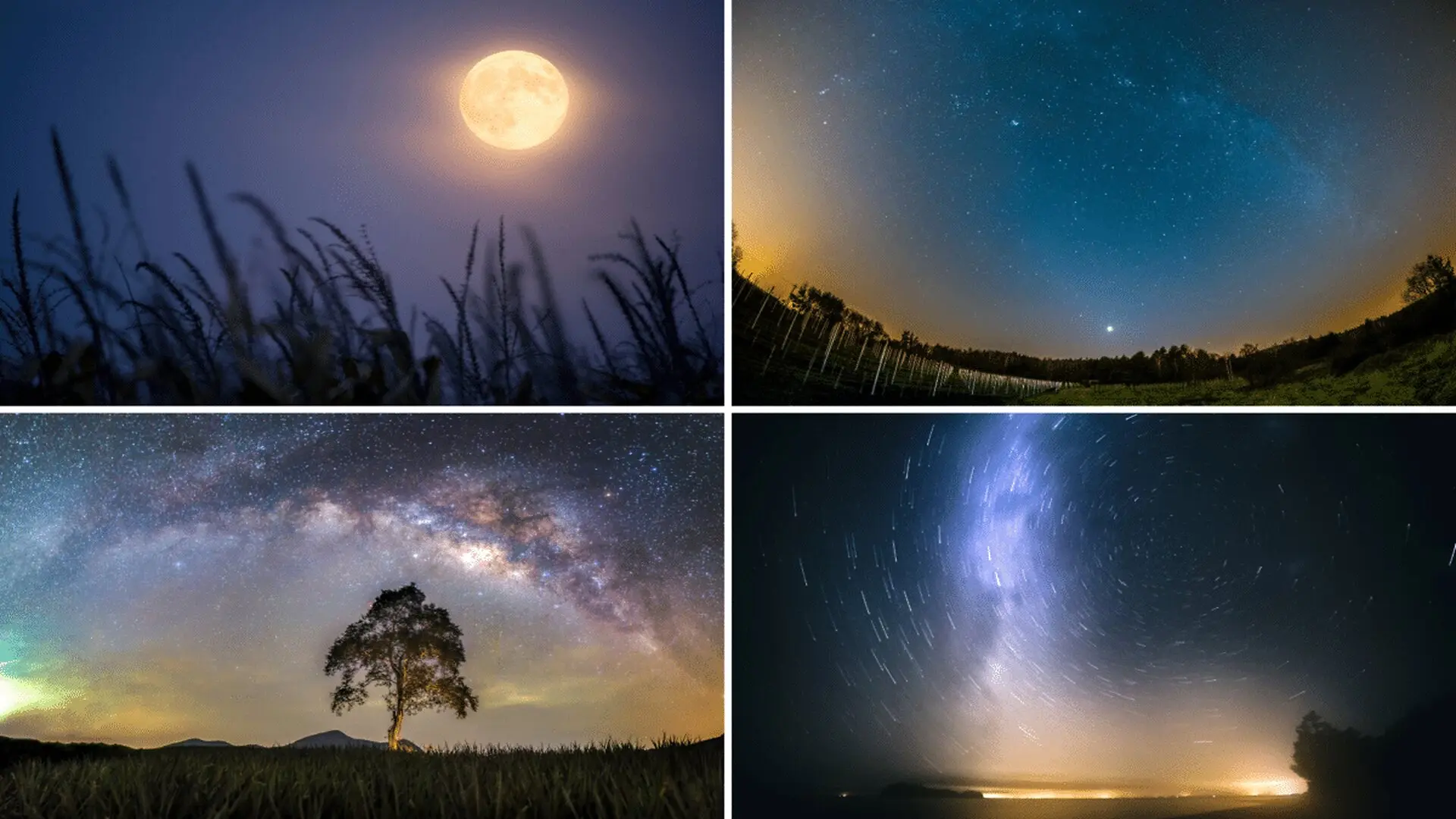
September Skies: Venus Brilliance, Celestial Alignments, and the Autumnal Equinox
As the Northern Hemisphere prepares for seasonal shifts, the September 2026 night sky offers a compelling lineup for observers. According to NASA, the month will feature everything from the peak of Venus to complex lunar encounters, providing clear opportunities to explore the cosmos without the need for advanced observatory equipment.
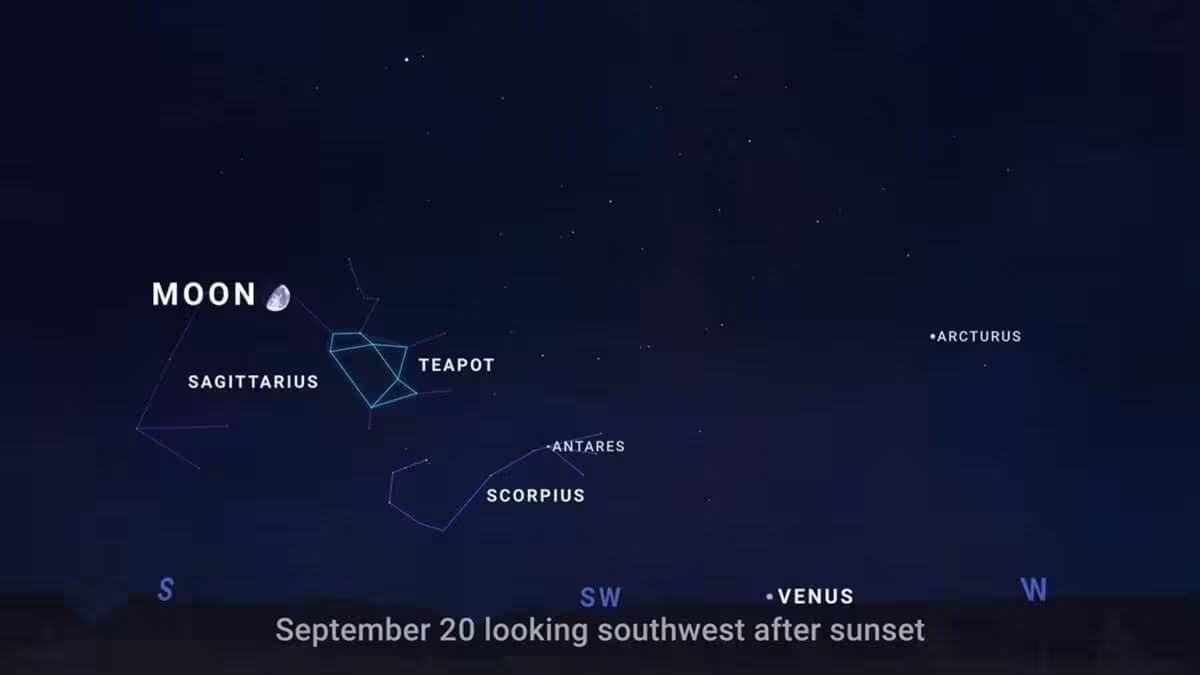
Beginning mid-month, specifically between September 14 and 20, the Moon will serve as a celestial map. During this window, our natural satellite will track through the constellation Scorpius, drawing near the red giant star Antares. Following this path, the Moon will drift toward the Sagittarius constellation, helping observers locate the distinctive Teapot asterism. By using this star formation as a guide, those under dark, clear skies may even discern the faint, ethereal glow of the Milky Way emanating from the teapot’s spout.
The Evening Majesty of Venus
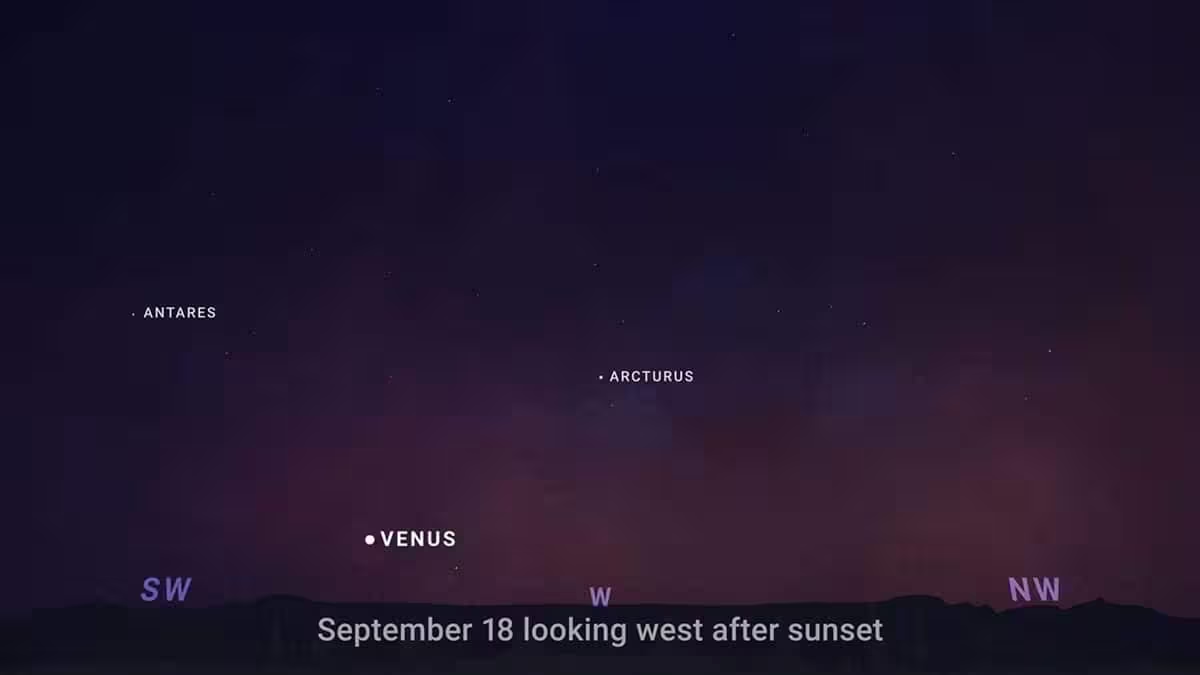
On September 18, Venus reaches its most radiant point of the year. As the second planet from the Sun, its cloud-shrouded atmosphere reflects significant light, allowing it to dominate the western horizon shortly after sunset. This event requires no specialized optics; however, a clear, unobstructed view of the horizon is recommended to catch the planet before it dips below the skyline. For those with binoculars or small telescopes, the event also offers a prime chance to observe the planet’s changing phases as it continues its orbit.
Global Lunar Observation and Planetary Trios
The following day, September 19, marks International Observe the Moon Night. NASA highlights this date to encourage public engagement with lunar science. Given that the Moon remains the most accessible target for amateur astronomers, the agency encourages the use of basic tools like binoculars to resolve lunar topography, including prominent craters and plains.
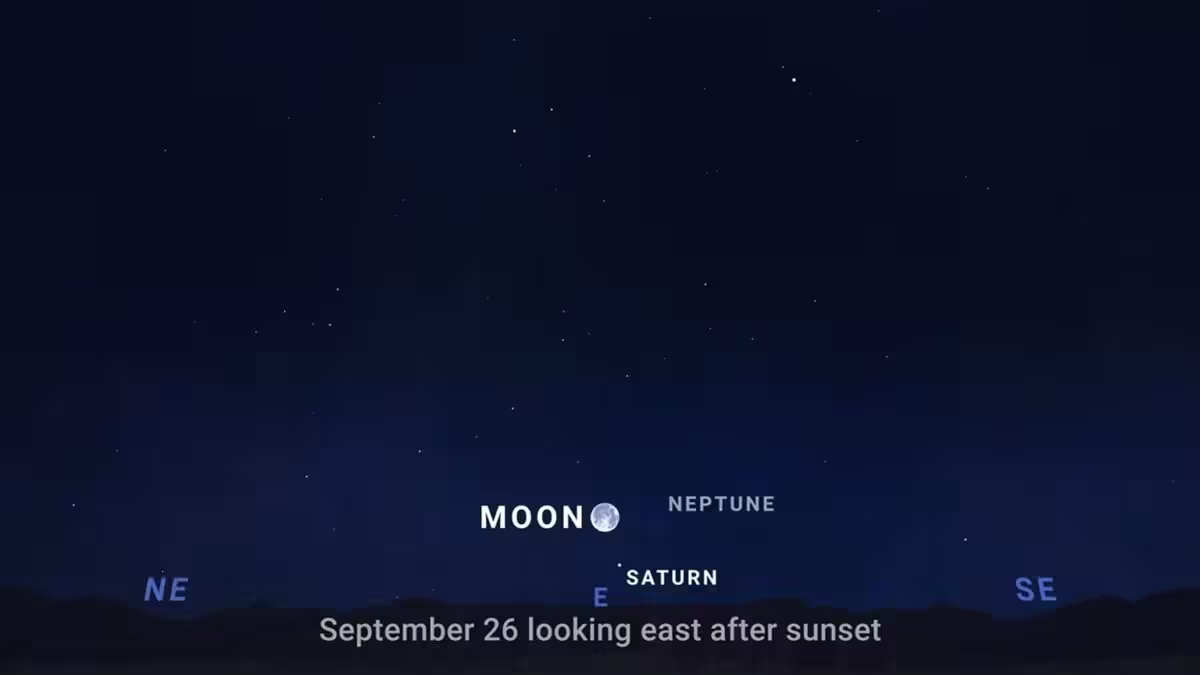
The month concludes with a significant display on September 26, as the Harvest Moon rises in tandem with Saturn and the distant planet Neptune. While Saturn will be easily visible to the naked eye, Neptune—shining at approximately magnitude 8—will remain a challenge, requiring binoculars or a telescope to distinguish it within the triangular arrangement formed by the three bodies.
The September Equinox and the Turn of the Seasons
Beyond these planetary movements, September 22 brings the equinox. On this day, the Sun sits directly above the Earth’s equator, resulting in an almost perfectly even split between daylight and nighttime hours across the globe. This event acts as the official gateway to autumn for the Northern Hemisphere and spring for the Southern, serving as a reminder of the axial tilt that dictates our planet’s seasonal rhythms.
This article has been fact checked for accuracy, with information verified against reputable sources. Learn more about us and our editorial process.
Last reviewed on .
Article history
- Latest version
Reference(s)
- BARNETT, AMANDA. “What’s Up: September 2026 Skywatching Tips from NASA.”, September 1, 2026 NASA <https://science.nasa.gov/solar-system/skywatching/whats-up-september-2026-skywatching-tips-from-nasa/>.
Cite this page:
- Posted by Karan Das