NASA Just Broke the Sound Barrier on Mars to Revolutionize Future Space Exploration
NASA’s latest rotor tests reveal how supersonic blade tips could enable future Mars helicopters to carry heavier, more ambitious scientific payloads.
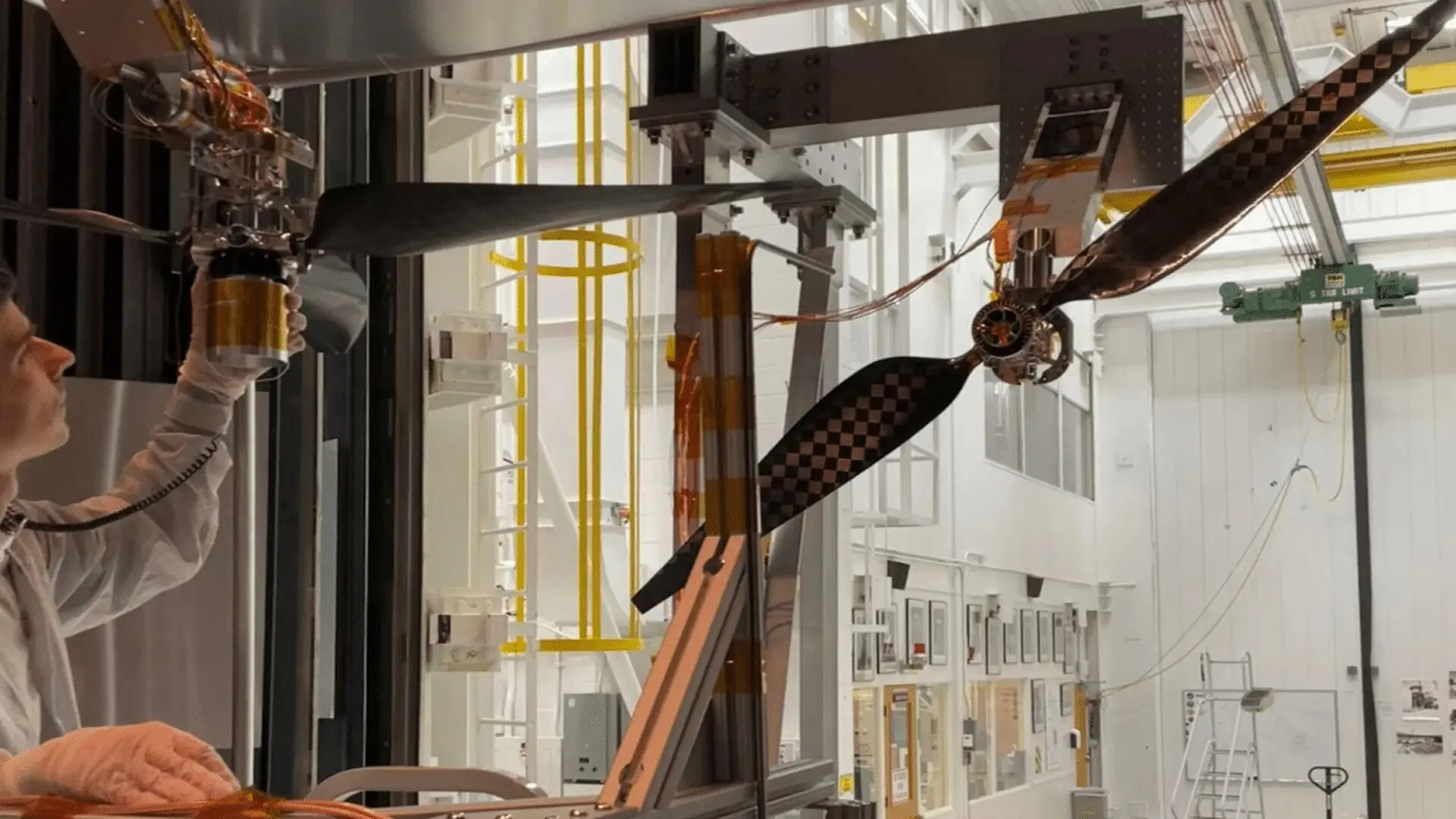
NASA engineers have successfully pushed next-generation Mars helicopter rotor blades past the sound barrier, unlocking a 30% increase in lift capacity. This breakthrough could pave the way for future aerial missions to carry significant scientific payloads, expanding the scope of exploration beyond the capabilities of the pioneering Ingenuity helicopter.
Pushing the Limits of Martian Aviation
Operating a rotorcraft on Mars presents a daunting engineering challenge. The planet’s atmosphere is remarkably thin, possessing only about 1% of the density found on Earth, which leaves blades with precious few gas molecules to leverage for lift. Simultaneously, the planet’s gravity—approximately 38% of Earth’s—demands a powerful propulsion system. While the Ingenuity helicopter proved that powered flight was possible, it carried no scientific instruments. Future missions require aircraft that can navigate difficult terrain while hauling sensors, cameras, and specialized research equipment.
“NASA had a great run with the Ingenuity Mars Helicopter, but we are asking these next-generation aircraft to do even more at the Red Planet,” said Al Chen, Mars Exploration Program manager at JPL. “That’s not an easy ask. While everything about Mars is hard, flying there is just about the hardest thing you can do.”
To generate more thrust, engineers must either increase the diameter of the rotors or boost their rotational speed. Increasing speed, however, forces the blade tips toward the speed of sound, a region where complex aerodynamic instability traditionally discouraged designers. New testing suggests this once-avoided flight regime could soon become a standard tool in the Martian aviation handbook.
Learning from the Ingenuity Baseline
Ingenuity made history on April 19, 2021, completing the first powered, controlled flight on another planet. Over the course of 72 flights, the vehicle utilized foam blades with composite skins, generally kept below 2,700 revolutions per minute. Under standard, windless conditions, the blade tips hovered around Mach 0.7 to ensure that unexpected gusts or Martian headwinds would not accidentally push the system into a supersonic state.
“If Chuck Yeager were here, he’d tell you things can get squirrely around Mach 1,” said Jaakko Karras, JPL’s rotor test lead. “With that in mind, we planned Ingenuity’s flights to keep the rotor blade tips at Mach 0.7 with no wind so that if we encountered a Martian headwind while in flight, the rotor tips wouldn’t go supersonic. But we want more performance from our next-gen Mars aircraft. We needed to know that our rotors could go faster safely.”
The speed of sound on Mars is significantly lower than on Earth, typically around 540 mph (869 km/h), due to the cold, carbon-dioxide-rich environment. This proximity to the sound barrier meant NASA had to conduct rigorous testing to understand the performance characteristics of rotors when pushed beyond the safety margins previously maintained for Ingenuity.
Simulating the Red Planet at JPL
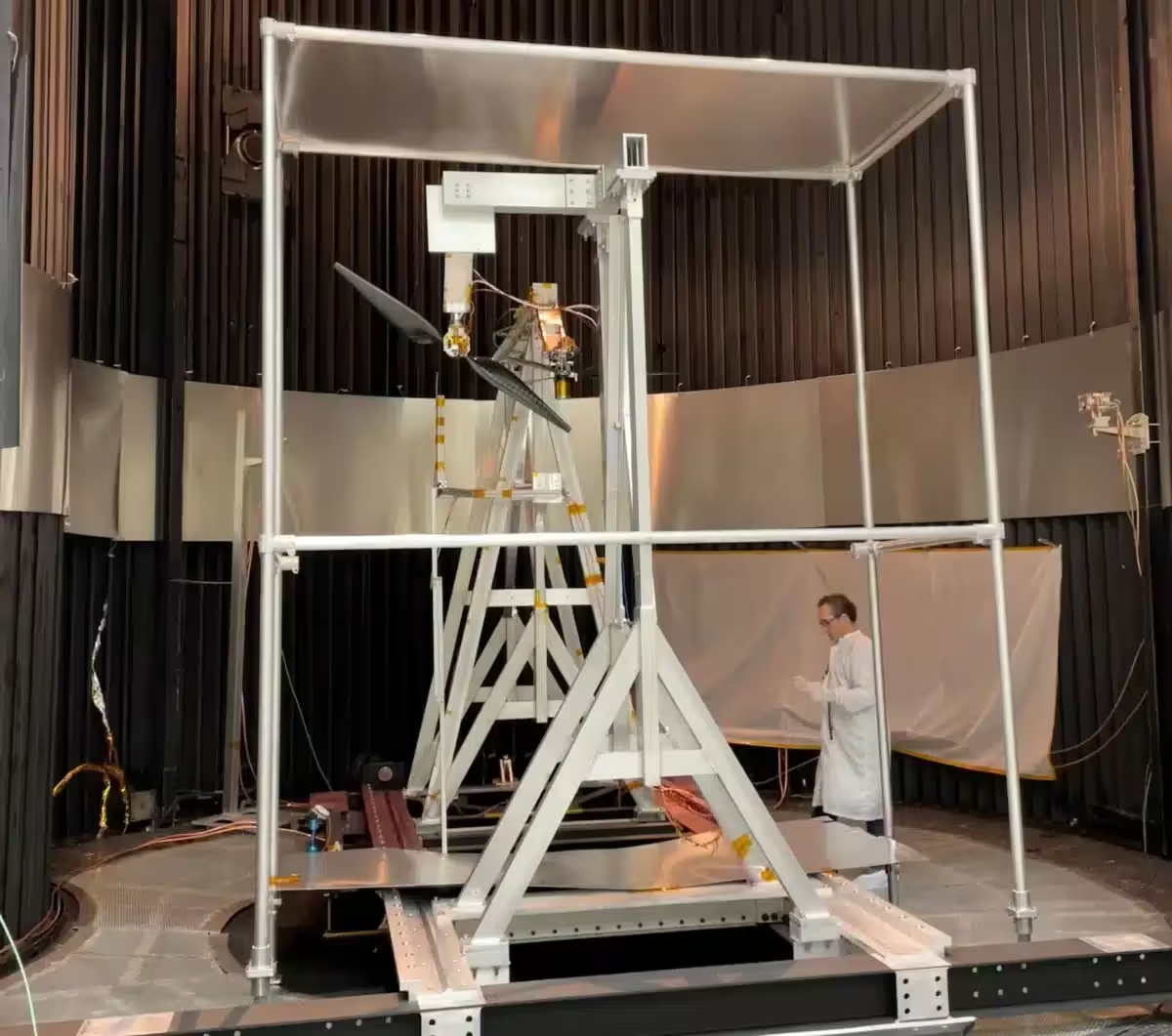
To gather this critical data, researchers utilized the 25-Foot Space Simulator at the Jet Propulsion Laboratory in Southern California. By evacuating the air and replacing it with carbon dioxide at Martian pressures, the team successfully replicated the planet’s atmospheric conditions. Over the course of 137 test runs, engineers pushed a three-bladed rotor developed by AeroVironment to its breaking point.
During the tests, the rotors reached speeds as high as 3,750 rpm, with blade tips hitting Mach 1.08. The results were immediate and impactful, showing a 30% jump in available lifting force. This additional capacity is vital, as it allows for heavier scientific hardware, larger batteries for longer mission durations, and more robust communications systems.
Scaling Up for Future Science Missions
The data from these tests is already informing the development of the SkyFall mission, which aims to deploy three next-generation helicopters to Mars in December 2028. Unlike their predecessor, these vehicles are intended to serve as dedicated scientific platforms rather than just technology demonstrators.
“The successful testing of these rotors was a major step toward proving the feasibility of flight in more demanding environments, which is key for next-gen vehicles,” said Shannah Withrow-Maser, an aerodynamicist from NASA’s Ames Research Center. “We thought we’d be lucky to hit Mach 1.05, and we reached Mach 1.08 on our last runs. We’re still digging into the data, and there may be even more thrust on the table. These next-gen helicopters are going to be amazing.”
As the team continues to analyze the findings, the path forward involves refining the balance between structural integrity and aerodynamic performance. By mastering the supersonic regime, NASA is effectively rewriting the rules for exploration, ensuring that future missions to the Red Planet can go further, carry more, and see deeper than ever before.
This article has been fact checked for accuracy, with information verified against reputable sources. Learn more about us and our editorial process.
Last reviewed on .
Article history
- Latest version
Cite this page:
- Posted by Karan Das