ESA Spacecraft Nears Historic Milestone In Brutal Mission To Reach Mercury
ESA’s BepiColombo mission reaches a critical milestone as the spacecraft prepares for its next series of maneuvers in orbit around Mercury.
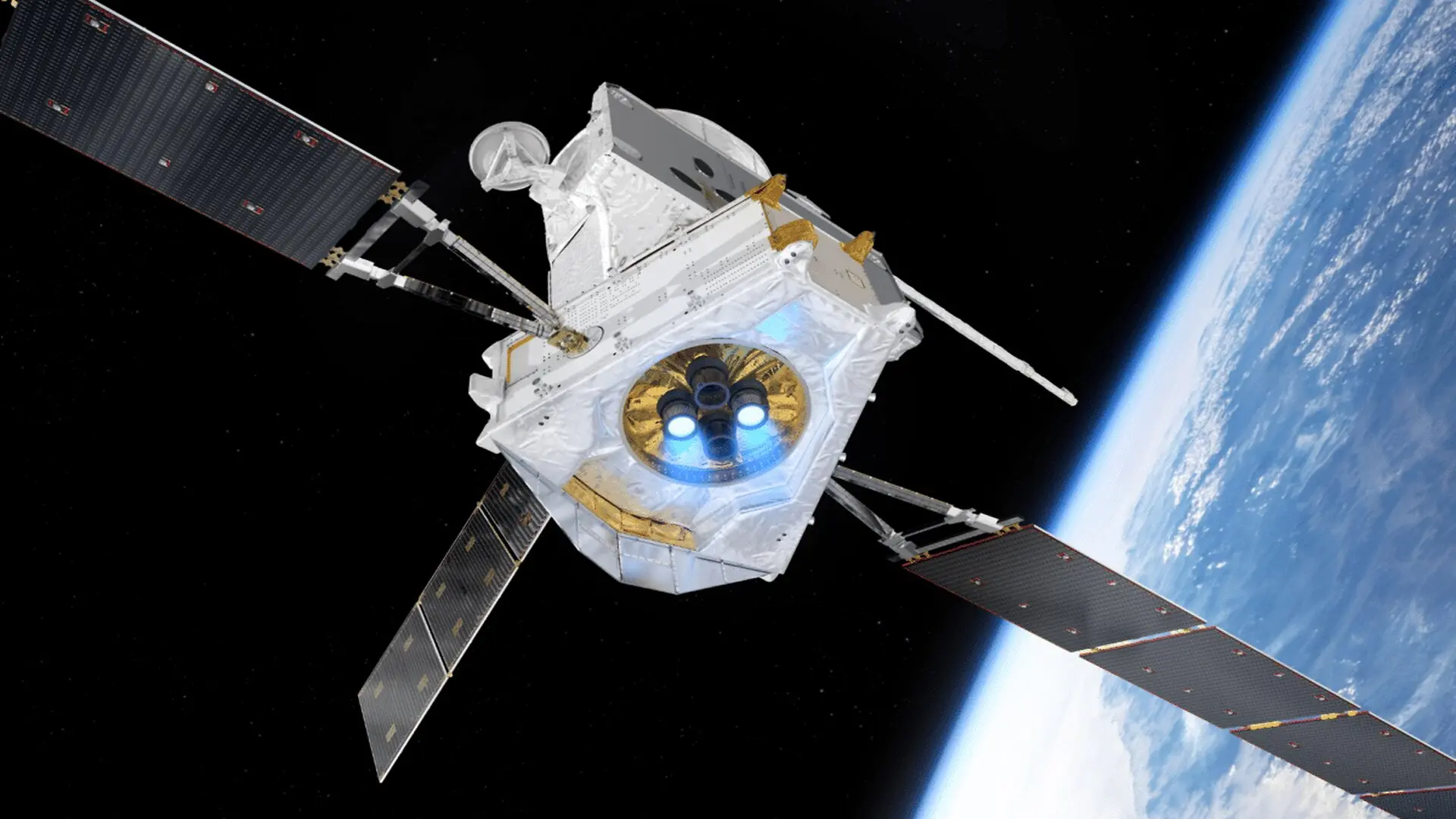
The BepiColombo mission, a joint venture led by the European Space Agency (ESA), is entering a pivotal stage as it inches closer to Mercury. After a multi-year trek through the inner solar system, the spacecraft is now preparing to transition into a complex orbital phase that promises to unlock the secrets of the Sun’s closest neighbor. This milestone marks the start of a deep-dive investigation into the planet’s surface, magnetic field, and the volatile gases that comprise its thin atmosphere.
Navigating the Sun’s Extreme Backyard
Operating near Mercury is widely considered one of the most grueling tasks in planetary science. The probe must withstand a punishing environment where temperatures fluctuate between a freezing -180°C and a scorching 450°C. Beyond the thermal extremes, the spacecraft faces solar radiation levels roughly ten times more intense than those found in Earth’s orbit.
According to ESA mission manager Santa Martinez, reaching the planet is only half the battle. ESA engineers have spent years designing specialized shielding and navigation protocols to ensure the probe survives these harsh conditions. Because a direct route would require prohibitive amounts of fuel, the team relied on a series of gravity-assist maneuvers—utilizing the gravitational pulls of Earth, Venus, and Mercury—to gradually shed velocity and settle into the correct approach trajectory.
“Mercury is a challenging destination. It’s very difficult to reach, it’s very difficult to operate there,” said Santa Martinez, ESA mission manager.
“The main two aspects are really the extreme temperatures that go from -180 to 450°C, and also the solar radiation, which can be up to ten times what we have on Earth.”
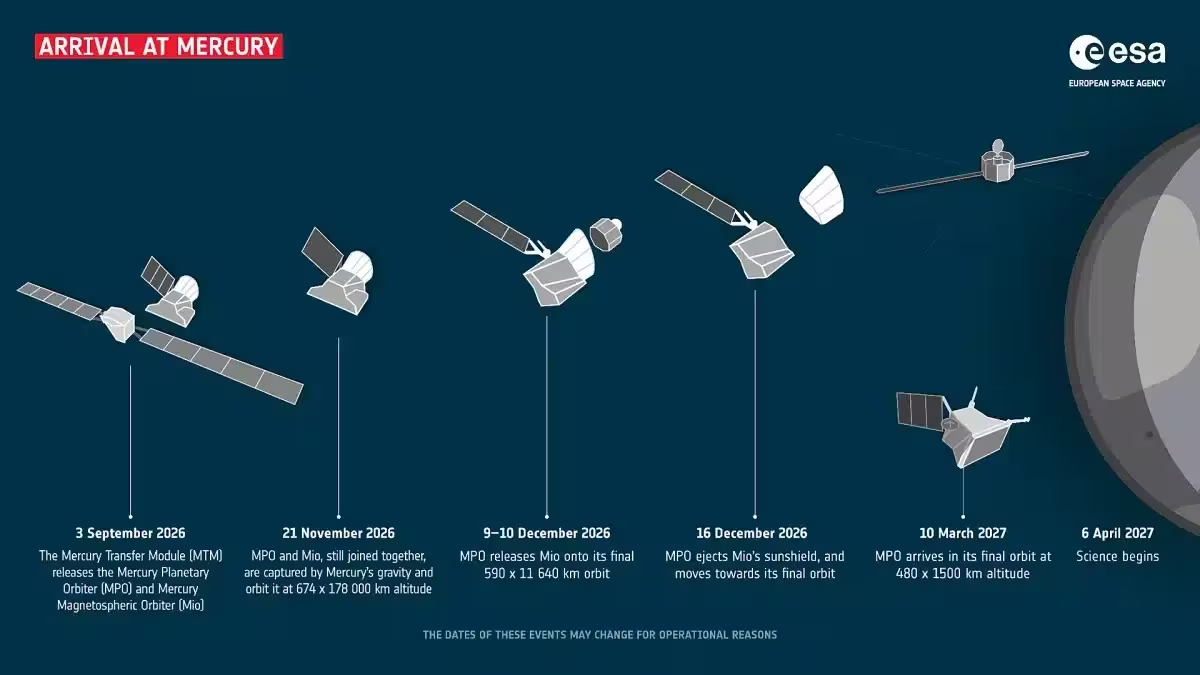
Operational Precision and Flexibility
The mission architecture consists of two distinct units: the European Mercury Planetary Orbiter and Japan’s Mercury Magnetospheric Orbiter, known as Mio. Eventually, these two segments will separate to conduct synchronized scientific observations. Until then, flight teams must contend with the complexities of managing a linked system that includes passive components with limited independent control.
ESA Flight Dynamics Manager Frank Budnik noted that the team is preparing for the unpredictable. While the mission is guided by rigorous pre-planned sequences, the reality of deep-space operations often necessitates on-the-fly adjustments to account for navigation variances or unexpected spacecraft performance.
“It’s a fully passive module, so you cannot control it, you cannot manoeuvre it,” explains ESA’s Flight Dynamics Manager Frank Budnik.
“We know that it’s likely that not everything is going to go according to the nominal plan,” she said. “But we are ready, we are flexible, and we need to be prepared for the unexpected.”
Uncovering the Mysteries of the Innermost Planet
Once settled into its operational orbit, BepiColombo will begin its primary scientific mission. A key target is Mercury’s exosphere, an incredibly thin layer of gas that is constantly bombarded by solar wind and influenced by surface geology. Scientists intend to “taste” these gases to determine their origins and how they change in real-time, providing a clearer picture of how the planet interacts with its volatile environment.
Researchers expect the mission to build upon the foundational data gathered by NASA’s Messenger probe. By offering a different perspective and significantly higher precision, BepiColombo is poised to refine our understanding of Mercury’s magnetic field and its unique, cratered geological history.
“Both spacecraft will be ‘tasting’ the gases that are surrounding Mercury, being able to tell us what gases are there, whether certain areas of the surface are giving off material and seeing how that changes over time as well,” Geraint Jones explains.
This article has been fact checked for accuracy, with information verified against reputable sources. Learn more about us and our editorial process.
Last reviewed on .
Article history
- Latest version
Reference(s)
- “Media briefing: BepiColombo's next milestone towards Mercury.” <https://www.esa.int/ESA_Multimedia/Videos/2026/08/Media_briefing_BepiColombo_s_next_milestone_towards_Mercury>.
Cite this page:
- Posted by Karan Das