Scientists Have Identified the Key Material Needed to Build a Real Space Elevator
A breakthrough in graphene-based materials is bringing the dream of a functional space elevator closer to becoming an engineering reality.
The long-standing vision of a space elevator is transitioning from the realm of science fiction to serious engineering discourse, spurred by a significant breakthrough in material science. Researchers have identified polycrystalline graphene as a viable candidate for the ultra-strong, lightweight tether required to anchor such a massive structure, potentially offering an alternative to traditional rocket-based orbital transport.
Engineering the Path to Orbit
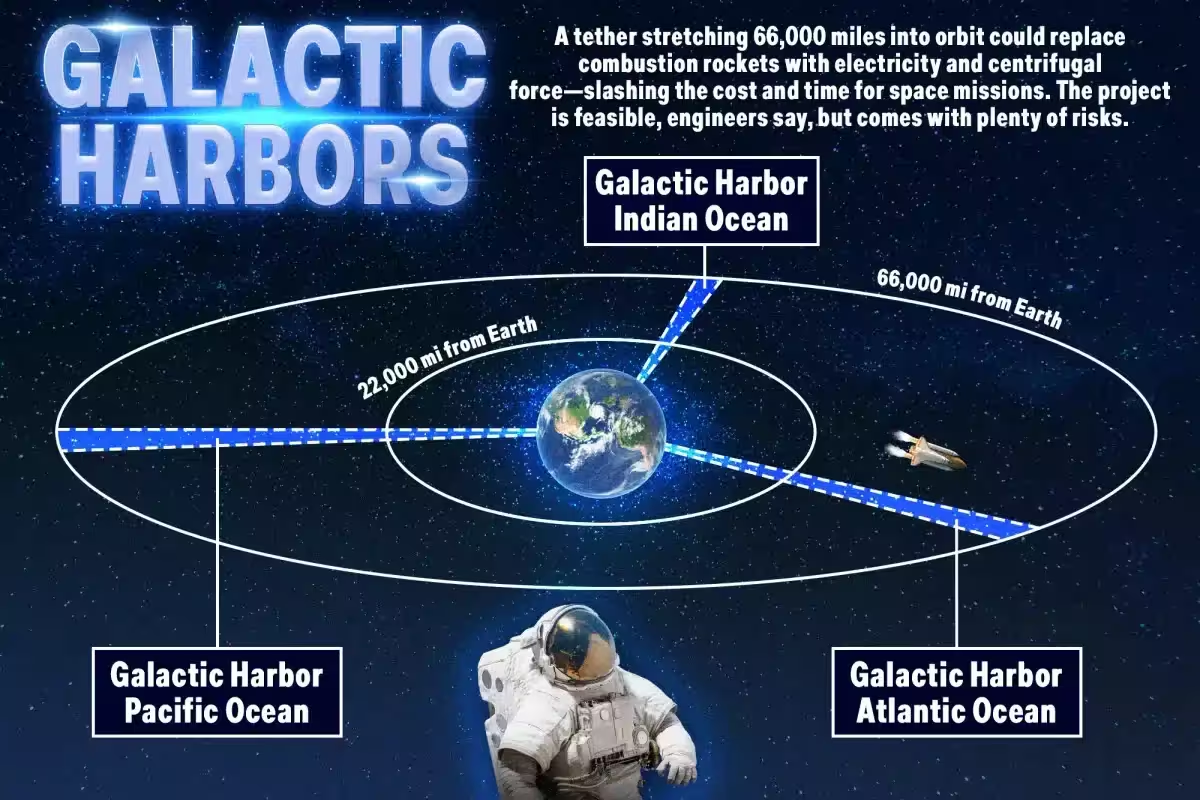
The proposed system would function as a permanent, electromagnetic bridge extending from a sea-based platform near the equator to a counterweight far beyond geostationary orbit. Instead of relying on volatile chemical propellants, the system would utilize mechanical climbers to ferry cargo and eventually passengers directly into space. By creating a continuous supply line, the elevator aims to shift space economics from expensive, one-off launches to a sustainable logistics network.
Graphene Breakthroughs
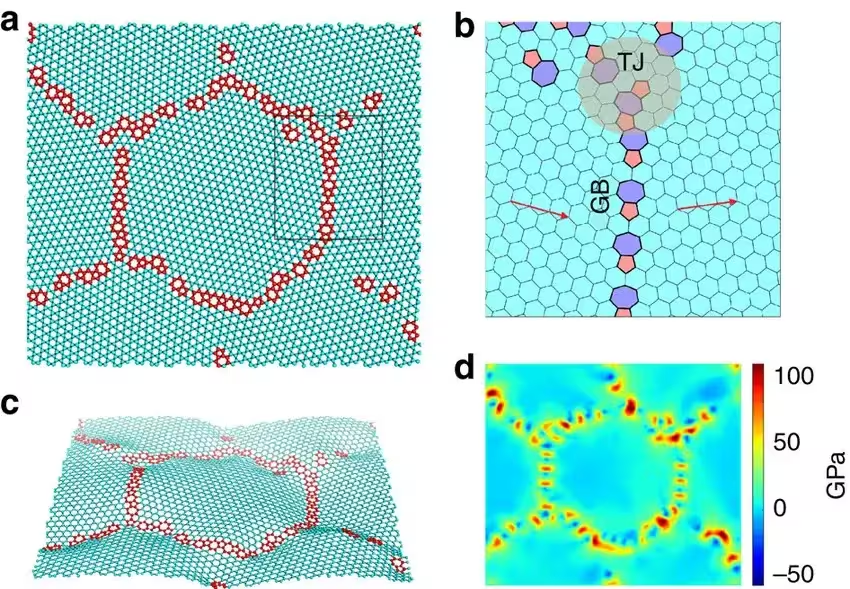
The primary barrier to this concept has always been the tether. It requires a material that possesses immense tensile strength while remaining thin and flexible enough to span roughly 100,000 kilometers. While single-layer graphene has shown theoretical promise, the practical challenge of manufacturing it at scale has been daunting. Recent progress involving polycrystalline graphene—structures composed of multiple crystalline domains—is changing the outlook.
According to the International Space Elevator Consortium (ISEC), the jump in material capabilities has been substantial. Engineers in South Korea have successfully produced a 1,000-meter-long strip of the material, suggesting that the industrial-scale production necessary for a planetary tether may finally be within reach. Peter Swan, president of ISEC, notes that the material’s durability is exceptional, citing its demonstrated ability to withstand ballistic impacts in experimental testing.
Operational Potential and Economic Realities
If realized, the elevator could drastically compress transit times for deep-space missions. ISEC projections suggest that cargo could reach the Moon in roughly 14 hours, with Mars transit times potentially dropping to between 61 and 120 days. Beyond speed, the environmental and economic impact of avoiding rocket launches—which are constrained by the “tyranny of the rocket equation”—could revolutionize interplanetary exploration.
However, the project faces formidable hurdles. Beyond the engineering of the tether, operators would need to mitigate the risks posed by orbital debris and coordinate with global satellite traffic. Financial analysts like Armen Papazian of the American University in Dubai emphasize that even with the necessary capital, the project would likely require decades of development. While ISEC estimates an initial price tag of $15 billion, this is dwarfed by the multi-hundred-billion-dollar investments expected for conventional lunar programs by 2030.
The current roadmap prioritizes a phased approach: focusing on robotic cargo logistics for the first decade, followed by the eventual integration of human transport. As the race to establish permanent lunar and Martian outposts intensifies, the space elevator remains an ambitious, yet increasingly plausible, candidate for the backbone of humanity’s future in space.
This article has been fact checked for accuracy, with information verified against reputable sources. Learn more about us and our editorial process.
Last reviewed on .
Article history
- Latest version
Reference(s)
- Moore, Chadwick. “First 'space elevator' — a 66,000-mile cable to the cosmos— closer than ever before as scientists make breakthrough.”, August 31, 2026 New York Post <https://nypost.com/2026/08/31/science/first-space-elevator-a-66000-mile-cable-to-the-cosmos-closer-than-ever-before-as-scientists-make-breakthrough/>.
Cite this page:
- Posted by Karan Das