China Delays Massive Chang’e 7 Moon Mission After Final Readiness Assessment
China has officially postponed its Chang’e 7 lunar mission, citing that the spacecraft is not yet ready for its scheduled launch window.
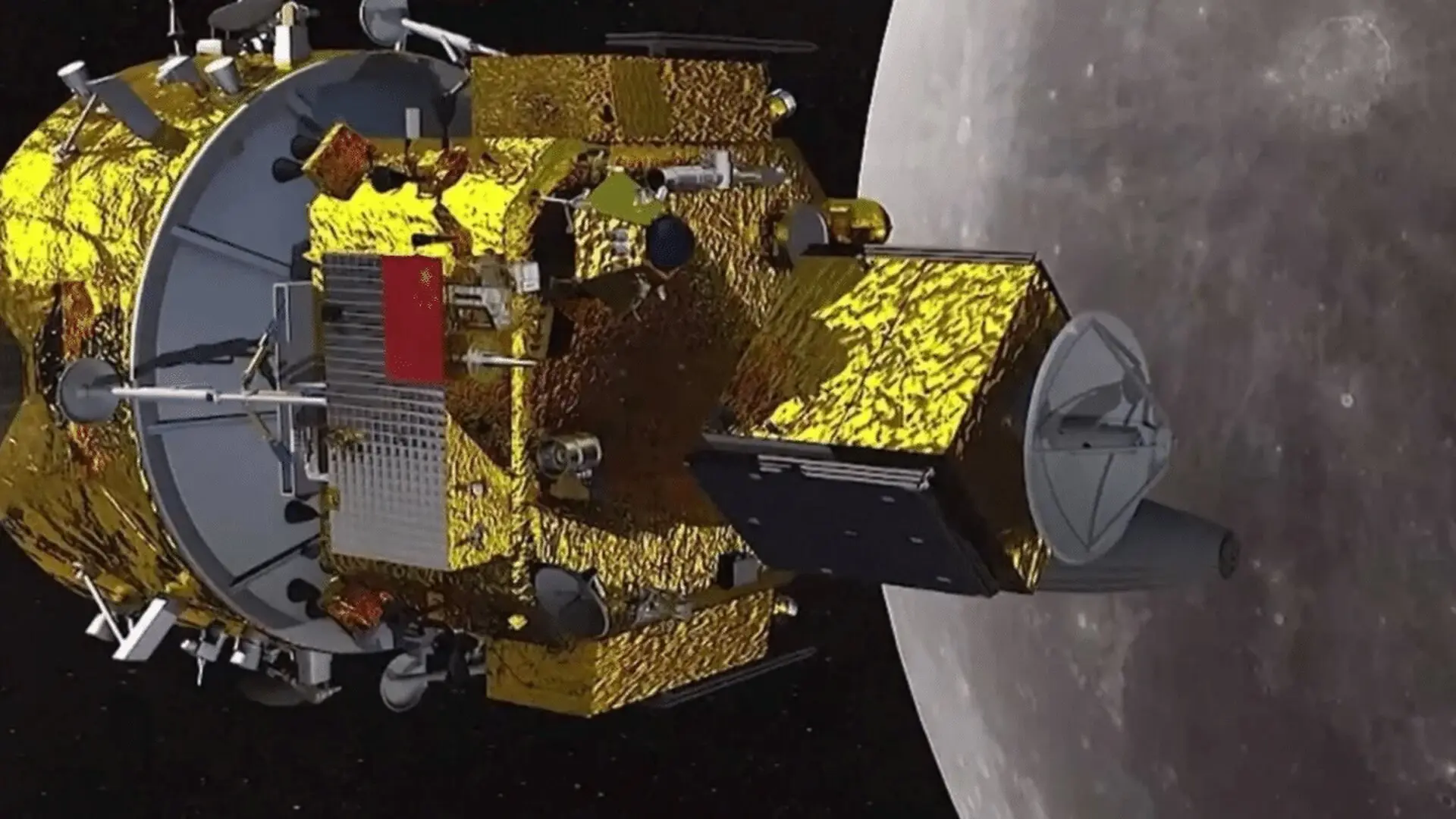
China has officially hit the pause button on its ambitious Chang’e 7 lunar mission, opting to scrap the scheduled launch window for this year. The decision marks a significant shift in the country’s space exploration timeline, prioritizing mission integrity over original deployment deadlines.
Strategic Postponement Prioritizes Operational Reliability
The decision to hold the mission follows a rigorous internal review process. According to reports from The Independent, Chinese space authorities concluded that the hardware and systems were not yet fully prepared to meet the stringent requirements necessary for a successful mission to the lunar south pole.
In an official statement regarding the postponement, officials emphasized a conservative approach to deep-space operations. They noted, “In keeping with the principle of proceeding prudently and reliably, and ensuring absolute success, after a comprehensive assessment it has been determined that the Chang’e 7 mission does not meet the conditions for launch and therefore cannot be carried out during the planned launch window this year.”
The Chang’e-7 lunar probe is scheduled for launch at an appropriate time, according to the China Manned Space Agency (CMSA).
— China Science (@ChinaScience) August 19, 2026
The combination of the Chang’e-7 lunar probe and the Long March-5 Y14 carrier rocket was transferred vertically on Wednesday to the launching area at the… pic.twitter.com/IncqYF9Jyu
Scientific Ambitions at the Lunar South Pole
Chang’e 7 is a cornerstone of China’s long-term lunar strategy. By targeting the lunar south pole, the mission aims to explore one of the most enigmatic and scientifically rich zones on the Moon. This region is of particular interest to global space agencies—including NASA—because its permanently shadowed craters are believed to harbor significant deposits of water ice. Harvesting such resources could prove vital for oxygen production, life support, and fuel synthesis for future crewed expeditions.
The mission architecture is notably complex, involving an integrated suite of an orbiter, a lander, a rover, and additional specialized exploration systems. Unlike earlier, more singular objectives in the Chang’e series—such as the landmark Chang’e 4 far-side landing or the Chang’e 5 sample return—this mission is designed as an expansive, multi-faceted scientific campaign.
Managing the Risks of Deep-Space Complexity
The postponement underscores the immense technical hurdles associated with contemporary lunar exploration. Navigating the rugged, high-latitude terrain of the lunar poles while contending with extreme thermal fluctuations and limited solar access requires precision engineering that leaves little room for error. By delaying the launch, China is choosing to mitigate the high risks of a potential failure that could stall the broader progress of its space program.
This cautious posture is becoming increasingly common as the international race to establish a permanent lunar footprint intensifies. As both state-run space agencies and commercial entities push to secure strategic footholds, the focus has shifted toward ensuring that complex, expensive equipment is battle-tested. While the delay is a setback for the current year, it provides the engineering teams with a crucial window to refine flight software and hardware, ultimately aiming for a higher probability of mission success when the probe eventually lifts off.
This article has been fact checked for accuracy, with information verified against reputable sources. Learn more about us and our editorial process.
Last reviewed on .
Article history
- Latest version
Reference(s)
- “https://twitter.com/ChinaScience/status/2089947166769082858/photo/1.” <https://t.co/IncqYF9Jyu>.
Cite this page:
- Posted by Karan Das