NASA May Reroute Artemis IV After Astronaut Warns South Pole Landing Is Too Risky
NASA rethinks Artemis IV moon approach after astronaut Victor Glover warns of safety risks for a south‑pole landing.

NASA’s roadmap to send humans toward the Moon’s south pole is now being questioned after Artemis II pilot Victor Glover suggested a more cautious first landing near the lunar equator. The conversation took place at a forum in Ames Research Center, where Glover argued that a step‑by‑step approach could enhance mission safety while allowing NASA to build experience before tackling the harsh polar environment.
Astronaut Calls for an Equatorial First Landing
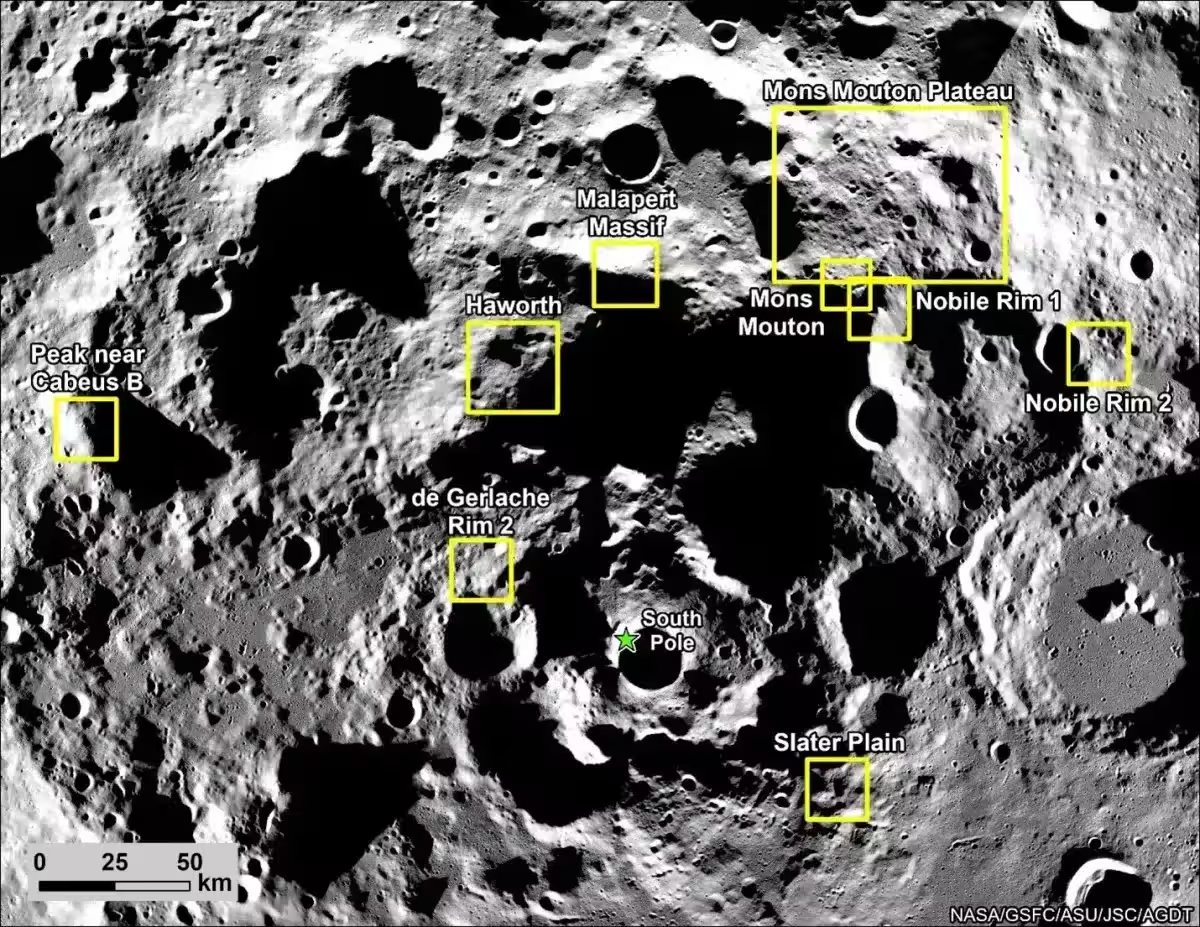
The Artemis program has zeroed in on the Moon’s south pole because permanently shadowed craters there are believed to hold water ice, a resource that could be turned into drinking water, radiation shielding, and rocket fuel. NASA sees the region as a cornerstone for a lasting lunar outpost that could pave the way for eventual crewed missions to Mars.
During the NASA Exploration Science Forum at Ames Research Center in California on July 21, Victor Glover—pilot of the Artemis II fly‑by—presented an alternative view on how the agency should stage its next crewed landings. The astronaut questioned whether the south pole should be the first destination for returning crews.
“I think we need to be realistic and work our way to the south pole, and maybe not try to go there first,” Glover said.
Glover’s reasoning focuses on operational familiarity. An equatorial landing would occur in daylight, provide stronger line‑of‑sight communications, and simplify contingency planning. He contends that early Artemis surface missions should prioritize reliability and crew safety while NASA perfects the technologies needed for more demanding polar operations.
Equatorial Sites Could Speed Emergency Returns
A key concern for Glover is the difficulty of evacuating astronauts from the south pole if a serious medical issue arises after touchdown. NASA’s current plan relies on a near‑rectilinear halo orbit (NRHO) linked to the Gateway station, which dictates specific return windows.
Because the NRHO trajectory follows a long cycle, opportunities to lift off from the surface and rendezvous with the orbiting spacecraft may only appear at set intervals, potentially leaving a crew stranded for several days during a medical emergency.
“You’re stuck for a week,” Glover said. “That’s a big deal to me, and I don’t like that plan … The equator gives me opportunity to save that person.”
Glover maintains that a landing near the lunar equator would open more frequent launch windows and simplify emergency planning. He believes that once NASA has proven reliable operations at an equatorial site, the agency can advance toward the south pole with greater confidence.
“If you want to go fast, go familiar … If we want to land soon, familiar, daylight, equator,” Glover argued.
The discussion reflects a wider debate within the space community about whether Artemis should rush to the most scientifically valuable region or first establish a safer operational baseline before expanding toward the poles.
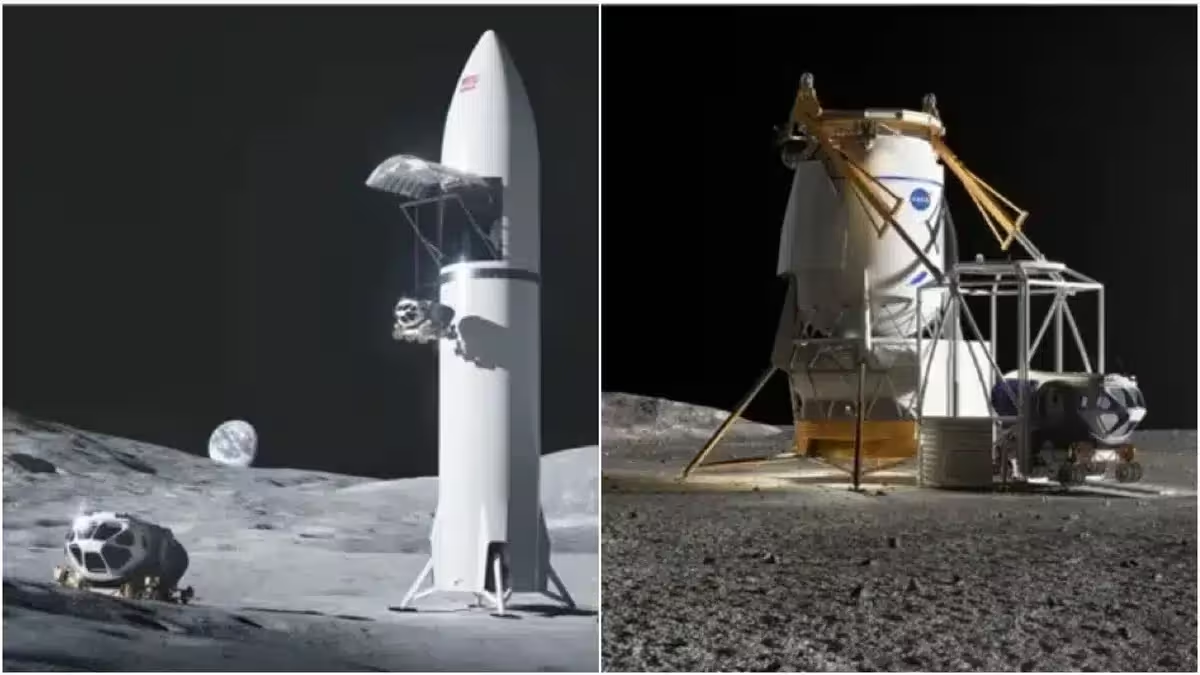
SpaceX Proposes a Streamlined Artemis IV Trajectory
The conversation about Artemis IV arrives as NASA and its commercial partners continue to refine the mission’s architecture. The original plan centered on the Gateway station and NRHO operations, but recent shifts emphasize surface exploration and reduced schedule risk.
SpaceX, a primary lunar transport partner, has examined an alternative profile that would sidestep some NRHO complexities by docking its Starship lander with Orion in Earth orbit before the translunar injection.
During a June event focused on Artemis III, Jessica Jensen, SpaceX Vice President of Customer Operations and Integration, outlined the updated concept developed jointly with NASA.
“We have an updated plan with NASA that includes docking Starship with Orion in Earth orbit instead of NRHO, and then we use Starship to actually do the translunar injection with Orion attached,” Jensen said, highlighting benefits that echo Glover’s safety concerns.
The revised trajectory could cut the amount of propellant required for complex orbital transfers and provide a more direct path to the Moon, thereby lowering schedule risk as NASA readies future crewed missions.
“The crew can also abort off the lunar surface nearly any time, versus waiting up to days from NRHO,” Jensen said. “In addition to improving crew safety, these new Artemis IV orbits also significantly lower the amount of propellant Starship needs to aggregate in space, since we now just have a more direct route to the moon, and this lower schedule risk overall.”
Balancing Ambition, Safety and Resource Access
The ongoing debate underscores the competing priorities shaping NASA’s return to the Moon. A landing at the south pole would place crews near water‑ice deposits that could support a sustainable outpost, while an equatorial site offers a less demanding environment for early missions.
International rivalry adds pressure. China’s lunar program has already achieved robotic landings and sample‑return missions, and it has announced intentions to send astronauts to the Moon before 2030, prompting NASA to maintain momentum.
As Artemis IV planning progresses, NASA will need to weigh scientific objectives, geopolitical dynamics and astronaut safety. Whether the agency opts for a rapid push toward the pole or a more measured approach will shape the future of human exploration beyond Earth orbit.
This article has been fact checked for accuracy, with information verified against reputable sources. Learn more about us and our editorial process.
Last reviewed on .
Article history
- Latest version
Cite this page:
- Posted by Karan Das