Scientists Just Used AI to Build Molecular Scissors That Could Destroy Undruggable Diseases
New AI models are revolutionizing biotechnology by designing custom enzymes and molecular scissors with unprecedented atomic precision.
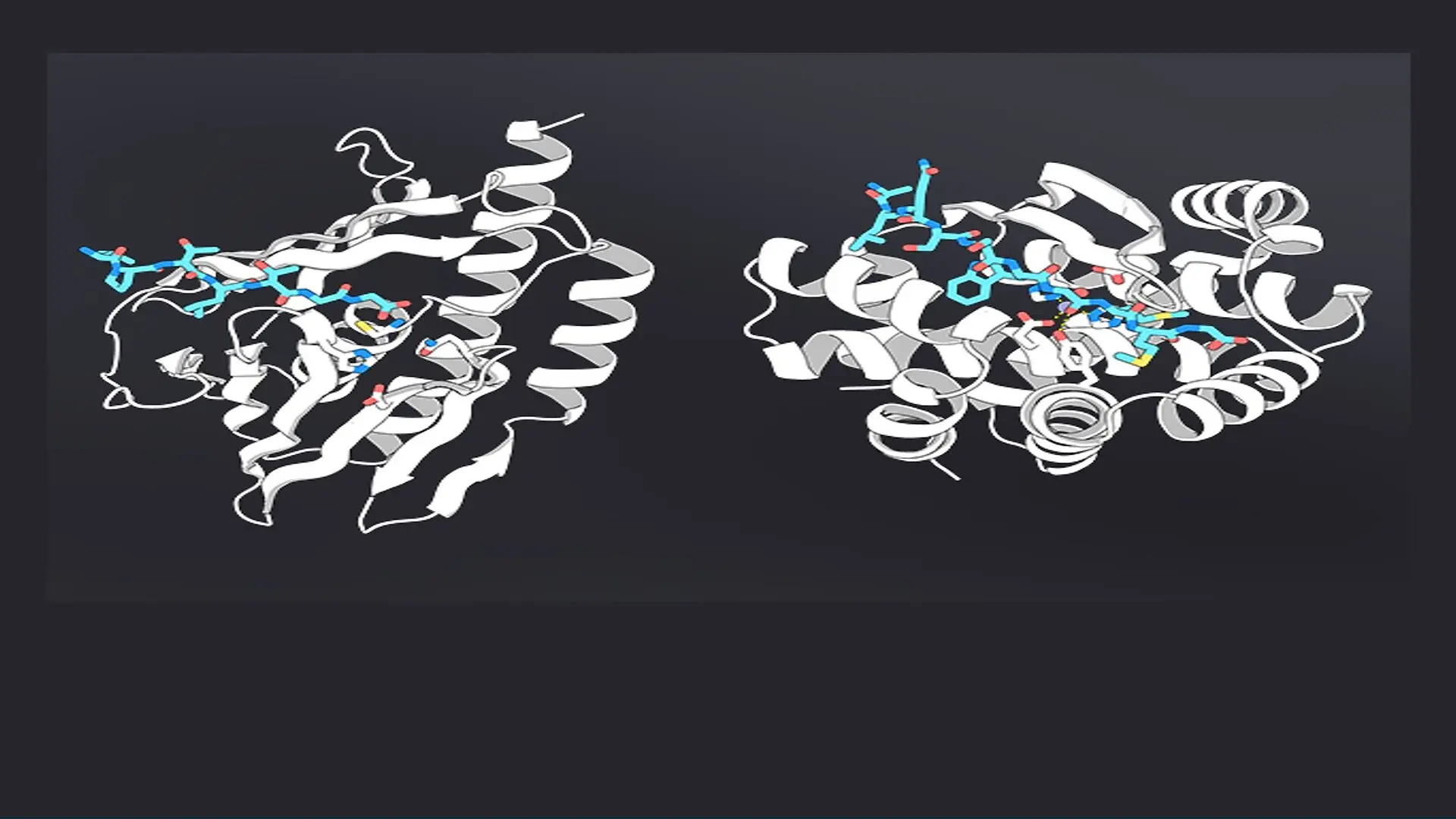
The landscape of synthetic biology is undergoing a significant transformation as researchers move beyond merely predicting protein shapes toward engineering complex molecular machinery from scratch. A team led by Nobel laureate David Baker at the University of Washington has unveiled a suite of advancements that enable the creation of bespoke enzymes, including molecular scissors capable of targeting proteins previously deemed impossible to address with traditional medicine.
The research, detailed in twonew papers, focuses on the design of synthetic proteases—enzymes that function as precision blades to sever specific chemical bonds. Unlike simpler proteins, enzymes are dynamic, shape-shifting structures that require an intricate choreography of atomic alignment to catalyze reactions. By successfully creating synthetic zinc and cysteine proteases, the researchers have demonstrated that artificial intelligence can now handle the delicate requirements of these complex biological tools.
In laboratory settings, these synthetic proteases showed promising efficacy against proteins linked to debilitating conditions, including amyotrophic lateral sclerosis (ALS) and Alzheimer’s disease. When introduced into cellular environments, the enzymes functioned as molecular switches, capable of activating specific proteins and modulating cell behavior through targeted incisions. Anqi Chen, a lead author on the study, noted that these proteases represent only the beginning of a broader capability to dismantle disease-associated proteins.
A key advantage of protease-based therapeutics lies in their efficiency. Because each enzyme molecule can perform multiple cutting actions, they can potentially achieve therapeutic effects at significantly lower doses than antibodies, which typically bind to a single target and occupy space without catalytic turnover.
Atomic-Level Precision in Protein Engineering
While these initial results mark a breakthrough, the researchers acknowledge that designing highly active enzymes remains a formidable challenge. To bridge the gap between structural design and functional performance, the Baker lab has introduced RFdiffusion3, a generative AI model that operates with unprecedented granularity. By shifting the focus from amino acid sequences to individual atomic coordinates, the tool allows for the fine-tuned construction of protein backbones and side chains.
RFdiffusion3 functions by mapping the structural properties of amino acids through a simplified yet accurate representation of their atomic components, much like tracking motion-capture markers to reconstruct complex movement. This shift allows scientists to specify the exact positions of atoms within a catalytic core, ensuring that the resulting enzyme is optimized for its intended chemical reaction.
In initial trials, the tool demonstrated its capability by designing enzymes to neutralize paraoxon, a hazardous environmental pollutant. Furthermore, the model was used to create zinc proteases designed to target proteins associated with chronic organ and nerve diseases. With a hit rate of approximately 58 percent in the latter test, the model is already outperforming previous generations of design software.
The ability to design proteins in the context of their environment—accounting for interactions with DNA, RNA, and other small molecules—marks a pivot toward a more holistic approach to synthetic biology. As the field matures, this atomic-scale precision promises to unlock a new era of therapeutics, environmental sensors, and synthetic biological components, effectively expanding the boundaries of the protein universe.
This article has been fact checked for accuracy, with information verified against reputable sources. Learn more about us and our editorial process.
Last reviewed on .
Article history
- Latest version
Reference(s)
- Choi, Hojae. “De novo design of cysteine proteases - Nature.”, October 14, 2026, pp. 1-9. Nature, doi: 10.1038/s41586-026-11143-w. <https://www.nature.com/articles/s41586-026-11143-w>.
- Chen, Anqi. “Computational design of metalloproteases - Nature.”, October 14, 2026, pp. 1-10. Nature, doi: 10.1038/s41586-026-11167-2. <https://www.nature.com/articles/s41586-026-11167-2>.
- Butcher, Jasper., et al. “Atomic functional site scaffolding in biopolymers with RFdiffusion3.” Science, October 15, 2026 American Association for the Advancement of Science (AAAS), doi: 10.1126/science.aeh2982. <https://www.science.org/doi/10.1126/science.aeh2982>.
Cite this page:
- Posted by Hassan Raza