James Webb Telescope Reveals Strange Gemstone Like Bulges On A Marshmallow Planet
The James Webb Space Telescope has revealed surprising new details about a massive, ultra-light exoplanet twice the size of Jupiter.
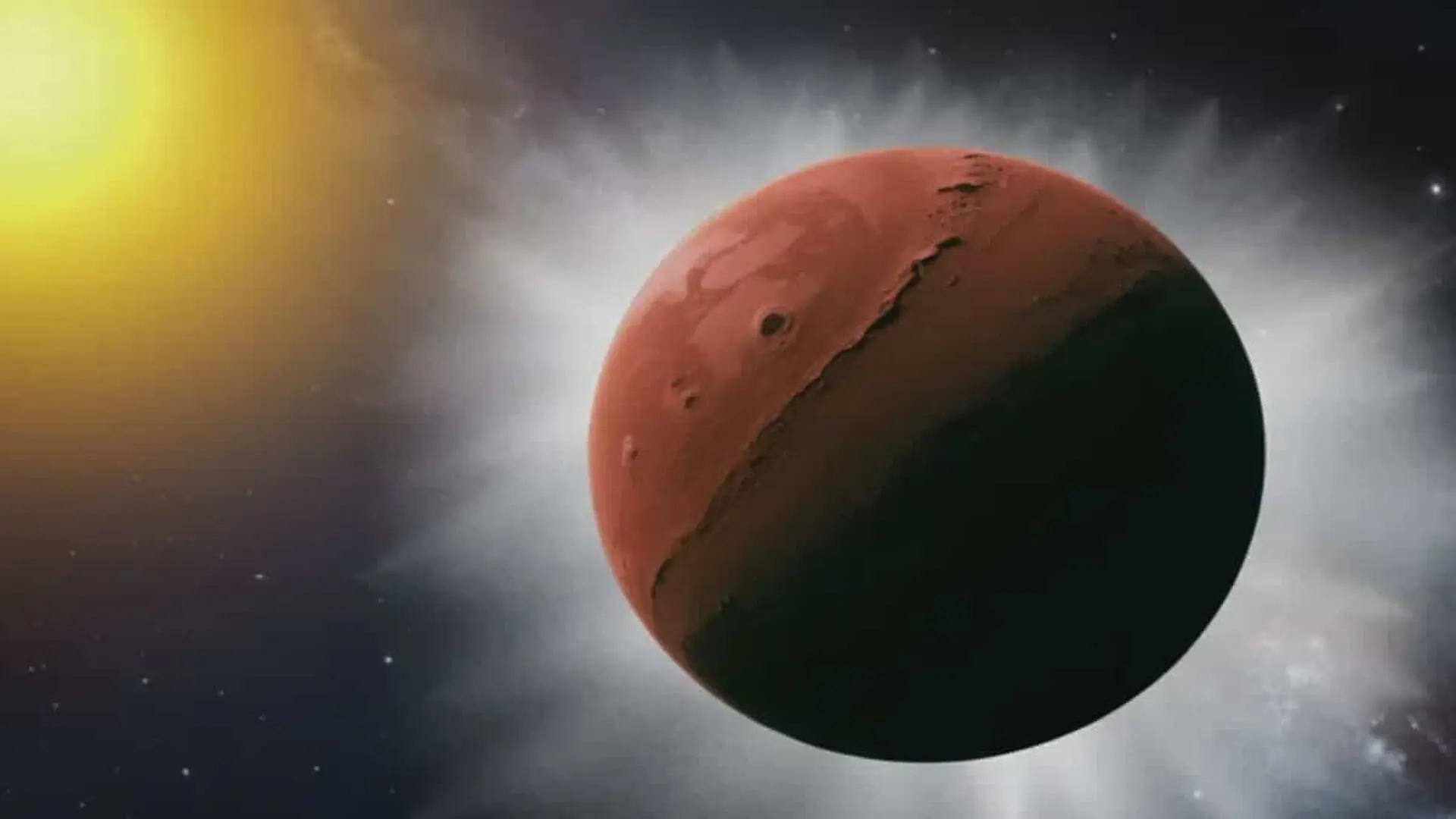
The James Webb Space Telescope has unveiled a startling feature of the distant exoplanet WASP-17b, revealing an atmosphere that appears studded with jewel-like bulges. Located 1,300 light-years away, this gas giant is already known for its extreme physical properties, possessing roughly 80% of Jupiter’s mass while sprawling to twice its size. This unusual combination results in an incredibly low density, earning it a reputation among researchers as a planet with the consistency of a marshmallow.
Advanced Imaging Reveals Atmospheric Asymmetry
WASP-17b is a classic “hot Jupiter” that completes a full orbit around its host star in less than four Earth days. Because the planet is tidally locked, one hemisphere remains in permanent, sweltering daylight, while the other is shrouded in eternal darkness. This extreme environmental contrast drives complex circulation patterns, as heated gases shift between the two sides.
To better understand these dynamics, researchers employed a new analytical approach known as “transmission strings.” Traditional observation methods typically treat an exoplanet’s atmosphere as a uniform ring, averaging measurements taken during a transit. By contrast, the transmission strings method allows scientists to map the atmosphere in three dimensions by measuring varying distances from the center of the planet to its outer edge at different points.
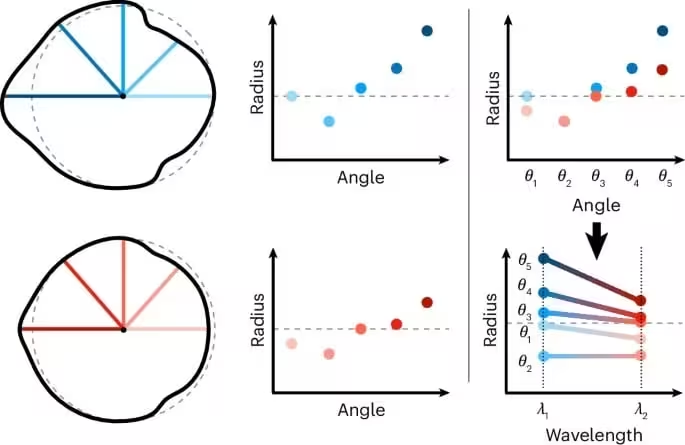
“Rather than assuming your atmosphere is a circle with the same radius all the way around, our technique allows you to pull out different distances from the center to the edge of the planet,” said Lili Alderson of Cornell University. This granular data revealed that the atmosphere is far from circular, featuring distinct, raised sections—or “gemstones”—that form where hot winds expand the atmosphere as they cross toward the nightside.
Validating Theoretical Models of Exoplanetary Weather
The findings, published on October 14 in the journal Nature Astronomy, confirm that the temperature and chemical variations across the planet align closely with established theoretical models. Observations of the morning and evening limbs of the planet showed significant temperature disparities that matched predictions with striking accuracy.
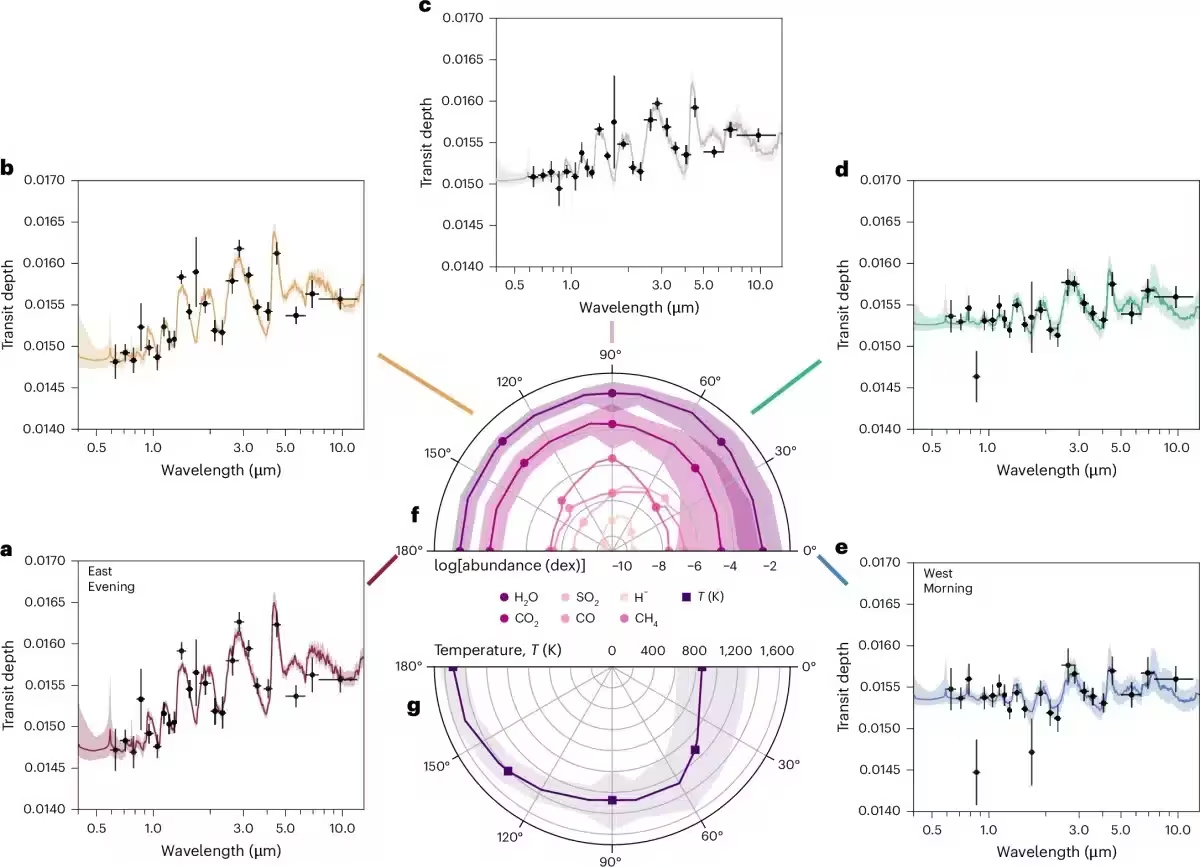
For the research team, this study serves as a critical proof of concept. By moving beyond simplified, two-dimensional atmospheric models, astronomers are gaining a more realistic view of how these distant worlds function as three-dimensional entities. As Alderson noted, seeing these predictions verified by real-world data marks a significant step forward in our understanding of planetary systems.
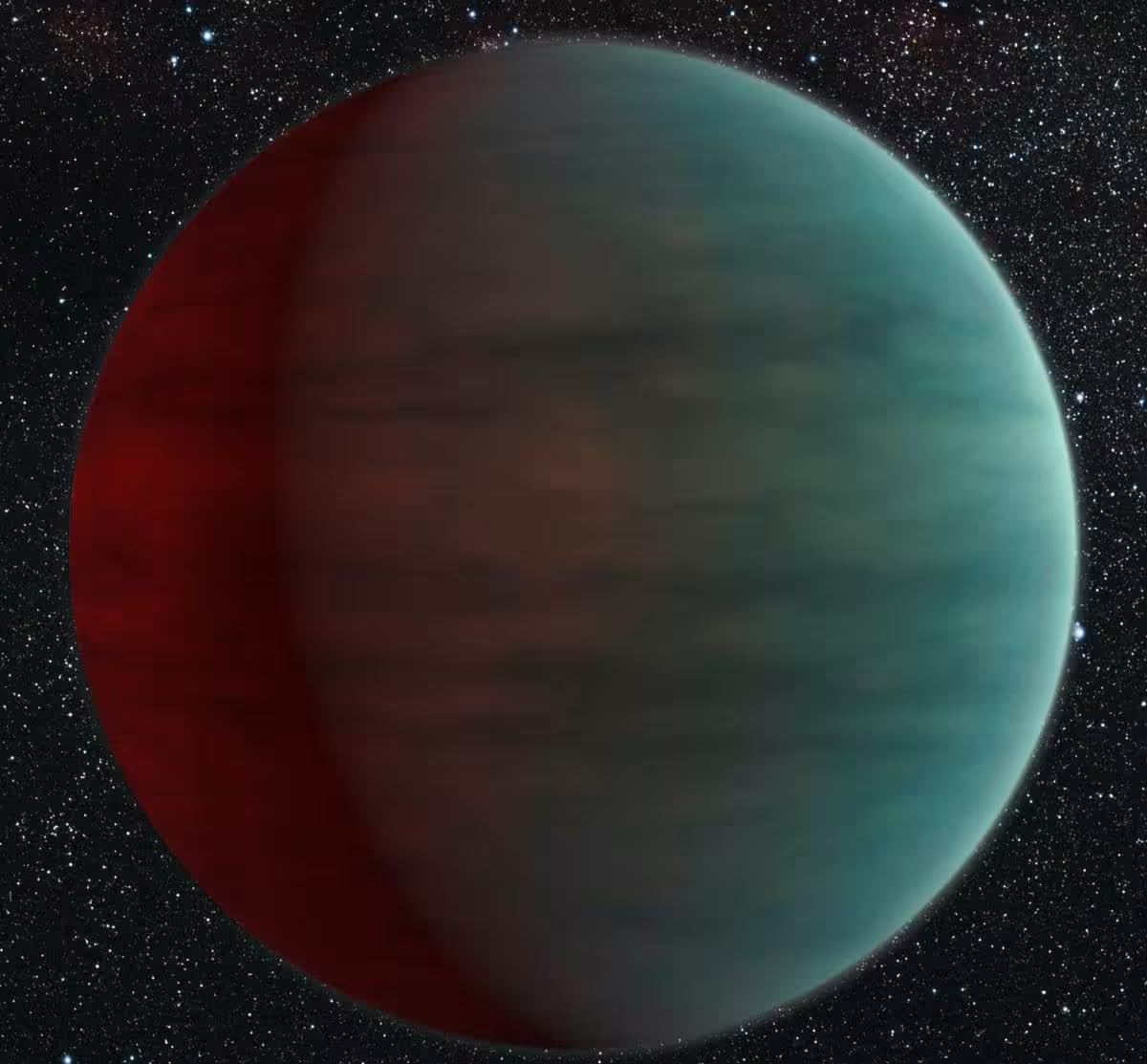
“This is proof of concept that planets are, in fact, 3D objects, and that, consistently, as they go around their star, what we predict should be happening is happening. To move beyond computational exercises and see it for real is a different matter,” Alderson said.
This article has been fact checked for accuracy, with information verified against reputable sources. Learn more about us and our editorial process.
Last reviewed on .
Article history
- Latest version
Reference(s)
- “Lili Alderson.” <https://astro.cornell.edu/lili-alderson>.
- Alderson, Lili. “A spatial map of the atmospheric limb of a hot Jupiter - Nature Astronomy.”, October 14, 2026, pp. 1-12. Nature, doi: 10.1038/s41550-026-02986-4. <https://www.nature.com/articles/s41550-026-02986-4>.
Cite this page:
- Posted by Karan Das