Scientists Uncover Switch‑Off Signal That Predicts Solar Cycle Strength Up To Seven Years Early
Scientists discover a solar turning point that could forecast space‑weather conditions years ahead of the Sun’s next activity peak.
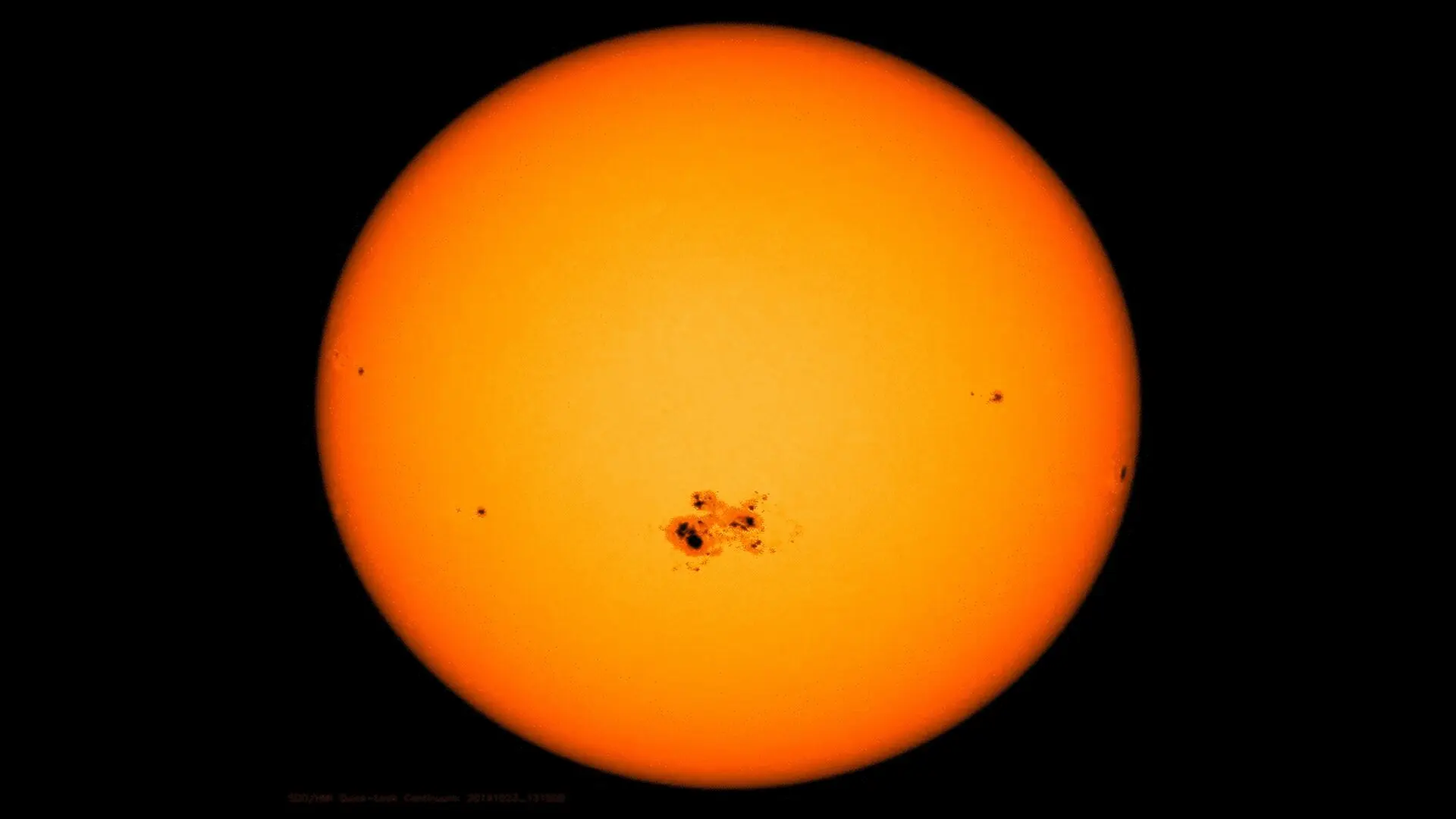
A team of astronomers has unveiled a technique that can signal the strength of the Sun’s upcoming activity cycle years before the peak arrives, according to findings shared at a Royal Astronomical Society gathering. The approach hinges on a newly recognized “switch‑off” moment in solar behavior, offering a potential seven‑year lead time for space‑weather forecasting.
Extended Forecasting Through a Solar “Switch‑Off” Indicator
The Sun follows an approximately 11‑year rhythm driven by its magnetic field, with sunspot counts rising and falling as the cycle progresses. Sunspots mark regions that can unleash solar flares and coronal mass ejections, bursts that may disrupt satellites, navigation, communications and power grids on Earth.
Historically, predicting how vigorous a given cycle will be has been challenging because each cycle displays its own quirks. Conventional methods often wait until the quiet solar minimum before offering stronger estimates.
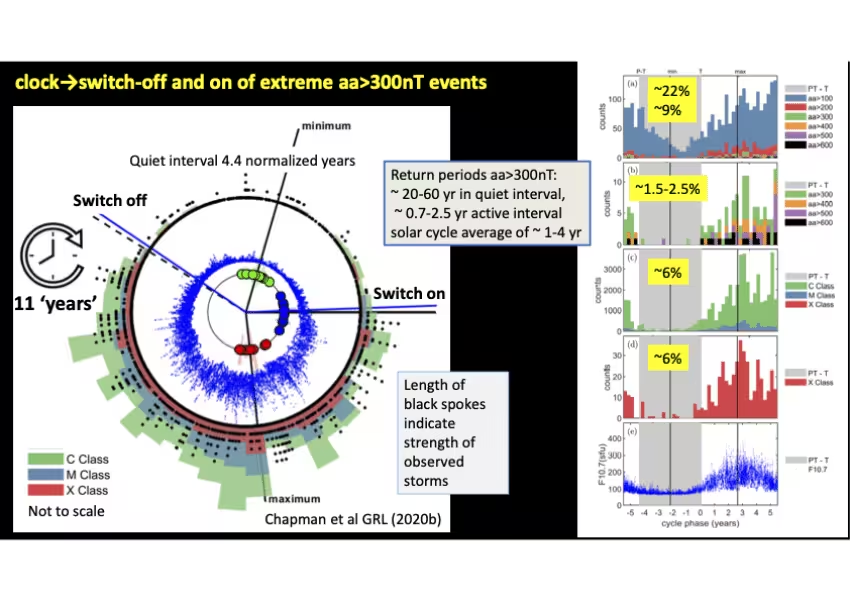
Researchers at the University of Warwick, led by Professor Sandra Chapman of the Centre for Fusion, Space and Astrophysics, identified a specific stage when the most extreme space‑weather events abruptly cease. This “switch‑off” point appears at a comparable phase in every cycle and encodes information about the forthcoming cycle’s intensity.
Chapman’s group previously introduced the “sunclock,” a tool that translates the Sun’s irregular activity onto a uniform timeline. By applying this framework, they uncovered patterns that remain hidden in traditional solar‑cycle metrics.
How the Switch‑Off Signal Improves Early Predictions
The method concentrates on the sunspot count present at the switch‑off stage. A clear relationship emerges between that figure and the peak sunspot number expected in the next cycle.
Chapman emphasized that the Sun does not simply drift into calm before reigniting activity. “We have found that the most extreme space‑weather phenomena shut down abruptly at a specific point in every solar cycle. Recognizing that moment gives us a new way to anticipate how active the next cycle will be,” she said.
Preliminary estimates for Solar Cycle 26 suggest a moderate peak, with sunspot numbers likely to hover between 100 and 120. This range aligns closely with the recent Solar Cycle 25, or could sit slightly below it. The projection remains provisional because the definitive switch‑off point for the current cycle has yet to be observed.
A more accurate assessment is expected once Solar Cycle 25 reaches its own switch‑off phase, at which time direct measurements will replace projected timings.
Real‑World Test: Solar Cycle 25’s Surge
The approach gained credibility after the team used it to forecast that Solar Cycle 25 would exceed many earlier estimates. As the cycle approached its maximum, it delivered several major solar storms.
In May 2024, a series of intense geomagnetic disturbances struck Earth after large sunspot groups emitted powerful solar material. Between May 10 and 13, the resulting storms ranked among the strongest geomagnetic events recorded in more than two decades.
These disturbances sparked vivid auroral displays, with the Northern Lights visible far south of their typical range, including parts of the United Kingdom. The episodes underscored how quickly solar changes can cascade through Earth’s space environment.
The research was presented at the Royal Astronomical Society’s National Astronomy Meeting in Birmingham, where scientists discussed the potential of the new technique to enhance long‑term space‑weather readiness.
Improved forecasts could allow satellite operators, power‑grid managers and communication providers to plan for periods of heightened solar activity, granting them valuable time to assess risks and adjust operations.
Implications for Understanding the Solar Dynamo
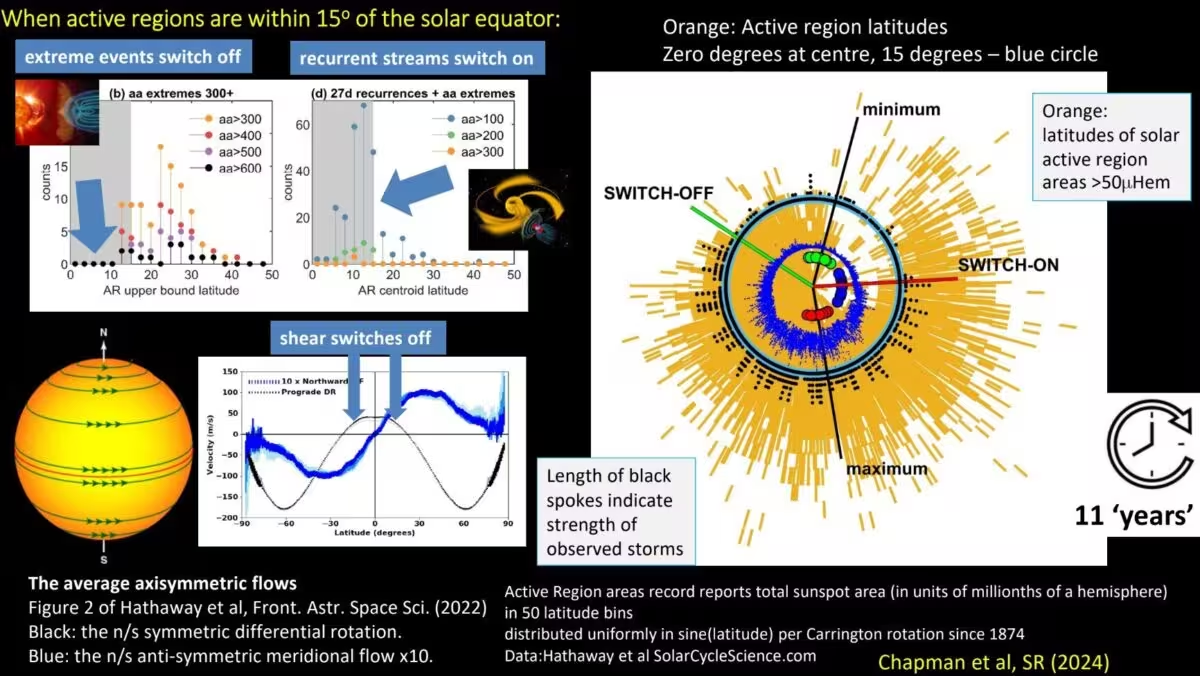
Beyond forecasting, the findings shed light on the solar dynamo—the internal mechanism that generates the Sun’s magnetic field and drives the long‑standing cycle of sunspot emergence.
The team proposes that the switch‑off stage marks the moment when magnetic conditions shaping the next cycle begin to solidify. Grasping this transition could refine theoretical models of solar magnetic evolution.
Chapman noted, “We are about two years away from the switch‑off point for the current Solar Cycle 25. At present we must estimate its timing, but once we reach it we can rely on observations alone to deliver a far more precise prediction for Solar Cycle 26.”
She added, “That will still give us roughly seven years of warning regarding the likely strength of the cycle.”
Ongoing monitoring of Solar Cycle 25 will test the robustness of the switch‑off relationship. If the correlation persists, the method could become a cornerstone for anticipating solar activity well before peaks materialize.
This article has been fact checked for accuracy, with information verified against reputable sources. Learn more about us and our editorial process.
Last reviewed on .
Article history
- Latest version
Reference(s)
- “NAM 2026: How the Sun goes to 'sleep' could reveal future space weather when it wakes.”, July 19, 2026 The Royal Astronomical Society <https://www.ras.ac.uk/news-and-press/research-highlights/nam-2026-how-sun-goes-sleep-could-reveal-future-space-weather>.
Cite this page:
- Posted by Karan Das