NASA’s Moon Base Will Be Bigger Than Any City on Earth, Artemis Plans Reveal
Explore NASA’s Artemis program’s vision for a permanent lunar south pole settlement with advanced rovers drones and moon base
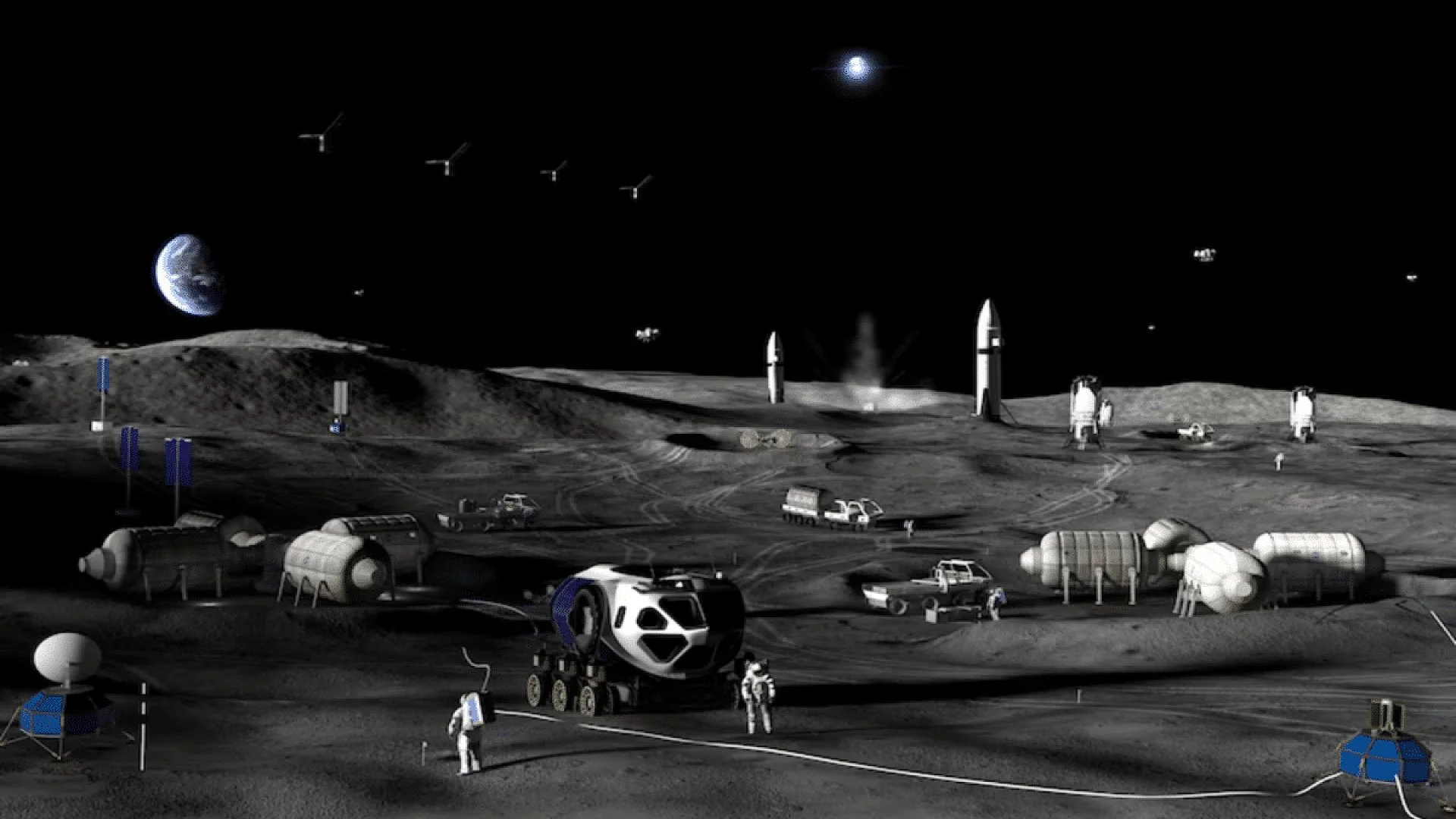
NASA is mapping out a permanent settlement on the Moon, outlining a multi‑phase plan to build a large‑scale outpost near the lunar south pole as part of the Artemis program. The agency says the effort will span the next decade, laying the groundwork for continuous human presence on Earth’s nearest neighbor.
Blueprint for a Lunar Metropolis
Carlos García‑Galán, who leads NASA’s Moon Base program, described a concept that stretches over hundreds of square miles, with a network of habitats, power stations and logistical hubs all supporting an enduring foothold on the Moon. “Our goal is to create a sprawling complex that can sustain a permanent lunar community,” he told reporters on May 26. The chosen site lies close to the south pole, where permanently shadowed craters are believed to contain significant deposits of water ice – a resource that could be harvested for life‑support and fuel.
Architect Nujoud Merancy highlighted the need to balance scientific, technical and terrain constraints. “No single location meets every requirement,” she explained, noting that the design must accommodate everything from solar exposure to safe distances for radiation‑shielding power plants.
“So, you’ll have the habitats on the tops of the hills where they get sunlight,” Merancy said. “Power systems — nuclear systems — need to be a kilometer or more away for the radiation protection, so all of these things, when you start putting them together, end up sprawling a little bit more like a city as you start building it out.”

Credit: NASA
Surveying the South‑Pole Frontier
The lunar south pole remains one of the Moon’s least charted regions, with rugged terrain and extreme temperature swings demanding detailed reconnaissance. García‑Galán noted that “exploring multiple sites will let us optimize both scientific return and long‑term viability.” To that end, NASA intends to deploy small hopping robots called MoonFall drones, which will map terrain, flag scientifically interesting zones and delineate the future base footprint.
China has announced its own ambition to land astronauts on the Moon by 2030, prompting U.S. officials to stress the importance of moving quickly. “I think it’s important for us to get there first,” NASA Administrator Jared Isaacman said, adding that the United States will respect the Outer Space Treaty while pursuing its own objectives.
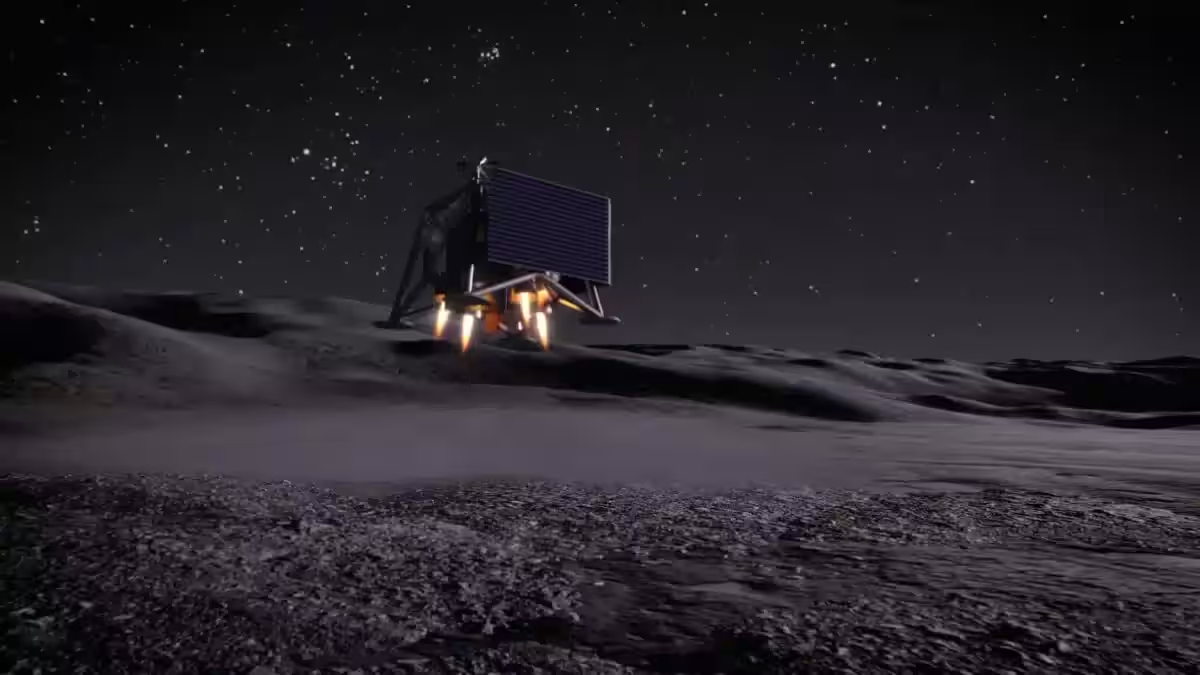
Artist’s rendering of a MoonFall drone operating near the lunar South Pole.
Image Credit: NASA
Robotic Vehicles Paving the Way
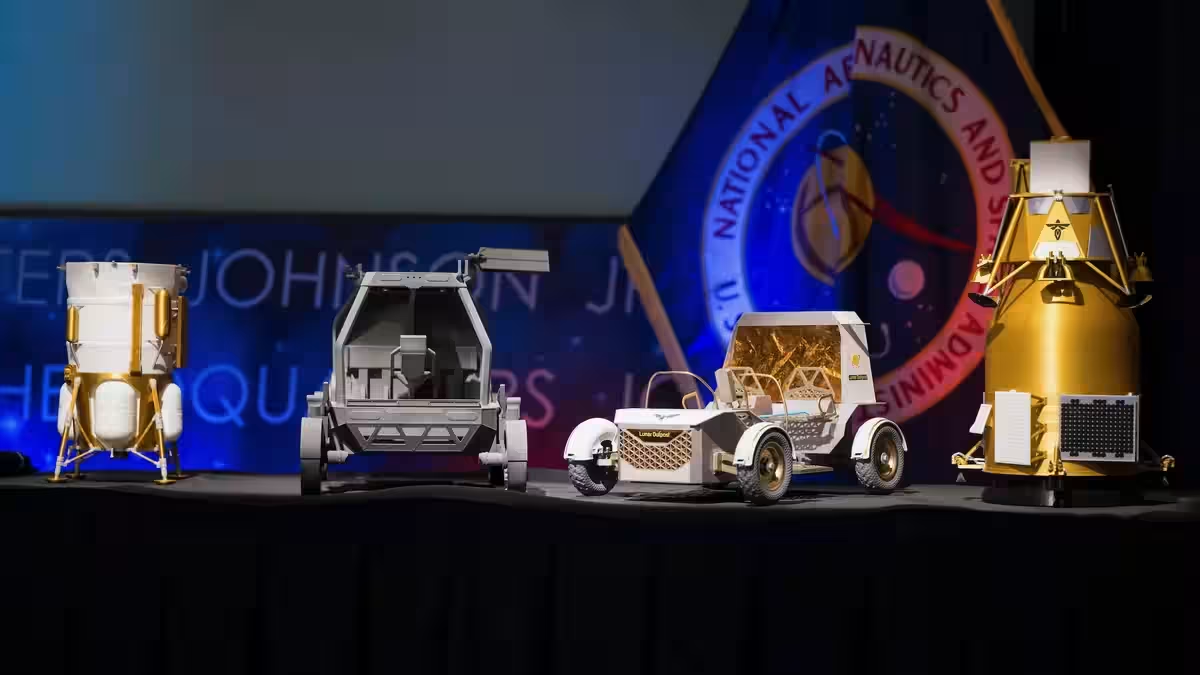
Beyond the hopping drones, NASA is contracting private firms Astrolab and Lunar Outpost to build large lunar terrain vehicles (LTVs). These rovers will travel the surface autonomously, gathering data and delivering cargo before crewed missions arrive. Blue Origin will launch the rovers aboard its Blue Moon lander, with the first deliveries slated for the Artemis 4 window around 2028.
Designed for both remote control from Earth and on‑site autonomy, the vehicles will serve as the backbone of the initial infrastructure, enabling safe habitats, power distribution and scientific experiments.
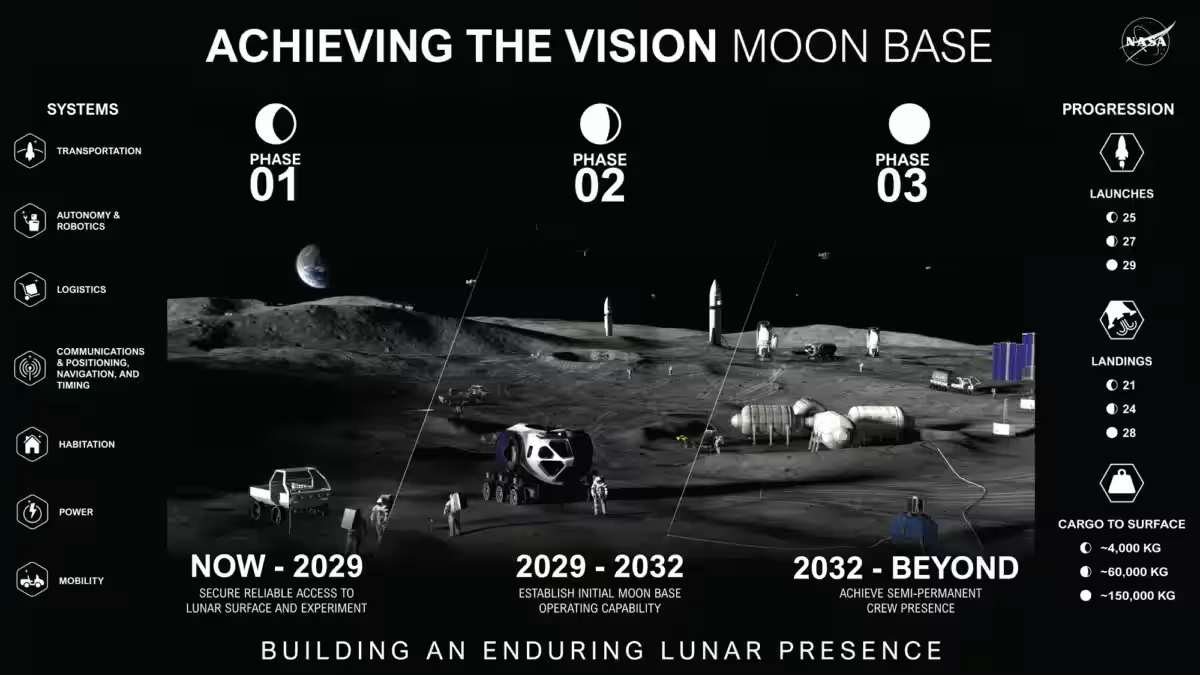
Three‑Stage Roadmap to a Permanent Outpost
NASA’s construction plan unfolds in three distinct stages. The first phase, running through 2029, focuses on data gathering and establishing reliable surface access. The second phase (2029‑2032) will bring the base to an operational status, while the third phase, beginning in 2032, aims to support a semi‑permanent crew presence. Each step builds on lessons from preceding Artemis missions, ensuring a gradual, risk‑aware expansion.
Credit: NASA
“The Moon Base will be America’s and humanity’s first outpost on another celestial world,” Isaacman emphasized. “Every mission, crewed or uncrewed, will teach us how to build, live and operate in one of the most demanding environments imaginable.”
This article has been fact checked for accuracy, with information verified against reputable sources. Learn more about us and our editorial process.
Last reviewed on .
Article history
- Latest version
Reference(s)
- “NASA Provides Update on Moon Base Rovers, Landers, Missions - NASA.” NASA <https://www.nasa.gov/news-release/nasa-provides-update-on-moon-base-rovers-landers-missions/>.
Cite this page:
- Posted by Karan Das