Scientists Tracked a Dead Whale 1,288M Deep in the Pacific for 15 Years, and Found a Hidden City Still Feeding on Its Bones Today
Deep-sea life thrives on whale bones, revealing new ecosystems and rewriting deep-ocean survival rules
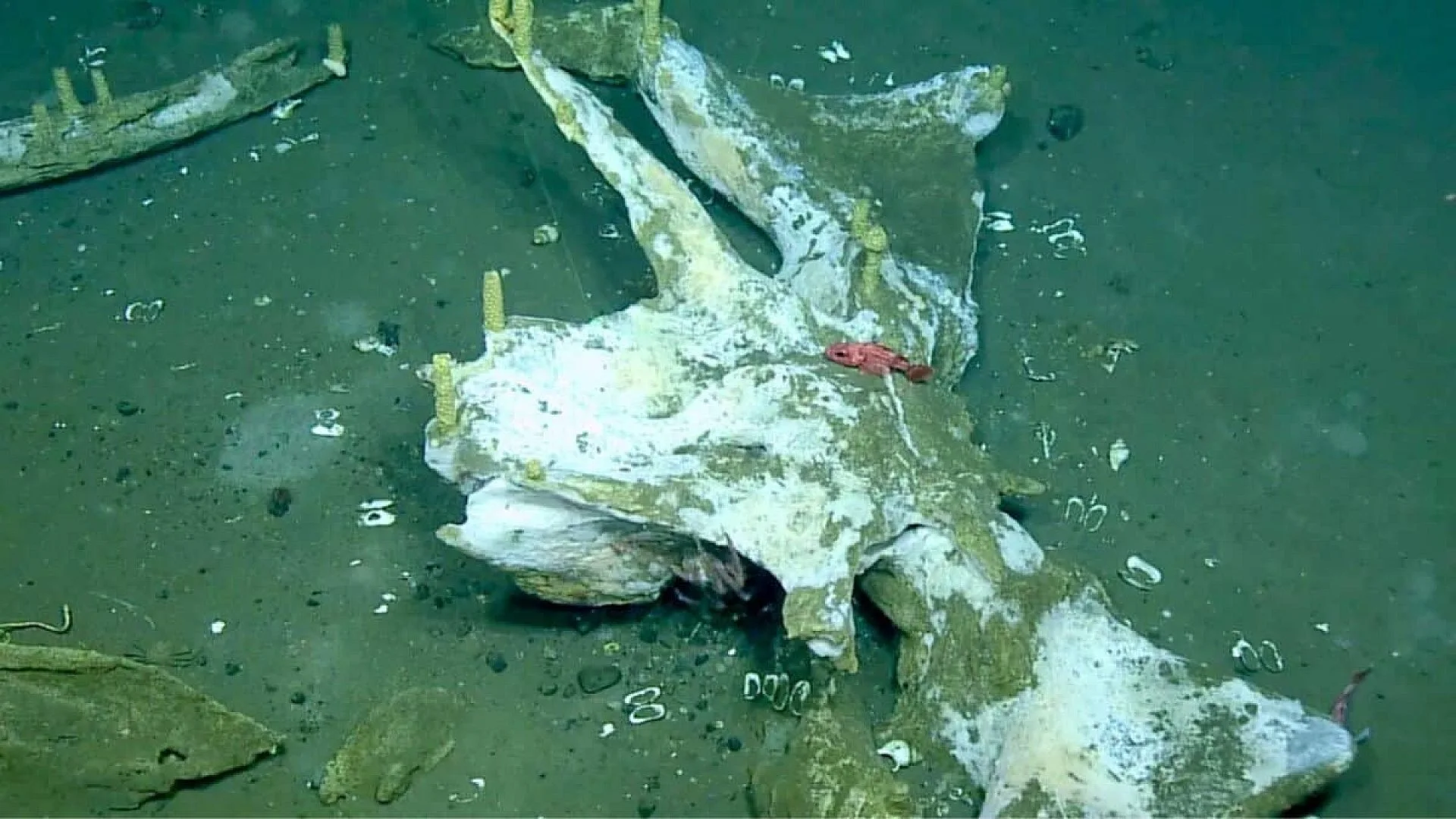
In 2009 a team surveying the Clayoquot Slope off Vancouver Island encountered a massive whale skeleton lying on the ocean floor at a depth of 1,288 meters. With most of the soft tissue already removed, the scientists saw an opportunity to follow the long‑term fate of the bones. Over the next 15 years they revisited the same remains, and the findings, now published in Frontiers in Marine Science, reveal a deep‑sea ecosystem that has resisted disappearance.
The animal, identified as either a blue or fin whale, had already entered the initial phases of decomposition when first recorded. The new research concentrates on the subsequent “sulphophilic” stage, which has now persisted for at least 21 years and may continue for another ten, overturning earlier assumptions that this phase would resolve more rapidly.
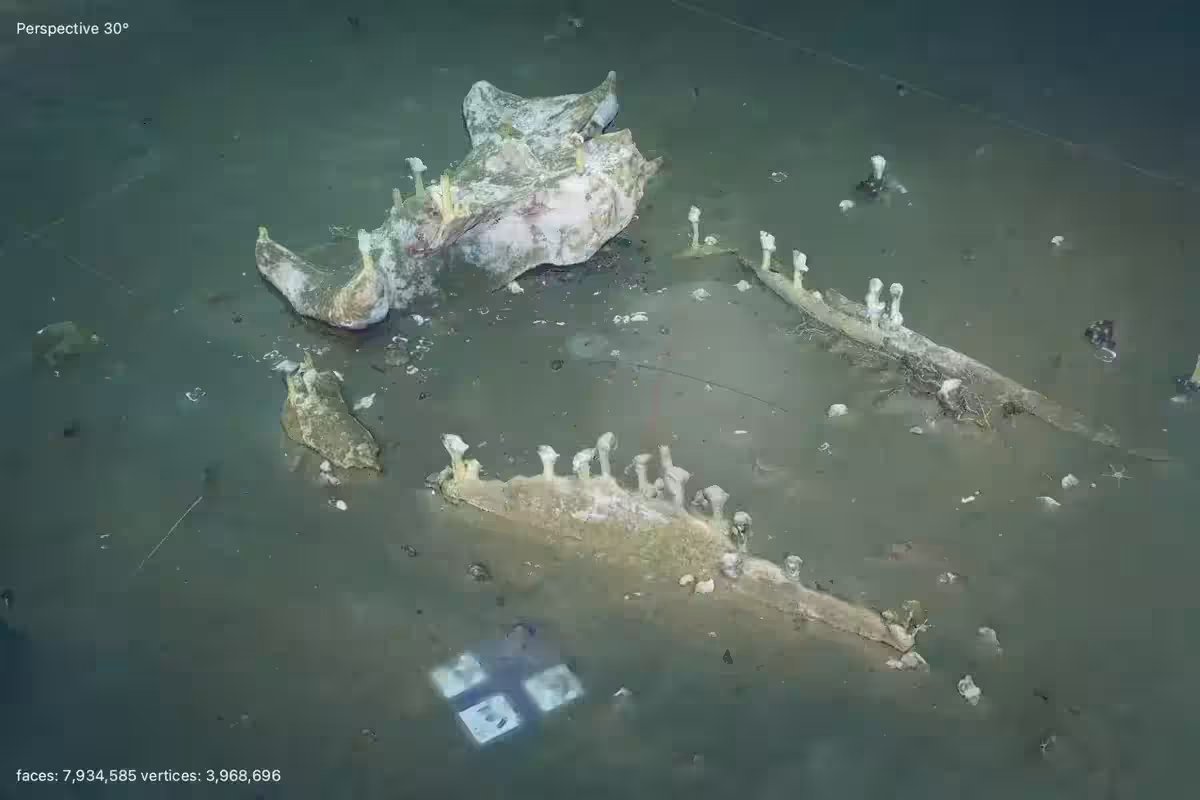
“The unique aspect,” explained Fabio De Leo of the University of Victoria, “is that, unlike previous investigations, we could repeatedly image the same skeleton with centimeter‑scale photogrammetry.”
Only Minor Bone Loss Recorded Over Eleven Years
A joint effort by Ocean Networks Canada and the University of Hawaii at Manoa deployed remotely operated vehicles to the site on four occasions between 2012 and 2024. Video footage was converted into detailed 3D reconstructions, allowing the team to quantify bone degradation with centimeter accuracy.
The skull and a series of 23 caudal vertebrae proved remarkably durable. Between 2012 and 2023 the vertebrae shortened by an average of just 1.4 percent, while a mandible fragment lost 7.8 percent of its length. The authors note in Frontiers in Marine Science that the cranium and vertebrae are likely to “persist for at least another decade.”
While the bones remained largely intact, the resident fauna shifted. In 2009, Osedax worms—often called zombie worms—had burrowed into the skeleton. By the most recent survey no individuals were observed, leading researchers to suggest that the worms exhausted available nutrients or were displaced by expanding microbial mats. Their niche was taken over by a full sulphophilic assemblage, including 33 vestimentiferan tube worms (Lamellibrachia cf. barhami), living vesicomyid clams, provannid gastropods, and over 100 empty clam shells.
Bacterial Mats Thickened Over the Decade
The sulphophilic phase relies on bacteria that break down lipids stored within the bones and release sulfur compounds, which in turn support a range of specialist organisms. Between 2012 and 2023 the coverage of these bacterial mats grew measurably: on the vertebrae it rose from 39.9 percent to 48.6 percent, and on the skull bones from 27.0 percent to 30.7 percent. The increase was statistically significant, indicating that the sulphophilic community was still expanding during the study period.
“This demonstrates that species adapted to whale falls will always find a new habitat when their larvae disperse, because other carcasses remain in the same sulphophilic stage,” De Leo added, citing a report in Discover Wildlife.
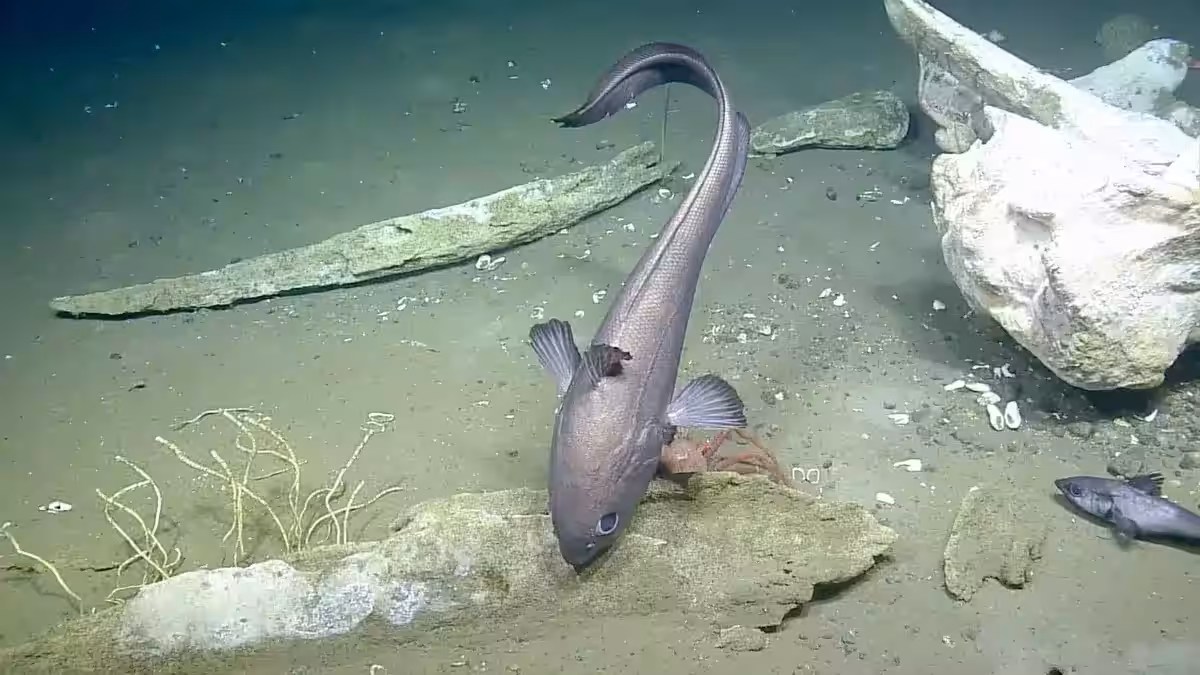
By 2023 the researchers documented 31 megafaunal taxa within a one‑meter radius of the skeleton. The most abundant were the gastropods Neptunea cf. amianta, with 74 individuals observed. Thirty‑six tower‑shaped Neptunea egg masses covered the skull, suggesting the bones served as a nursery. A year later, egg masses remained in roughly the same locations, though fewer were present and no adult snails were seen on top of them.
Expanding Low‑Oxygen Zones Raise Concerns
The Clayoquot Slope lies within a persistent Oxygen Minimum Zone, where dissolved oxygen averages 0.46 milliliters per liter. Researchers note that such low‑oxygen zones are widening and shoaling in the Northeast Pacific as the climate warms, deepening by up to three meters per year in certain areas.
When oxygen concentrations fall below 0.33 milliliters per liter—a threshold documented for Osedax survival elsewhere—the bone‑eating worms may be unable to colonize new whale falls, potentially reshaping the entire decomposition process and reducing species diversity. The current site remains above that critical level, and the disappearance of Osedax here is not attributed to oxygen stress.
The sulphophilic phase at this whale fall has now exceeded two decades, mirroring timelines observed off southern California. Lipid‑rich skull and vertebrae continue to break down slowly, bacterial mats keep expanding, and chemosynthetic fauna remain active. The study, appearing in Frontiers in Marine Science, indicates that this deep‑sea community will likely persist for many more years.
This article has been fact checked for accuracy, with information verified against reputable sources. Learn more about us and our editorial process.
Last reviewed on .
Article history
- Latest version
Reference(s)
- Leo, Fabio. “High resolution seafloor photogrammetry indicates long-term persistence of a sulphophilic community on a whale fall in the NE Pacific.” Frontiers in Marine Science, vol. 13, March 27, 2026, pp. 1770207 Frontiers, doi: 10.3389/fmars.2026.1770207/full. <https://www.frontiersin.org/journals/marine-science/articles/10.3389/fmars.2026.1770207/full>.
- Pilcher, Helen. “Scientists found a dead whale 1,288m deep in the Pacific. They filmed it for 20 years – and discovered this.”, May 26, 2026 Discover Wildlife <https://www.discoverwildlife.com/animal-facts/marine-animals/whale-fall-sulphophilic-community>.
Cite this page:
- Posted by Karan Das