Stunning Gemini Image Shows Butterfly Galaxies Merging and a Supernova Lighting Their Collision
Astronomers discover two galaxies locked in a cosmic dance, revealing a rare galactic interaction.
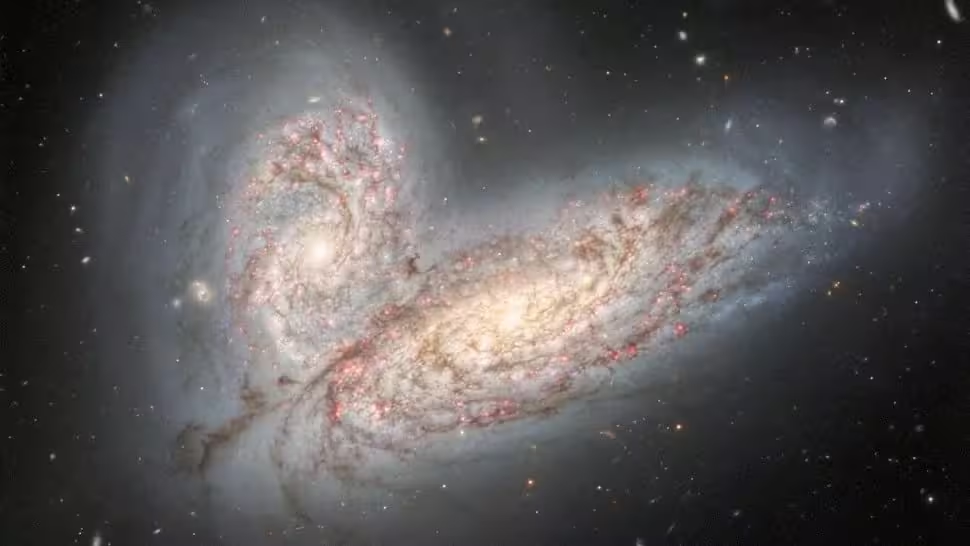
A fresh view from the Gemini North telescope showcases two spiral galaxies in the Virgo Cluster that are beginning to intertwine. The pair, catalogued as NGC 4568 and NGC 4567, lie roughly 60 million light‑years from our planet and are now dubbed the “Butterfly galaxies” because of their overlapping silhouettes.
Early‑Stage Tidal Dance in the Virgo Cluster
Although the two disks still display their classic spiral arms, the mutual gravitational pull is already stretching and distorting their structures. Current measurements place the galactic cores about 20 000 light‑years apart, a span comparable to three‑quarters of the distance from Earth to the Milky Way’s centre.
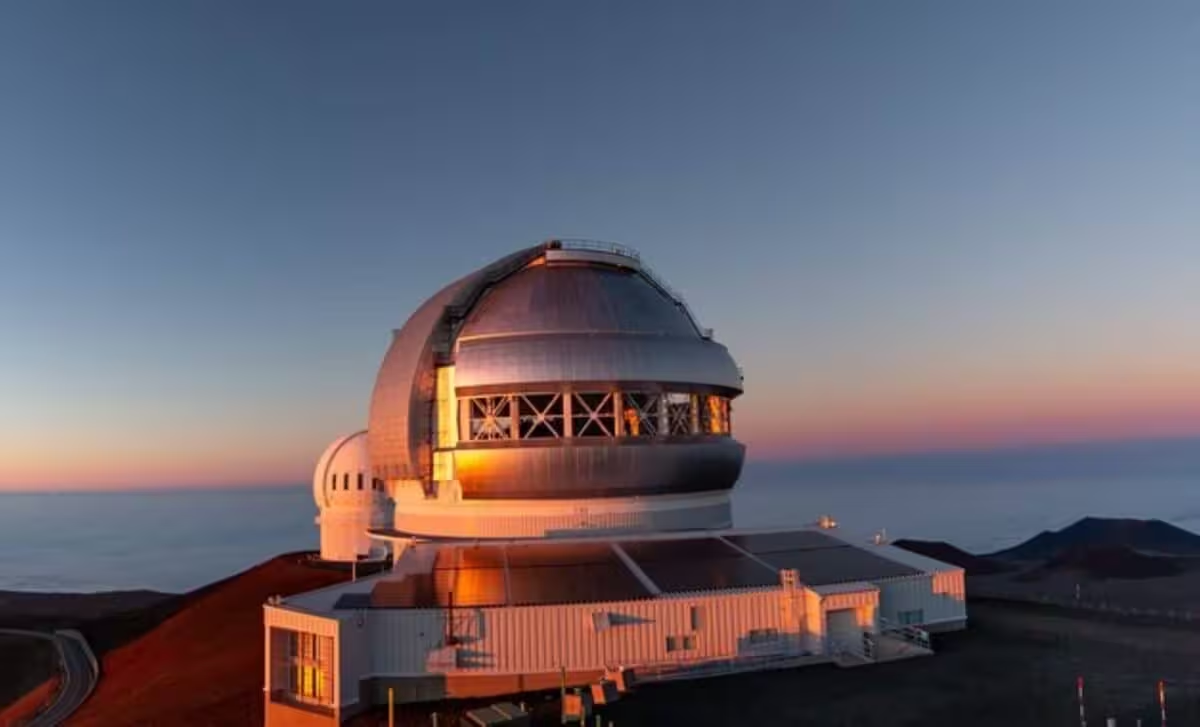
The Gemini North data, gathered in 2020 under the stewardship of NOIRLab, captures this slow‑moving encounter, offering astronomers a rare laboratory for watching how spirals begin to lose their identity as they orbit one another.
From Spirals to an Elliptical Remnant
As the galaxies continue their orbital ballet, tidal forces will draw out streams of gas and stars, eventually blending the two systems into a single, smoother entity. Computational models predict that such mergers typically settle into elliptical galaxies, erasing the original arm patterns.
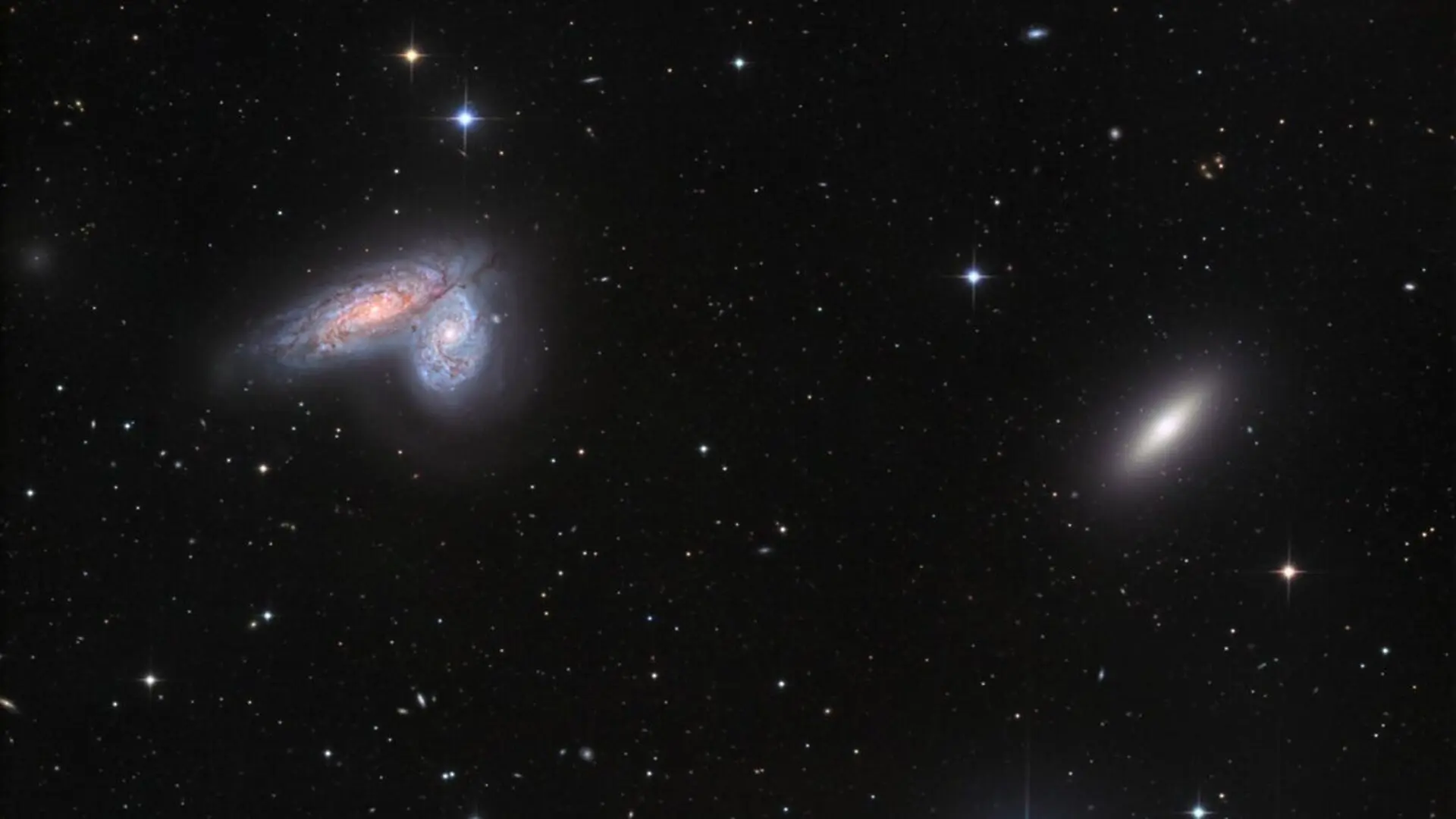
The anticipated end product of the Butterfly pair is expected to resemble Messier 89, an elliptical galaxy also residing in Virgo that is dominated by older, low‑mass stars and a rich population of globular clusters, with only modest ongoing star formation.
During the interaction, compressed clouds of gas and dust will spark brief episodes of intensified star birth, but the reservoir of material needed for new stars will gradually be depleted or expelled as the merger progresses.
A Supernova Lights Up the Interaction Zone
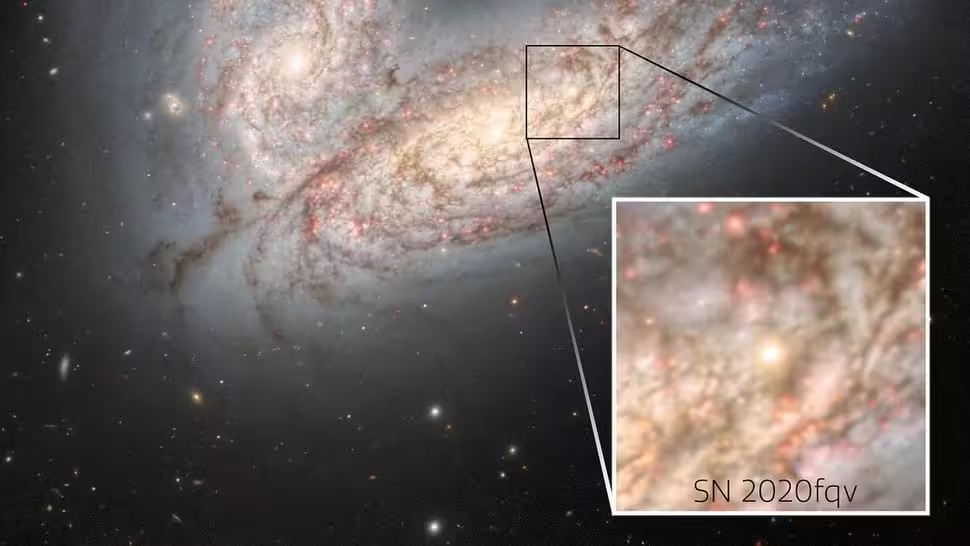
Embedded in the same field of view, astronomers identified a bright transient known as SN 2020fqv, the explosive death of a massive star within NGC 4568. The flash appears as a distinct point near one of the galaxy’s spiral arms and was first recorded in 2020.
Subsequent observations by the Hubble Space Telescope have provided a detailed look at the blast, enabling researchers to probe the final stages of the progenitor star and refine techniques for spotting imminent supernovae.
The ongoing merger of the Butterfly galaxies offers a tangible preview of the kind of cosmic reshaping that our own Milky Way will undergo when it eventually collides with Andromeda in several billion years, underscoring the dynamic nature of galaxy evolution across the universe.
This article has been fact checked for accuracy, with information verified against reputable sources. Learn more about us and our editorial process.
Last reviewed on .
Article history
- Latest version
Cite this page:
- Posted by Karan Das