SpaceX Deploys First Robot to Service and Extend Life of Geosynchronous Satellites
SpaceX launches a robotic spacecraft that could transform how geosynchronous satellites are serviced and extended, boosting longevity.
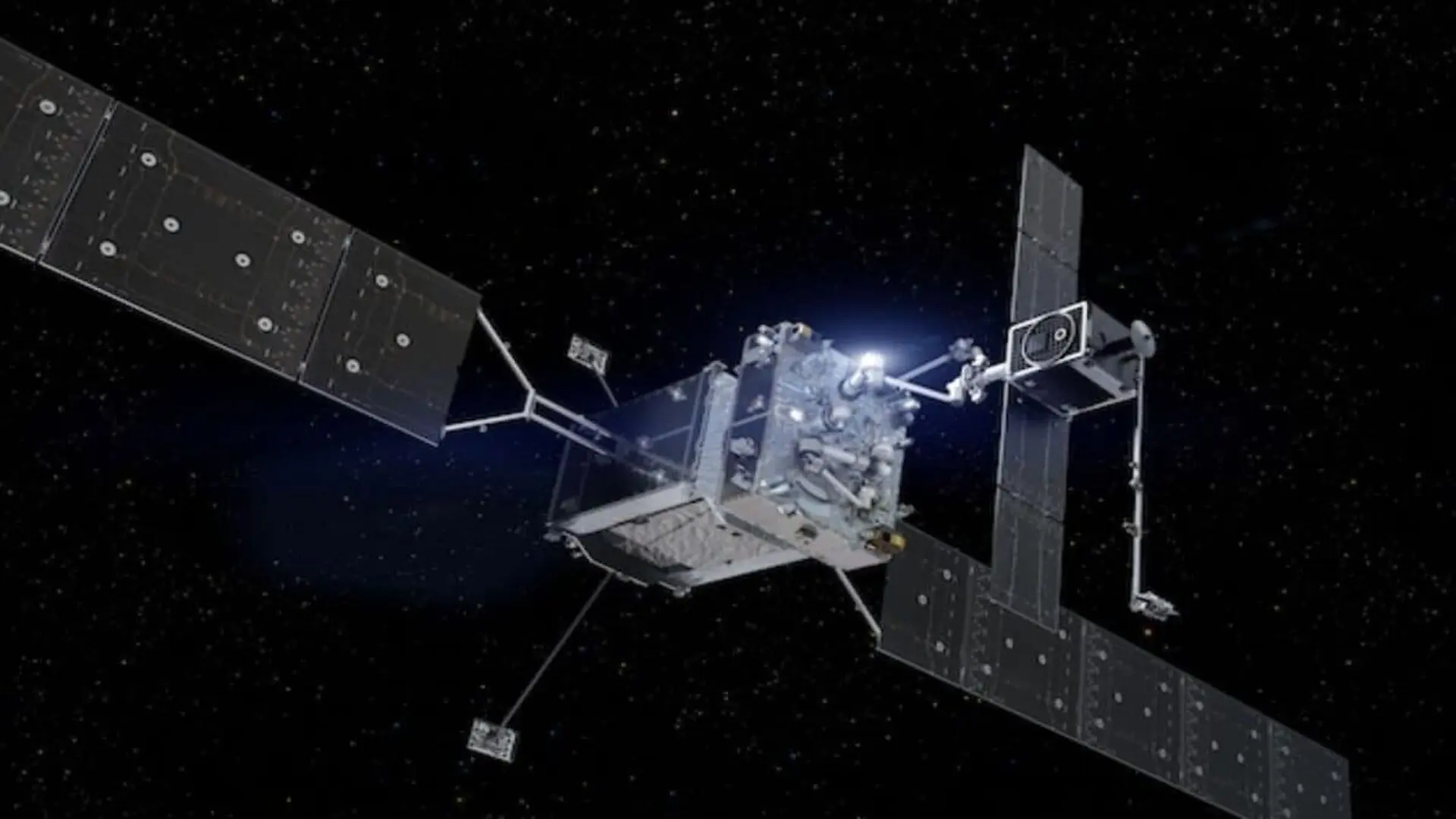
SpaceX’s Falcon 9 lifted off from Cape Canaveral carrying a pioneering payload aimed at reshaping satellite upkeep in geosynchronous Earth orbit. The mission delivers Northrop Grumman’s autonomous service platform alongside three modular propulsion extensions, a combination intended to inspect, reposition, mend and enhance existing satellites.
Autonomous Service Unit Set to Extend Satellite Lifespans
After launch, the service unit will coast for roughly twelve months before reaching the crowded geosynchronous belt where many communications and defense assets reside. Once on station, it will begin a series of support operations for operators such as Australia’s Optus and Luxembourg‑based SES.
Each of the three propulsion extensions carries fresh fuel and can be docked to compatible spacecraft, granting an additional operational window of up to eight years. This method sidesteps the need to replace whole satellites when only their thruster systems have exhausted their design life.
Beyond refueling, the platform is engineered for detailed visual inspections, orbital adjustments, mechanical repairs and hardware upgrades on satellites that were not originally built for in‑orbit modifications, according to Spaceflight Now.
The launch vehicle was a Falcon 9 booster designated B1069, selected for its extra performance margin needed to place the payload on a geosynchronous transfer trajectory. The rocket lifted off from Space Launch Complex 40 at Cape Canaveral.
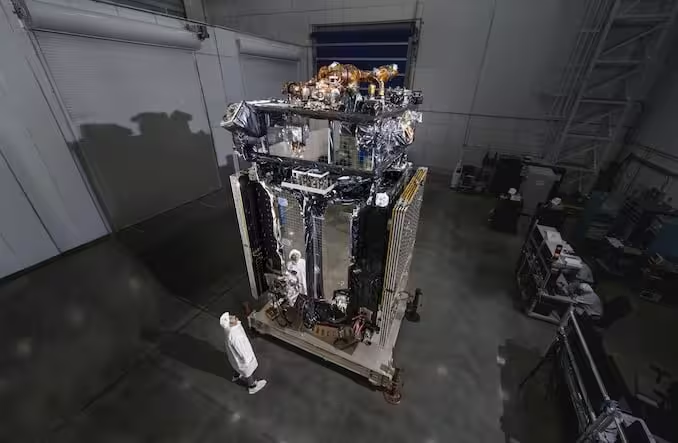
Two Decades of Research Fueling Today’s Robotic Arms
The concept traces back to early work at the Naval Research Laboratory, where scientists explored autonomous rendezvous and docking techniques. Initial efforts aimed at retrieving mis‑placed satellites eventually evolved into the “Spacecraft for the Universal Modification of Orbits” (SUMO) initiative.
“SUMO presented a formidable challenge,” explained Glen Henshaw, Ph.D., lead space roboticist at NRL for the RSGS program, in a pre‑launch interview.
“We then realized a universal truth—every satellite got to space on a rocket! By targeting the sturdy ‘launch vehicle interface plane’—the structural ring or explosive bolt holes that attach a spacecraft to a rocket for launch—we determined that a robotic arm could safely grapple almost any spacecraft without damaging delicate instruments.”
Subsequent programs such as FREND (Front End Robotics Enabling Near‑term Demonstration) refined the arm hardware to survive the harsh space environment. Alliance Spacesystems, Inc., the manufacturer behind the robotic limbs, previously supplied mechanisms for NASA’s Curiosity rover on Mars.
Collaboration among NASA, DARPA and other agencies over many years helped translate laboratory prototypes into a viable commercial servicing system capable of operating alongside existing satellites.
Implications for Future Satellite Design and Space Sustainability
In 2019, DARPA contracted SpaceLogistics—an affiliate of Northrop Grumman—to integrate the robotic payload with the service vehicle platform, steering the technology toward a market‑ready solution for multiple satellite owners.
Following successful demonstration flights, the system is slated to support the U.S. Space Force’s Servicing, Mobility and Logistics portfolio, potentially becoming a cornerstone of broader efforts to boost the resilience of orbital infrastructure.
The ability to perform in‑orbit maintenance may prompt a shift in how new satellites are engineered, encouraging designers to incorporate standardized access points, upgrade pathways and provisions for future robotic interventions.
More broadly, the mission underscores an industry‑wide move toward sustainable space operations. As the orbital population expands, technologies that prolong spacecraft life and curb unnecessary replacements are gaining traction among both commercial firms and government agencies.
This article has been fact checked for accuracy, with information verified against reputable sources. Learn more about us and our editorial process.
Last reviewed on .
Article history
- Latest version
Reference(s)
- “Live coverage: SpaceX to launch novel geosynchronous robotic servicing satellite on decade-long mission – Spaceflight Now.” <https://spaceflightnow.com/2026/07/21/live-coverage-spacex-to-launch-novel-geosynchronous-robotic-servicing-satellite-on-decade-long-mission/>.
Cite this page:
- Posted by Karan Das