Supermassive Black Holes Could Spawn Millions of Giant Planets, Study Finds
Active supermassive black holes could spawn millions of giant planets, challenging where astronomers think worlds can form
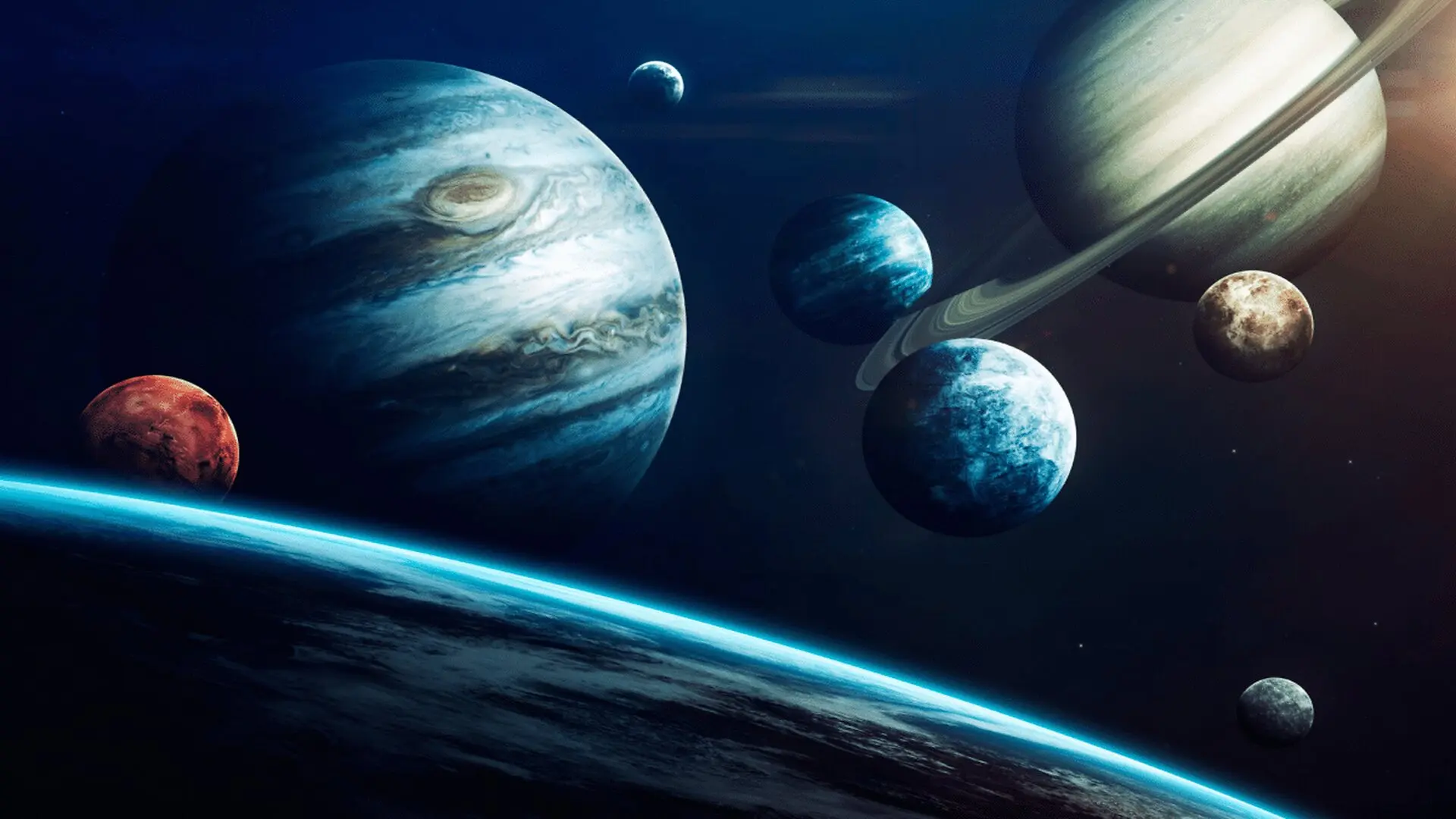
For many years astronomers have pictured supermassive black holes as cosmic graveyards, where gravity devours matter and intense radiation sweeps the surrounding space. Recent calculations, however, propose a radically different picture: the peripheral zones of the enormous disks that feed active supermassive black holes might be fertile grounds for forming millions of giant planets, suggesting a planetary production engine far more prolific than previously imagined.
Black‑Hole Environments Could Conceal Planet‑Making Zones
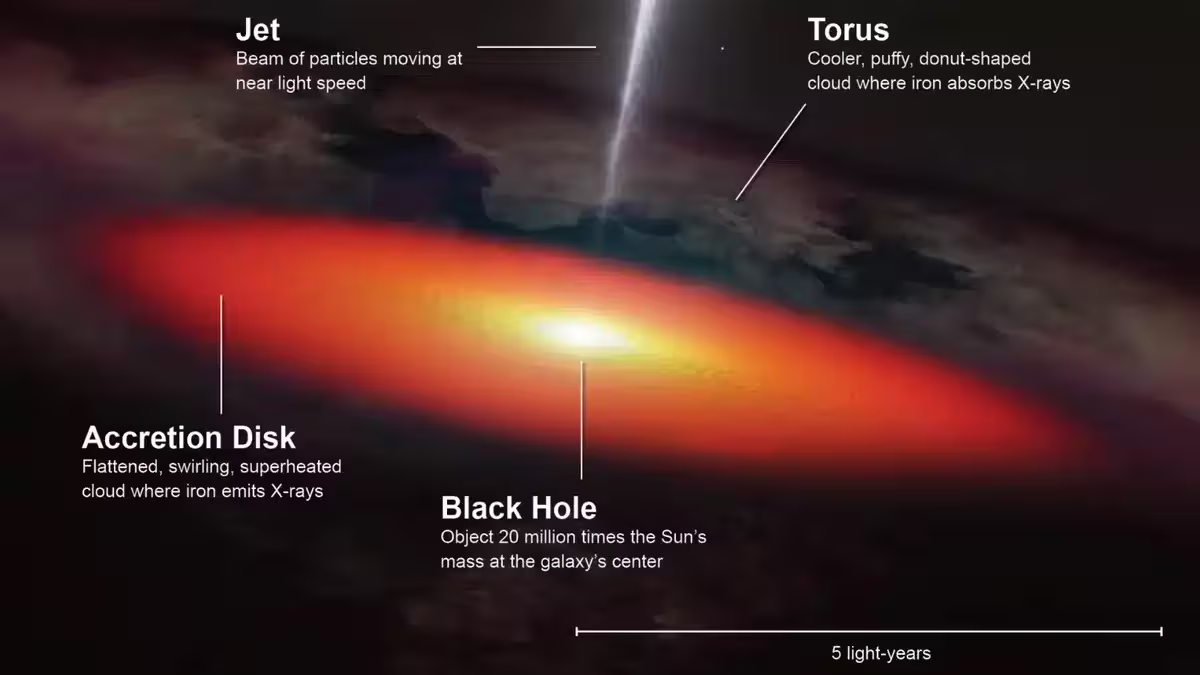
Active galactic nuclei (AGNs) shine with the power of black holes swallowing vast clouds of gas and dust, often outshining the combined light of all the stars in their host galaxies. The harsh radiation, extreme gravity, turbulent flows, and relativistic jets have long been thought to preclude the gentle conditions required for planet assembly.
A new study challenges that view by focusing on the outer reaches of these disks, where temperatures and densities can approach those found in the protoplanetary disks of young stars. Researchers built a long‑term numerical model to track dust behavior over millions of years, finding that particles can aggregate into dense clumps that serve as the seeds for planetary bodies.
Because AGN disks contain orders of magnitude more material than typical stellar disks, the simulations suggest the potential to generate planetary populations that dwarf anything observed around ordinary stars, possibly reaching into the millions of giant worlds.
Streaming Instability May Spark Giant Planet Formation
The key process identified by the authors is streaming instability, a mechanism already recognized as a catalyst for planet growth in ordinary protoplanetary disks. Under suitable conditions, dust streams coalesce into filaments that become self‑gravitating and rapidly accrete material.
Applying this framework to AGN disks, the team found that the sheer abundance of dust and gas could drive the creation of massive planets, some reaching or surpassing Jupiter’s mass. “We discovered millions of Jupiter‑mass planets could form at a distance of tens of parsecs [one parsec is around 3.3 light‑years] from supermassive black holes, which are also AGNs,” explained University of Colorado Boulder researcher Bhupendra Mishra to Space.com. “These are dust giants exceeding Jupiter’s mass. They will look like lava balls.”
Such objects would differ dramatically from any planet known in our solar system, resembling scorching, massive condensations of dust and gas residing in the far‑flung outskirts of galactic nuclei. If the scenario holds, these worlds would constitute a distinct class of exoplanets, expanding the catalogue of planetary diversity.
Scientists Astonished by the Predicted Numbers
While theoretical discussions of planet formation near supermassive black holes have existed, the scale produced by the simulations surprised the investigators. The combination of an immense material reservoir and efficient dust‑clumping mechanisms points to production rates far exceeding those of conventional star‑planet systems.
“We were astonished! This has not been found in AGN disk context before using a streaming instability model,” Mishra remarked. “My colleague Wladimir Lyra, an astronomy professor at New Mexico State University (NMSU), is world‑renowned in the field of planet formation, and we both were totally amazed when we noticed this mass and size range of planet formation.”
These reactions underscore how little is known about the peripheral regions of AGN disks, highlighting a promising frontier for future theoretical and observational work.
Preprint Posted on arXiv
Possible Paths to Detection
Turning a theoretical prediction into an observable phenomenon requires a feasible detection strategy. One avenue involves gravitational lensing, where the gravity of a massive foreground object bends and magnifies light from a more distant source. Clusters of planets embedded in AGN disks could imprint subtle lensing signatures that next‑generation instruments might capture.
“Gravitational lensing could help to identify the cluster of these planets in the outskirts of the AGN disk. However, finding such an AGN is not easy unless we get lucky,” Mishra added. “I believe we could detect these planets, but we have to study this model further.”
Future telescopes with higher sensitivity and refined data‑analysis techniques may eventually probe these extreme environments, offering a chance to confirm whether the cosmos truly hosts planetary factories around its most massive black holes.
This article has been fact checked for accuracy, with information verified against reputable sources. Learn more about us and our editorial process.
Last reviewed on .
Article history
- Latest version
Cite this page:
- Posted by Karan Das