Hybrid-Electric Saab 340B Soars Above 30,000 Feet, Showcasing Future Airliner Power
Hybrid-electric aircraft completes high‑altitude test, showing electric and conventional propulsion can work together, delivering data for future designs.
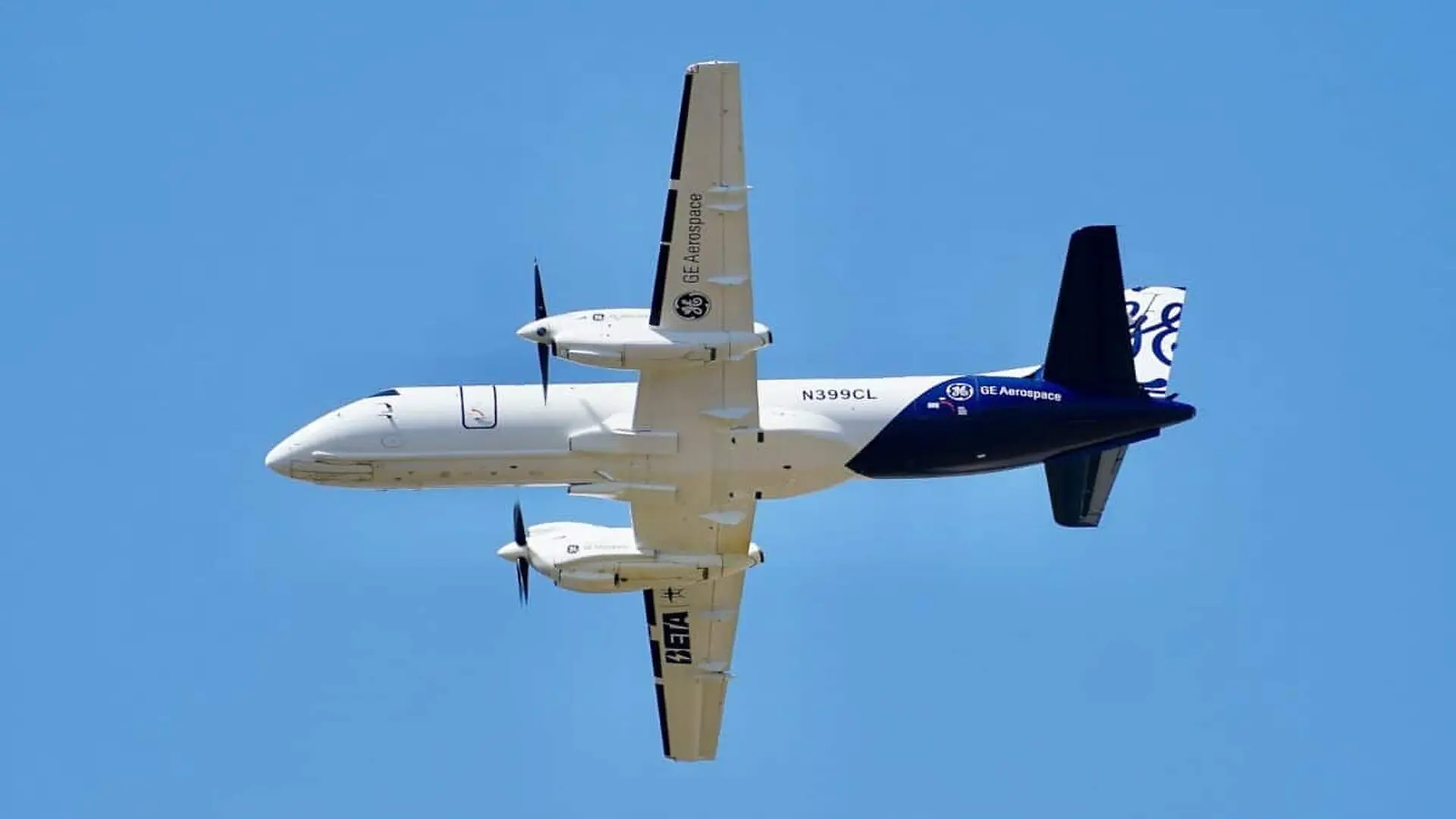
GE Aerospace has achieved a milestone by flying a hybrid‑electric propulsion system at more than 30,000 feet, an altitude typical for commercial passenger jets. The test used a modified Saab 340B aircraft and was carried out in partnership with NASA, BETA Technologies and Boeing.
The flight forms part of the NASA Electrified Powertrain Flight Demonstration (EPFD) initiative, which seeks to mature hybrid‑electric concepts for the next generation of airliners.
Hybrid‑Electric Power Unit Reaches Commercial Cruise Altitude
The Saab 340B was equipped with a megawatt‑class, multi‑kilovolt hybrid system that blends a conventional gas turbine with an electric drivetrain. This configuration lets the aircraft shift power between the turbine and the electric motors during climb, cruise and descent.
The propulsion hardware resides in an inverted nacelle mounted on the right side of the airframe, a layout that improves airflow to the high‑power electrical components.
The system’s components were supplied by several partners: GE Aerospace delivered electric motors, power converters, inverters, controllers, gearboxes, heat exchangers, torque sensors and wiring; BAE Systems supplied the battery packs; and Aurora Flight Sciences, a Boeing subsidiary, engineered the nacelle.
Another star of today’s #FIA2026 flying display, the @BETA_aircraft/@GE_Aerospace turbo-electric demonstrator – it is a Saab 340B, on which the starboard GE CT7 is assisted by battery electric powertrain (note the additional air ducts on the nacelle and on the fuselage). pic.twitter.com/VL5VC8AMUz
— Andras Sobester (@ASobester) July 20, 2026
Pilots from GE Aerospace and BETA Technologies flew the aircraft in hybrid‑electric mode, with the longest single segment lasting more than two hours.
The test campaign also included a transatlantic ferry to the United Kingdom for the Farnborough International Airshow. BETA Technologies reported that the hybrid system assisted the aircraft on each leg, providing climb thrust, cruise efficiency and the ability to generate electricity to recharge the battery.
Engineering Hurdles and Future Aviation Applications
Adapting hybrid‑electric propulsion for aircraft presents distinct challenges from ground‑vehicle applications, including thermal management at low atmospheric pressure, weight‑critical component design and reliable operation in a commercial aviation environment.
During the flights the electric drivetrain not only drove the propeller but also regenerated power to top up the onboard battery, demonstrating bidirectional energy flow under real‑world conditions.
NASA noted that the achievement builds on more than a decade of research into electric and hybrid aircraft concepts. Earlier work at the agency’s Electric Aircraft Testbed allowed GE Aerospace to evaluate the system in simulated flight up to 45,000 feet in 2022.
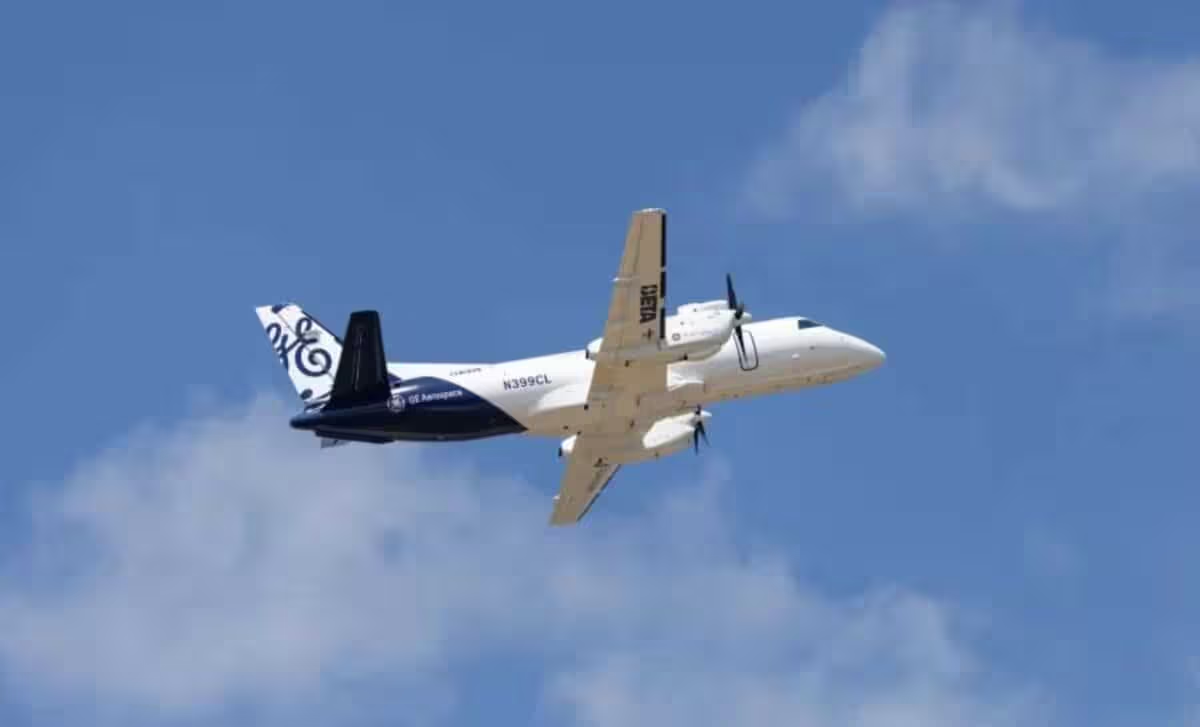
The EPFD effort began after GE Aerospace secured a 2021 NASA contract to prove flight‑ready hybrid‑electric hardware for single‑aisle aircraft. Initial milestones involved ground‑level testing of electric components and integrated system checks.
The demonstration also aligns with the CFM InternationalRISE program, a joint venture between GE Aerospace and Safran Aircraft Engines. According to GE Aerospace, the RISE initiative has completed roughly 500 test campaigns and more than 3,000 endurance cycles, exploring open‑fan engine concepts and hybrid‑electric propulsion.
While no commercial aircraft has yet been announced to use this exact propulsion architecture, the flight provides critical validation data that will inform the design of future aircraft and accelerate the development of next‑generation, low‑emission propulsion systems.
This article has been fact checked for accuracy, with information verified against reputable sources. Learn more about us and our editorial process.
Last reviewed on .
Article history
- Latest version
Reference(s)
- “Electrified Powertrain Flight Demonstration (EPFD) Project.” NASA <https://www.nasa.gov/directorates/armd/iasp/epfd/>.
- “https://twitter.com/ASobester/status/2079318169081008464/photo/1.” <https://t.co/VL5VC8AMUz>.
- “Farnborough International Airshow | Farnborough International Airshow.” FarnboroughAirshow <https://www.farnboroughairshow.com/>.
- “NASA Electric Aircraft Testbed (NEAT).”, November 18, 2024 NASA <https://www.nasa.gov/eap-labs-and-testbeds/neat/>.
- <https://www.cfmaeroengines.com/rise>.
Cite this page:
- Posted by Karan Das