One Of The Sky’s Rarest Events Is Back This Summer: How To Spot the Night-Shining Noctilucent Clouds Before They Disappear
Glowing night clouds return this summer, painting northern skies with rare, dazzling displays.
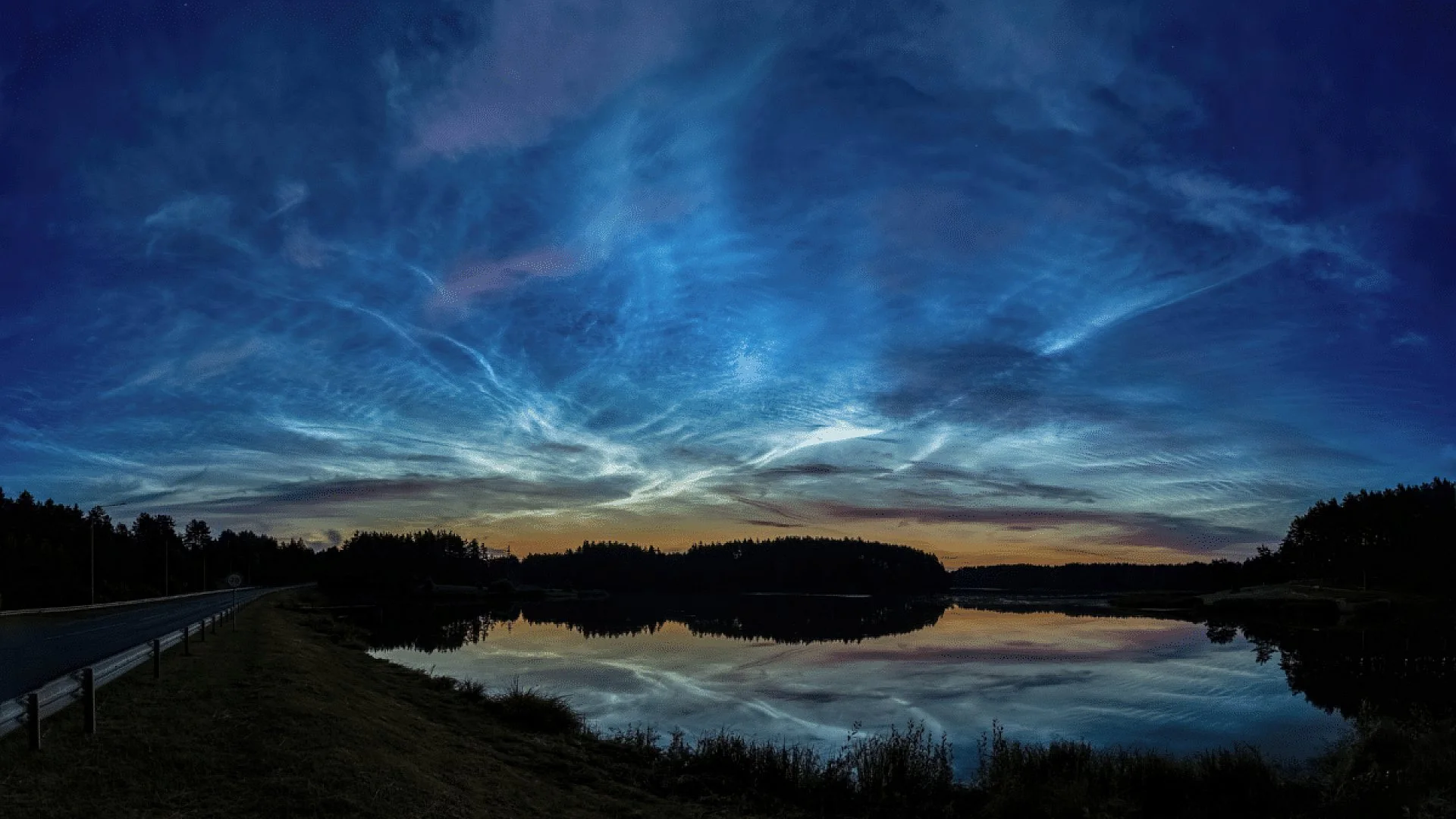
A fresh wave of luminous noctilucent clouds is adorning the twilight horizon, providing a striking display for early morning observers and evening stargazers. These high‑altitude ice formations are reappearing over sections of the northern hemisphere, signaling the opening of the 2026 viewing season.
What Causes the Midnight Glow
Forming roughly 80 kilometers above the surface in the mesosphere, noctilucent clouds sit at a height nearly ten times that of typical weather clouds. At this altitude they intercept sunlight long after the sun dips below the horizon or just before it rises, producing silver‑blue ribbons that stand out against the dimming sky. Unlike lower clouds that appear dark at these times, these formations reflect sunlight in a way that gives them an almost otherworldly luminescence.
The clouds consist of minute ice crystals that aggregate in the extreme cold near the polar zones. Their seasonal emergence is linked to both atmospheric dynamics and the planet’s orientation toward the sun, which is why they are most commonly reported during the summer months at high northern latitudes. The delicate structures are constantly reshaped by upper‑level winds, making successful photography a rewarding challenge for enthusiasts.
Best Times and Places to Observe
The optimal window for spotting these clouds stretches from mid‑May through mid‑August, with July delivering the highest frequency of sightings. They are typically visible between 45 and 80 degrees north, especially across North America and Northern Europe. Data from the UK Met Office indicate that the mesosphere reaches its coldest temperatures in these regions, fostering ideal conditions for noctilucent cloud development.
To catch a glimpse, turn your gaze toward the western horizon as twilight deepens and the first stars appear. The luminous, wispy formations contrast sharply with darker lower clouds, creating a dramatic visual effect. Photographers such as John Clement in Kennewick, Washington have recorded sweeping long‑exposure images that reveal expansive bands of glowing ice, demonstrating how even modest setups can capture this rare phenomenon.
The #NoctilucentCloud season 2026 which began a few nights ago at high Northern latitude has reached Germany: a #webcam view – https://t.co/E4YbOrJ8Hl – from #Flensburg at 54.8°N from 15 minutes ago! pic.twitter.com/Ycy4EB55Ee
— Daniel Fischer @[email protected] (@cosmos4u) May 31, 2026
Social Media Momentum and Public Interest
Online enthusiasm for noctilucent clouds is accelerating, with amateur astronomers like Daniel Fischer streaming live views from Germany and generating buzz under the hashtag #NoctilucentCloud. These platforms enable observers from disparate locations to share real‑time images, compare conditions, and follow the progression of the season.
Coverage by Space.com underscores how accessible these sightings have become, inviting people to step outdoors during twilight to experience one of Earth’s most uncommon atmospheric displays. The phenomenon captivates both photographers and scientists while serving as a vivid reminder of the layered complexity of our planet’s atmosphere.
This article has been fact checked for accuracy, with information verified against reputable sources. Learn more about us and our editorial process.
Last reviewed on .
Article history
- Latest version
Reference(s)
- “https://www.foto-webcam.eu/webcam/flensburg/.” <https://t.co/E4YbOrJ8Hl>.
- “https://twitter.com/cosmos4u/status/2060878043397185638/photo/1.” <https://t.co/Ycy4EB55Ee>.
- Wood, Anthony. “One of the sky's rarest phenomena is back: How to see rare night-shining clouds this summer.”, June 5, 2026 Space <https://www.space.com/stargazing/one-of-the-skys-rarest-phenomena-is-back-how-to-see-rare-night-shining-clouds-this-summer>.
Cite this page:
- Posted by Karan Das