NASA’s New X‑Ray Portrait and Sound Reveal Hidden Forces Behind Messier 94’s Starburst Ring
NASA unveils a multi‑sensory view of spiral galaxy Messier 94, merging X‑ray and visible light to spotlight its active star‑forming region.
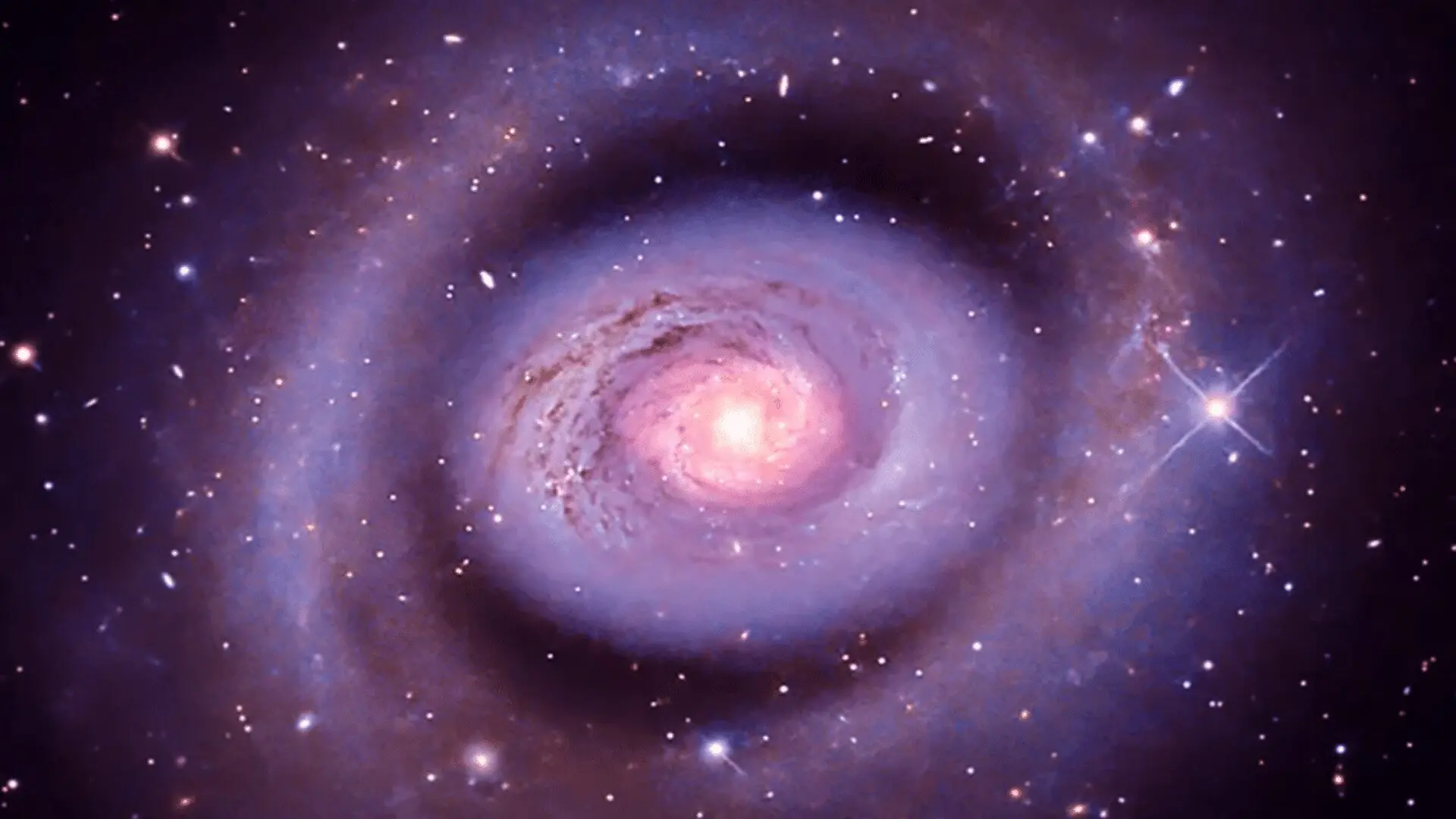
NASA has released a new visual‑audio composite of the nearby spiral galaxy Messier 94, showcasing the intricate features that surround its vigorous star‑forming core. The presentation merges data from the Chandra X‑ray Observatory with ground‑based optical imaging, turning raw measurements into a more immersive depiction of the galaxy.
The composite highlights NGC 4736, the catalog name for Messier 94, renowned for its luminous inner ring where massive bursts of new stars are being forged. By layering multiple wavelengths and applying a sonification technique, NASA provides an alternative way to explore distant celestial objects and the dynamics that shape them.
The release, dated June 30 2026, draws on observations collected from orbit and from Earth‑bound telescopes. The resulting portrait offers a close‑up view of a system whose internal architecture continues to inform theories of star birth and galactic evolution.
Inside the Galaxy’s Star‑Forming Ring
Messier 94 sits relatively near our own Milky Way on an astronomical scale and displays a striking bright inner ring, often described as a starburst zone. Within this region, dense clouds of gas collapse, igniting the formation of successive stellar generations.
Researchers suggest that an oval‑shaped feature at the galaxy’s center may act as a conduit, steering gas inward and sustaining the intense star‑forming activity observed in the ring.
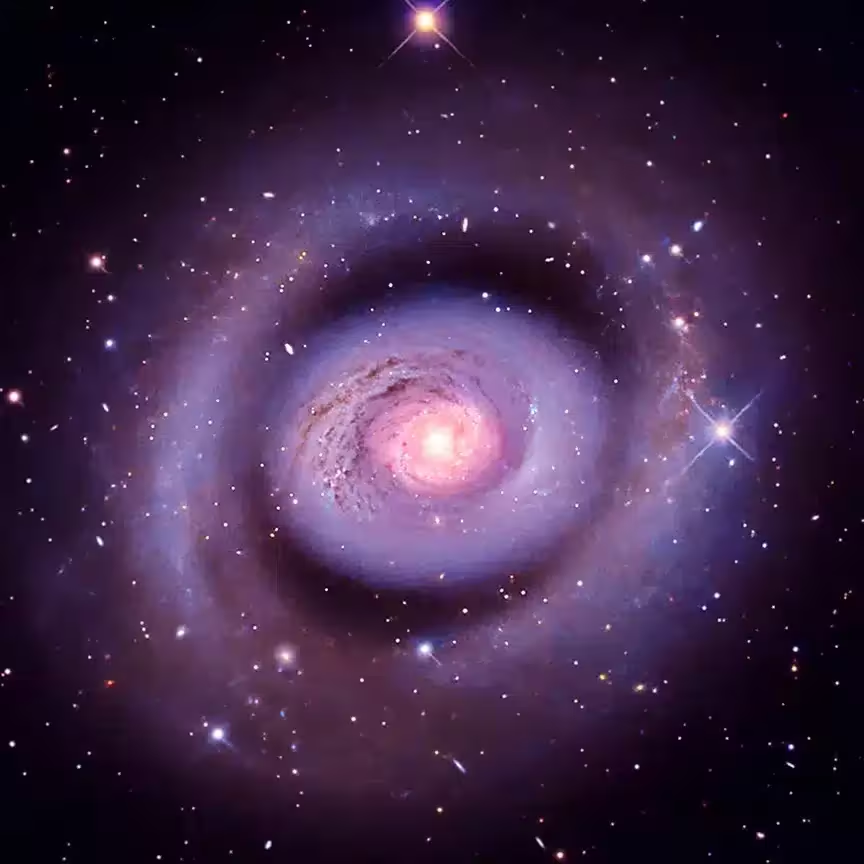
To capture this complexity, the new image blends X‑ray measurements from Chandra with optical data gathered by skilled amateur astronomers using terrestrial telescopes. Distinct X‑ray wavelengths are encoded in hues of red, orange and blue, while the visible‑light component adds further structural detail.
This fusion reveals phenomena invisible to the human eye alone—scalding gas, high‑energy events, and stellar processes—offering a more complete picture of the galaxy’s environment.
Blending High‑Energy X‑rays with Ground‑Based Optics
The composite of Messier 94 illustrates how astronomers integrate diverse datasets to dissect distant galaxies. While a single optical image outlines the galaxy’s shape, additional wavelengths uncover the physical mechanisms at work inside.
Chandra continues to be pivotal for probing extreme environments, allowing scientists to map scorching regions, energetic sources, and interactions among galactic components.
According to NASA, the final visual merges X‑ray data from NASA/CXC/SAO with optical contributions from photographers Brian Brennan and Remi Lacasse. Processing was completed by L. Frattare and K. Arcand, weaving scientific precision with artistic narrative.
The effort underscores a growing trend in astronomy: partnerships between professional observatories and talented amateurs, where ground‑based imaging enhances space‑telescope observations to produce richer depictions of cosmic targets.
Turning Galactic Measurements Into Audio
Accompanying the visual release, NASA introduced an auditory interpretation of Messier 94. The technique, known as sonification, translates numerical data into sound patterns that mirror the features identified in the observations.
Sonification does not capture actual sounds from space; rather, it maps scientific metrics onto audible frequencies, enabling listeners to discern variations in intensity, spatial distribution, and structural complexity within the dataset.
For scientists, such auditory tools can offer fresh perspectives on intricate data sets, while for the public they provide an additional sensory gateway to appreciate objects that lie far beyond direct perception.
This approach reflects a broader initiative by space agencies to convey astronomical discoveries through multiple senses, combining images, data, and sound to illustrate the vastness and intricacy of the universe.
What Messier 94 Reveals About Galactic Development
Examining galaxies like Messier 94 helps astronomers trace how cosmic structures evolve over billions of years. Interactions among gas, stars, and galactic morphology yield clues about the mechanisms that drive star formation and shape galaxies.
With its luminous core and active ring, Messier 94 remains a compelling subject for multi‑wavelength scrutiny. Each new observation adds a layer to the narrative of how galaxies assemble and transform.
NASA’s latest release demonstrates how cutting‑edge space instrumentation, combined with creative presentation methods, can expose details that would otherwise stay concealed. The resulting image and its audio counterpart provide a fresh viewpoint on one of the many dynamic systems populating the cosmos.
This article has been fact checked for accuracy, with information verified against reputable sources. Learn more about us and our editorial process.
Last reviewed on .
Article history
- Latest version
Reference(s)
- “A New Look – and Sound – for Messier 94 - NASA.” NASA <https://www.nasa.gov/image-article/a-new-look-and-sound-for-messier-94/>.
Cite this page:
- Posted by Karan Das