Massive Underground Magma System Discovered Deep Beneath The Surface Of Mars
Mars lacks tectonic plates, yet seismic data reveals mysterious activity deep within its crust. What is shifting 24 km below the Red Planet’s surface?
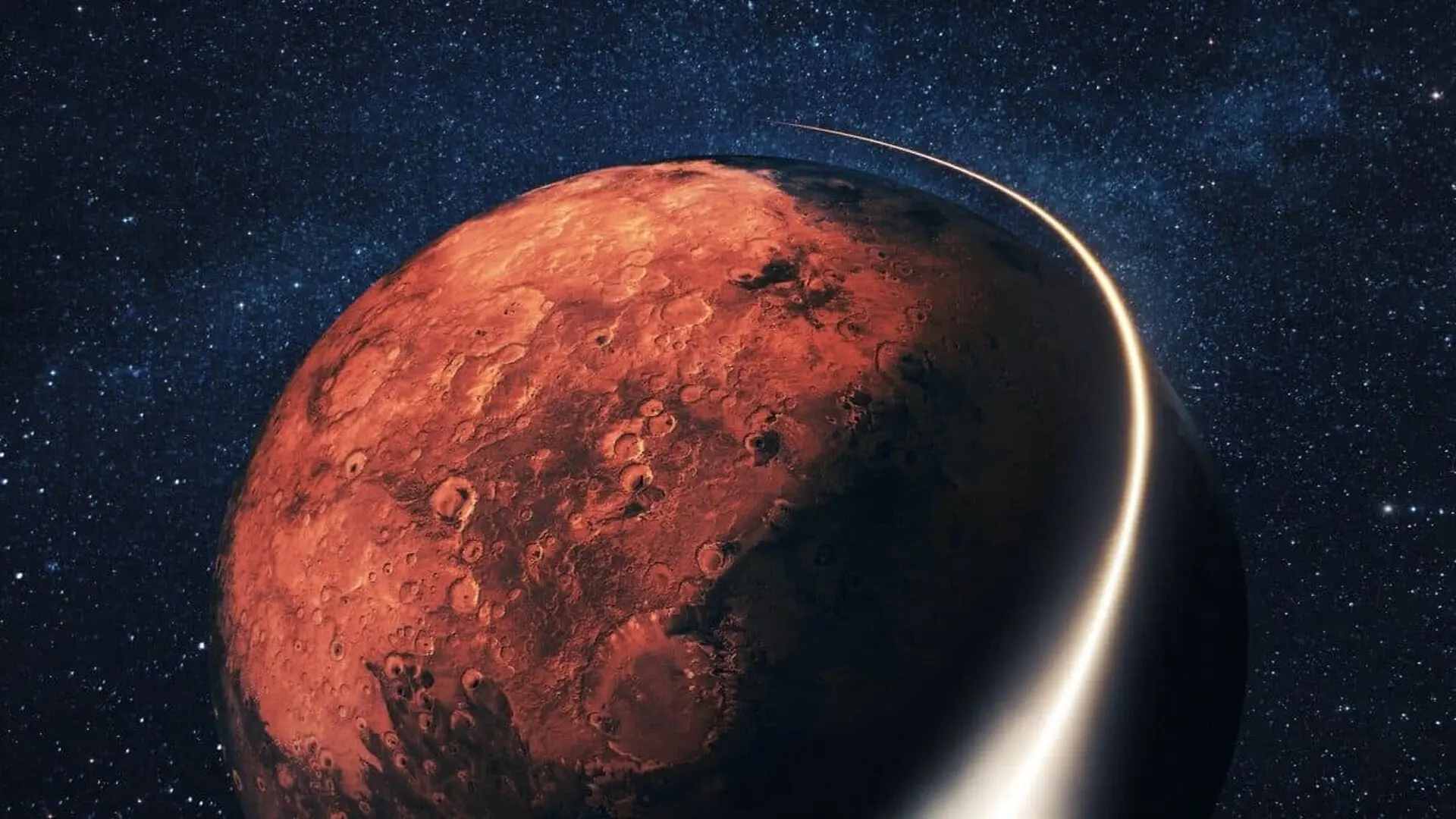
Deep beneath the dusty surface of Mars, researchers have uncovered evidence of a vast, ancient magma network that likely reshaped the planet’s crust over millions of years. This discovery, led by a team at the University of Oxford, challenges long-held assumptions about the Red Planet, suggesting it possessed a far more sophisticated geological history than previously imagined—even in the absence of the plate tectonics that drive Earth’s dynamic landscape.
Historically categorized as a stagnant lid planet, Mars has been viewed as a geologically sleepy world because it lacks the shifting tectonic plates responsible for recycling planetary material and building continents. The new findings, published in Nature Astronomy, indicate that Mars circumvented this limitation through persistent, large-scale magmatic activity.
Evidence From Beneath the Red Planet
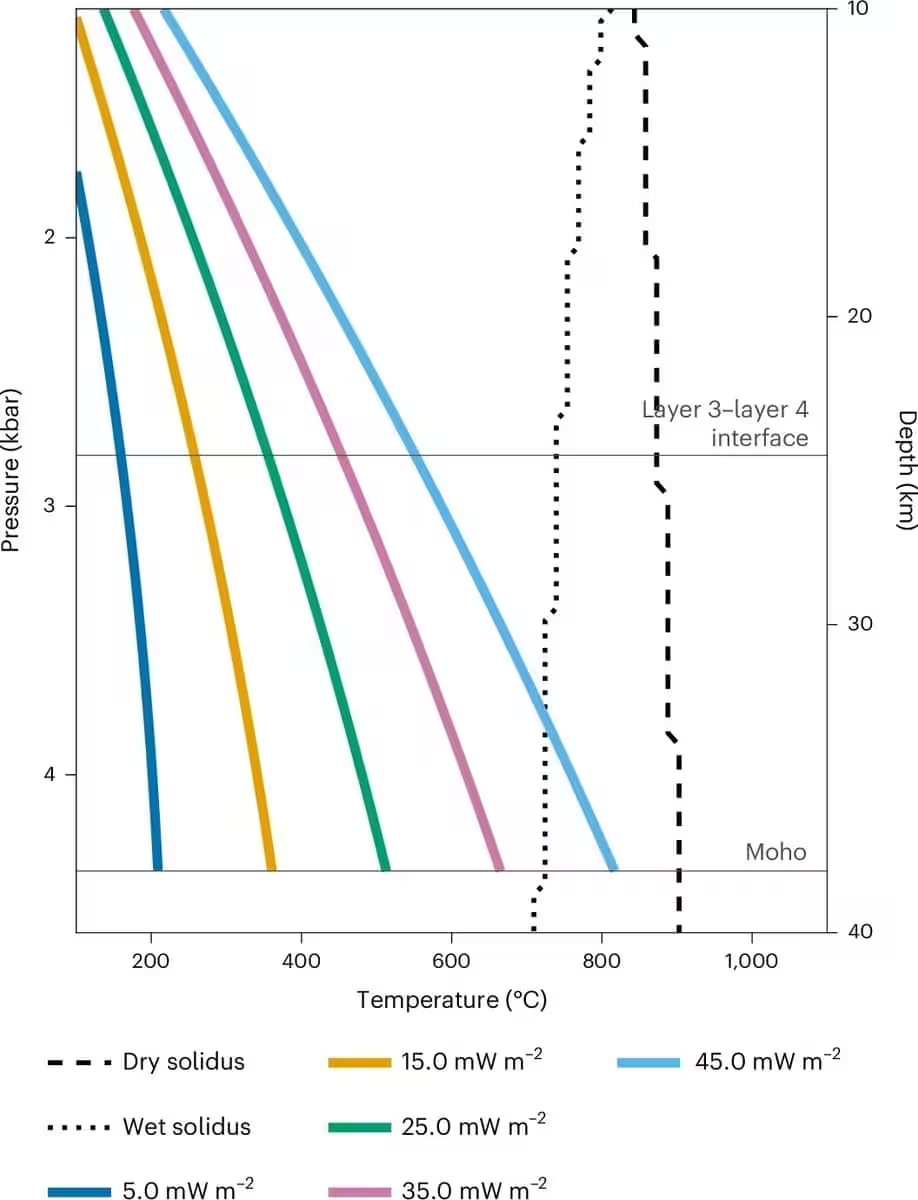
The study relies on seismic data captured by NASA’s InSight lander, which touched down in 2018. By analyzing waves generated by marsquakes and meteorite impacts, the research team investigated a distinct, mysterious boundary located roughly 24 kilometers below the Martian surface. Through rigorous thermodynamic modeling and statistical comparison against a range of rock compositions, the team determined the likely mineralogical makeup of this deep layer.
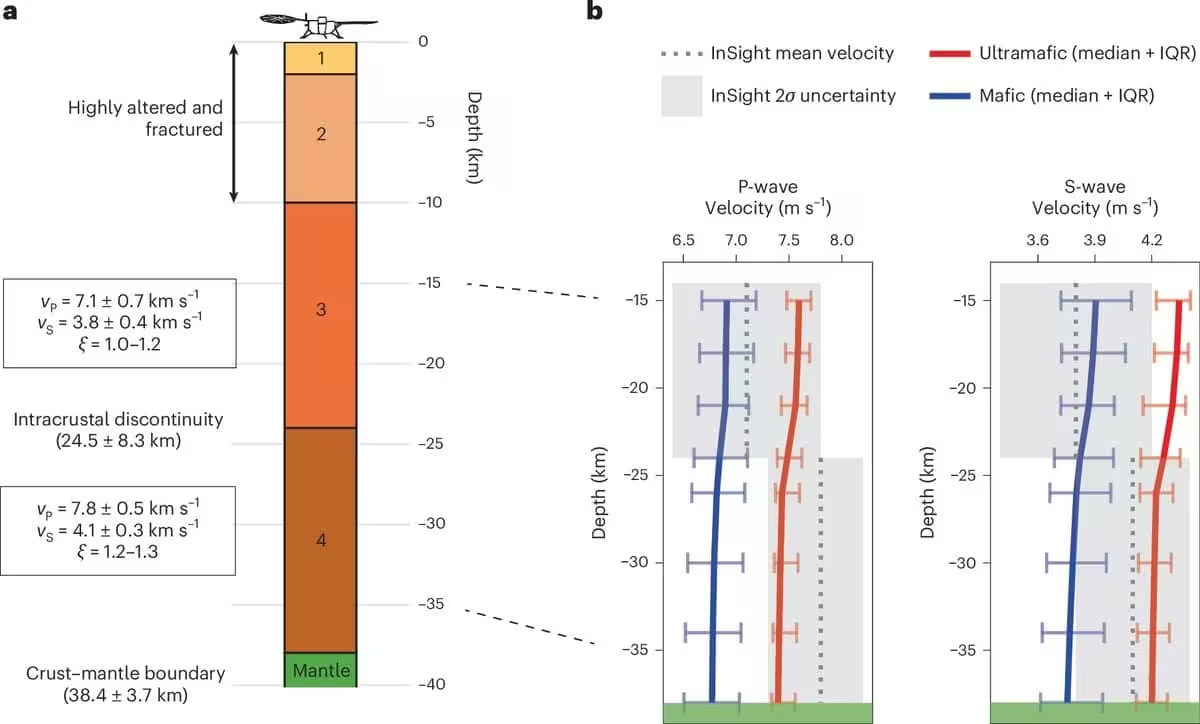
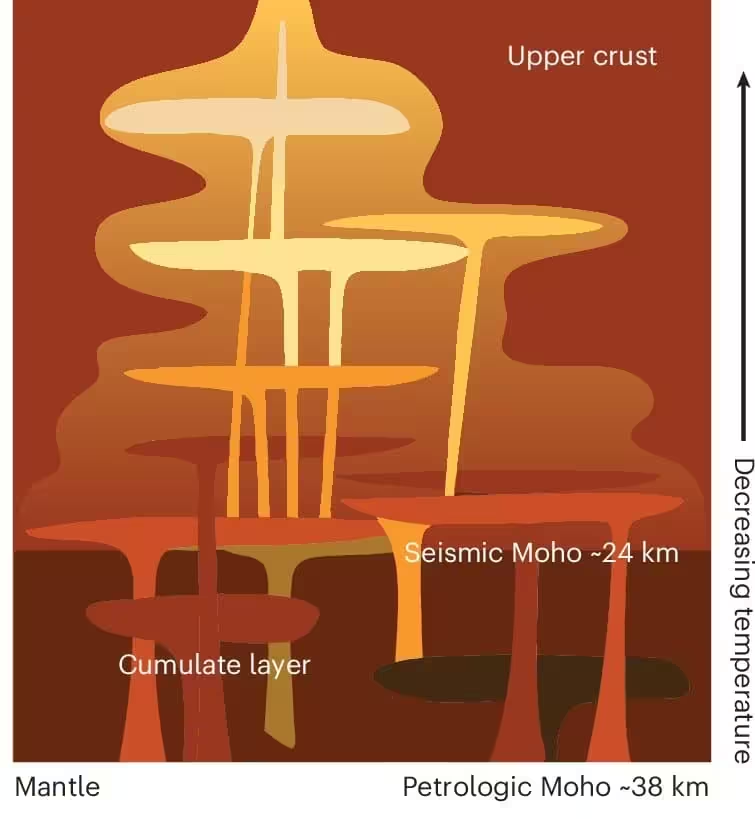
The data suggests that the lower layer consists of ultramafic rocks, rich in iron and magnesium, topped by a layer of silica-rich mafic rock. Researchers propose that this structure originated from molten rock that pooled deep underground, allowing heavier crystals to settle while lighter, evolved magma migrated toward the surface—a process of fractional crystallization mirroring volcanic activity seen on Earth.
Evidence of Transcrustal Magmatism
This buried network appears to span hundreds or even thousands of kilometers across the Martian northern hemisphere. Rather than being defined by isolated, singular volcanic events, Mars likely hosted interconnected magma systems that facilitated the movement and chemical transformation of molten rock throughout the crust. This phenomenon, known as transcrustal magmatism, implies that the planet’s interior was significantly more active than scientists had assumed.
“This discovery suggests Mars could sustain large, long-lived systems where molten rock evolved and reprocessed itself throughout the entire crust,” said lead author Dr. Tobermory Mackay-Champion. “It raises exciting possibilities for how common such systems might be on rocky planets beyond our solar system.”
Implications for Planetary Habitability
The implications of this finding extend well beyond the Martian crust. By demonstrating that complex, internal geological differentiation can occur without plate tectonics, the research prompts a reevaluation of what makes a planet habitable.
Professor Jon Wade of the University of Oxford’s Department of Earth Sciences notes that these findings challenge the notion that Earth’s path is the only route to geological complexity. “If Mars could develop this kind of complex crust without plate tectonics, then maybe the conditions needed for habitability can emerge on more planets than we realized,” Wade said, “including those previously dismissed based on size or their apparent lack of tectonic activity.”
This article has been fact checked for accuracy, with information verified against reputable sources. Learn more about us and our editorial process.
Last reviewed on .
Article history
- Latest version
Reference(s)
- Mackay-Champion, T.. “Seismic evidence for a melt-depleted lower crust and transcrustal magmatism on Mars - Nature Astronomy.”, June 26, 2026, pp. 1-8. Nature, doi: 10.1038/s41550-026-02907-5. <https://www.nature.com/articles/s41550-026-02907-5>.
- Cermak, Alicia. “InSight Lander - NASA Science.”, December 5, 2017 NASA <https://science.nasa.gov/mission/insight/>.
- “Dr Tobermory Mackay-Champion - Our People.” <https://www.bristol.ac.uk/people/person/Tobermory-Mackay-Champion-848c6d55-171a-4d14-acda-dbb53a68edd3/>.
- “Jon Wade.” <https://www.earth.ox.ac.uk/people/jon-wade>.
Cite this page:
- Posted by Karan Das