NASA Astronaut Says Humanity Has It Backward After Seeing Earth From Space
Astronaut Ron Garan reveals how a single, life-changing realization from orbit completely transformed his perspective on our fragile planet Earth.
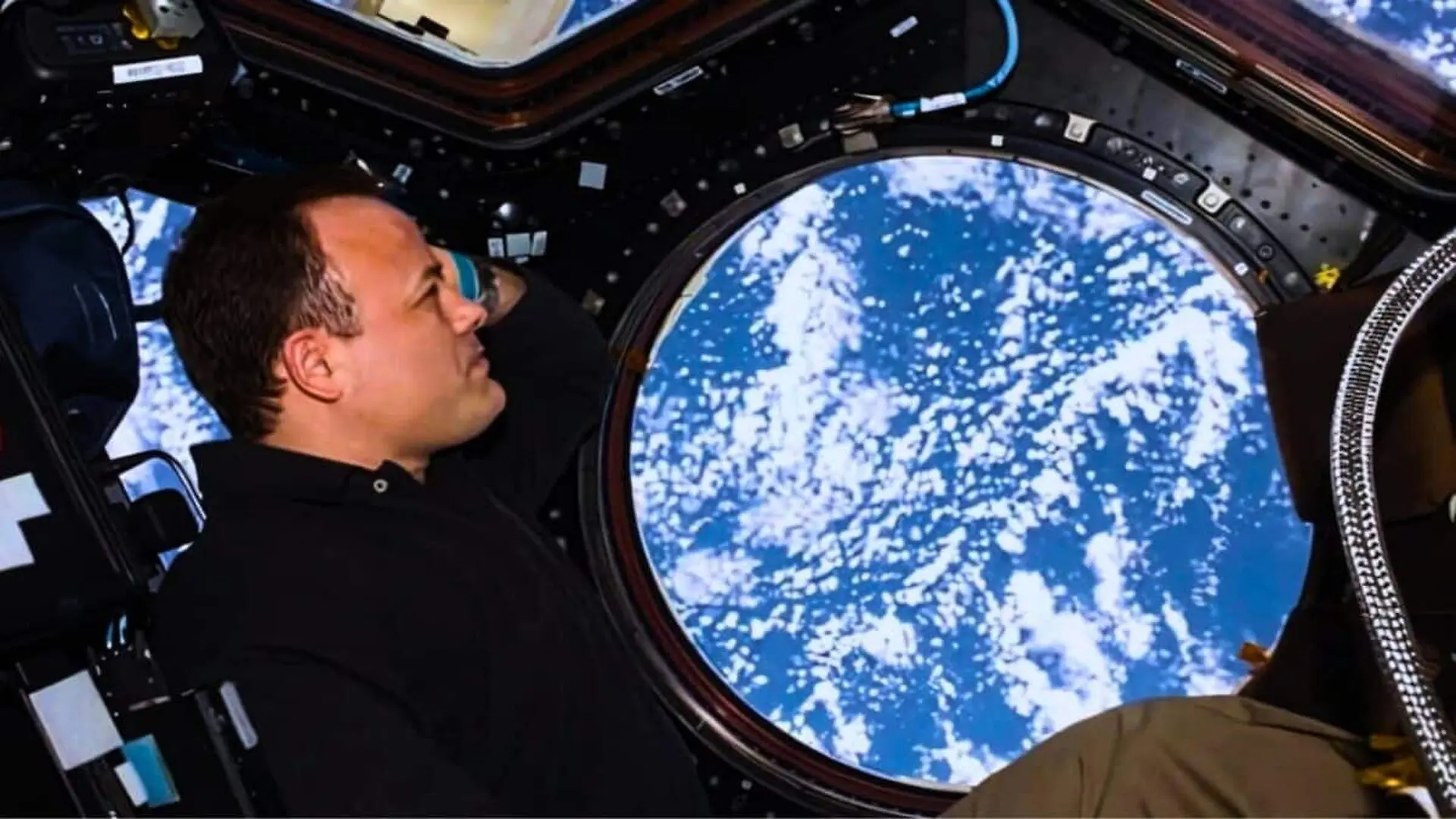
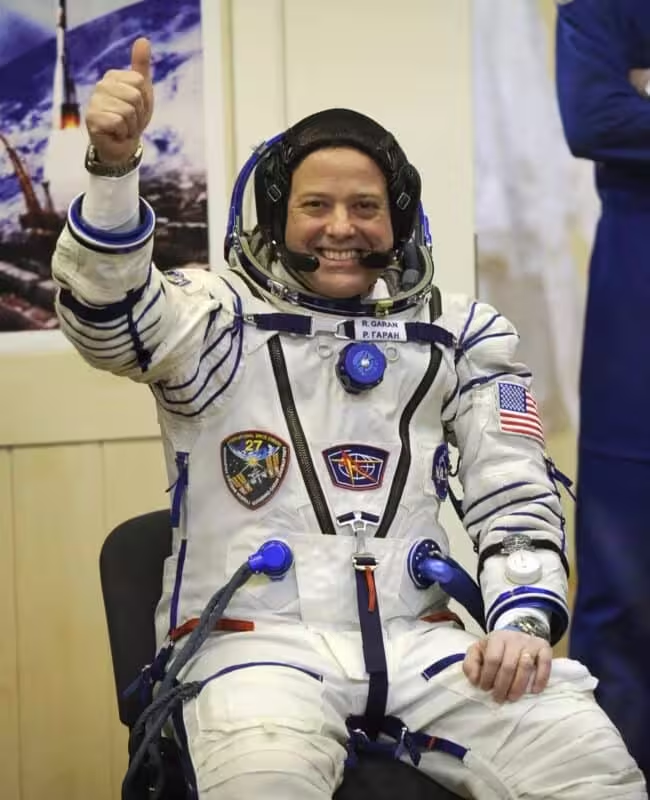
From the vantage point of orbit, the complex machinery that dictates human existence undergoes a striking transformation. The political borders that define nations dissolve into invisibility, and the vast, seemingly endless sky we perceive from the ground is revealed as a fragile, gossamer veil clinging to the planet’s surface. For former NASA astronaut Ron Garan, who spent months living and working aboard the International Space Station, this shift in perspective was not merely a visual curiosity but a fundamental reordering of his understanding of civilization.
The Inverted Reality of Human Systems
Garan’s time in space led him to a provocative conclusion: humanity has inverted its priorities. In our daily lives, we treat the economy as the bedrock of society—the system that everything else must serve. However, from the perspective of low Earth orbit, this hierarchy appears fundamentally flawed. Garan argues that the true structure of our existence places the habitable planet at the base, followed by society, with the economy resting on top. By treating the economy as the primary foundation, Garan asserts that we are essentially “living a lie.”
The visual evidence from orbit is compelling. The atmosphere, which feels infinite from the surface, appears from space as a thin, narrow ribbon providing the only barrier between life and the void. Below, illuminated cities like Shanghai pulse with light, appearing less like isolated urban centers and more like a biological network of neurons firing within a singular, living organism. When viewed this way, it becomes clear that human systems are not separate from the environment, but entirely dependent on it. A functional planetary life-support system is the prerequisite for any market to exist, yet our current global framework treats the planet’s ecological limits as mere obstacles to financial growth.
The Immediate Impact of the “Overview Effect”
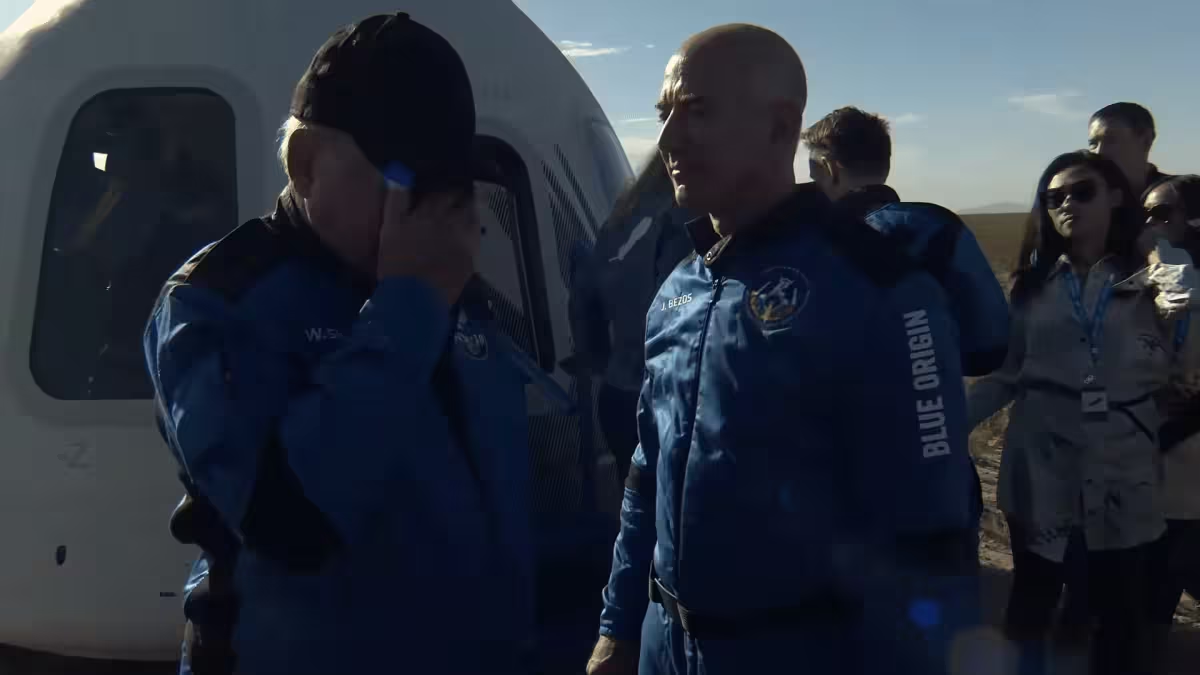
This cognitive shift does not necessarily require a long-duration mission. When actor William Shatner traveled to the edge of space with Blue Origin in October 2021, his suborbital flight lasted only about 10 minutes. Yet, upon returning, he was visibly overwhelmed by the stark contrast between the vibrant, blue Earth and the absolute darkness of the cosmos. His emotional plea—that everyone should witness this view—speaks to the visceral power of the experience.
The phenomenon, famously coined as the “overview effect” by author Frank White in 1987, has been consistently reported by space travelers since the dawn of the space age. During the Apollo 8 mission in 1968, the crew captured the iconic “Earthrise” photograph, which revealed our home as a solitary, fragile blue marble in the vastness of space. As crew member Bill Anders famously observed, the true discovery of their lunar mission was not the moon itself, but the Earth. That singular perspective—seeing the planet as a unified, connected object—strips away the significance of man-made divisions.
Reframing the Future
The implications of this shift are profound. If we accept Garan’s hierarchy, then current economic policies that treat environmental sustainability as an afterthought are fundamentally disconnected from reality. The overview effect does not provide a roadmap for governance, but it does serve as a powerful lens that exposes the arbitrariness of our societal structures. By recognizing that our entire economic engine occupies only the top floor of a building whose foundation is the planetary ecosystem, we might begin to see the necessity of prioritizing the base upon which all human activity relies.
This article has been fact checked for accuracy, with information verified against reputable sources. Learn more about us and our editorial process.
Last reviewed on .
Article history
- Latest version
Reference(s)
- “Ron Garan | NASA Astronaut, Keynote Speaker & Author.”, December 7, 2022 Ron Garan <https://www.rongaran.com/>.
- <https://bigthink.com/starts-with-a-bang/william-shatner-space/>.
Cite this page:
- Posted by Karan Das