Stunning Satellite Images Show Snow Blanketing One Of The Driest Places On Earth
A rare atmospheric event has transformed one of the world’s driest deserts, stunning scientists and locals with an unexpected and dramatic landscape shift.
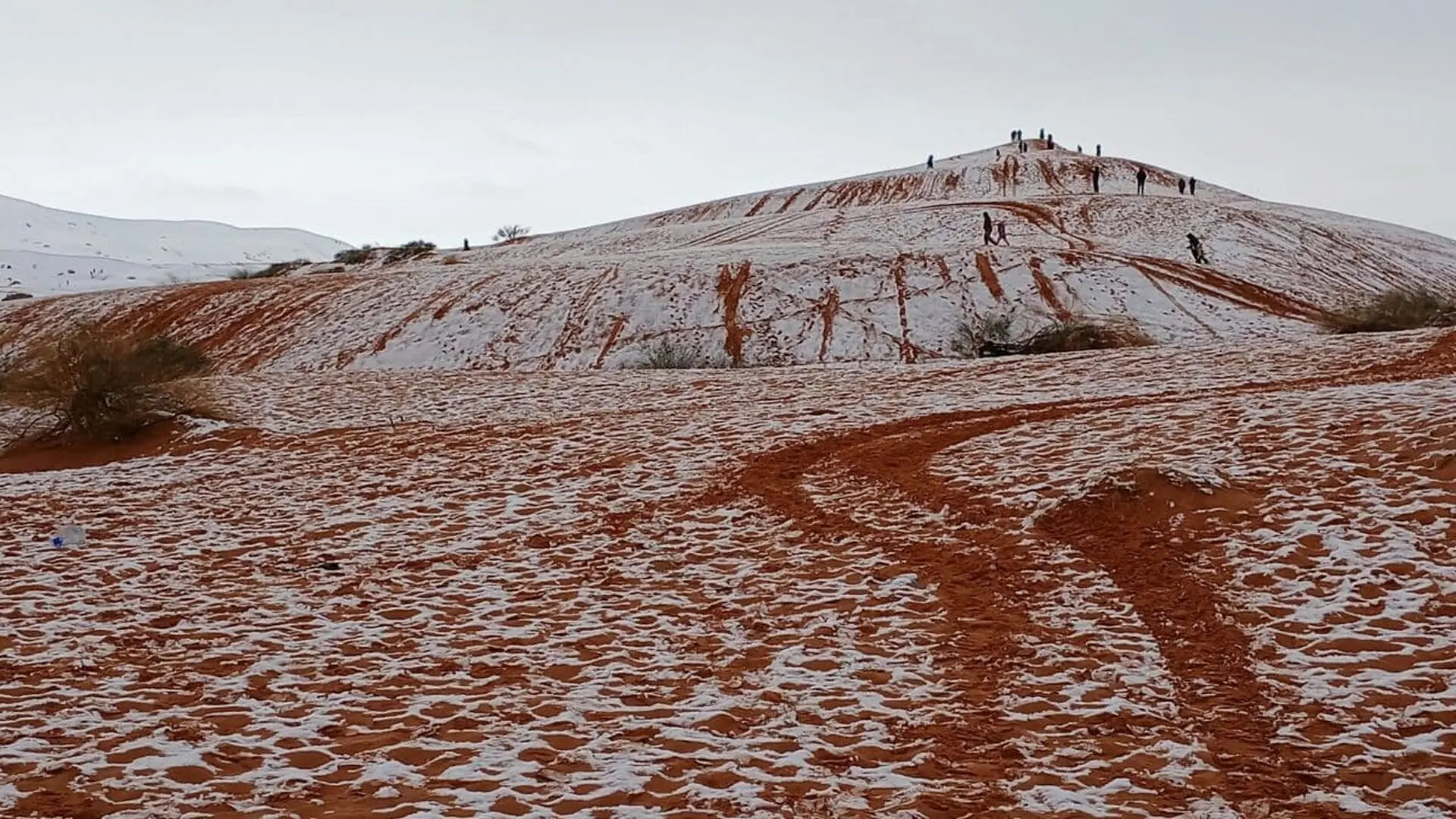
The Atacama Desert, a landscape defined by its extreme aridity and status as one of the driest environments on Earth, experienced a startling transformation this past August. A series of intense winter storms blanketed vast stretches of northern Chile in snow and unleashed unprecedented levels of rainfall on a region where some areas typically go years without a single drop of precipitation.
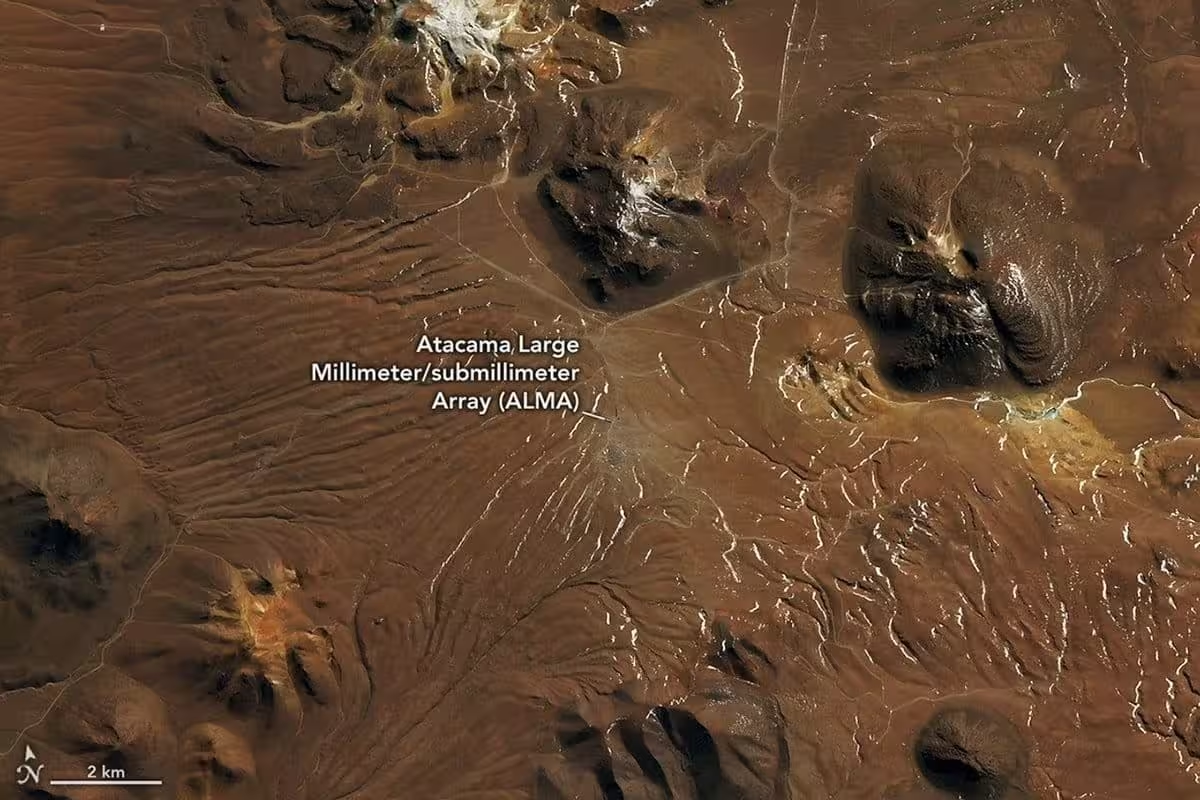
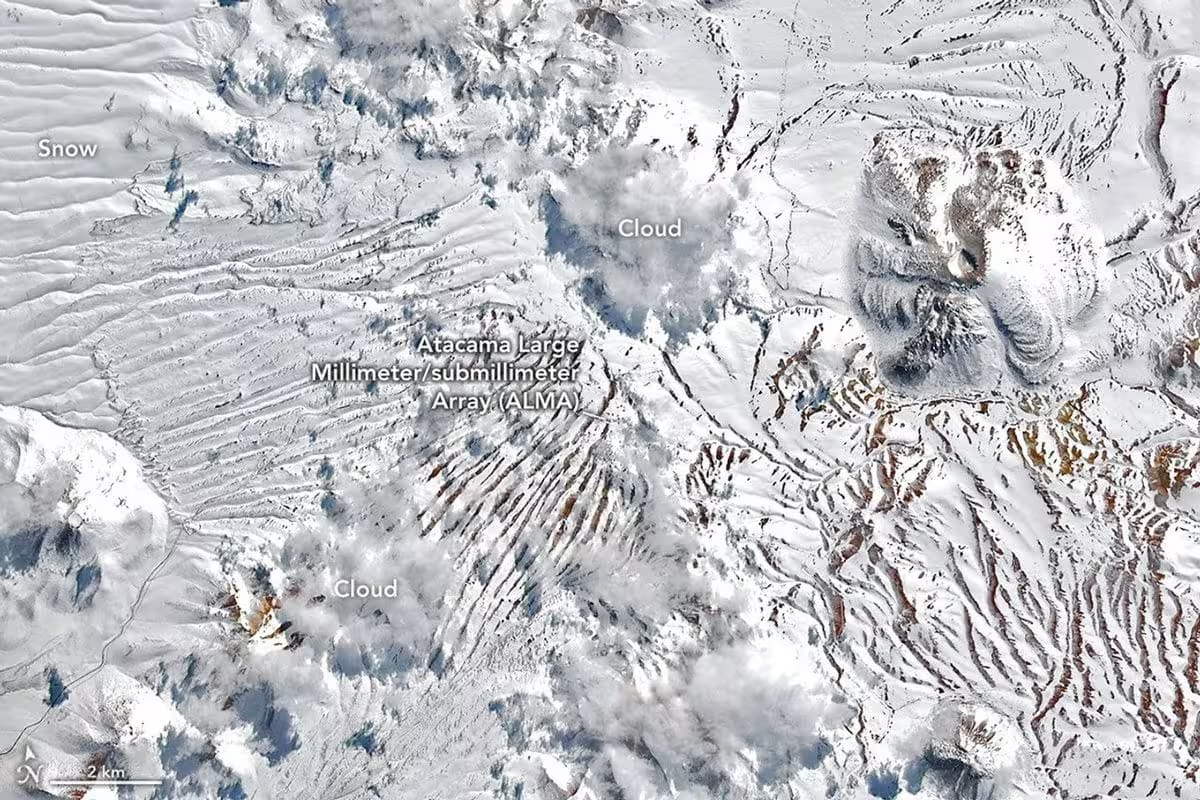
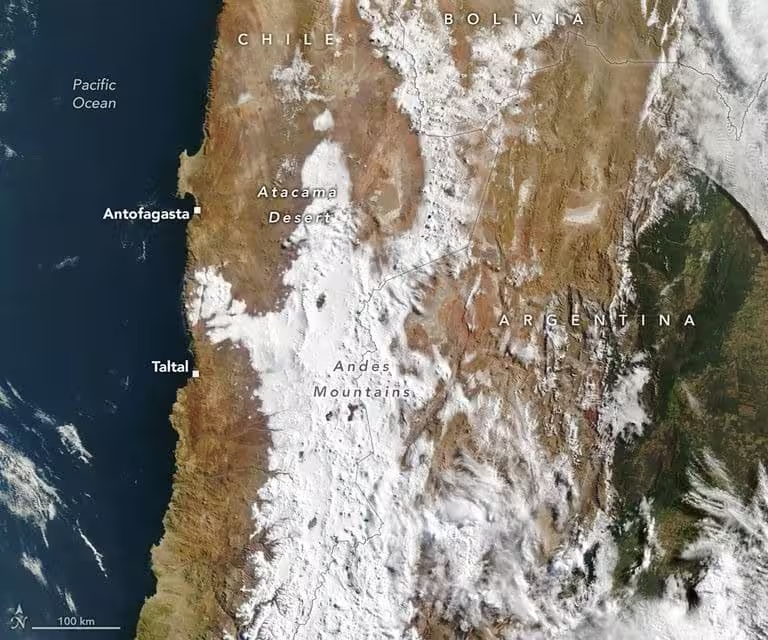
Satellite observations from NASA Earth Observatory, utilizing imagery from the Landsat 8 and Landsat 9 missions, captured the rapid transition between August 6 and August 14. The data revealed a white expanse spreading from the high peaks of the Andes deep into the desert interior, a phenomenon that, while previously documented in isolated events in 2011 and 2025, reached a significantly greater scale in 2026.
Atmospheric Anomalies Trigger Unprecedented Precipitation
The meteorological event was driven by the formation of “cutoff lows”—low-pressure systems that detach from the primary jet stream. According to University of Chile atmospheric scientist René Garreaud, a massive trough extending across a significant portion of the Southern Hemisphere facilitated this separation, drawing moisture from the Pacific coast into the hyperarid interior.
The impact was most striking in coastal zones unaccustomed to such deluges. In the town of Taltal, roughly 40 millimeters (1.6 inches) of rain fell over a three-day period. Garreaud noted that this total represents approximately ten times the city’s average annual precipitation, describing the levels as virtually unheard of in such a parched climate. Further inland, NASA’s Terra satellite confirmed that the storm system continued to push fresh snow westward from the mountains toward the coastline south of Antofagasta by August 19.
Scientific Infrastructure and Human Communities Face Disruption
The unusual weather patterns posed significant operational challenges for the high-altitude observatories stationed on the Chajnantor plateau. As the storm moved through the Altiplano-Puna volcanic complex, the Atacama Large Millimeter/submillimeter Array (ALMA) was forced to suspend its astronomical observations. The facility, which relies on the region’s historically stable and dry atmosphere, had to safeguard its sensitive equipment against high winds and heavy snow accumulation.
Beyond the scientific sector, the human cost was significant. Chile’s National Disaster Prevention and Response Service (SENAPRED) reported that the sudden influx of water triggered flash floods and mudflows. Thousands of residents were impacted by the event, with hundreds of homes sustaining structural damage, highlighting the vulnerability of desert infrastructure to sudden, extreme precipitation.
The Influence of a Warming Pacific
Experts point to the intensifying El Niño climate pattern as a primary catalyst for this shift in regional weather. El Niño typically acts to weaken the subtropical Pacific high, a high-pressure system that usually acts as a barrier against moisture, effectively shielding the Atacama from such storms. This weakening, coupled with the development of atmospheric blocking patterns over the South Pacific, created a scenario where moisture-laden air could penetrate deep into the continent, disrupting the traditional climate of northern Chile.
This article has been fact checked for accuracy, with information verified against reputable sources. Learn more about us and our editorial process.
Last reviewed on .
Article history
- Latest version
Reference(s)
- Dauphin, Lauren. “Rare, Widespread Snow in the Atacama Desert - NASA Science.”, August 27, 2026 NASA <https://science.nasa.gov/earth/earth-observatory/rare-widespread-snow-in-the-atacama-desert/>.
- GARREAUD, René. “René GARREAUD.” WCRP <https://www.wcrp-climate.org/about-wcrpx/governance/jsc-2026/176-rene-garreaud-2026>.
- “Terra | The EOS Flagship.”, December 18, 2025 <https://terra.nasa.gov/>.
- “Home - SENAPRED | Servicio Nacional de Prevención y Respuesta ante Desastres.”, July 11, 2025 SENAPRED | Servicio Nacional de Prevención y Respuesta ante Desastres - Es el organismo técnico del Estado chileno que se encarga de planificar y coordinar los recursos para la prevención y atención de emergencias y desastres, tanto naturales como causados por el hombre. <https://senapred.cl/>.
Cite this page:
- Posted by Karan Das