Deep Core Flow Reversed Beneath Pacific 2,200 km Below Earth Offers Unprecedented Glimpse
Decades of hidden Earth signals reveal
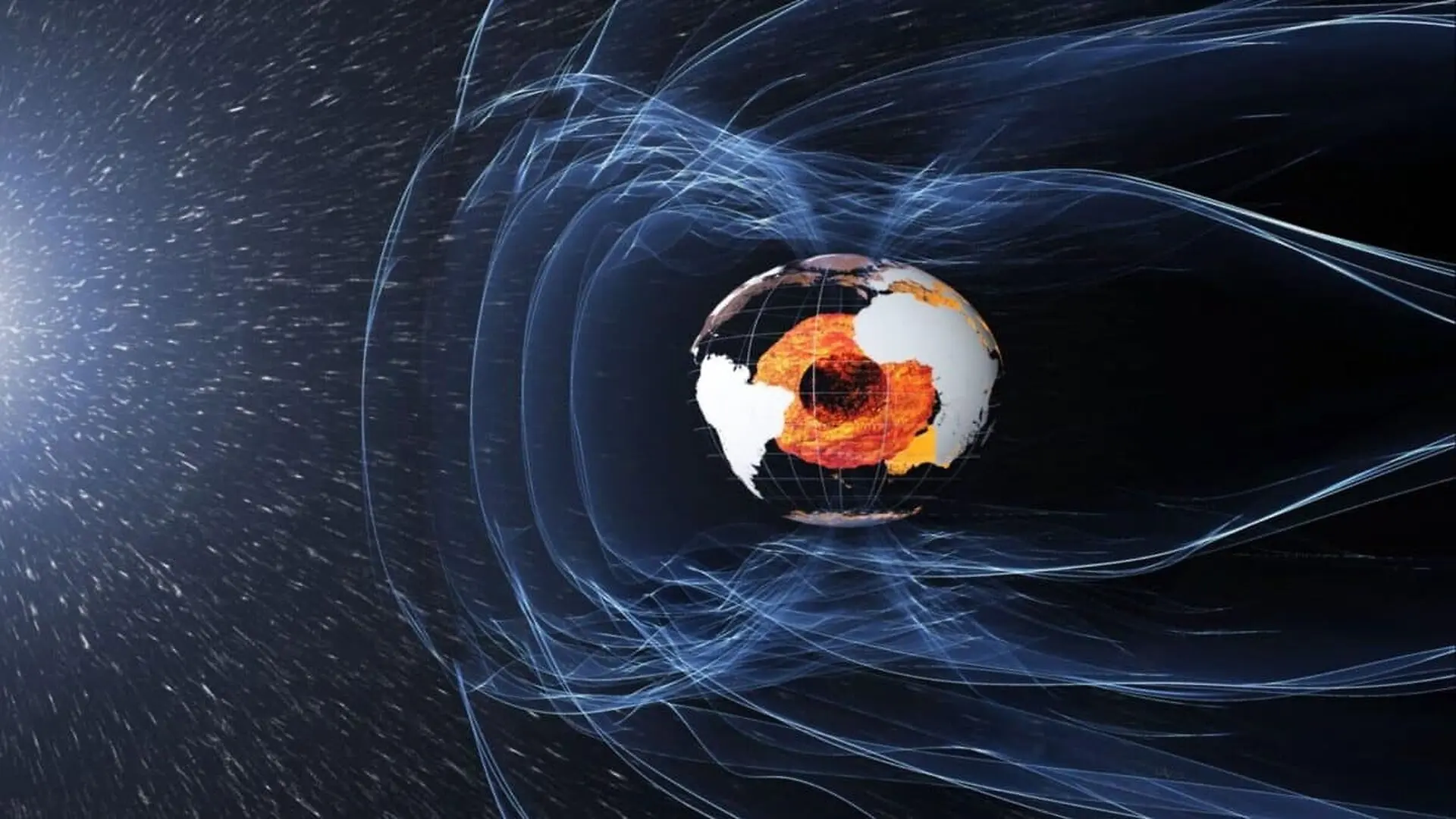
Beneath the Pacific basin, a vast pocket of liquid iron altered its flow direction near 2010, hinting that Earth’s inner dynamics can undergo rapid shifts. The planet’s outer core, a massive layer of swirling metallic fluid, works as a natural generator, sustaining the magnetic shield that deflects solar wind particles.
Although the core remains inaccessible to direct observation, scientists infer its behavior by monitoring variations in the geomagnetic field. By merging long‑term recordings from terrestrial observatories with satellite data, investigators have mapped an unexpected reversal in the Pacific‑region iron currents.
The research, appearing in the Journal of Studies of Earth’s Deep Interior, draws on measurements spanning 1997‑2025 and offers one of the sharpest snapshots of how swiftly deep‑earth processes can reorganize.
Sudden Flip of a Major Core Flow Detected
Analysis reveals that a broad swath of iron‑rich liquid under the equatorial Pacific switched from a faint westward drift to a pronounced eastward surge around 2010. This transition occurred roughly 2,200 km beneath the surface, close to the core‑mantle boundary. Prior models assumed that large‑scale outer‑core currents evolve over centuries; the new evidence demonstrates that substantial reconfigurations can happen within a decade.
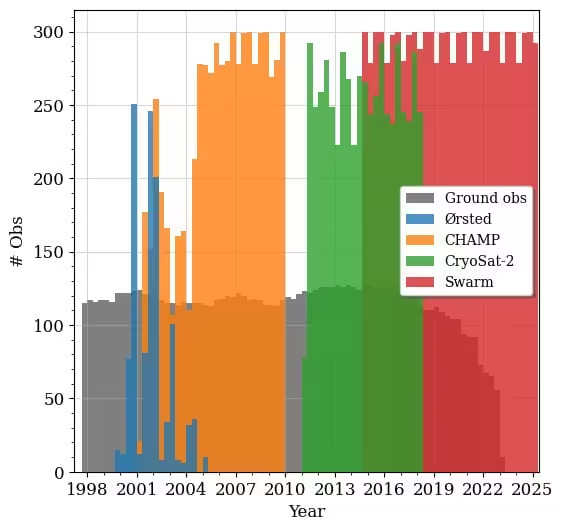
The team leveraged magnetic records from ESA’s Swarm and CryoSat missions, together with observations from the CHAMP and Ørsted satellites and a global network of ground stations. This comprehensive dataset enabled a high‑resolution reconstruction of the deep‑flow dynamics.
Frederik Dahl Madsen of the University of Edinburgh’s School of Geosciences, who led the investigation, noted that the abrupt reversal raises fresh questions about the forces shaping core dynamics. Researchers are now probing whether the phenomenon represents a brief anomaly, a recurring cycle, or a more permanent alteration in circulation patterns.
“The emergence of a strong eastward current beneath the Pacific coincides with a shift in inner‑core behaviour inferred from geodetic and seismic data, suggesting a coupled response within the deep interior.”
Satellite Magnetometers Uncover Hidden Core Motions
The flow of liquid iron in the outer core powers the geodynamo, the engine behind Earth’s magnetic field. Because direct sampling is impossible, orbiting instruments have become essential for probing these concealed movements.
ESA’s trio of Swarm satellites, launched in 2013, carry ultra‑sensitive magnetometers that detect minute fluctuations in the planet’s magnetic field. Their data help separate deep‑core signals from those generated by the crust, oceans, and atmosphere.
Anja Stromme, ESA’s Swarm Mission Manager, emphasized that the long‑term record allows scientists to track geodynamo evolution across multiple years, including events such as the 2017 geomagnetic jerk, a rapid change in field behaviour.
“Extended satellite magnetic observations let us follow core‑driven changes in near‑real time and refine models of Earth’s magnetic evolution. Future missions will remain pivotal.”
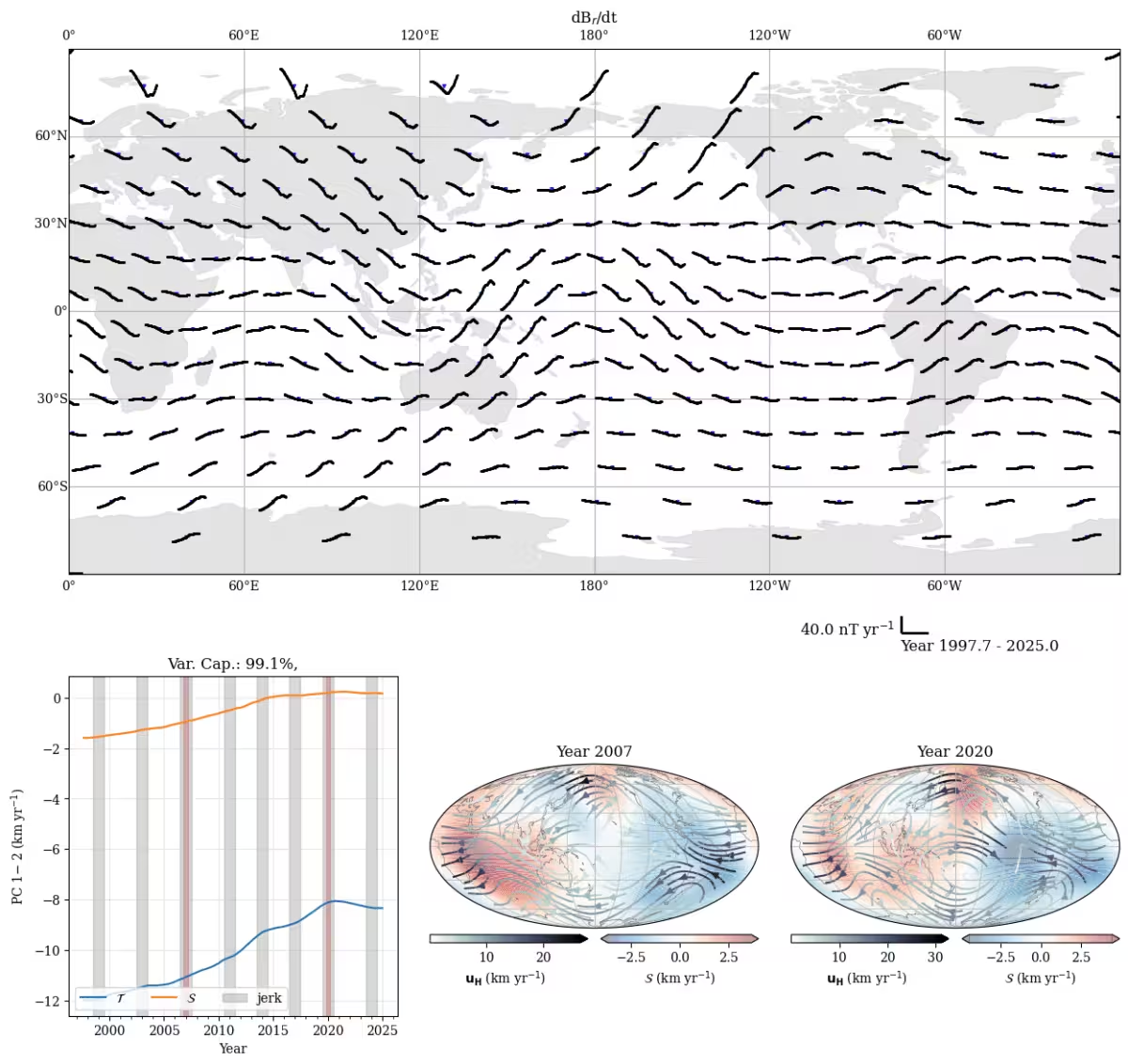
Satellite records also captured wave‑like patterns and swiftly evolving structures that would be difficult to discern from ground‑based measurements alone.
Implications of a Deep‑Earth Flow Shift
The detected reversal does not pose an immediate hazard to the surface, but it enriches our understanding of the planet’s internal engine. Variations in the magnetic field affect navigation, satellite operations, and space‑weather forecasting, making accurate models of core activity essential.
Elisabetta Iorfida, ESA’s Swarm Mission Scientist, remarked that the findings challenge the view of a largely steady westward flow in the outer core. She explained that regional alterations can emerge within a decade and may signal interactions among the outer core, inner core, and lower mantle.
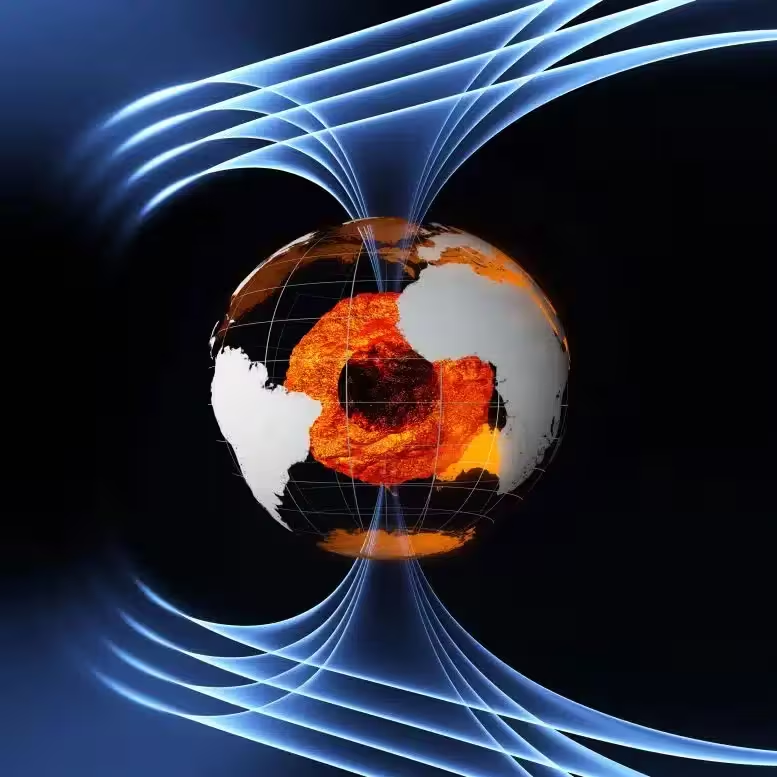
As additional satellite missions return new magnetic data, scientists will continue to monitor the Pacific‑region flow and explore what it reveals about Earth’s deepest layers.
This article has been fact checked for accuracy, with information verified against reputable sources. Learn more about us and our editorial process.
Last reviewed on .
Article history
- Latest version
Reference(s)
- Agency, European. “Swarm.” <https://earth.esa.int/eogateway/missions/swarm>.
- <https://www.esa.int/Applications/Observing_the_Earth/FutureEO/CryoSat>.
- “Introducing Anja Strømme - Earth Online.” <https://earth.esa.int/eogateway/gallery/introducing-anja-stromme>.
Cite this page:
- Posted by Karan Das