New Horizons May Reach the Solar System’s Edge Between 2029 and 2040
NASA’s New Horizons may soon cross a mysterious solar system boundary, offering fresh insights into the outer frontier.
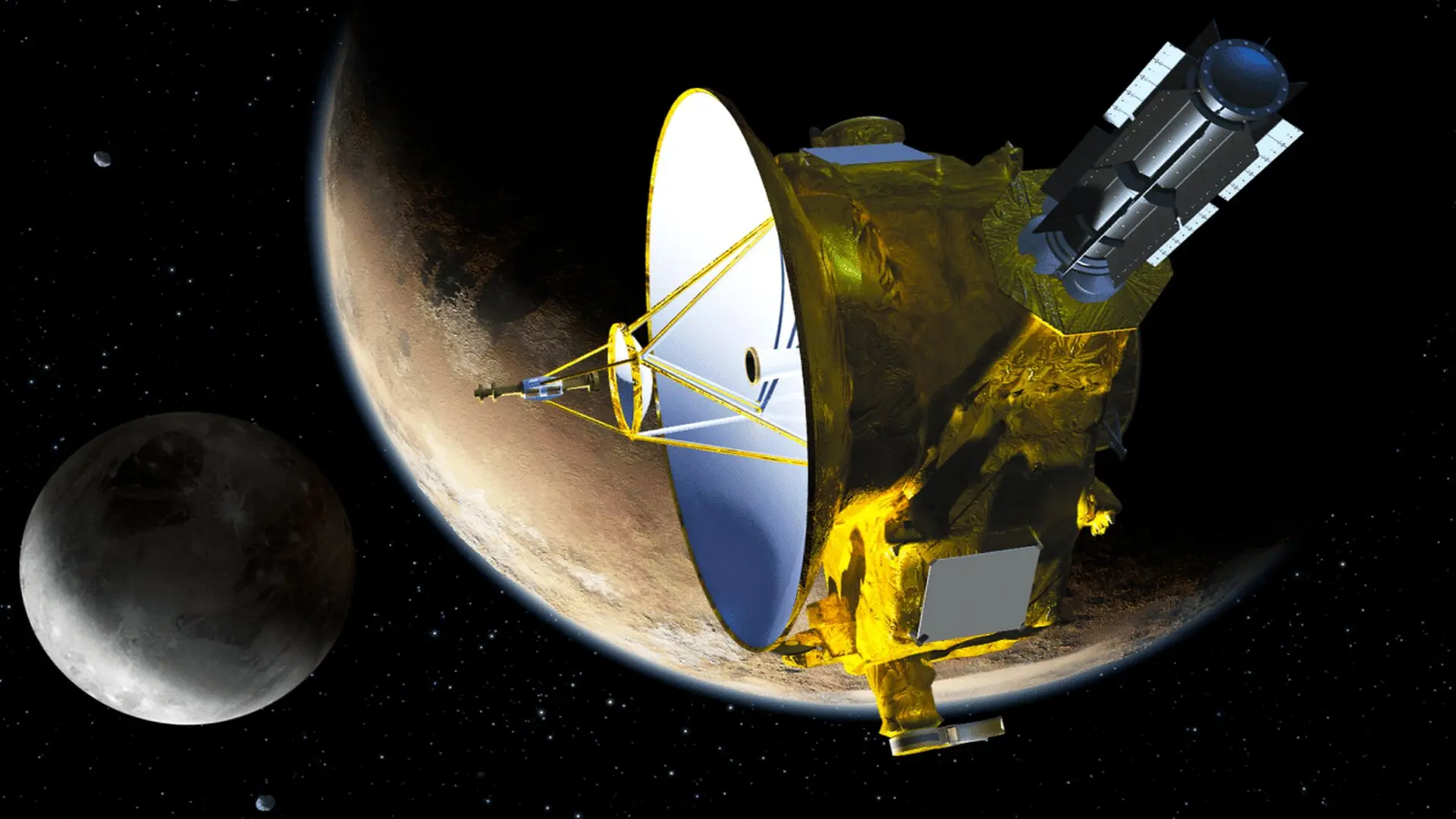
NASA’s New Horizons probe is closing in on a landmark phase of its journey. After reshaping our picture of Pluto and the Kuiper Belt, the spacecraft is now moving toward the outer rim of the heliosphere, the gigantic magnetic cavity blown by the Sun. New analyses suggest that the crossing could occur as early as 2029 or as late as 2040, offering a rare window to investigate where the solar wind yields to interstellar space.
Researchers Hone Predictions of the Solar System’s Edge
Pinpointing the exact terminus of our solar system is far more intricate than drawing a fixed line in the cosmos. The heliosphere constantly reshapes itself in response to fluctuations in solar output and the pressure of interstellar material streaming through the galaxy. Because the boundary shifts over time, estimating when New Horizons will meet the termination shock demands sophisticated modeling rather than a simple distance calculation. At present the probe lies roughly 66 astronomical units (AU) from the Sun—one AU being the average Earth‑Sun distance of about 149 million kilometres (93 million miles). Scientists say the mission is entering a zone where each new datum could reshape our grasp of the Sun’s sphere of influence.
In the course of refining these models, researchers are preparing for an event that only two spacecraft have witnessed so far. As Dr. Jonathan Gasser, lead author of the latest studies, explained:
“We want to understand when the spacecraft will reach the termination shock to prepare to take measurements and download data about this region.” He added, “Based on our research, we predict that New Horizons will encounter the termination shock as early as 2029 or as late as 2040. And it is possible that it could cross the boundary more than once as the heliosphere continues to expand and contract.”
Why the Heliospheric Frontier Is in Constant Motion
The heliosphere exists because the Sun continuously ejects a stream of charged particles known as the solar wind. These particles surge outward at speeds near 1.6 million kilometres per hour, enveloping every planet and providing a shield against much of the energetic radiation arriving from interstellar space. Yet this protective bubble is anything but static. During periods of heightened solar activity, stronger winds push the heliosphere farther outward; during quieter phases, the boundary contracts.
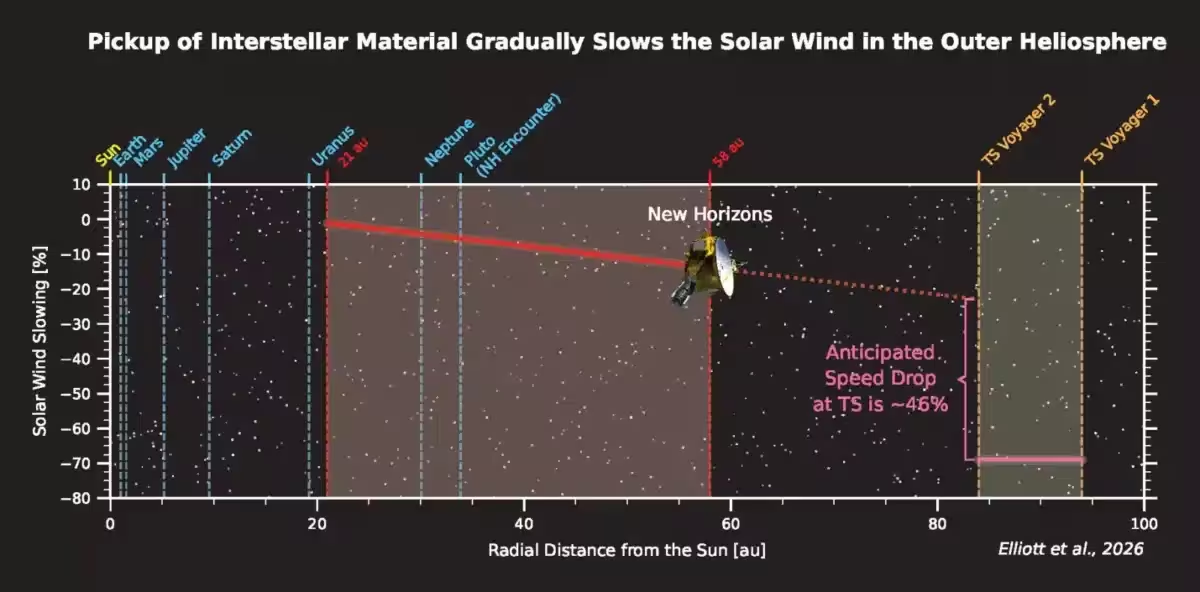
Recent work also points to a second influence: ionised particles from the galaxy collide with the outward‑flowing solar wind, gradually slowing it as the two streams intermingle. When the solar wind’s speed drops below the local sound speed, a termination shock forms—a region prized for scientific study. Because both the Sun and the surrounding interstellar environment evolve, the shock can shift, raising the possibility that New Horizons might traverse it more than once.
A New Probe Joins the Voyagers in Interstellar Exploration
Only Voyager 1 and Voyager 2 have previously pierced the termination shock and entered interstellar space, making any additional crossing exceptionally valuable. When Voyager 2 passed through the shock, its instruments recorded a sharp 46 percent drop in solar‑wind speed, offering direct evidence of the transition from solar to interstellar dominance. New Horizons carries a distinct suite of sensors and will encounter the boundary under different solar conditions, giving scientists a fresh comparative dataset.
Dr. Heather Elliott of the Southwest Research Institute emphasized the broader significance, noting, “Studying the heliosphere is like solving a cosmic puzzle. Not only do we learn more about how the Sun’s influence ends, but we also gain a deeper understanding of the boundary between our solar system and interstellar space – a critical step toward planning future interstellar travel.”
Recent Papers Map the Path to the Next Deep‑Space Milestone
The newest timeline estimates are backed by three peer‑reviewed investigations. Two papers probing the heliospheric boundary were published in The Astrophysical Journal and Advances in Space Research, while a separate analysis of solar‑wind velocities appeared in The Astrophysical Journal. Together these studies provide the most detailed picture yet of the dynamic environment awaiting New Horizons. As the probe presses onward, each kilometre brings humanity closer to a second historic crossing of the frontier that separates our solar system from the vast gulf between the stars. Whether that event unfolds in a few years or nearer the end of the next decade, the mission is poised to deliver observations that could reshape scientific conceptions of the Sun’s outermost reach and the nature of interstellar space.
This article has been fact checked for accuracy, with information verified against reputable sources. Learn more about us and our editorial process.
Last reviewed on .
Article history
- Latest version
Reference(s)
- Gasser, Jonathan., et al. “Solar Wind Forecasting for Long-term Variations of the Global Heliosphere.” The Astrophysical Journal, vol. 999, no. 1, February 20, 2026, pp. 11 American Astronomical Society, doi: 10.3847/1538-4357/ae3152. <https://iopscience.iop.org/article/10.3847/1538-4357/ae3152>.
- Gasser, Jonathan., et al. “Predictions of New Horizons’ termination shock crossing.” Advances in Space Research, vol. 77, no. 12, June 1, 2026, pp. 12741-12753. Elsevier BV, doi: 10.1016/j.asr.2026.04.074. <https://www.sciencedirect.com/science/article/pii/S0273117726005612?via%3Dihub>.
- Elliott, Heather A.., et al. “The Gradual Slowing of the Solar Wind in the Outer Heliosphere.” The Astrophysical Journal, vol. 1001, no. 1, April 3, 2026, pp. 55 American Astronomical Society, doi: 10.3847/1538-4357/ae39c6. <https://iopscience.iop.org/article/10.3847/1538-4357/ae39c6>.
Cite this page:
- Posted by Karan Das