Hubble Captures Brilliant New Image of LH 95, a Stellar Nursery With 2,500 Growing Stars
A stunning Hubble image of LH 95 reveals how stars form, evolve and keep growing over millions of years, offering fresh insights for astronomers.
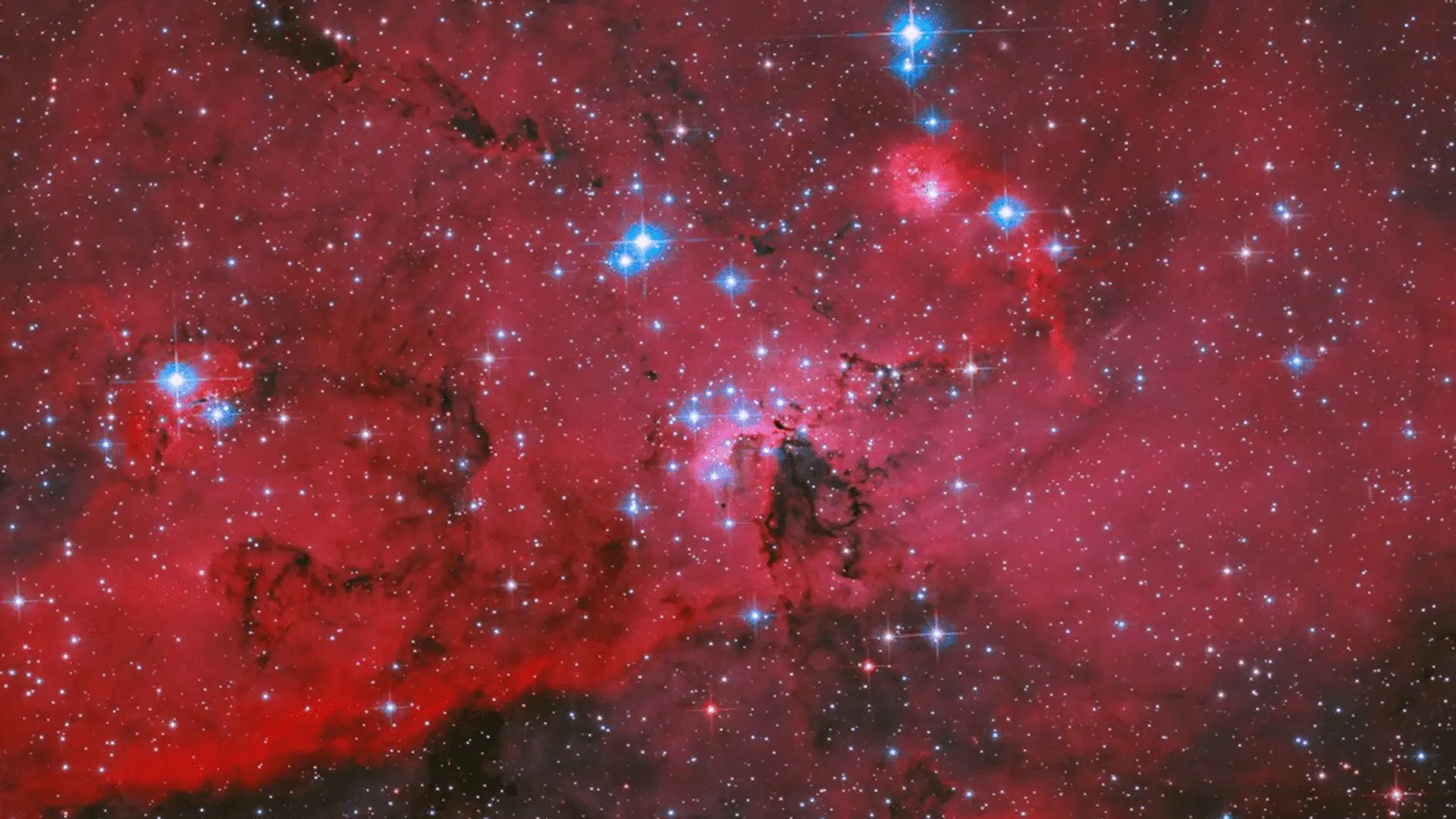
A fresh release from the NASA Hubble Space Telescope showcases an exceptionally colorful star‑forming region, giving researchers a rare glimpse into the early stages of stellar birth. The new view of LH 95, situated within the Large Magellanic Cloud, highlights dazzling blue stars set against vivid crimson hydrogen clouds and reveals thousands of nascent stars that have not yet ignited nuclear fusion.
A Radiant Nebula of Youthful Stars and Hydrogen Emission
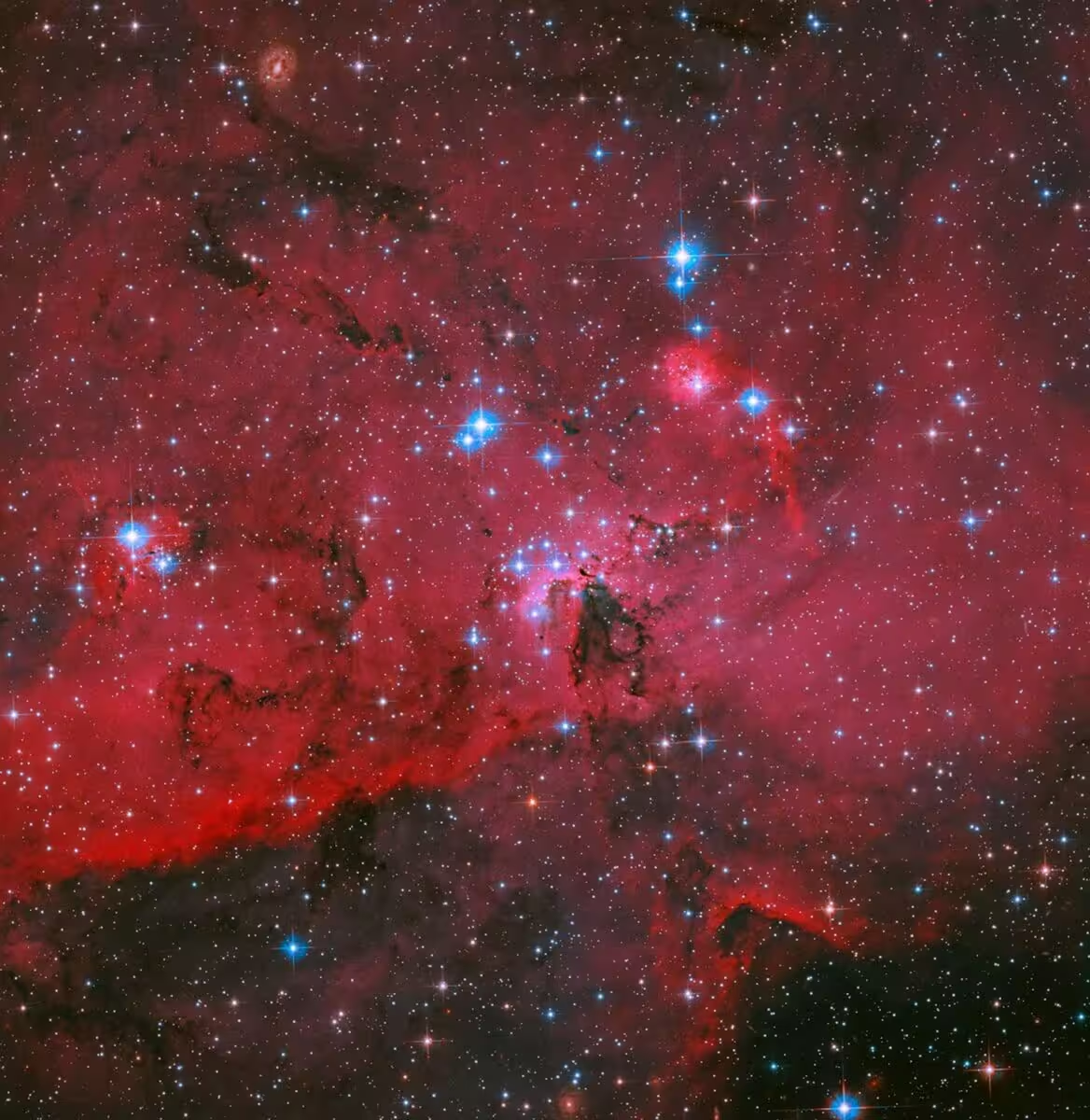
Nestled in the dwarf galaxy that orbits the Milky Way, LH 95 is a sprawling association where massive blue giants share space with countless lower‑mass companions. The contrast between the bright stellar points and the surrounding red‑tinged gas makes the scene instantly arresting. The scarlet hue originates from hydrogen‑alpha emission, a key tracer of active star‑forming regions. Dark filaments of dust thread through the nebula, resisting the intense ultraviolet light and powerful stellar winds generated by the most massive stars, while constantly reshaping the surrounding material.
Thousands of Proto‑Stars Still Accreting Mass
NASA reports that LH 95 hosts roughly 2,500 pre‑main‑sequence objects—stars that have gathered most of their final mass but have not yet ignited hydrogen fusion. These youthful objects continue to draw material from surrounding gas‑rich disks, slowly increasing in size until core temperatures become sufficient for sustained nuclear burning. Detailed analysis shows that the accretion rate naturally declines as the stars mature, and the process can persist for several million years, longer than many earlier models predicted. The findings also shed light on planetary system development, since the same disks that feed young stars often give rise to planets.
Sequential Generations Reveal Overlapping Star‑Formation Episodes
Investigations of LH 95 uncovered evidence that the region has experienced multiple waves of star formation rather than a single burst. Many of the identified stars appear to be around four million years old, while the most massive member—estimated at 60 to 70 solar masses—is roughly one million years younger than its neighbors. This staggered timeline suggests that massive stars may trigger subsequent generations through their radiation, stellar winds, and eventual supernova explosions, offering a detailed record of how star‑forming environments evolve over time.
Why LH 95 Serves as a Benchmark for Stellar Evolution Studies
Astronomers value LH 95 for its dense population of young stars combined with relatively low dust obscuration compared with similar regions in the Milky Way, allowing clear observation of objects at various evolutionary stages. The latest Hubble images underscore the telescope’s continued relevance more than three decades after launch. Alongside the James Webb Space Telescope and the forthcoming Nancy Grace Roman Space Telescope, Hubble remains a cornerstone of contemporary astronomy, steadily advancing our understanding of how galaxies assemble stars across cosmic history.
This article has been fact checked for accuracy, with information verified against reputable sources. Learn more about us and our editorial process.
Last reviewed on .
Article history
- Latest version
Reference(s)
- Vogel, Tracy. “NASA's Hubble Captures Crimson Cloud Sparkling with White, Blue Stars - NASA Science.”, July 3, 2026 NASA <https://science.nasa.gov/missions/hubble/nasas-hubble-captures-crimson-cloud-sparkling-with-white-blue-stars/>.
Cite this page:
- Posted by Karan Das