ESA’s Tiny CubeSat Will Land on Asteroid Apophis to Measure Earth’s Gravity Pull
ESA greenlights a CubeSat to attempt the first autonomous landing on asteroid Apophis before its close Earth flyby.
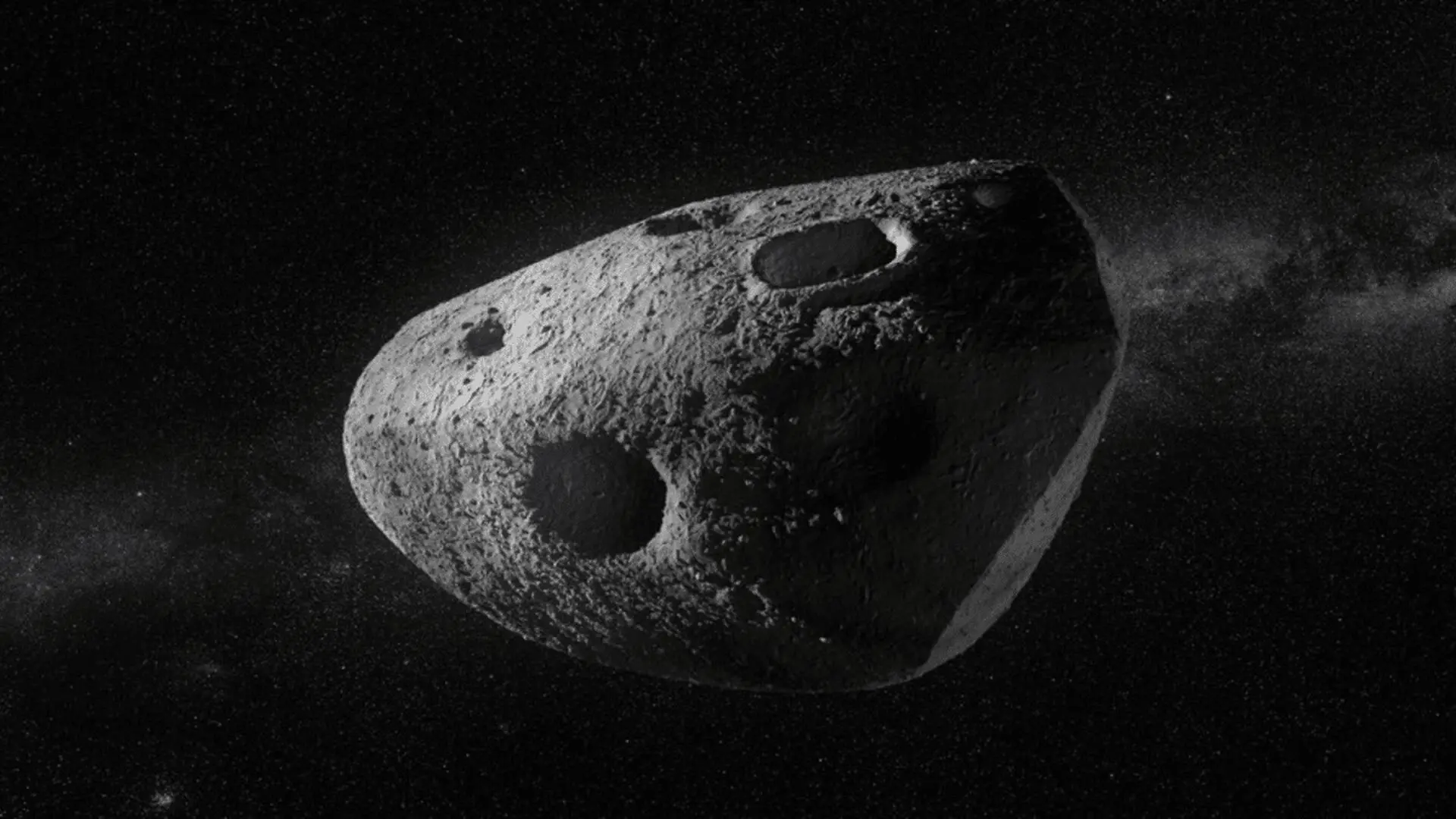
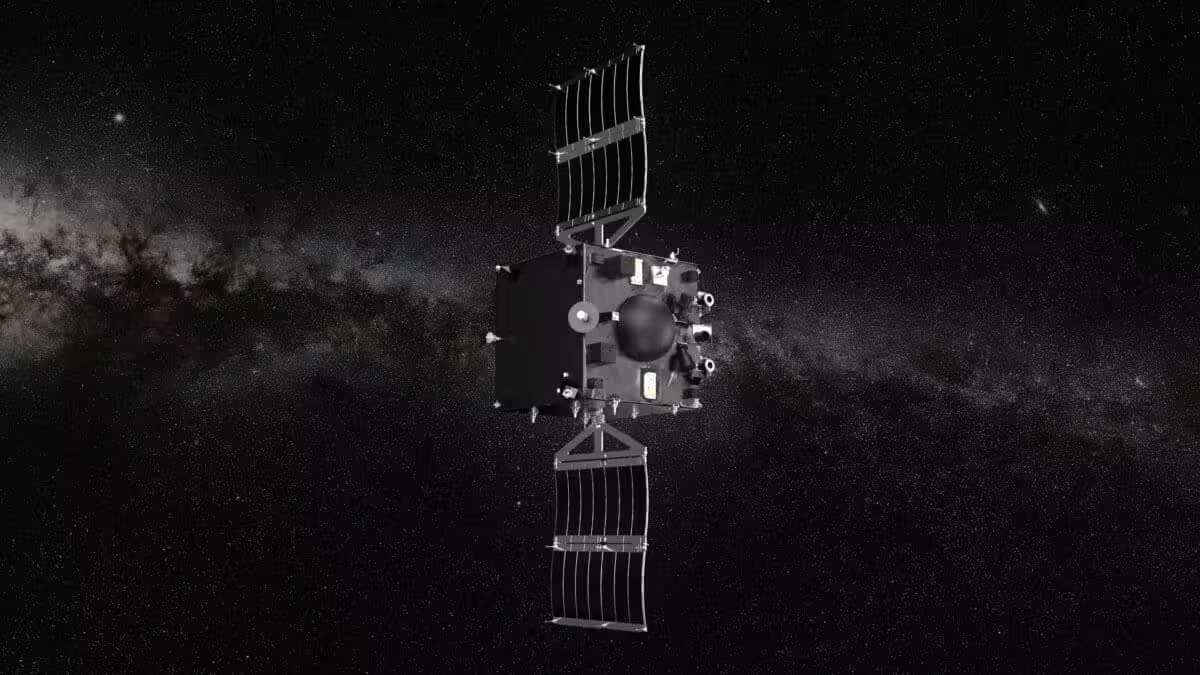
The European Space Agency has moved forward with one of its most daring planetary‑defence projects by signing a contract for Don Quijote, the inaugural CubeSat built to touch down on an asteroid. The tiny probe will accompany the Ramses spacecraft on a journey to 99942 Apophis, which will swing past Earth at an exceptionally close distance on April 13, 2029. ESA says the mission will let researchers monitor, from the asteroid’s surface, how Earth’s gravity reshapes a large near‑Earth object during this rare encounter.
Why the 2029 Apophis Flyby Matters
Apophis, a 375‑metre rock, ranks among the most scrutinised asteroids because its 2029 trajectory will bring it within roughly 32,000 kilometres of our planet—closer than many geostationary satellites. Rather than treating the approach as a mere sky‑watching event, ESA plans to turn it into a scientific laboratory by placing instruments on the asteroid before the encounter.
“The arrival of Apophis represents a unique opportunity,” said Orson Sutherland, ESA’s programme manager for Mars and Beyond. “It is exceedingly rare for such a large asteroid – at 375 m across, about the size of a cruise liner – to pass so near to Earth. Flying past at an altitude of 32 000 km, its trajectory will take it within the orbit of our geostationary satellites.”
He continued: “It’s really a free experiment because the tug of Earth’s gravity is forecast to trigger deformation and potentially set off asteroid quakes, that Don Quijote will now be able to monitor right on the spot.”
These conditions provide a natural experiment that cannot be duplicated in a laboratory or fully reproduced by computer models. Researchers anticipate that Earth’s pull will alter Apophis’ interior in measurable ways, shedding light on the composition of primordial rocky bodies and informing future defence tactics.
ESA notes that this close approach will be one of the most scientifically valuable opportunities of the coming decades.
Designing a CubeSat for an Asteroid Touchdown
Although Don Quijote fits inside a shoebox‑sized volume, its engineering challenges exceed those of typical Earth‑orbit CubeSats. The probe must endure deep‑space travel, navigate around a rotating small body, autonomously select a safe landing zone, survive the impact, and immediately begin measurements in an environment never before experienced by a CubeSat.
Three core instruments will be onboard. The GRASS gravimeter—developed by the Royal Observatory of Belgium in partnership with EMXYS—will map Apophis’ weak gravity field. The MARIE magnetometer, created under the German Space Science Programme, will test for any intrinsic magnetic field and gauge Earth‑induced magnetic effects. A third payload, the Seismic Instrument for Asteroids (SIA) from ISAE‑SUPAERO, aims to perform the first direct seismic survey of an asteroid.
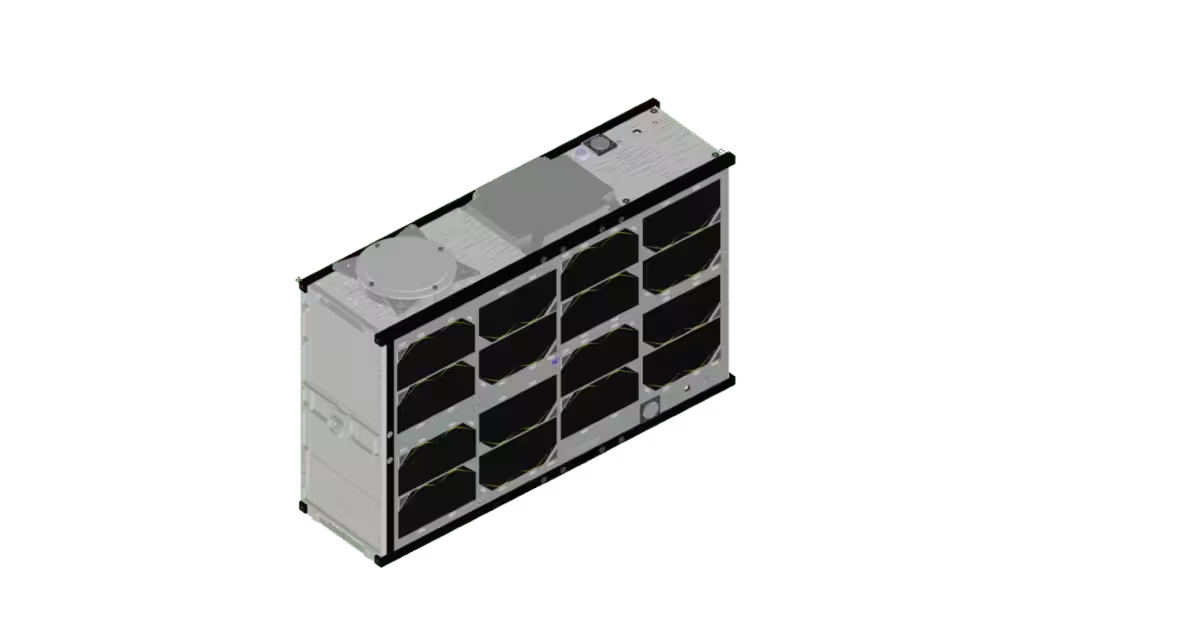
Integrating all these components into a compact frame demanded novel engineering solutions.
Francisco García de Quirós, CTO of EMXYS, explained: “We have to fit in all our instruments, plus the spacecraft electronics, batteries and inter‑satellite links, along with eight thrusters for propulsion. At the same time we must maintain a carefully controlled centre of mass so the thrusters work with optimal efficiency as the CubeSat steers itself down to a safe landing.”
Every gram saved translates into added scientific capability and ensures the CubeSat can stay attached to the larger Ramses platform throughout the voyage.
Tight Schedule Ahead of the 2029 Encounter
Ramses is slated to launch on Japan’s H3 rocket in spring 2028, giving engineers less than two years to finish building, integrating, and qualifying the spacecraft before departure.
To accelerate development, ESA is re‑using hardware from the Hera mission, which is currently heading toward the Dimorphos asteroid after NASA’s DART impact test. Leveraging proven components reduces risk and lets the team concentrate on the new challenges posed by Apophis.
Mission manager Paolo Martino said: “Now that also the last main contract has been signed, the team can get on with implementing the mission within an unavoidably tight timescale – because the asteroid will not be waiting around for us!”
Missing any milestone would jeopardise the launch window, and a missed launch would mean forfeiting the historic flyby.
Autonomous Descent onto a Rotating Asteroid
The most dramatic segment will commence when Don Quijote separates from Ramses and initiates its descent. Because of communication delays, the CubeSat must conduct a fully autonomous landing, relying on onboard navigation and feature‑tracking algorithms.
Francesca Ingiosi, who oversees the Ramses CubeSats, clarified: “There won’t be time for sustained human oversight: Don Quijote is going to take itself down on a completely autonomous basis, relying on feature tracking to find a safe place to land. It will be running its gravimeter and magnetometer when it flies, but we have high expectations for its scientific work on the surface.”
She added that the surface environment remains uncertain. “It will come down quite slowly, but in the ultra‑low gravity of Apophis some bouncing along the surface is possible. The CubeSat is therefore designed to operate from any orientation, although the precise nature of the surface remains a question mark: there is even a small possibility that Don Quijote sinks into the ground, which would not be good!”
The asteroid’s rotation and temperature swings add further complexity. “The asteroid is likely to be tumbling chaotically, and passing from local day to night should mean big temperature shifts. To maximise our surface lifetime we would want to be on a spot experiencing both day and night, to allow us to recharge our batteries without overheating. But if we did end up in sustained shadow Don Quijote also has non‑rechargeable batteries as a backup power source.”
If all goes as planned, Don Quijote will become the first CubeSat to operate from an asteroid’s surface while documenting how a close Earth encounter reshapes a near‑Earth object. The mission could reshape expectations for small spacecraft in deep space and provide data that no previous asteroid mission has captured.
This article has been fact checked for accuracy, with information verified against reputable sources. Learn more about us and our editorial process.
Last reviewed on .
Article history
- Latest version
Cite this page:
- Posted by Karan Das