Scientists Have Finally Unlocked The Secret Behind Roman Concrete’s Ability To Heal Itself
Scientists have finally uncovered the secret behind the incredible durability of ancient Roman concrete, revealing how these structures survived 2,000 years.
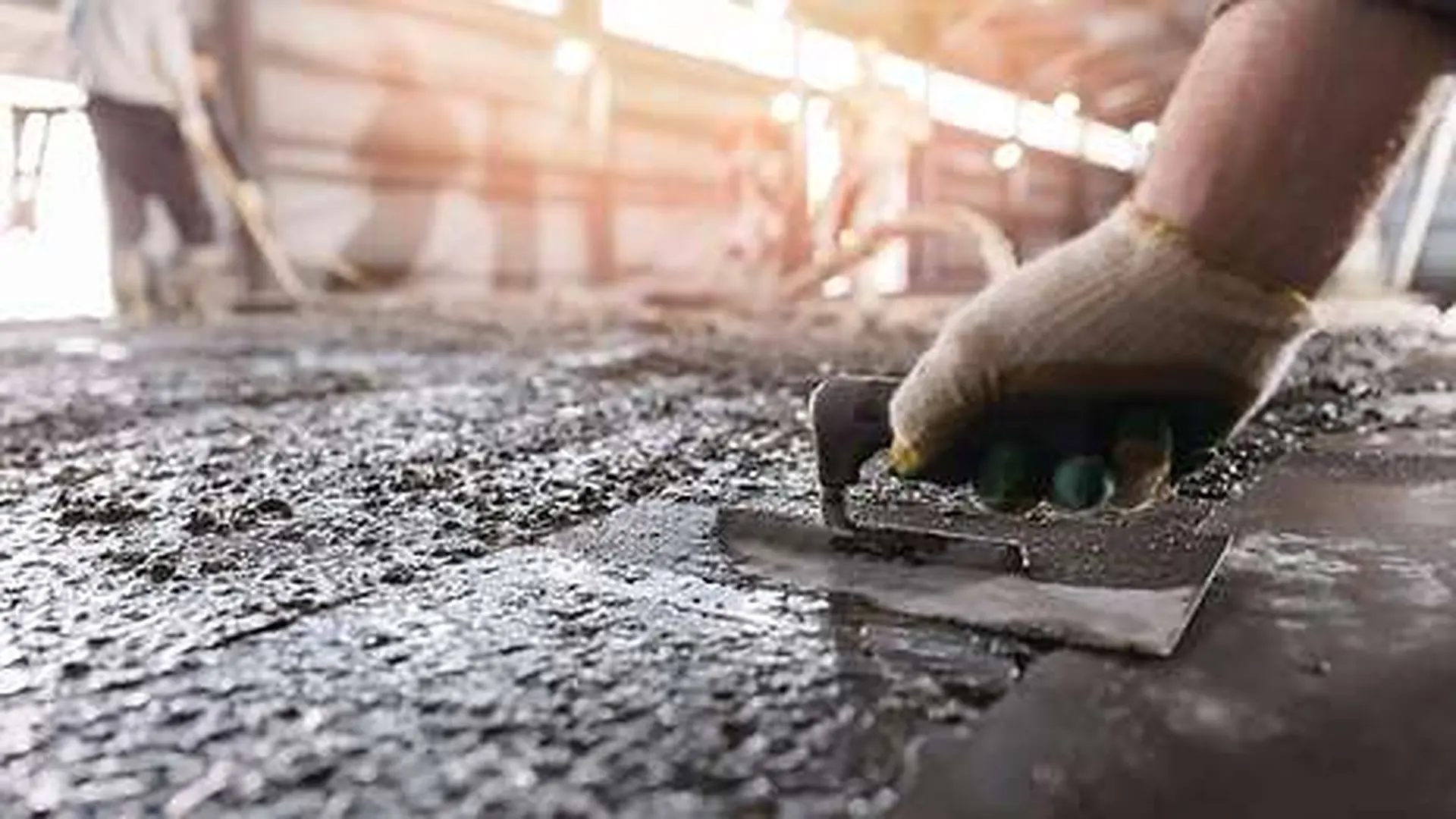
For generations, the durability of ancient Roman structures was primarily attributed to the inclusion of pozzolans, or volcanic ash, in their mortar recipes. However, new scientific investigations reveal that the secret to this longevity lies in a sophisticated, deliberate production process that granted the material a remarkable ability to self-repair.
In 2023, a research team headed by Admir Masic, a professor at the Massachusetts Institute of Technology (MIT), identified a technique termed “hot mixing.” This method introduces small, reactive pockets of lime into the concrete matrix, which serve as a latent healing mechanism when the structure sustains damage.
The Chemistry of Ancient Self-Healing Materials
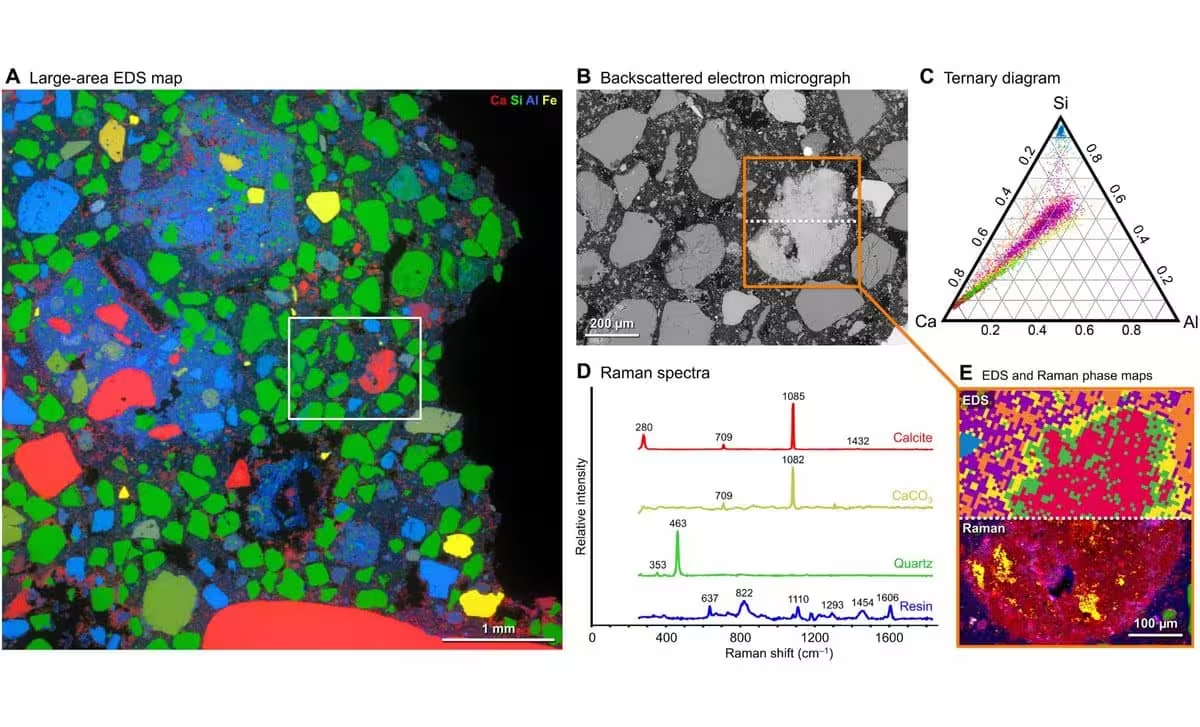
Ancient Roman builders utilized a distinct approach compared to modern manufacturing standards. Rather than blending lime with water before introducing other ingredients, they combined quicklime directly with volcanic components. This reaction, which releases significant heat, resulted in the presence of calcium-rich mineral inclusions known as lime clasts throughout the mortar.
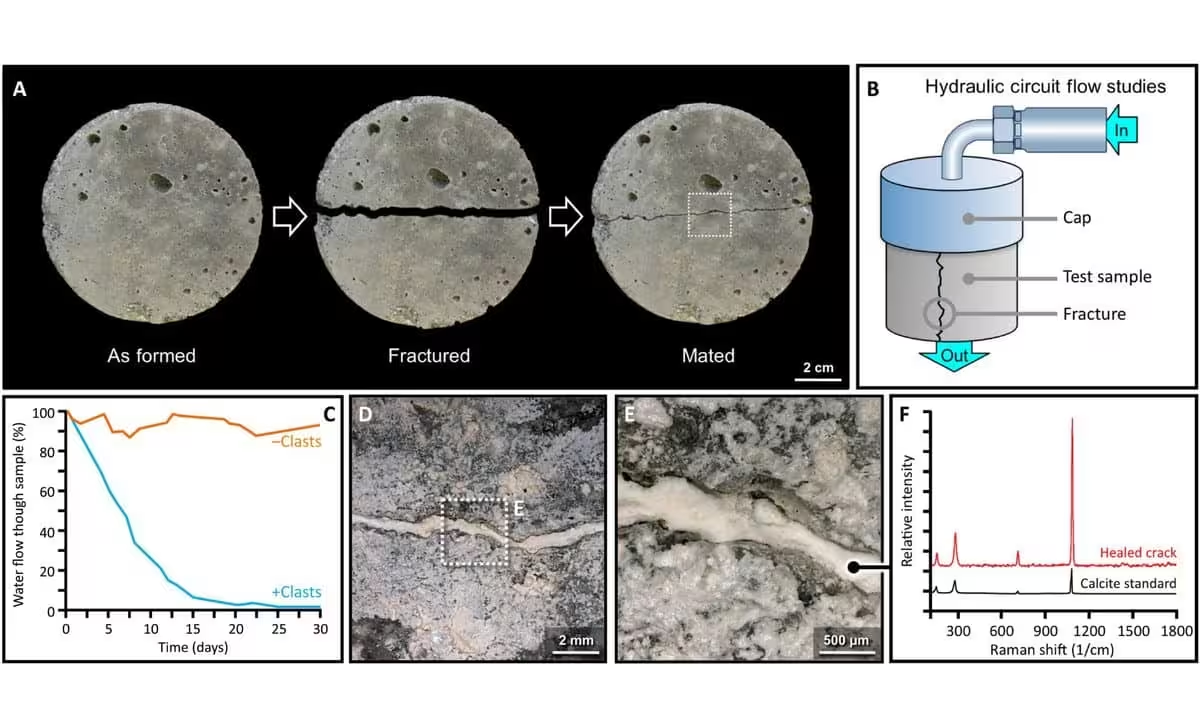
While these white, pebble-like fragments were long dismissed by historians as evidence of inferior mixing or poor quality control, recent research suggests they were actually a critical engineering feature. When a crack forms in the concrete, water is able to infiltrate the structure. This moisture activates the lime clasts, causing them to dissolve and re-precipitate as calcium carbonate crystals. This chemical reaction effectively seals the fissure, preventing further structural degradation.

Controlled experiments have validated that this specific formulation allows concrete to autonomously mend hairline fractures. This regenerative capacity stands in stark contrast to contemporary concrete, which is notoriously susceptible to long-term weathering and structural fatigue.
The question of whether this technique was an intentional Roman innovation or a byproduct of crude methods was settled by findings at an archaeological site in Pompeii. In 2025, researchers examining construction materials buried by the eruption of Mount Vesuvius in 79 AD discovered clear proof that Roman builders intentionally mixed quicklime with volcanic materials, confirming that hot mixing was a standardized, purposeful practice.

Bridging Millennia for Modern Infrastructure
The realization that ancient builders possessed a solution to concrete degradation has spurred significant interest within the sustainable engineering sector. Start-ups like DMAT, co-founded by Masic and entrepreneur Paolo Sabatini, are currently working to integrate these ancient chemical principles into modern construction workflows. The goal is to introduce additive materials that can be used within existing production systems rather than overhauling the industry entirely.
Projections from DMAT suggest that adopting this self-healing technology could extend the service life of infrastructure by 50% while simultaneously reducing carbon emissions by up to 60%. A practical application of this research occurred in 2026, when a specialized repair mortar was successfully applied to the N13 highway in Graubünden, Switzerland.
Reimagining Durable Design
While the Romans were driven by the necessity of creating enduring monuments with available local resources, their legacy has provided a blueprint for modern sustainability. The focus is shifting from simple raw strength toward responsive materials capable of autonomous maintenance.
As the construction industry faces mounting pressure to address its massive environmental footprint, these findings from Rome offer a vital path forward. By revisiting ancient techniques, engineers may finally be able to develop infrastructure that does not just withstand time, but actively survives it.
This article has been fact checked for accuracy, with information verified against reputable sources. Learn more about us and our editorial process.
Last reviewed on .
Article history
- Latest version
Reference(s)
- “Admir Masic.” <https://cee.mit.edu/people_individual/admir-masic/>.
- “Riddle solved: Why was Roman concrete so durable?.”, January 6, 2023 MIT News | Massachusetts Institute of Technology <https://news.mit.edu/2023/roman-concrete-durability-lime-casts-0106?utm_source=chatgpt.com>.
- Seymour, Linda M.., et al. “Hot mixing: Mechanistic insights into the durability of ancient Roman concrete.” Science Advances, vol. 9, no. 1, January 6, 2023 American Association for the Advancement of Science (AAAS), doi: 10.1126/sciadv.add1602. <https://www.science.org/doi/10.1126/sciadv.add1602>.
Cite this page:
- Posted by Bilal Abbasi