The 8 Most Persistent Theories Behind Amelia Earhart’s Mysterious Disappearance
From lost radio signals to island mysteries, explore the enduring theories and wartime rumors surrounding the final, ill-fated flight of Amelia Earhart.
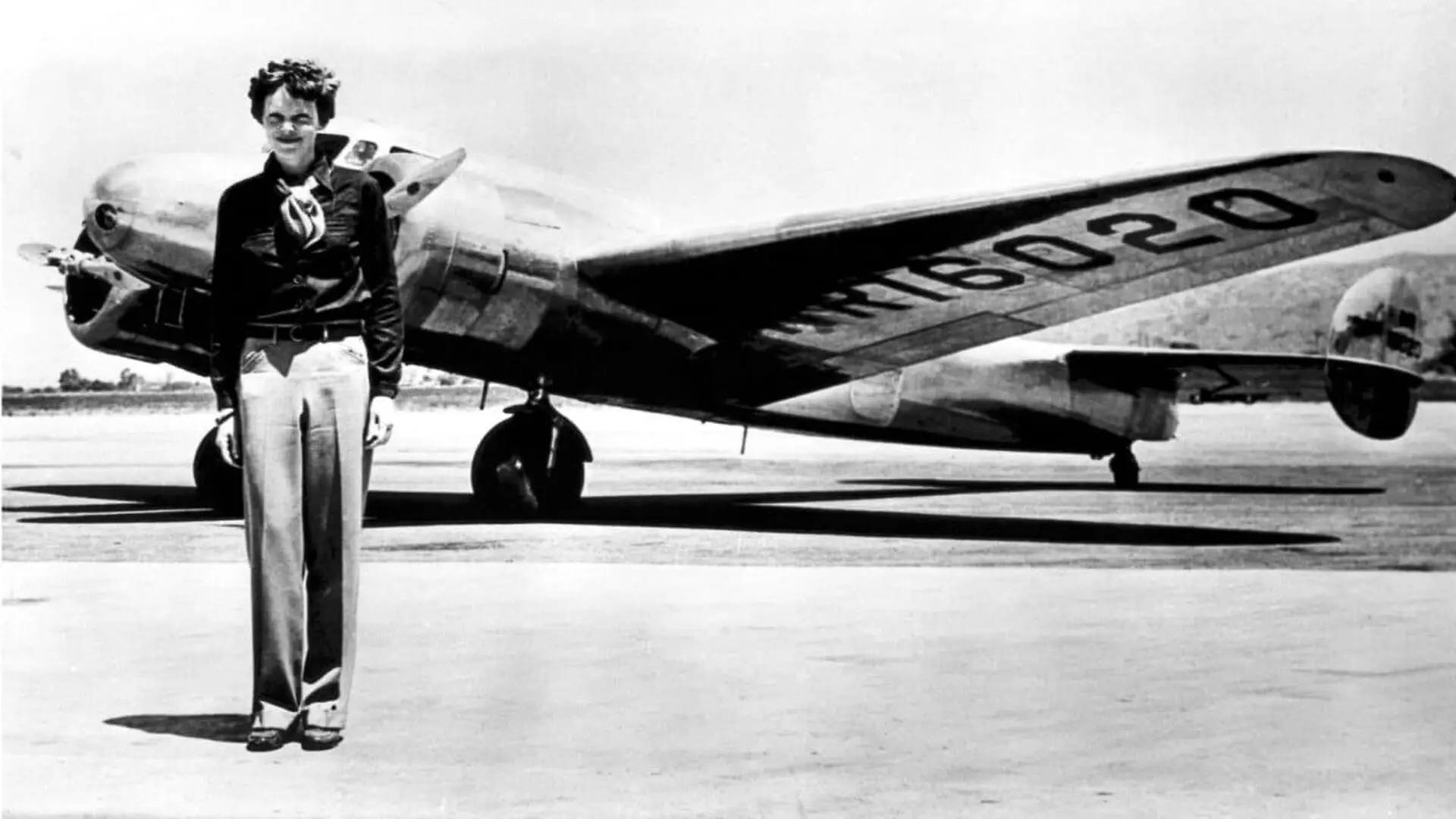
The final transmission from Amelia Earhart, sent at 8:43 a.m. local time on July 2, 1937, remains one of aviation history’s most haunting puzzles. Departing Lae, New Guinea, alongside navigator Fred Noonan in a Lockheed Electra, the duo aimed for the remote Howland Island, where the U.S. Coast Guard cutter Itasca stood ready to assist. Earhart’s last confirmed words—“We are on the line 157 337… We are running on line north and south”—suggested she was desperately searching for the island, but no further contact followed. The ensuing two-week search, covering an expanse of the Pacific roughly the size of Texas, yielded nothing, fueling decades of speculation ranging from the plausible to the bizarre.
The Prevailing Theory: A Final Descent into the Pacific
The most widely accepted explanation among experts remains the simplest: the aircraft, low on fuel and unable to locate Howland Island, succumbed to the vastness of the Pacific Ocean. The U.S. Navy reached this conclusion in 1937, asserting that the Electra likely sank into waters reaching depths of 18,000 feet. This scenario aligns directly with Earhart’s final radio reports regarding her dwindling fuel supply and requires no assumptions of clandestine diversions or mid-flight changes in course.

The second-most prominent theory suggests that after missing their destination, the pair made an emergency landing on the reef at Gardner Island, now known as Nikumaroro. The International Group for Historic Aircraft Recovery (TIGHAR) has spent decades examining this possibility, analyzing artifacts and potential radio transmissions from the period. A particularly grim aspect of this hypothesis involves thirteen bones found on the island in 1940, which some have suggested were scavenged by giant coconut crabs. However, no definitive evidence has ever linked these remains to Earhart, and a recent scientific expedition by researchers from Purdue University concluded without a breakthrough.

Another theory, championed by researcher William Snavely, posits that Earhart attempted to turn back toward New Britain or New Guinea after realizing she could not find Howland, potentially crashing near Buka Island where local divers have reported seeing an aircraft wreck. Critics point out, however, that radio signals received by the Itasca reportedly grew stronger as Earhart approached Howland, suggesting she never turned away.

Myths of Captivity, Espionage, and Other Unsubstantiated Claims
Persistent, if unproven, narratives suggest Earhart was captured by Japanese forces in the Marshall Islands and later transported to Saipan. This idea was popularized by Fred Goerner’s 1966 book, The Search for Amelia Earhart, based on local anecdotal testimony. Yet, the theory suffers from a lack of physical evidence, and the proposed crash sites are hundreds of miles off course.

Similarly, the suggestion that Earhart was conducting a secret surveillance flight for President Franklin D. Roosevelt is frequently cited but lacks documentation. The theory was bolstered by the 1943 film Flight for Freedom, which depicted a pilot intentionally vanishing to justify a military search. However, historical records confirm the Lockheed Electra was not configured for such military installations reconnaissance, and the flight plan was inconsistent with a covert intelligence mission.

Other fringe theories have faced swift debunking. During World War II, rumors spread that Earhart was the voice of the propagandist “Tokyo Rose,” a claim her husband, George Putnam, dismissed after reviewing recordings. Likewise, the 1970 claim that Earhart survived and lived as a New Jersey woman named Irene Bolam was proven false, as Bolam possessed a documented life history completely separate from the aviator’s.

Finally, speculation regarding extraterrestrial abduction or the removal of the aircraft from Earth remains at the bottom of the credibility scale. According to Popular Mechanics, these narratives lack any factual basis, leaving the open-ocean crash as the only scenario backed by the reality of the flight’s final, desperate moments.

This article has been fact checked for accuracy, with information verified against reputable sources. Learn more about us and our editorial process.
Last reviewed on .
Article history
- Latest version
Reference(s)
- “Records Relating to Amelia Earhart.”, July 6, 2017 National Archives <https://www.archives.gov/news/topics/earhart>.
- <https://tighar.org/Projects/Earhart/AEdescr1.html>.
- Neuman, Scott. “New Research Claims Bones Found 80 Years Ago On Pacific Atoll Likely Amelia Earhart's.”, March 8, 2018 NPR <https://www.npr.org/sections/thetwo-way/2018/03/08/591950171/new-research-claims-bones-found-80-years-ago-on-pacific-atoll-likely-amelia-earh>.
- “Client Challenge.” <https://www.theguardian.com/us-news/2026/oct/19/amelia-earhart-purdue-expedition-clump-of-trees-nikumaroro-kiribati>.
- Gorman, Shawn. “8 Theories About What Actually Happened to Amelia Earhart, Ranked From Most to Least Plausible.”, November 2, 2026 Popular Mechanics <https://www.popularmechanics.com/flight/a74312475/amelia-earhart-disappearance-theories/>.
Cite this page:
- Posted by Divya Iyer