US Launches 215 Million Dollar Race to Build First Practical Quantum Computer by 2028
The US government has launched a $215 million competition to develop a fault-tolerant quantum computer capable of outperforming today’s best supercomputers.
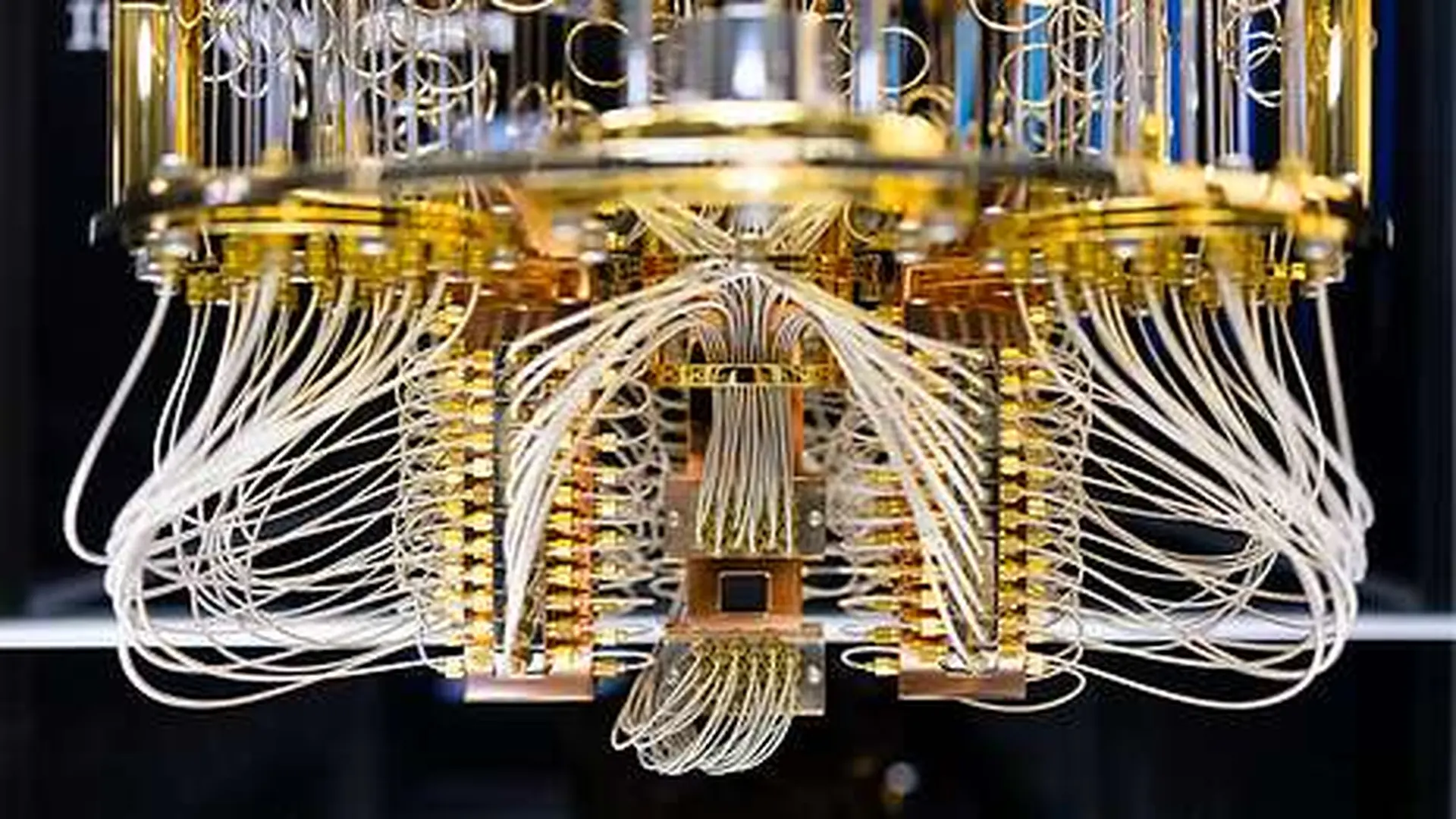
US Government Launches Multi-Million Dollar Race for Fault-Tolerant Quantum Computing
The U.S. Department of Energy has unveiled an ambitious $215 million initiative aimed at overcoming the primary hurdle currently stalling quantum development: the inherent instability of quantum hardware. By challenging private industry to engineer a fault-tolerant quantum computer by 2028, the agency hopes to push the technology beyond experimental prototypes and into the realm of practical, scientific utility.
While quantum computing has attracted significant private capital in recent years, the field remains trapped by the fragility of qubits. These quantum bits are notoriously prone to environmental interference, causing errors that crash calculations before they can yield meaningful results. To move past this, researchers must implement error-correction protocols that link multiple physical qubits into a single, stable “logical qubit.” This transition requires a dramatic increase in system scale and complexity that has yet to be achieved in any functional device.
The new Quantum Genesis Q Competition provides a roadmap and significant financial backing to accelerate this shift. According to Darío Gil, the department’s under secretary for science, the initiative is designed to unlock computational frontiers that have historically remained theoretical, spanning disciplines such as materials science, chemistry, physics, and applied mathematics.
Breaking Down the $215 Million Roadmap
The funding is structured to incentivize rapid scaling rather than merely rewarding existing research. The initiative includes:
- Phase One Milestones: Early-stage applicants can secure fixed awards of up to $1.5 million for achieving foundational technical benchmarks.
- Logical Qubit Thresholds: The primary prize pool allocates $100 million for teams that demonstrate a machine capable of managing at least 100 logical qubits.
- Scaling Bonuses: Two additional $50 million pools are reserved for developers who successfully scale their systems to reach 150 and 200 logical qubits, respectively.
The agency anticipates supporting between three and ten competing teams. To ensure the results are robust, the Department of Energy has also earmarked $45 million to establish national laboratory testbeds, which will act as independent verification sites to rigorously test the hardware and algorithms of participating companies.
A High-Stakes Timeline
The 2028 deadline is aggressive, placing the government’s target at the extreme end of current industry projections. Tanner Crowder, who leads quantum information science within the Office of Science, emphasized that the department is not looking for incremental hardware improvements. The objective is to facilitate genuine scientific breakthroughs, requiring systems that are not just large, but reliable enough to perform complex, error-corrected operations.
Critics and industry analysts note that the timeline is daunting. Scaling qubit counts by the necessary orders of magnitude within three years represents a massive engineering challenge. Furthermore, the total prize package is modest compared to the billions already invested by private venture firms, and a significant portion of the $215 million remains subject to future Congressional budget approvals.
Despite these hurdles, the competition serves as a critical coordination mechanism for the industry. By setting concrete, verifiable benchmarks for error correction, the Department of Energy is providing a clear finish line, potentially helping the sector coalesce around standardized performance metrics that have previously been elusive.
Whether this infusion of federal funding will be enough to bridge the gap between current experimental efforts and fully fault-tolerant machines remains to be seen. However, by formalizing the transition to logical qubits, the initiative signals a decisive shift toward treating quantum computing as a maturing infrastructure for high-performance science.
This article has been fact checked for accuracy, with information verified against reputable sources. Learn more about us and our editorial process.
Last reviewed on .
Article history
- Latest version
Reference(s)
- “DOE Launches Competition to Accelerate Development of World’s First Fault-Tolerant Quantum Computer.”, September 16, 2026 Energy.gov <https://www.energy.gov/science/articles/doe-launches-competition-accelerate-development-worlds-first-fault-tolerant>.
Cite this page:
- Posted by Bilal Abbasi