Asteroid Bennu Holds a Secret About the Violent Origins of Our Solar System
Analysis of new samples from asteroid Bennu reveals a surprising origin story that challenges our current understanding of the solar system’s history.
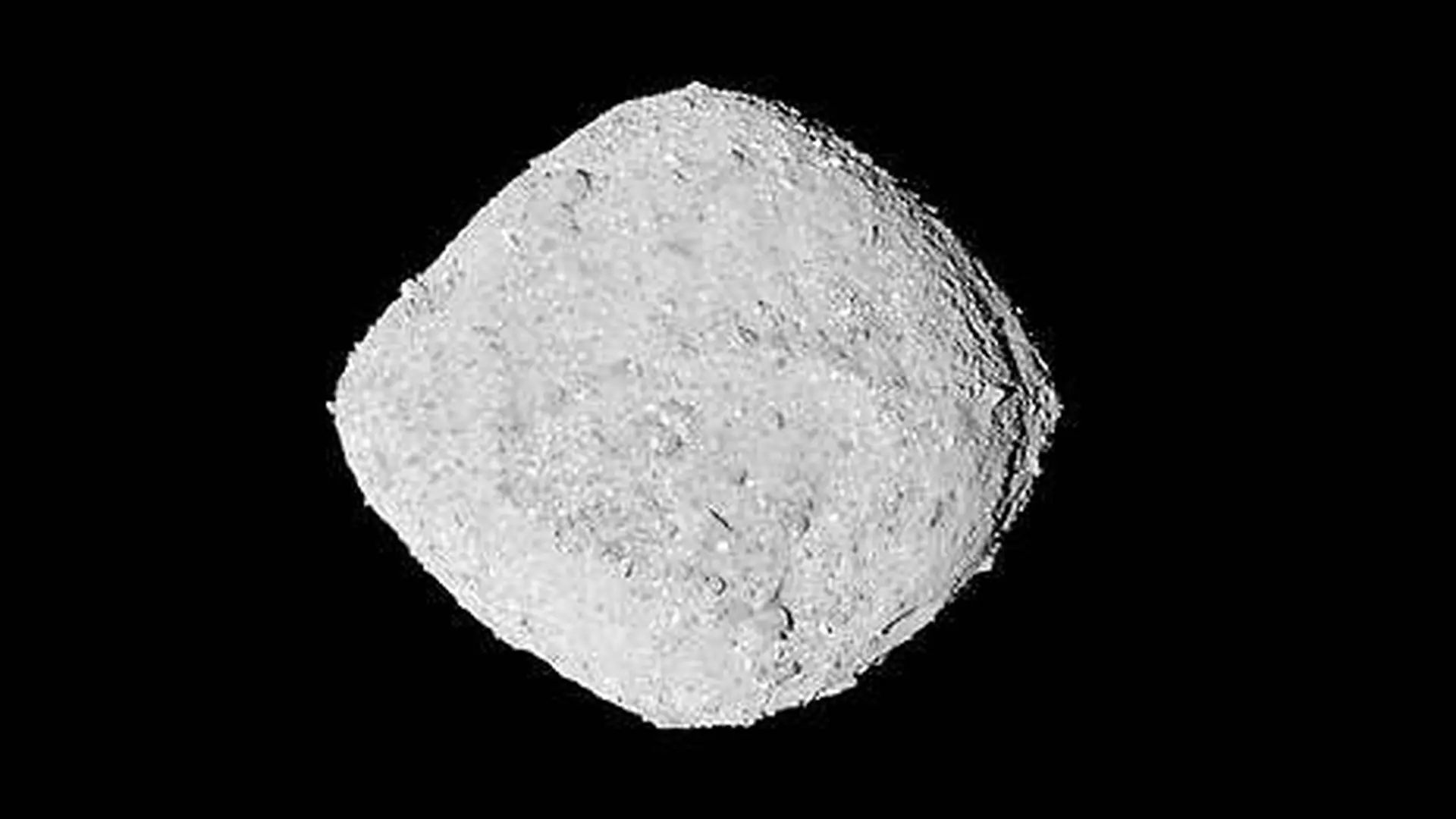
Deep-Space Samples Rewrite the Origin Story of Asteroid Bennu
New geochemical analysis of material retrieved from the near-Earth asteroid Bennu has upended long-held theories regarding the early development of our solar system. The samples, brought to Earth by NASA’s OSIRIS-REx mission and analyzed by a team at ETH Zurich, suggest that this ancient celestial body is a chemical hybrid, born in a volatile transition zone rather than the deep, frozen reaches of the outer solar system.
In 2023, the OSIRIS-REx probe successfully delivered approximately 120 grams of surface material to the Utah desert. A portion of this collection was sent to the laboratory of Maria Schönbächler, a professor of isotope geochemistry at ETH Zurich. Her team’s findings, recently published in the journal Science Advances, reveal that the asteroid acts as a pristine time capsule, preserving the chemical signatures of the solar system’s birth 4.5 billion years ago.
To determine the origin of the asteroid, the researchers measured specific isotopes of titanium, iron, and chromium. These elements provide a distinct chemical “fingerprint” that allows scientists to track the cosmic dust reservoir from which an object formed. The data revealed that Bennu shares an almost identical isotopic profile with the asteroid Ryugu and a rare class of carbon-rich meteorites known as CI chondrites.
This common signature contradicts previous scientific consensus, which posited that these asteroids originated in the distant outer solar system, likely near the birthplace of comets. Instead, the research suggests these bodies formed near the “water-ice line,” a crucial thermal boundary where water vapor transitioned into ice. In this region, materials from the inner and outer solar system converged, with ice acting as a binding agent for fine dust particles.
The researchers argue that the gas giant Jupiter played a decisive, formative role in this process. As Jupiter grew rapidly within the first million years of the solar system’s existence, it acted as a massive barrier. This “bridge pillar” effect blocked larger, coarse debris while allowing finer dust to flow through and mix thoroughly in the transition zone near the water-ice line. This explains why Bennu is remarkably rich in both water and fine, primordial dust that closely matches the chemical composition of the Sun.
“Bennu is a hybrid: the material does not clearly match either the inner or the outer Solar System,” explains Schönbächler. She notes that the asteroid serves as a unique record of the original chemical mixture that eventually built the terrestrial planets. Because the material has remained largely unchanged since the dawn of the solar system, it provides vital clues regarding how water and organic precursors were delivered to the early Earth.
The study opens new questions for planetary scientists, particularly concerning the prevalence of this isotopic signature among other asteroids and the exact mechanisms Jupiter employed to regulate the distribution of dust. The team at ETH Zurich is already looking toward future opportunities to expand this research, with plans to apply for access to upcoming mission samples, including those expected from the Japanese space agency JAXA’s mission to the Martian moon, Phobos, in 2031.
This article has been fact checked for accuracy, with information verified against reputable sources. Learn more about us and our editorial process.
Last reviewed on .
Article history
- Latest version
Reference(s)
- Schönbächler, Maria., et al. “Nucleosynthetic constraints on the origin of Bennu and CI-like asteroids.” Science Advances, vol. 12, no. 39, September 25, 2026 American Association for the Advancement of Science (AAAS), doi: 10.1126/sciadv.aei9107. <https://doi.org/10.1126/sciadv.aei9107>.
Cite this page:
- Posted by Bilal Abbasi