New Simulation Reveals The Sweet Spot When Earth Became Ready For Life
A new computer model reveals when Earth became habitable, suggesting that the very asteroid impacts once thought to destroy life may have actually enabled it.
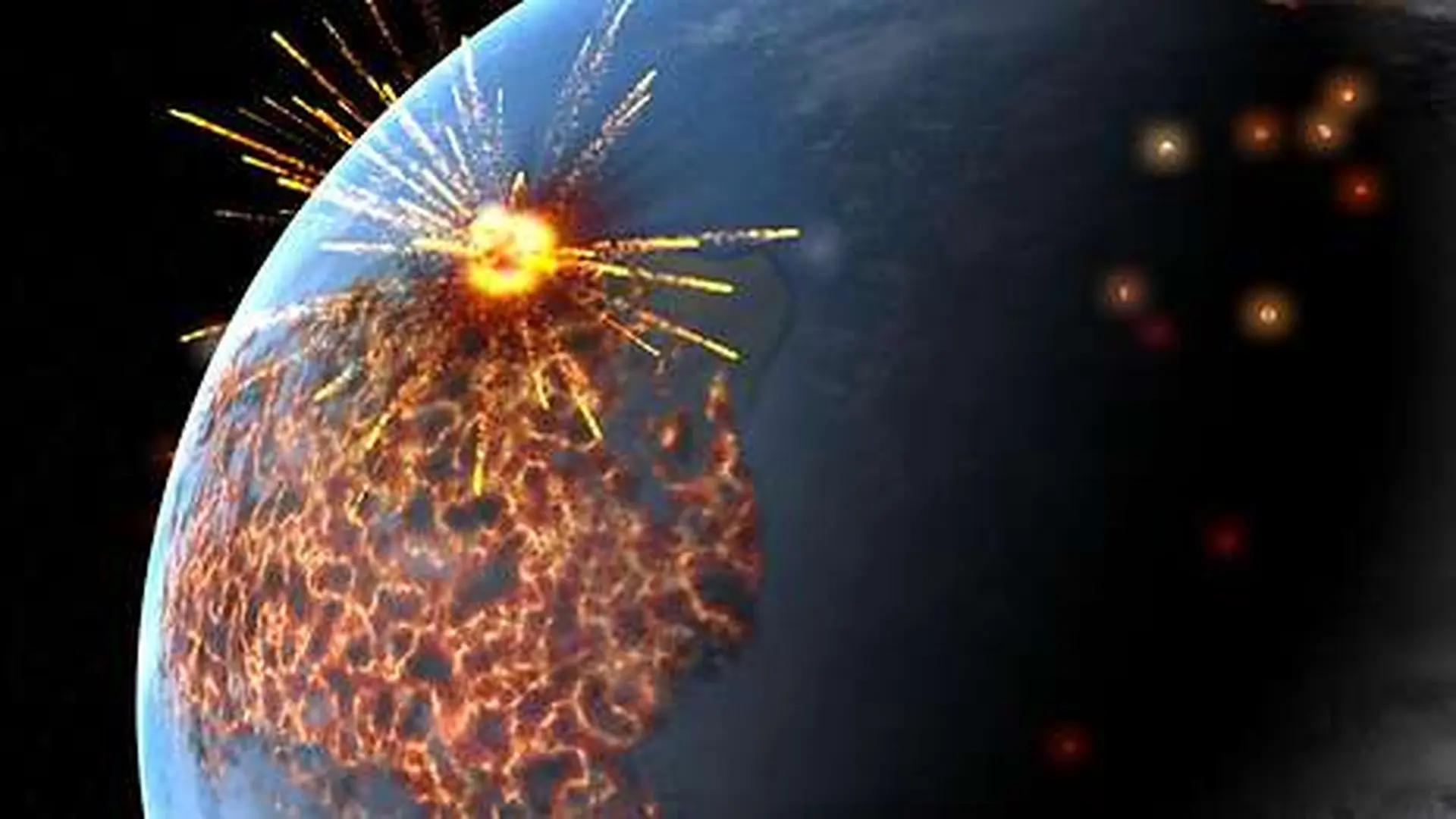
New three-dimensional computer simulations suggest that the conditions necessary for the emergence of life may have first coalesced on Earth between 4.4 and 4.3 billion years ago. While this window identifies a period when the planet’s environment became hospitable for prebiotic chemistry, researchers emphasize that it marks the onset of favorable conditions rather than the definitive start of life itself.
During its earliest epoch, Earth was subjected to a violent and continuous barrage of asteroids, comets, and other planetary debris. This relentless bombardment generated enough thermal energy to effectively sterilize the planet’s surface, destroying the delicate chemical building blocks required for biological development. For life to emerge, these fragile molecules needed stable environments where they could persist and interact without being obliterated by the next impact event.
Simulating a Billion Years of Planetary Evolution
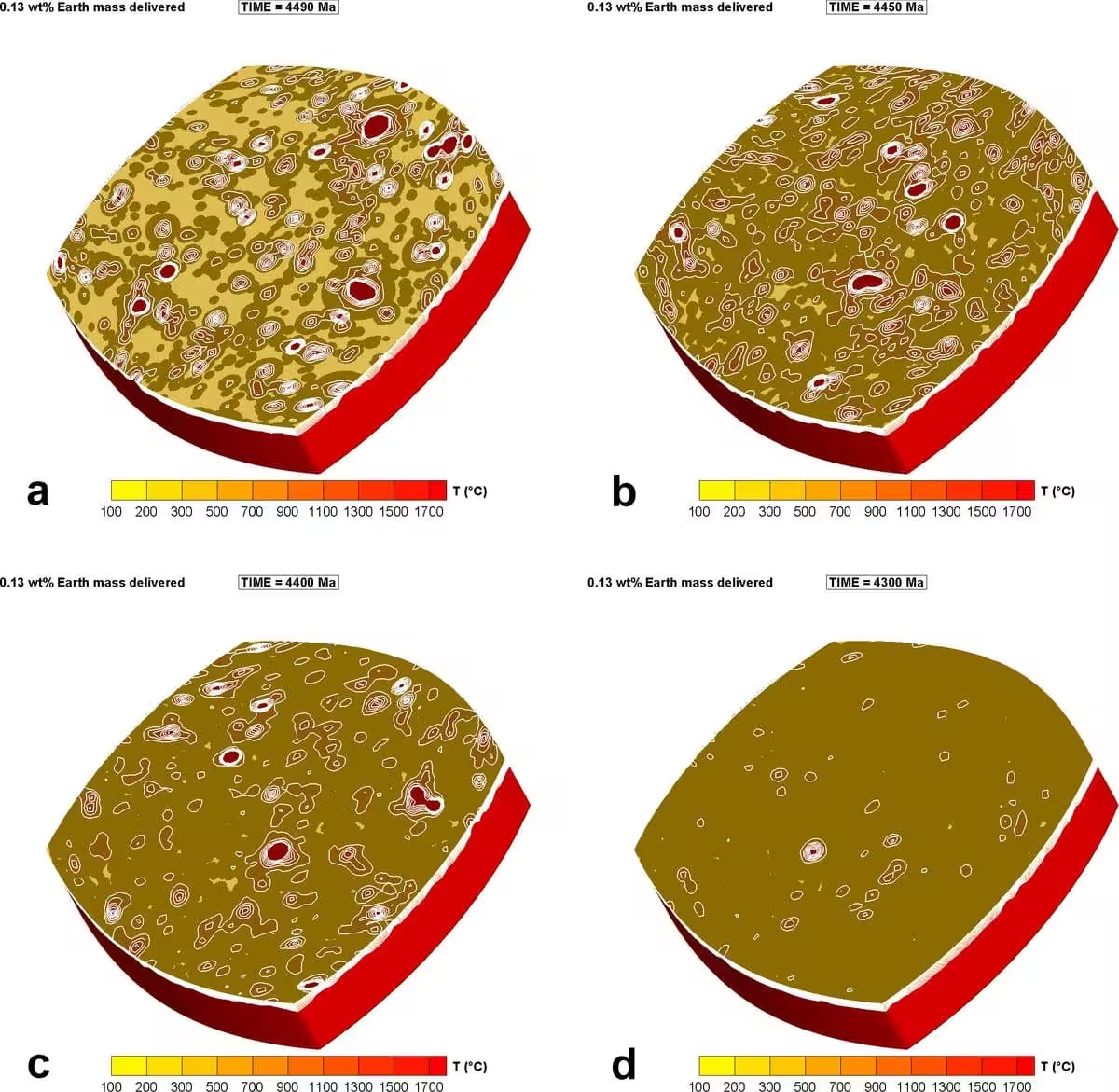
The research, published in Nature Communications, modeled the thermal evolution of the Earth’s crust from 4.5 to 3.5 billion years ago. The team, led by scientists including Oleg Abramov of the Planetary Science Institute, calibrated their model using established lunar cratering records and the abundance of highly siderophile elements—metals that readily bind with iron—found in the Earth’s upper mantle.
By comparing simulated surface temperatures against the thermal limits of molecules like RNA—a primary candidate for early genetic replication—the study identified a persistent pattern of global sterilization that dominated the planet until approximately 4.4 billion years ago.
The Shift to Biological Stability
Abramov notes that prebiotic chemistry requires more than just transient cool intervals; it demands continuous environmental stability. Prior to 4.4 billion years ago, any region that cooled sufficiently was likely to be reheated by subsequent impacts, effectively resetting the chemical clock. However, as the frequency of collisions waned, “never-sterilized” zones began to emerge.
In these regions, the crust remained below a critical threshold of 110°C, providing a sanctuary for developing chemistry. These stable areas expanded rapidly, and by 4.25 billion years ago, more than half of the modeled crustal volume had become consistently habitable.
The Paradox of Destruction and Creation
The research highlights an intriguing duality: the same impacts that destroyed early molecules were also instrumental in creating the environments where they could flourish. The heat from these collisions, combined with fractured rock, formed extensive hydrothermal systems. These systems facilitated the mixing of water and chemical energy, providing a potential crucible for the precursors of life.
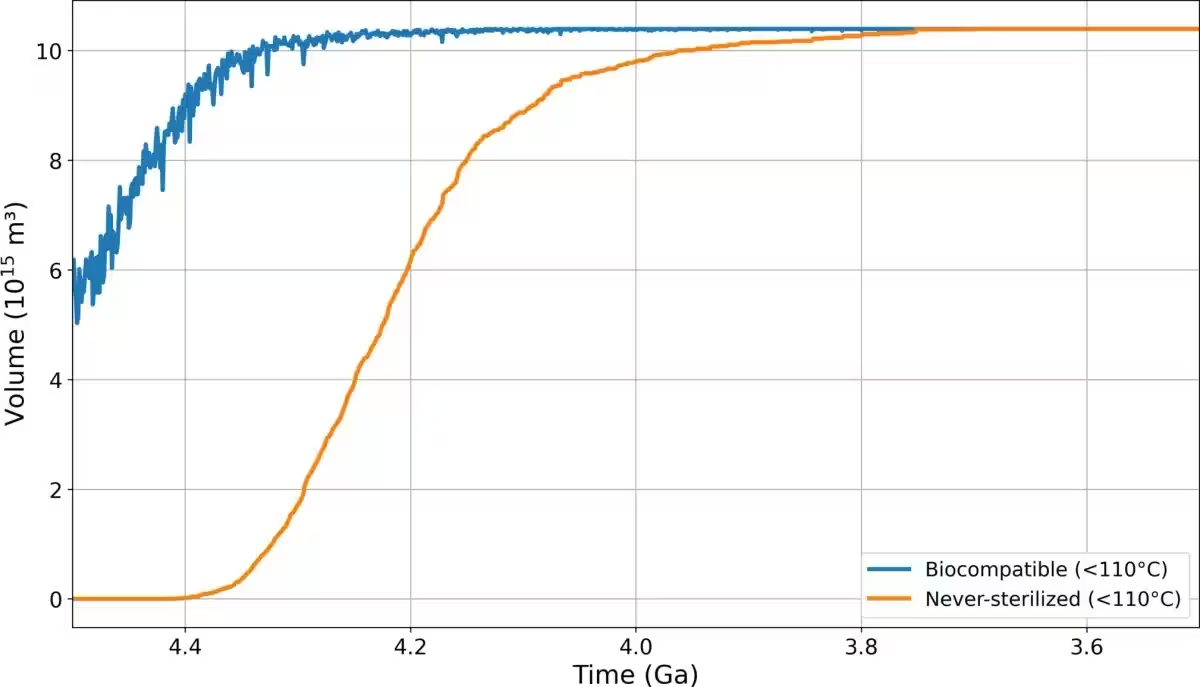
The simulation revealed that around 4.3 billion years ago, these hydrothermal networks were particularly abundant and interconnected. This timing aligned with the growth of stable, unsterilized crust, creating an ideal scenario for the transition from chemistry to biology. Balancing these destructive and creative forces, the authors conclude that Earth became a viable cradle for early life between 4.4 and 4.3 billion years ago, with the peak of these conditions occurring roughly 4.33 billion years ago.
“These criteria point to the Earth becoming suitable for an early stage of life between 4.4 and 4.3 billion years ago, with optimal conditions at approximately 4.33 billion years ago.”
This article has been fact checked for accuracy, with information verified against reputable sources. Learn more about us and our editorial process.
Last reviewed on .
Article history
- Latest version
Reference(s)
- Abramov, Oleg. “A Hadean timeline for the emergence of the RNA World - Nature Communications.”, vol. 17, no. 1, September 22, 2026, pp. 9790 Nature, doi: 10.1038/s41467-026-76978-3. <https://www.nature.com/articles/s41467-026-76978-3>.
- “Oleg Abramov - Planetary Science Institute.” Planetary Science Institute <https://www.psi.edu/staff/profile/oleg-abramov/>.
Cite this page:
- Posted by Bilal Abbasi