New AI Imaging Reveals Exactly How Spacecraft Heat Shields Melt During Reentry
Scientists have developed a new method to observe how spacecraft heat shields transform in real time, revealing secrets of extreme thermal protection.
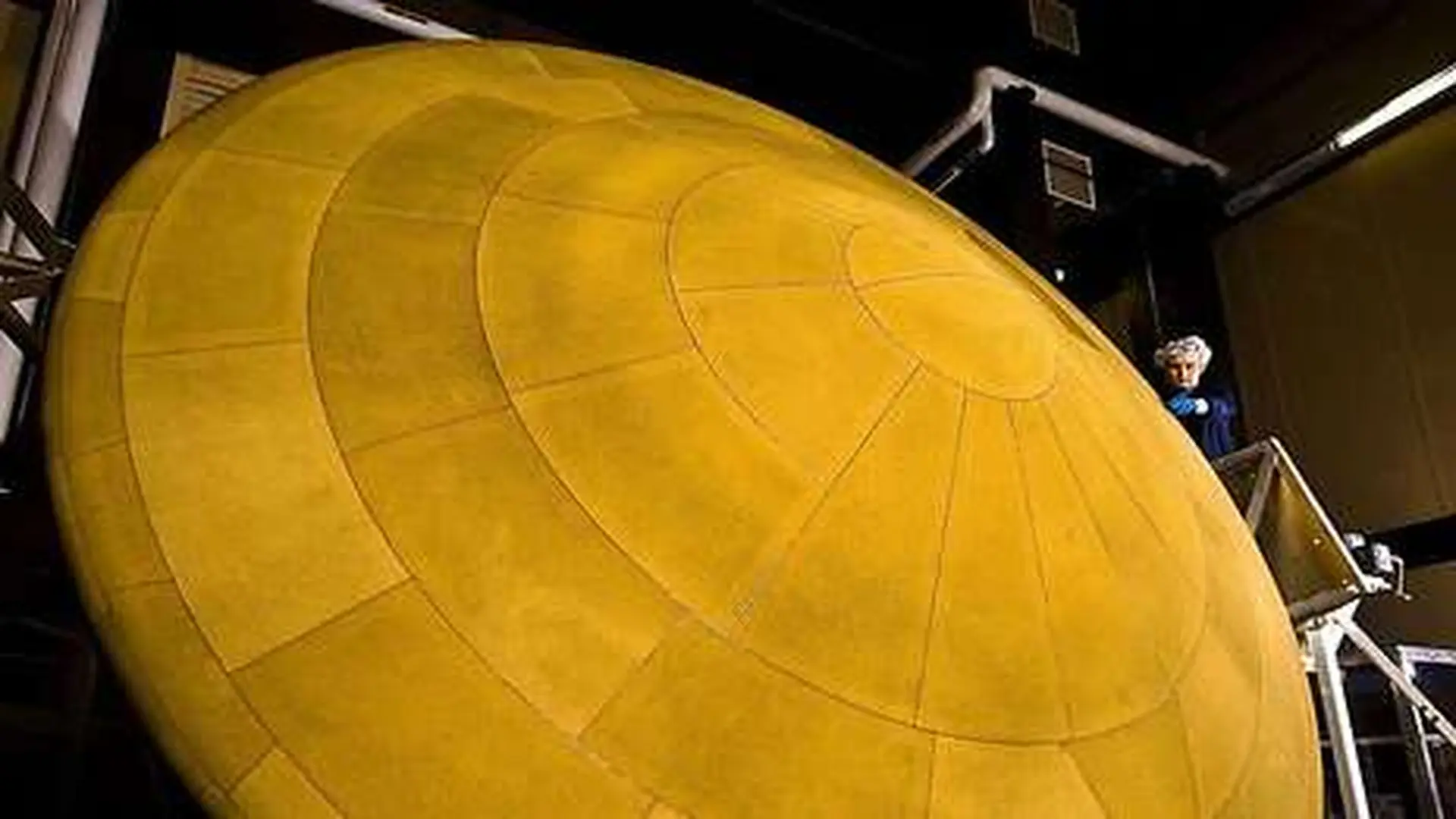
A multi-institutional research team has pioneered a sophisticated method to observe the internal structural evolution of spacecraft heat shields in real-time as they endure the blistering conditions of atmospheric reentry. By integrating advanced X-ray imaging with artificial intelligence, scientists can now visualize how these critical protective layers fundamentally transform while absorbing extreme thermal loads.
When a spacecraft slams into the atmosphere at hypersonic speeds, its heat shield faces temperatures exceeding 3,000 degrees Fahrenheit (1,650 degrees Celsius). To survive this, the craft relies on a process called ablation, where the outer material intentionally degrades and erodes to dissipate heat. While this mechanism is effective, observing the specific physical and chemical changes occurring deep within the material’s structure during the event has historically been a significant engineering hurdle. Previously, researchers were limited to comparing material samples only before and after exposure, leaving the dynamic, transient behavior during the burn largely a mystery.
Peering Into the Heart of Reentry Materials
The research initiative, led by experts from Lawrence Berkeley National Laboratory, the University of Illinois Urbana-Champaign, and NASA, focused on superlight ablators. These materials serve as the backbone for backshell protection on numerous space missions. The study specifically examined two commercial-grade materials, SLA-220 and SLA-561V, which possess distinct chemical architectures.
As detailed in the journal npj Materials Degradation, the team utilized in situ X-ray micro-computed tomography (micro-CT) to monitor the samples as they were heated to 1,652 degrees Fahrenheit (900 degrees Celsius). This allowed the researchers to capture the material’s decomposition in successive stages rather than as a single static outcome.
“This technique gives us unique insights and helps us visualize the internal structural changes that drive ablation as it occurs,” said Vishnu Oruganti, a former University of Illinois Urbana-Champaign researcher who is now based at NASA’s Johnson Space Center.
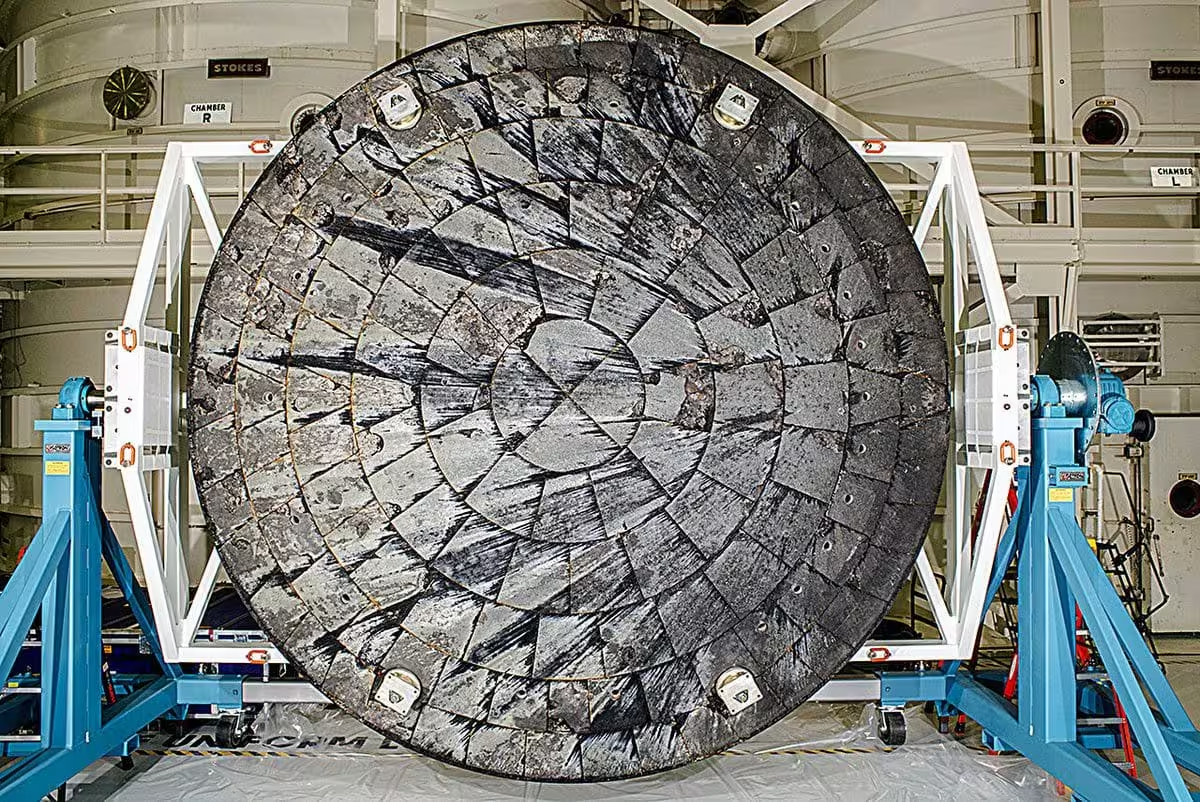
This diagnostic approach has already been instrumental in evaluating materials for high-stakes projects, including the Artemis missions and specialized systems intended for future Mars entry vehicles.
AI-Driven Visualization of Material Evolution
To overcome the technical challenge of balancing imaging speed with the microscopic detail required to understand material degradation, the team deployed an AI-based super-resolution technique powered by generative adversarial networks. This software effectively fused low-resolution, high-speed scans taken during the heating process with static, high-resolution snapshots taken before and after the test.
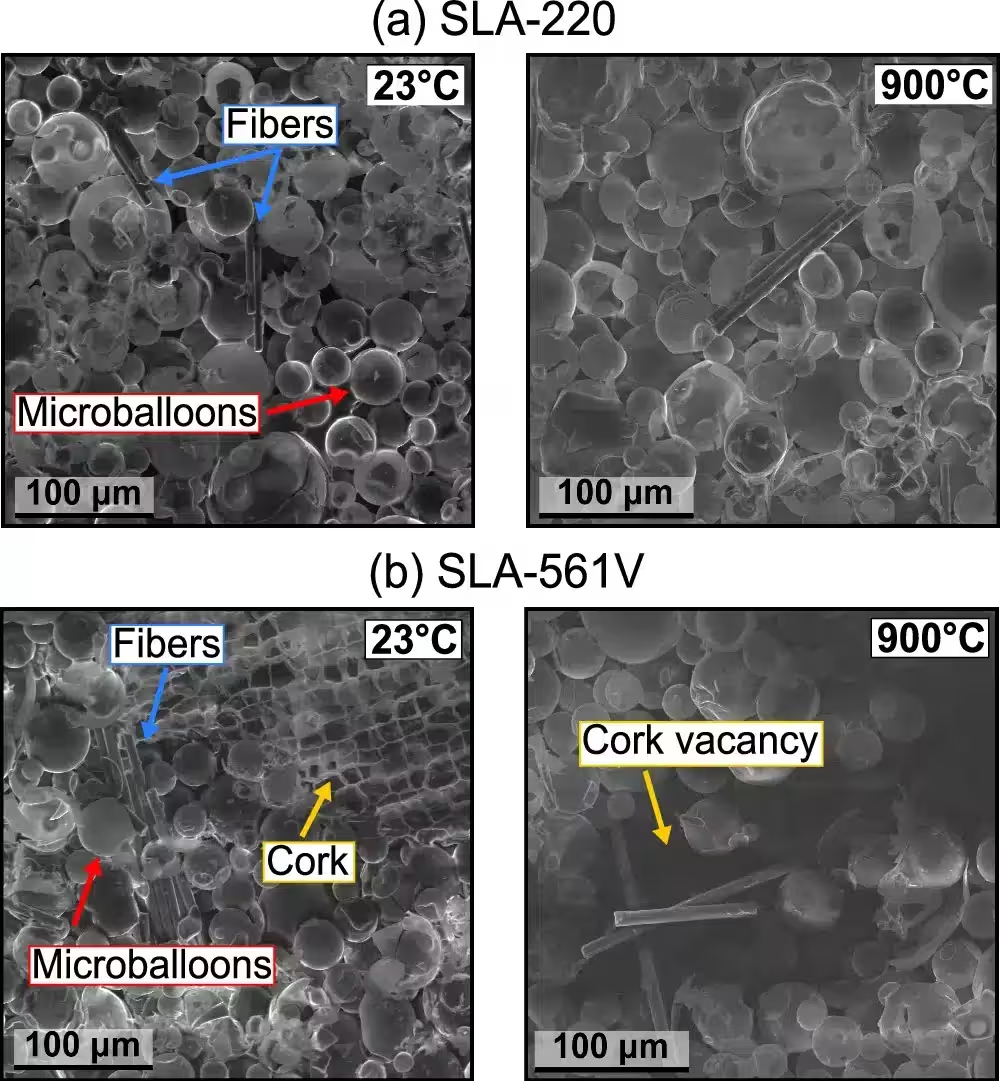
By training the AI system on these high-fidelity data sets, researchers generated a remarkably clear record of how the internal matrix, structural fibers, and fillers behave under thermal stress. According to Liz Clark, a scientist at the Advanced Light Source (ALS), this synergy between tailored imaging and machine learning provides unprecedented empirical clarity on how materials perform in extreme environments.
Decoding Structural Divergence
The study highlights significant differences in how SLA-561V and SLA-220 respond to heat. The presence of natural cork in SLA-561V leads to a specific type of degradation where the filler burns away, creating internal voids. In contrast, the organic-free SLA-220 develops a dense, interconnected network of branching channels within its silicone-based matrix. These distinct structural pathways dictate how gases and heat permeate the shield, which in turn influences the overall efficacy of the heat protection system.
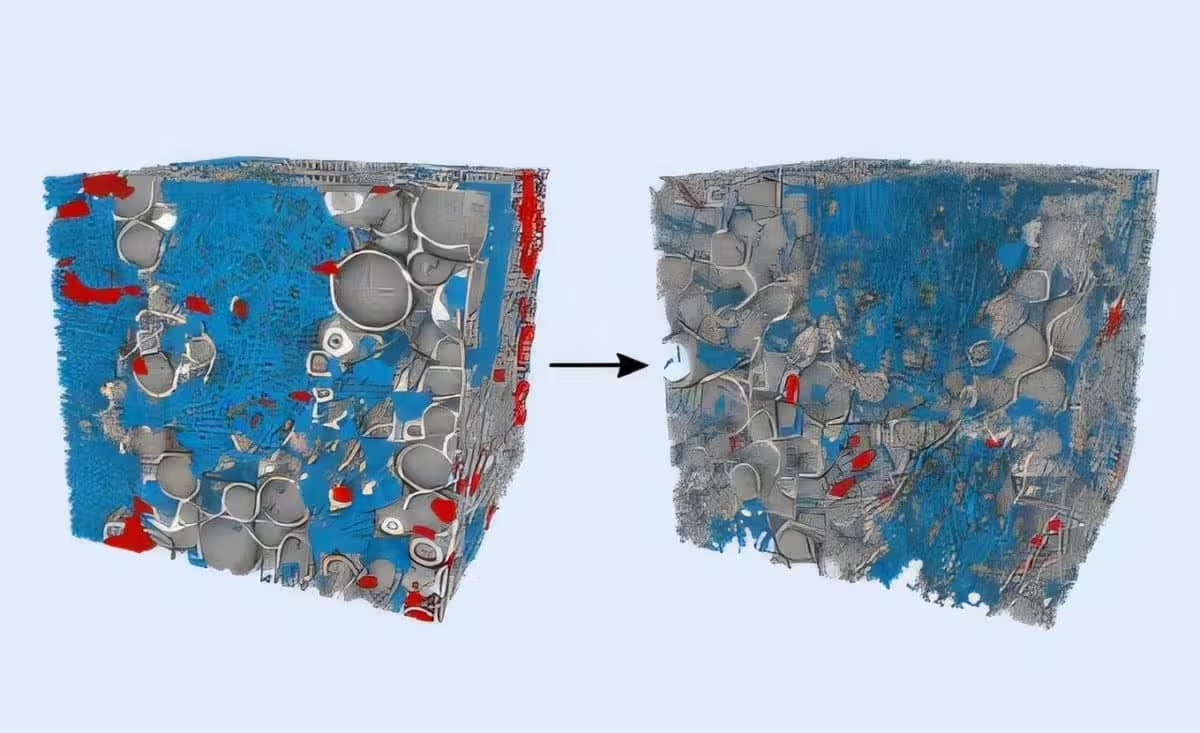
By providing direct, high-resolution observations, this research offers a critical data stream that will help engineers refine the computational models used to design safer, more efficient thermal protection systems for the next generation of spacecraft.
This article has been fact checked for accuracy, with information verified against reputable sources. Learn more about us and our editorial process.
Last reviewed on .
Article history
- Latest version
Reference(s)
- Foster, Collin. “Super-resolved microstructure of pyrolyzing superlight ablators - npj Materials Degradation.”, vol. 9, no. 1, February 5, 2025, pp. 9 Nature, doi: 10.1038/s41529-025-00556-z. <https://www.nature.com/articles/s41529-025-00556-z>.
Cite this page:
- Posted by Bilal Abbasi