Why Alaska Rivers Are Turning Orange As Permafrost Thaw Releases Ancient Minerals
Thawing permafrost in Alaska is turning pristine rivers bright orange, as toxic minerals leach into waterways, impacting ecosystems for over 100 kilometers.
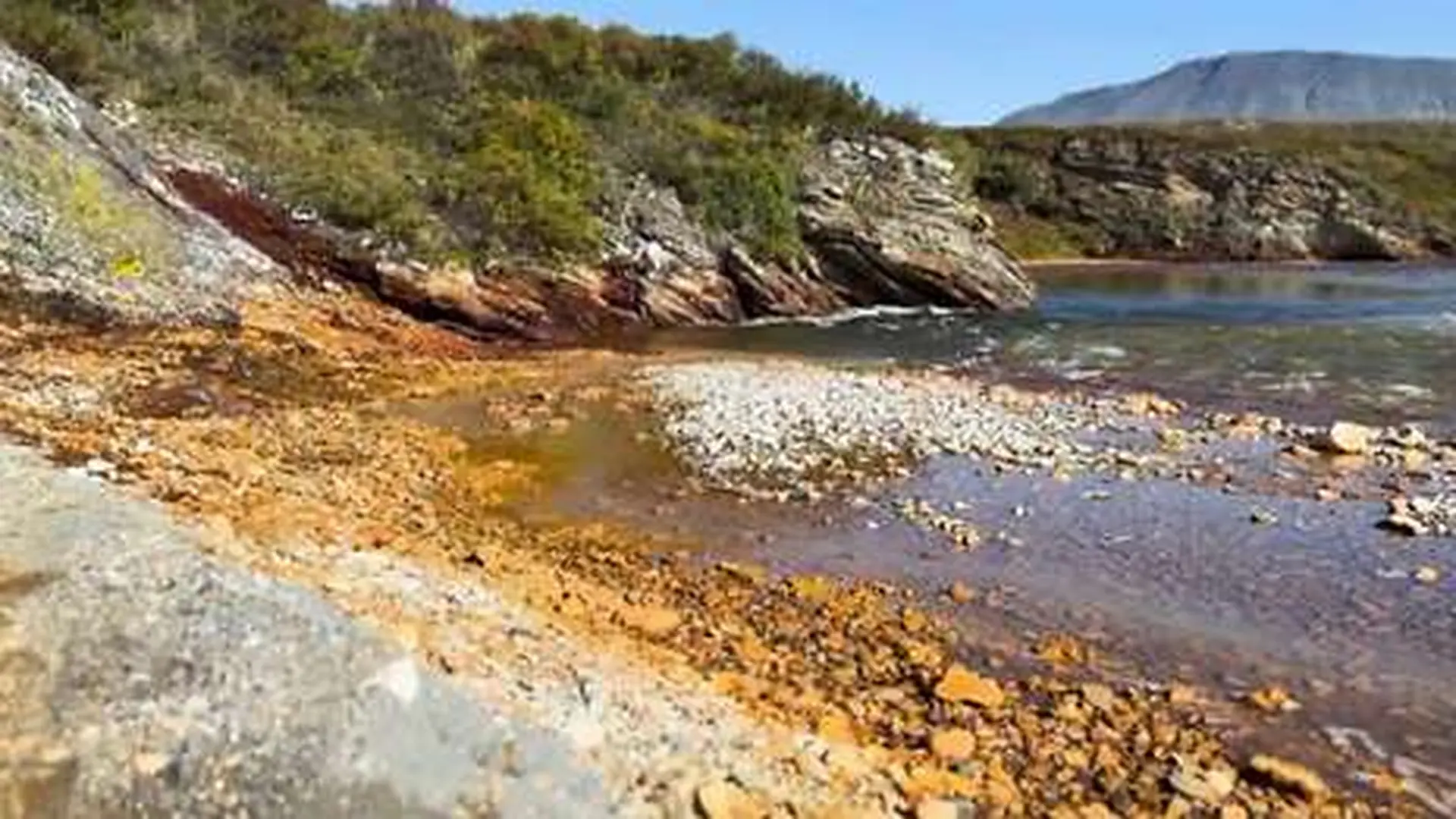
Remote river systems in northwestern Alaska, long considered pristine and untouched by human industrial activity, are undergoing a dramatic and unexpected chemical transformation. Scientific investigations into six watersheds across the western Brooks Range have identified the emergence of natural acid rock drainage, a geochemical process driven by the thawing of permafrost that allows water to penetrate deep into previously frozen mineral layers.
The discovery, detailed in a study published in AGU Advances, provides a clearer understanding of why hundreds of streams and rivers throughout the Brooks Range have recently taken on a distinct, rust-colored hue. By 2025, researchers had identified more than 200 waterways across the region showing evidence of this natural, yet potentially disruptive, process.
Permafrost Thaw Unlocks Ancient Mineral Deposits
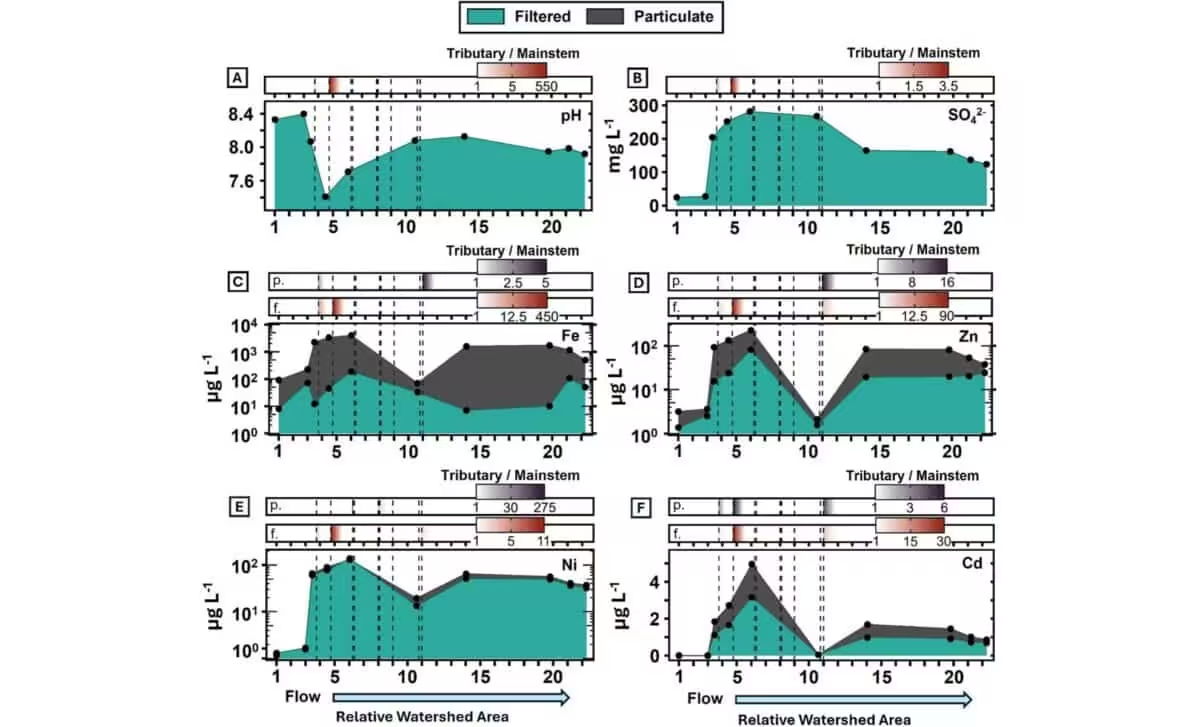
Between 2022 and 2024, researchers conducted a comprehensive analysis of six watersheds, comparing water quality from upstream headwaters against hillside seeps and downstream sections. The chemical contrast between these zones was stark. While upstream mainstems maintained a near-neutral pH of 8.3 with minimal metal content, hillside seeps exhibited high acidity, with a median pH of 3.2, significantly higher sulfate levels, and a heavy influx of metals including iron, aluminum, manganese, zinc, nickel, and cadmium.
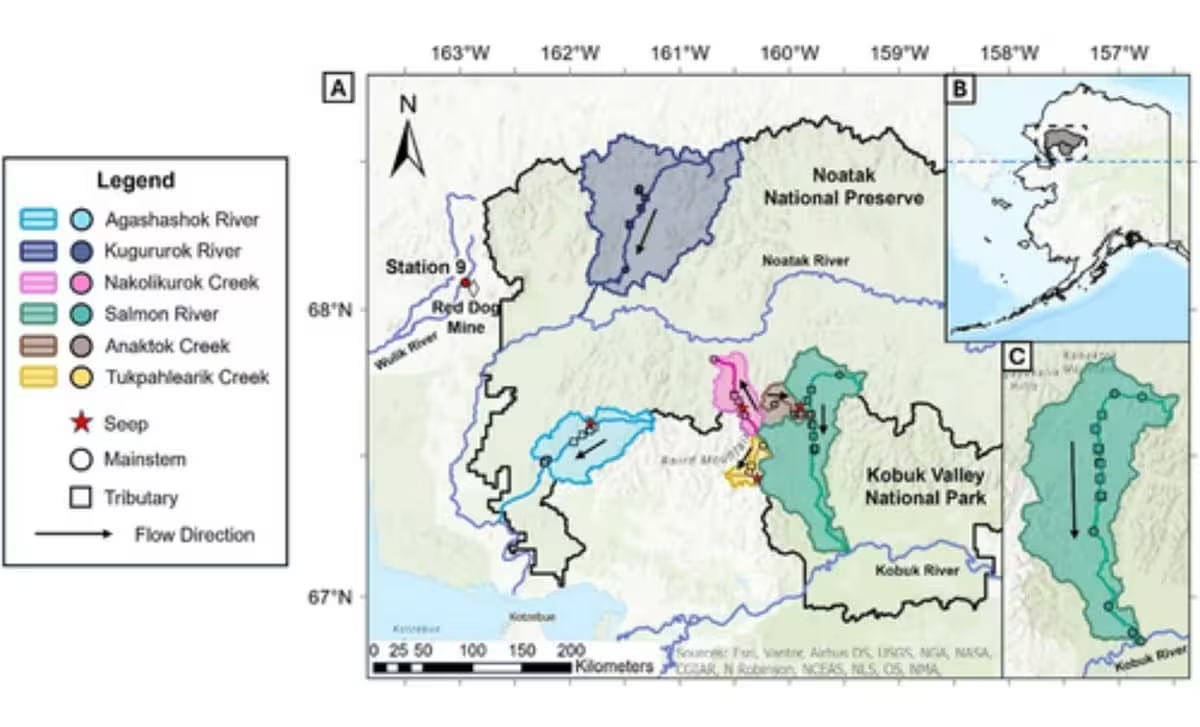
The research team concluded that this shift is triggered by the oxidation of sulfide minerals. As permafrost thaws, groundwater is able to circulate through deep, sulfide-bearing rocks. When these minerals are exposed to water and oxygen, they react to form sulfuric acid, which subsequently leaches metals from the surrounding rock. While the main river channels possess a natural capacity to buffer this acidity—preventing a drastic drop in pH—they remain conduits for transporting sulfates and dissolved metals downstream.
The Salmon River offers a primary example of this reach: along a 103-kilometer stretch, nickel concentrations surged from 0.5 to 32.4 micrograms per liter, with sulfate levels rising tenfold after the influx of contaminated tributaries.
A Recent and Rapid Geochemical Shift
By analyzing historical data, scientists identified that the most intense spikes in water contamination occurred abruptly around 2019 and 2020. During this period, the Wulik River saw total zinc concentrations rise by as much as 770 percent. This timing correlates with a period of exceptionally warm winters and heavy snowfall in 2018 and 2019. The deep snowpack acted as an insulating blanket, preventing the soil from fully refreezing and facilitating the sustained groundwater movement necessary for the chemical weathering process.
Interestingly, some waterways have shown signs of a potential recovery period since 2021, with concentrations of zinc and sulfate trending downward. While the underlying causes for this temporary relief remain under investigation, the broader implications for Arctic ecosystems—which support both vital fish populations and indigenous communities—remain a critical concern. As Arctic temperatures continue to climb, this phenomenon serves as a stark indicator of how rapidly climate-driven landscape changes can alter the geochemistry of the natural world.
This article has been fact checked for accuracy, with information verified against reputable sources. Learn more about us and our editorial process.
Last reviewed on .
Article history
- Latest version
Reference(s)
- Evinger, Taylor G.., et al. “Abrupt Onset and Persistent Downstream Effects of Acid Rock Drainage on Rivers Across Northwest Arctic Alaska.” AGU Advances, vol. 7, no. 6, September 24, 2026 American Geophysical Union (AGU), doi: 10.1029/2026AV002407. <https://agupubs.onlinelibrary.wiley.com/doi/10.1029/2026AV002407>.
Cite this page:
- Posted by Bilal Abbasi