Freshwater Loaches Caught Shedding Chromosomes in Real Time
Genetic analysis of Japanese spined loaches reveals an ongoing, stepwise return from a doubled genome down to lower chromosome counts.
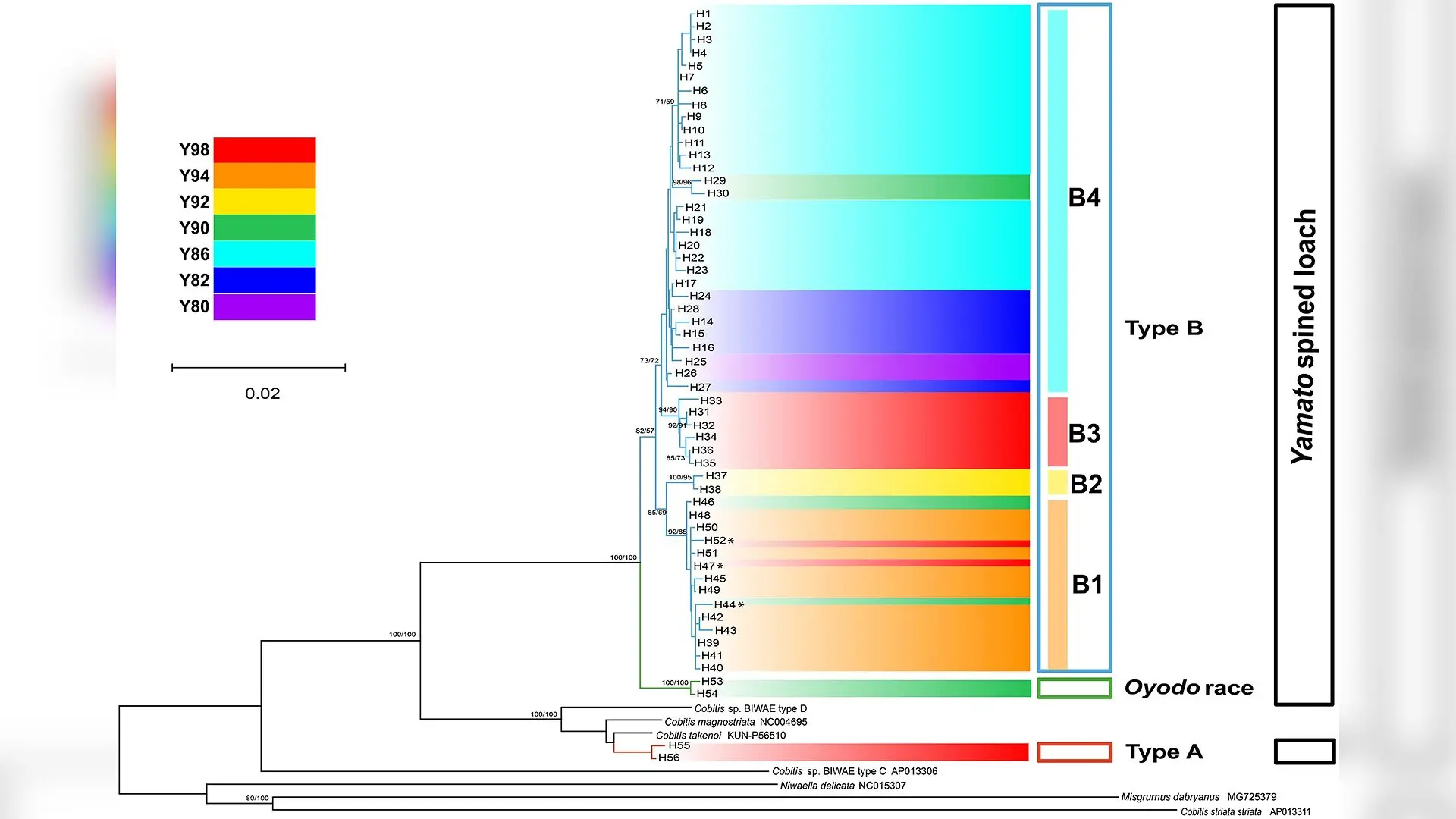
Freshwater loaches living in Japan are shrinking their sets of genetic instructions in real time, going through a rare evolutionary shedding process that reveals how vertebrate genomes reorganize after ancient merging events. Researchers analyzing the Yamato spined loach, an allotetraploid freshwater fish group created when two distinct diploid species hybridized roughly 3.6 million years ago, discovered that modern populations retain up to seven different chromosome counts ranging from 98 down to 80. This continuous series of chromosome reductions offers a rare living window into rediploidization, the biological process where a polyploid organism with doubled chromosomes gradually returns toward a normal diploid state through genome downsizing and structural rearrangements. The findings were published in PLOS One by Hayato Oka and colleagues.
How Seven Different Chromosome Races Evolved Across Japanese Rivers
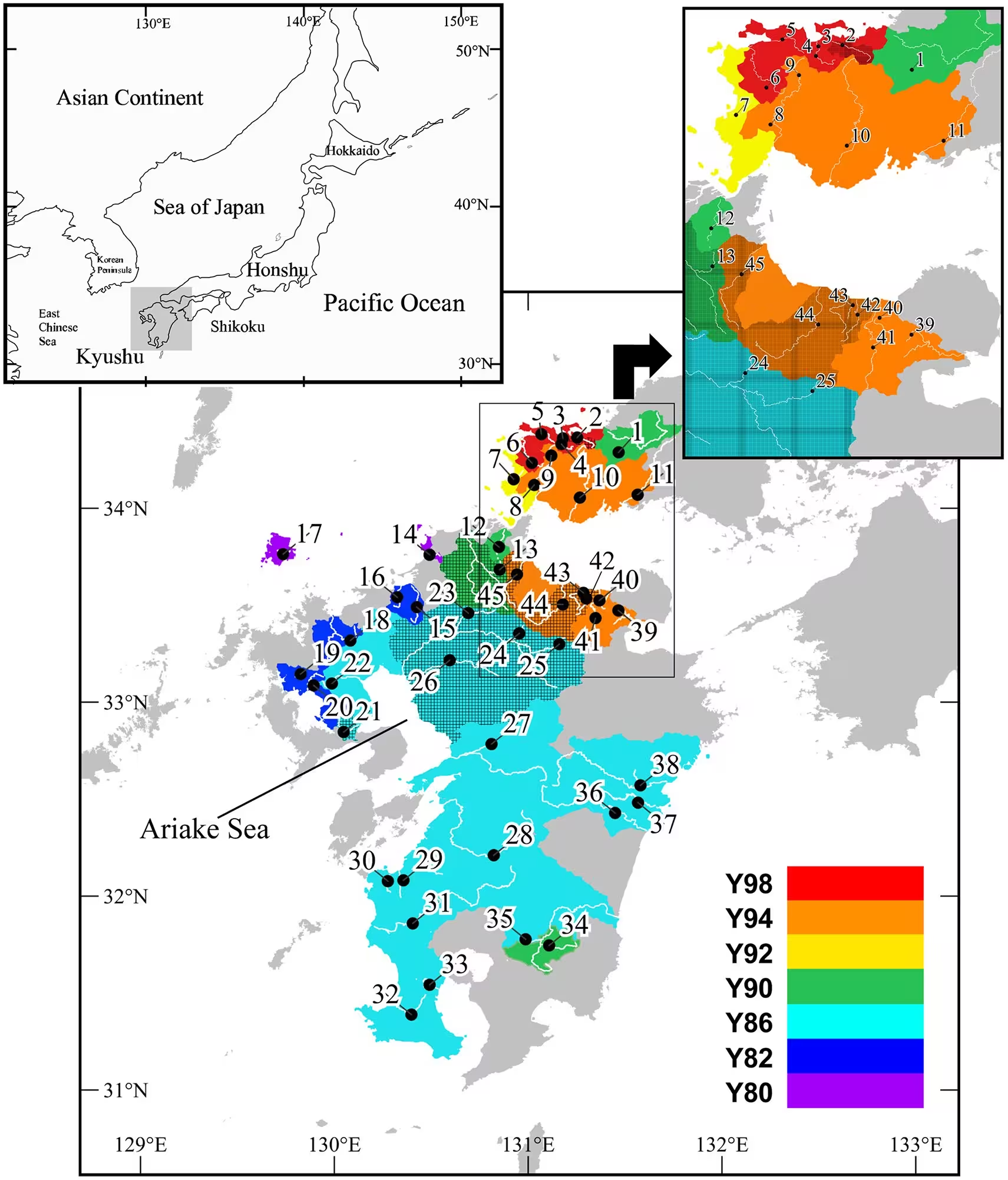
Vertebrate evolution has been shaped by ancient whole-genome duplications, but because most of those events happened tens of millions of years ago, studying how genomes downsize afterward is remarkably difficult. The Yamato spined loach complex, inhabiting the western tip of Honshu and Kyushu islands, represents an ideal natural laboratory because its hybridization event occurred much more recently than in better-known polyploid vertebrates like the African clawed frog or common carp. To map this chromosomal transition, the authors examined 45 populations across 36 river systems, successfully determining chromosome numbers and identifying two previously unknown karyotypes featuring 92 and 80 chromosomes.
Populations with higher chromosome counts, such as the ancestral 98-chromosome race, were generally restricted to specific northern regions and western Honshu. In contrast, populations carrying lower chromosome counts formed derivative genetic clusters, pointing to a stepwise and gradual reduction in chromosome numbers over evolutionary time. Furthermore, mitochondrial DNA sequencing and haplotype network analyses revealed that some groups sharing identical chromosome counts, such as certain 90-chromosome populations, actually arose independently in separate river basins through parallel evolutionary pathways.
Why DNA Content Remained Stable Despite Massive Chromosome Drops
Shedding nearly 20 chromosomes from an ancestral count of 98 down to 80 might sound like a massive loss of genetic material, but flow cytometry measurements revealed a surprising twist. The relative cellular DNA content across the different chromosomal races did not show a positive correlation with chromosome counts or fundamental arm numbers. This unexpected result indicates that the reduction in chromosome numbers was not driven by the wholesale deletion of entire chromosomes or large genetic segments, but rather by structural chromosome rearrangements such as Robertsonian translocations and tandem fusions.
During these structural shifts, multiple smaller chromosomes fuse together into larger ones, reducing the visible chromosome count while preserving much of the underlying genomic content. The authors note that geographical isolation between independent river systems played a major role in allowing these chromosomal reorganizations to proceed separately in each watershed. While mitochondrial DNA tracing provides a clear look at maternal lineages and rapid divergence, future investigations utilizing nuclear markers will be necessary to fully resolve the complex genomic dynamics driving this ongoing vertebrate transition.
The research was published in PLOS One on November 11, 2026.
This article has been fact checked for accuracy, with information verified against reputable sources. Learn more about us and our editorial process.
Last reviewed on .
Article history
- Latest version
Reference(s)
- Oka, Hayato., et al. “Evolutionary dynamics of chromosomal races in the Japanese allotetraploid spined loach, Cobitis sp. ‘yamato’ species complex.” PLOS One, vol. 21, no. 11, November 11, 2026, pp. e0351665 Public Library of Science (PLoS), doi: 10.1371/journal.pone.0351665. <https://doi.org/10.1371/journal.pone.0351665>.
Cite this page:
- Posted by Priya Sharma