Historical Bird Flu Outbreaks Reveal Which Species Recover Best
An analysis of 40 mass-mortality events shows a typical 17 percent population drop, though vulnerable seabirds and threatened species struggle to bounce back.

A sweeping global assessment of historical bird outbreaks reveals that avian influenza causes an immediate 17 percent population drop in affected wild species, though three-quarters manage to bounce back within years. Researchers examined 40 mass-mortality cases from 2005 to 2018 to understand how wild bird populations weather the lethal pathogen.
How Different Bird Groups Weather the Viral Threat
Waterfowl such as ducks and geese frequently carry avian influenza viruses with minimal individual death rates, supported by natural resilience or cross-immunity. In contrast, colony-nesting seabirds, gulls, and terns face much harsher demographic consequences after contracting the disease. The study, published in PLOS One, tracked long-term census data across multiple continents to reveal these divergent survival patterns.
Gulls and terns experienced the most severe initial population crashes, with drops averaging well over one-fifth of local numbers. Because these seabirds live longer and reproduce more slowly than ducks, replacing lost adults takes considerable time. Furthermore, inexperienced younger birds moving into vacant nesting territory can suppress overall colony productivity for years.
Which Vulnerable Species Failed to Recover Their Numbers
While 30 of the 40 examined populations successfully returned to within five percent of their pre-outbreak baselines, ten cases showed no sign of recovery by the end of the monitoring period. These persistent declines hit several globally threatened species particularly hard. African penguins, Cape cormorants, and common pochards suffered prolonged downward trends that compounded existing environmental pressures.
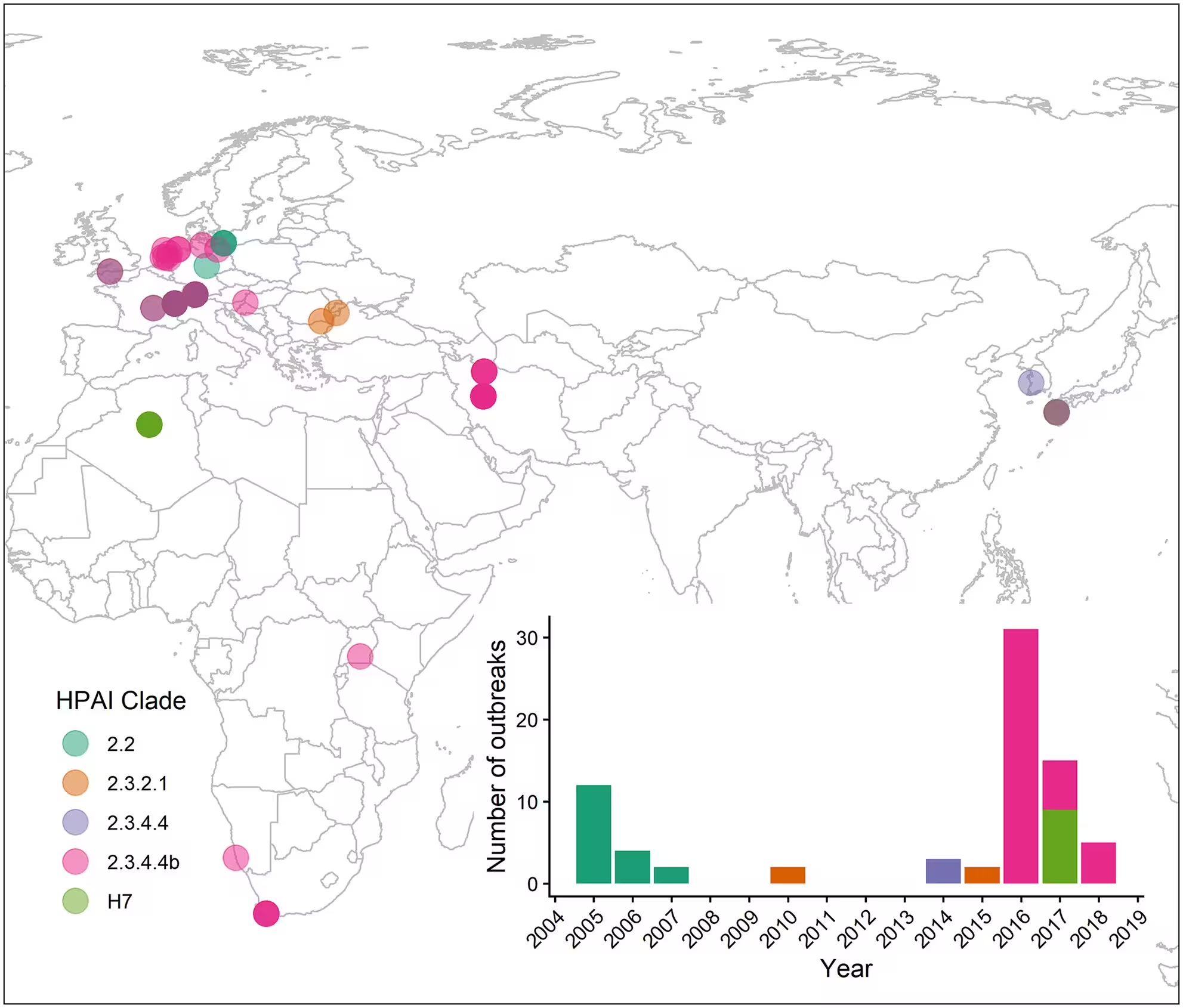
The analysis also highlighted how predators like peregrine falcons can suffer lasting population dips after hunting infected waterfowl. Repeat viral exposures, however, did not always worsen outcomes, as surviving birds often developed baseline immunity that buffered against subsequent waves of disease.
What These Historical Lessons Mean for Modern Conservation
Since 2020, highly pathogenic strains have expanded their reach to new continents and hundreds of new mammalian and avian hosts. The authors emphasize that predicting exact local outcomes remains exceedingly difficult due to variations in viral genetics and host behavior. Combining routine carcass counts with multi-year population surveys is essential to protect vulnerable wildlife.
The research was published in PLOS One on November 11, 2026.
This article has been fact checked for accuracy, with information verified against reputable sources. Learn more about us and our editorial process.
Last reviewed on .
Article history
- Latest version
Reference(s)
- Gold, Susannah., et al. “Characterising the longer-term impacts of highly pathogenic avian influenza outbreaks prior to 2020 on wild bird populations.” PLOS One, vol. 21, no. 11, November 11, 2026, pp. e0360235 Public Library of Science (PLoS), doi: 10.1371/journal.pone.0360235. <https://doi.org/10.1371/journal.pone.0360235>.
Cite this page:
- Posted by Hassan Raza