Silt Mixture Slashes Water Flow in Major River Tests
Adding precise amounts of calcium hydroxide to Yellow River sediment creates tortuous internal pore networks that reduce water seepage without changing total porosity.
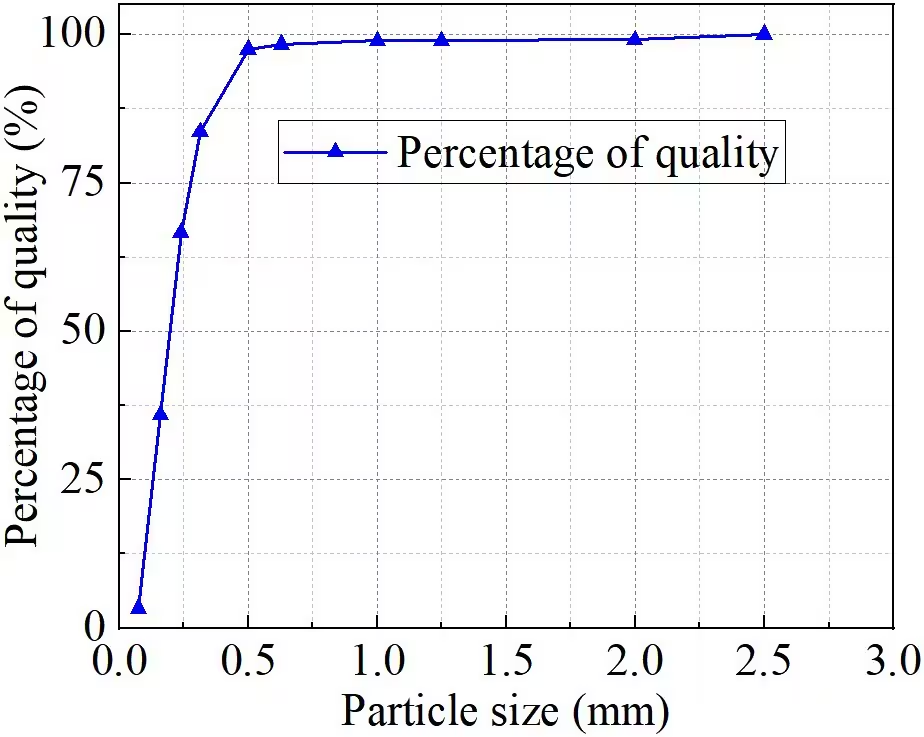
Turning problematic river silt into structural material could help solve one of the world’s major sediment challenges, as researchers show that adding specific amounts of calcium hydroxide to Yellow River mud can dramatically reduce water seepage. The river, famous for carrying heavy silt loads that raise riverbeds and increase flood risks, produces millions of tons of sediment each year that traditionally see little high-value use. By combining this abundant raw sediment with a sodium hydroxide and calcium hydroxide activator system, scientists created a hardened material with significantly tighter internal pores.
How Calcium Dosage Alters Water Flow Through Silt
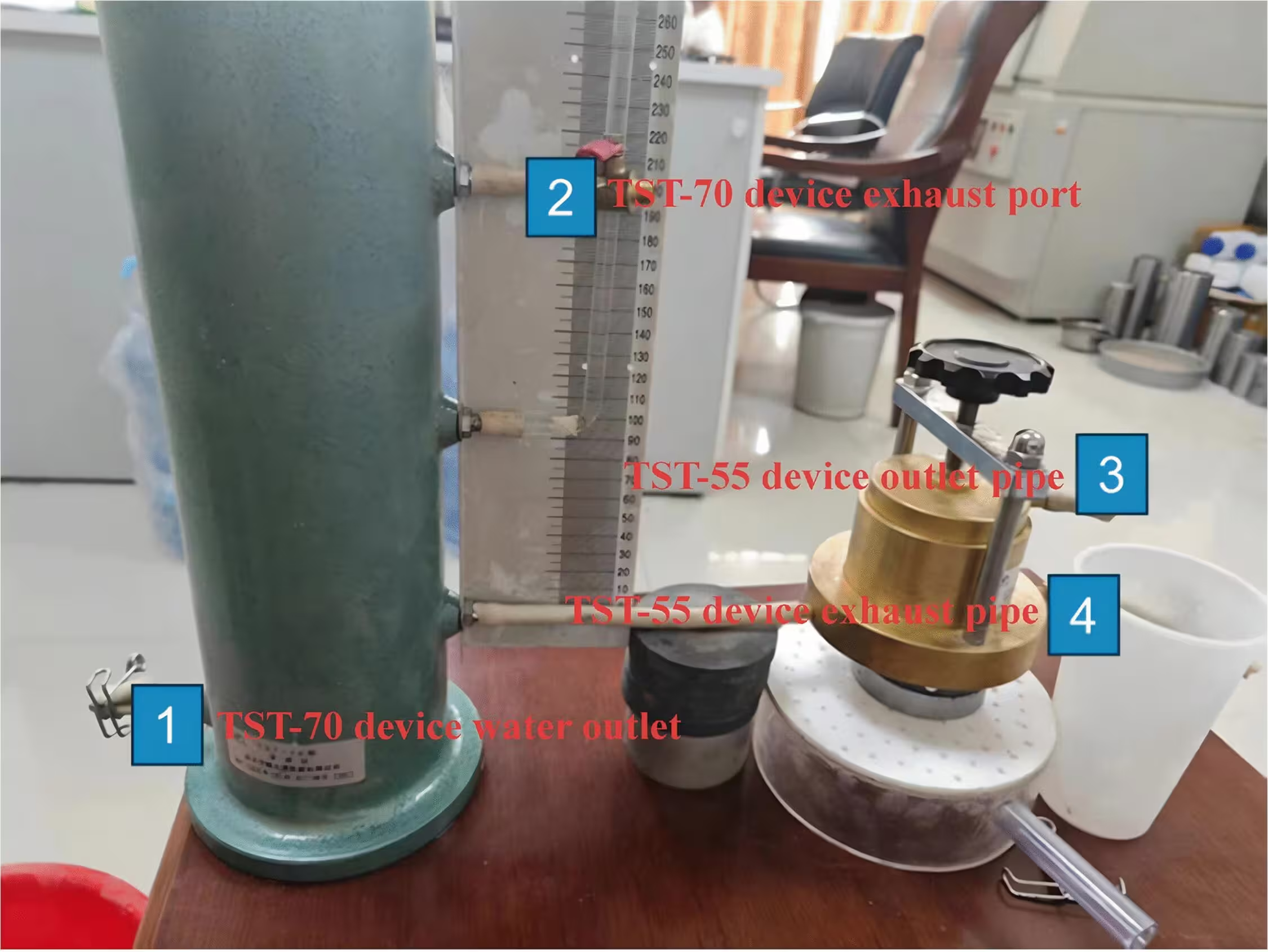
To evaluate the hydraulic properties of the material, the team examined six distinct mixture proportions with calcium hydroxide dosages ranging from 2.5% to 15.0% by dry mass. The testing, published in PLOS One, revealed that the permeability coefficient exhibits a strong non-monotonic response to the calcium activator. Raising the calcium hydroxide content from 2.5% to 10.0% slashed the permeability coefficient by 82.58% at 3 days, 82.45% at 7 days, and 69.07% at 28 days.
However, further increasing the dosage to 12.5% caused a temporary rebound in water permeability, before dropping again at the 15.0% mark. The authors attribute the initial improvement to calcium ions neutralizing surface charges on sediment particles to induce flocculation, alongside the formation of cementitious silicate and aluminate hydration products that fill internal voids. The unexpected permeability jump at 12.5% likely stems from unreacted lime and structural shifts in the binding phases, which can introduce microscopic volume changes and microcracks.
Pore Structure Complexity Versus Total Porosity
Intriguingly, the total porosity of the specimens remained remarkably stable at around 9.5% across nearly all mixes and curing ages. This constant void volume meant that traditional porosity measurements failed to explain why water flow varied by nearly an order of magnitude between different samples. Low-field nuclear magnetic resonance analysis resolved this puzzle by tracking the distribution and geometry of the internal pore network.
The researchers found that the fractal dimension of small pores, spanning 0.1 to 1 micrometers, correlated tightly with the measured permeability coefficients. Samples with higher fractal dimensions possessed more tortuous, complex pore pathways that effectively blocked water migration. The statistical correlation between this pore complexity and macroscopic permeability yielded strong coefficients of determination across all curing ages.
Testing Reinforcement Layers in Embankment Simulations
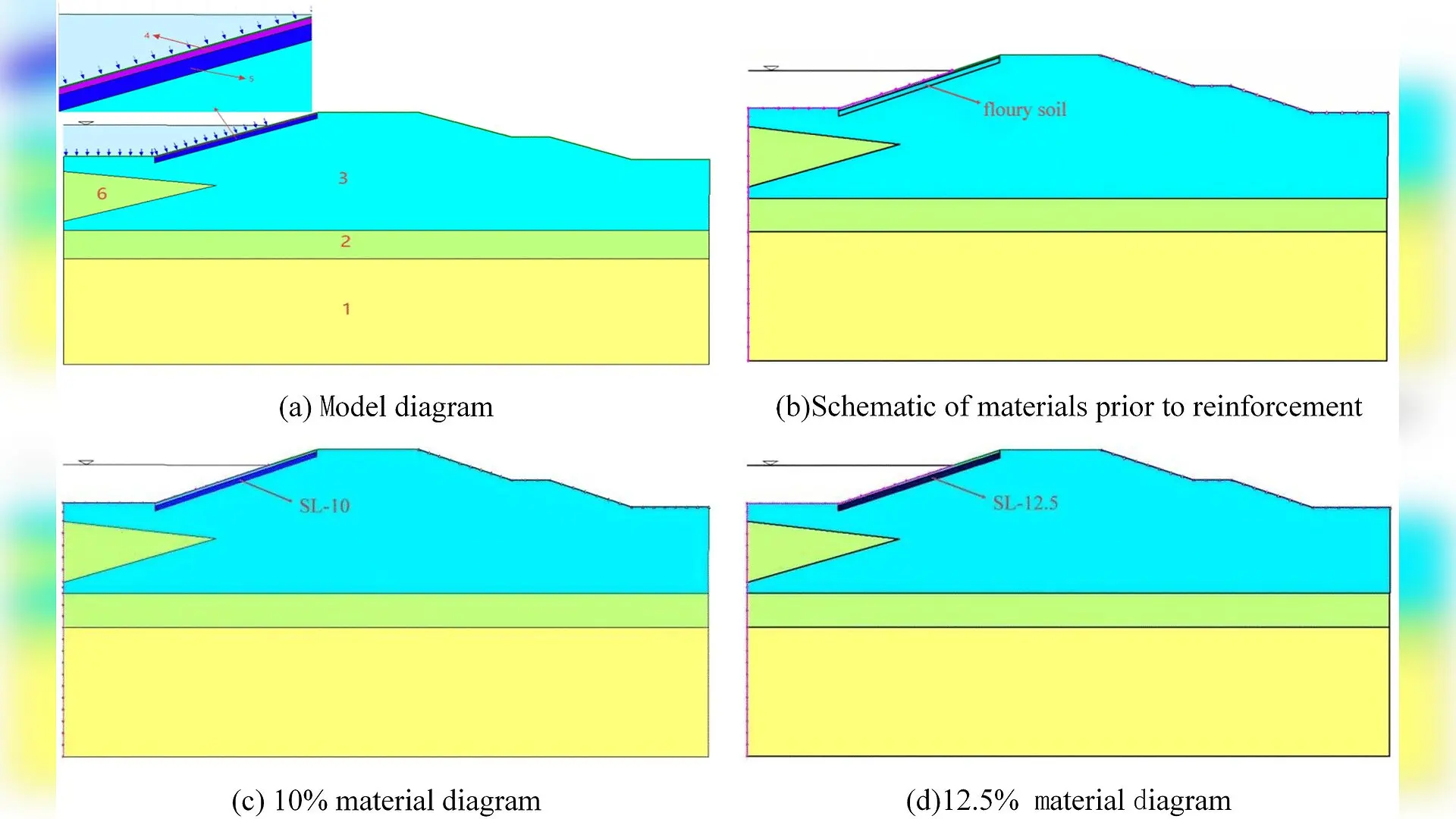
To verify whether these laboratory findings translate to real-world infrastructure, the team incorporated the measured parameters into a two-dimensional finite element model of a Yellow River levee section in Jinan, Shandong Province. The simulation tested a 70-centimeter-thick reinforcement layer placed 30 centimeters beneath the upstream slope surface using the 10.0% and 12.5% calcium hydroxide mix designs.
Model results indicate that the low-permeability layer successfully intercepts incoming water and depresses the phreatic surface inside the embankment. The seepage exit point on the downstream slope dropped by 0.15 meters and 0.18 meters for the 10.0% and 12.5% mixtures, respectively. Meanwhile, the unit-width seepage discharge experienced a slight increase of roughly 12% to 13%, reflecting a redistribution of flow paths rather than a failure of the material.
Limitations and Future Research Directions
The authors acknowledge several constraints in their current work, noting that the sediment was sourced solely from the Huayuankou reach and may not reflect the mineralogy of other river sections. Furthermore, curing ages were restricted to 28 days, leaving long-term durability under weathering cycles, frost, and mechanical stress unaddressed. Field monitoring and microstructural imaging via scanning electron microscopy will be necessary before such materials see widespread engineering deployment.
The research was published in PLOS One on November 13, 2026.
This article has been fact checked for accuracy, with information verified against reputable sources. Learn more about us and our editorial process.
Last reviewed on .
Article history
- Latest version
Reference(s)
- Han, Liwei., et al. “Experimental and numerical assessment of calcium hydroxide dosage on the seepage performance of Yellow River sediment-based alkali-activated materials for embankment seepage control.” PLOS One, vol. 21, no. 11, November 13, 2026, pp. e0362361 Public Library of Science (PLoS), doi: 10.1371/journal.pone.0362361. <https://doi.org/10.1371/journal.pone.0362361>.
Cite this page:
- Posted by Bilal Abbasi