How Two Italian Giants Unlocked the Secrets of the Brain
Historical archives reveal how Giuseppe Moruzzi and Rita Levi-Montalcini overcame persecution and scarcity to build world-class neuroscience in Italy.
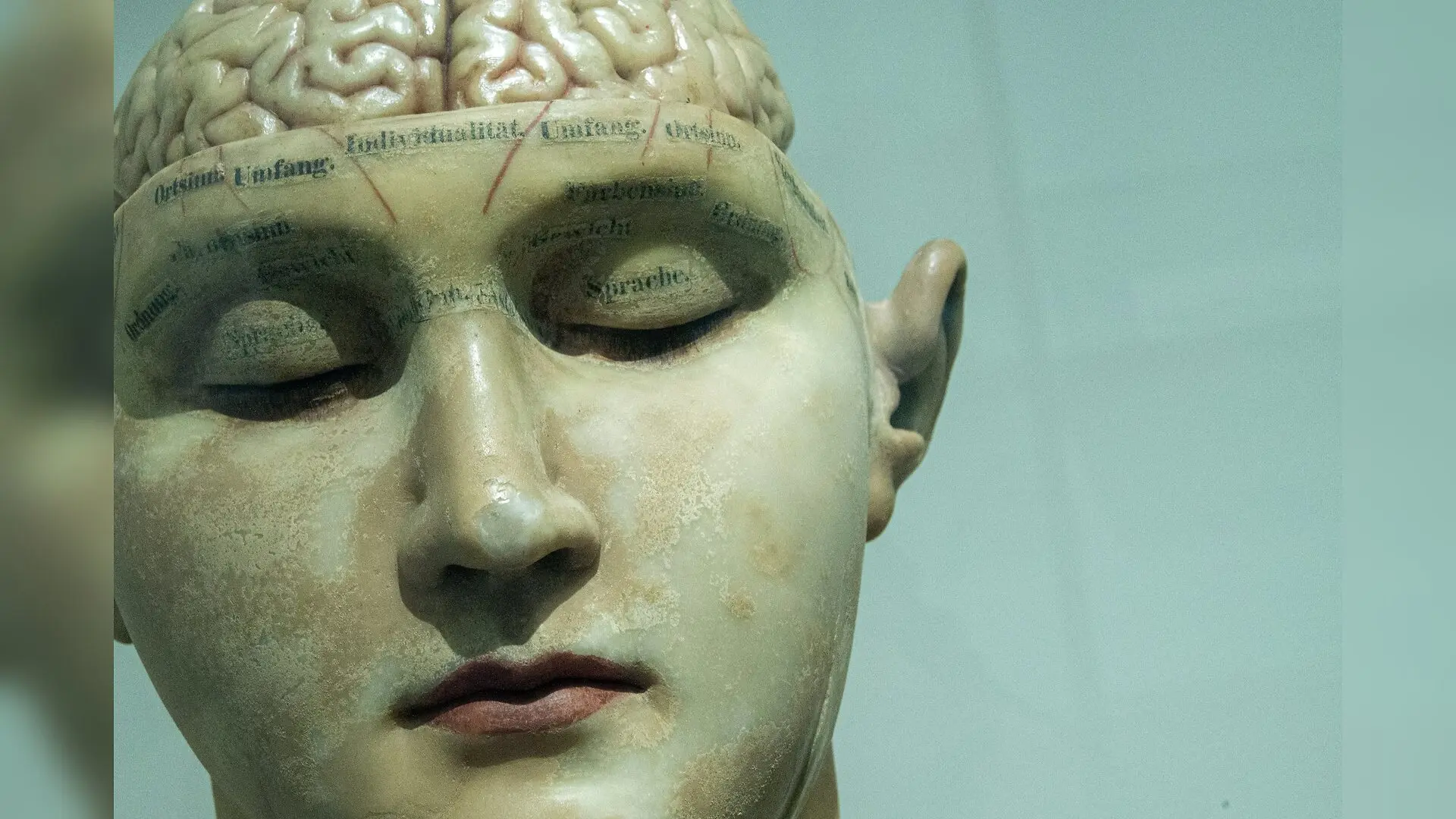
Delicate brain cells shaped like microscopic butterflies hold the deepest secrets of human consciousness and mental life. A century of groundbreaking collaboration between the National Academy of Lincei and the National Research Council shaped modern neuroscience in Italy, driven by scientific giants such as Giuseppe Moruzzi and Rita Levi-Montalcini. Their pioneering efforts built world-class research hubs that transformed the study of the mind.
How Two Pioneering Neuroscientists Formed a Lifelong Scientific Partnership
Giuseppe Moruzzi and Rita Levi-Montalcini first crossed paths in 1939 at the International Congress of Neurology in Copenhagen, just as the political climate in Europe deteriorated toward war. Levi-Montalcini had fled Belgium to escape racial persecution, while Moruzzi arrived from Cambridge after working alongside Lord Edgar Adrian. A decade later in March 1949, the two researchers met again at the Congress of Genetic Neurology in Chicago, where both stood at the height of their scientific productivity. Moruzzi had recently discovered the ascending reticular system alongside Horace Magoun at Northwestern University, while Levi-Montalcini had published pivotal findings resolving a long-standing debate on neuronal death during embryonic development.
As documented in historical reviews published in the Conference of the National Academy of Lincei and National Research Council, these international milestones preceded their respective returns to Italy. Moruzzi established an internationally renowned neurophysiology laboratory in Pisa in 1949. Meanwhile, Levi-Montalcini began dividing her time between the United States and Italy starting in 1962 before settling permanently in her home country during the 1970s.
Unlocking the Mechanisms of Sleep and Wakefulness in Pisa
Moruzzi transformed the Institute of Physiology at the University of Pisa into a premier global center for electrophysiology. By applying microelectrodes and electroencephalograms to record electrical activity from single neurons, his team revealed how nerve impulses encode information throughout the central nervous system. His collaboration with Magoun demonstrated that electrical stimulation of the brainstem’s reticular formation shifts brain waves from a sleep-like synchronized pattern to the desynchronized state typical of wakefulness. This discovery established the ascending reticular substance as the biological switch governing the sleep-wake cycle, attention, and consciousness.
Moruzzi successfully secured vital financial backing from the Rockefeller Foundation and the National Institutes of Health to rebuild the Pisa laboratory after wartime devastation. To sustain this momentum, he collaborated with Pisa University Rector Alessandro Faedo to petition the National Research Council for a dedicated national research facility. This initiative culminated in the establishment of the CNR Neurophysiology Laboratory in Pisa, which later expanded under Lamberto Maffei to encompass visual system research and eventually merged into a unified Institute of Neuroscience in 2001.
Discovering Nerve Growth Factors and Building Cellular Biology
Rita Levi-Montalcini pursued her own revolutionary path by investigating how complex neural networks form during embryonic development. Working from a makeshift laboratory in her bedroom during World War II, she laid the groundwork for experiments that earned her an invitation to Washington University by Viktor Hamburger in 1947. There, she discovered the Nerve Growth Factor, a milestone that revealed how neurotrophic molecules regulate neuronal survival, differentiation, and synaptic plasticity. This discovery earned her the Nobel Prize in Medicine in 1986.
Upon returning to Italy, Levi-Montalcini secured institutional support from the National Research Council and the Higher Institute of Health to establish the Laboratory of Cellular Biology in Rome in 1969. When administrative age limits threatened to halt her leadership in the 1970s, she successfully invoked legislation recognizing her status as a victim of racial persecution under 1938 fascist decree laws, allowing her to continue directing the institute until 1979. Her foundational research ultimately paved the way for the approval of the first nerve growth factor-based eye drop therapy for neurotrophic corneal keratitis in 2017, and inspired the creation of the European Brain Research Institute in 2002.
Transitioning from Renaissance Workshops to Digital Brain Simulations
Italian neuroscience has evolved from small academic workshops where students learned directly from master scientists into a data-intensive discipline relying on large collaborative networks. Modern researchers utilize advanced imaging, single-cell recording, and multi-omic atlases to bridge the gap between microscopic cellular circuits and macroscopic human behavior. The National Research Council remains at the forefront of this digital transformation by leading the Italian node of EBRAINS, the collaborative research platform born from the European Union Human Brain Project.
The research was published in Conference of the National Academy of Lincei and National Research Council - 100 Years of Collaboration for the Progress of Science, Rome, 17-18 October 2023.
This article has been fact checked for accuracy, with information verified against reputable sources. Learn more about us and our editorial process.
Last reviewed on .
Article history
- Latest version
Reference(s)
- Cattaneo, Antonino. “The Development of Neuroscience.” Springer Proceedings in Physics, November 14, 2026, pp. 48-69. Springer Nature Switzerland, doi: 10.1007/978-3-032-35509-6_5. <https://doi.org/10.1007/978-3-032-35509-6_5>.
Cite this page:
- Posted by Bilal Abbasi