The World’s Only Sea Without A Coast Is Rapidly Changing And Scientists Are Concerned
A journey through the mysterious, vanishing landscape of a sea where there is nowhere left to stand, revealing the environmental reality behind the phrase.
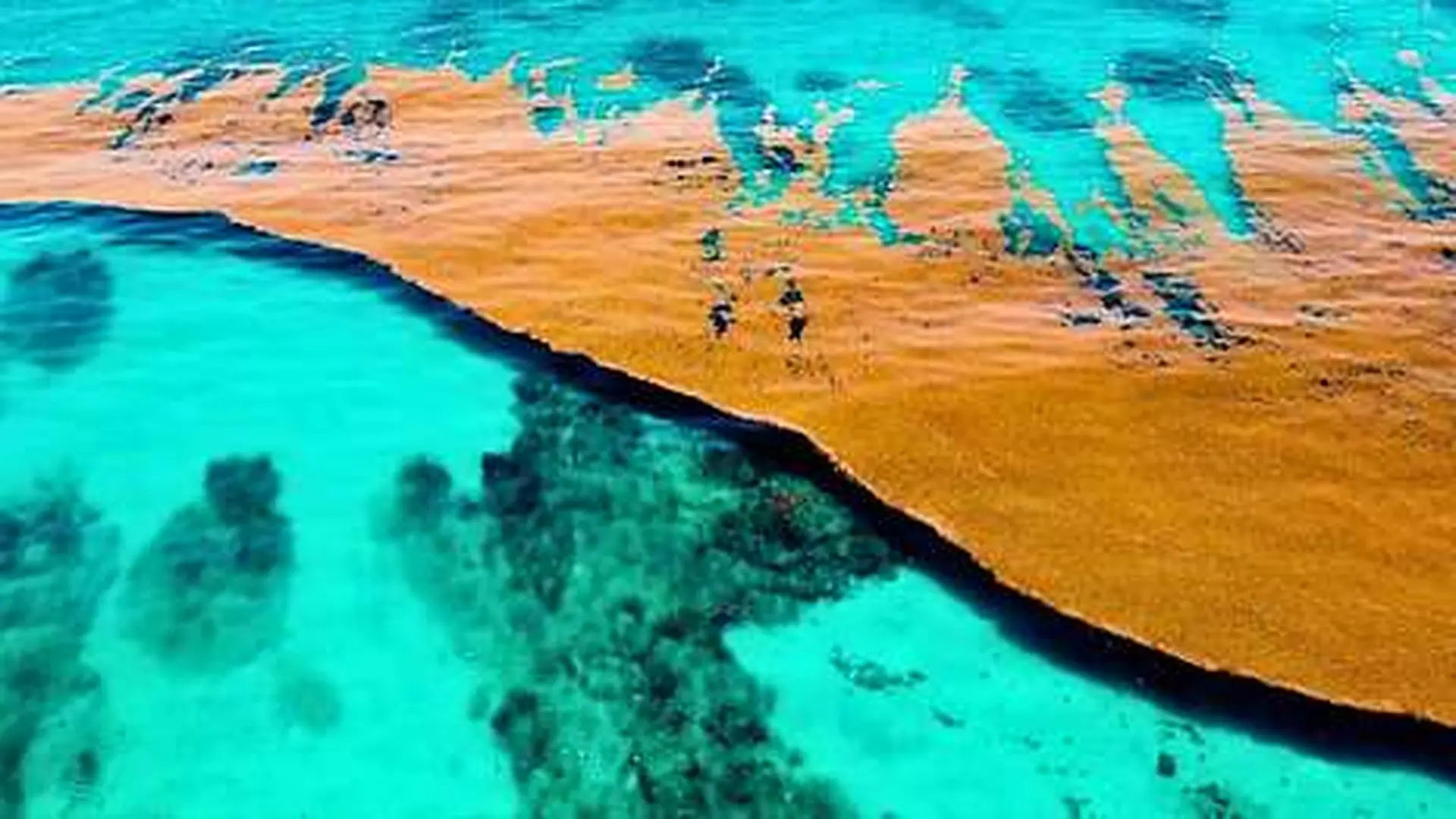
The Sargasso Sea remains a geographic anomaly, a vast expanse of ocean defined not by continental coastlines but by the rotating currents of the North Atlantic. Encircling it are the Gulf Stream, the North Atlantic Current, the Canary Current, and the North Atlantic Equatorial Current, forming a shifting, liquid boundary that makes the region notoriously difficult to study. Because the water is in constant motion and lacks a fixed shore, gathering consistent environmental data has historically required immense logistical persistence.
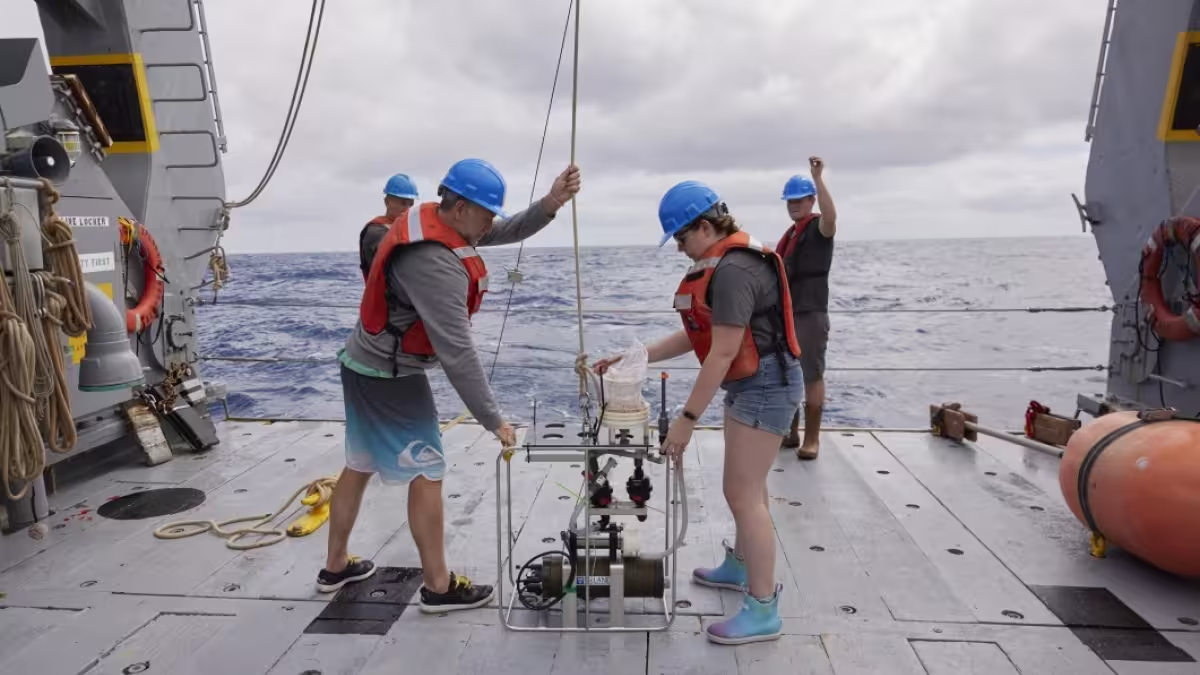
In 1954, oceanographer Henry Stommel of the Woods Hole Oceanographic Institution established a permanent monitoring point known as Hydrostation S, located 25 kilometers southeast of Bermuda. Researchers have returned to this exact coordinate every two weeks for seven decades, creating one of the most vital long-term environmental records in existence. New analysis of this data, published in Frontiers in Marine Science, reveals a stark transformation: the Sargasso Sea is fundamentally different today than it was just forty years ago.
Decades of Change in Atlantic Chemistry
Led by chemical oceanographer Nicholas Bates of Arizona State University’s Bermuda Institute of Ocean Sciences, the study compared historical records with contemporary measurements. By integrating data from Hydrostation S and the Bermuda Atlantic Time-series Study (BATS)—which has sampled deeper water columns since 1988—researchers have mapped a clear, alarming trend.
Since 1983, the surface of the Sargasso Sea has warmed by approximately 1 degree Celsius (1.8 degrees Fahrenheit). Beyond this heating, the water has become roughly 30 percent more acidic, significantly saltier, and depleted of roughly 6 percent of its dissolved oxygen. According to Bates, these shifts are not merely cyclical fluctuations; the current chemical state of the surface water has moved entirely outside the range observed throughout the 1980s.
The primary driver behind this decline is the absorption of anthropogenic carbon dioxide from the atmosphere. While the ocean serves as a critical buffer against global heating, the study indicates that the Sargasso Sea’s capacity to sequester this carbon has diminished by roughly 6 percent over the last four decades. Bates noted that there is currently no evidence of these trends slowing down.
Impacts on a Unique Marine Ecosystem
The Sargasso Sea takes its name from Sargassum, a floating brown macroalgae that creates a complex, buoyant habitat often referred to as the “golden floating rainforest.” This ecosystem provides essential shelter for juvenile sea turtles, diverse crustacean populations, and migratory species like humpback whales and eels.
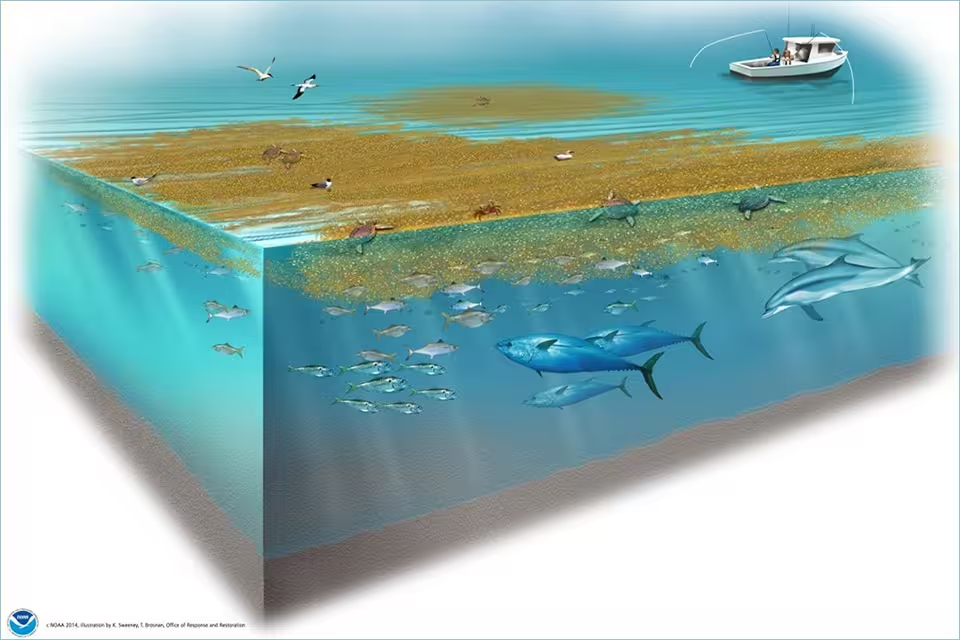
The rising acidity poses a specific threat to organisms that rely on calcium carbonate to construct their shells and skeletons, such as the microscopic calcifying phytoplankton that form the foundation of the marine food web. While the study highlights that environmental conditions have become increasingly hostile for these organisms, the long-term consequences for the larger marine life that inhabit the region remain an area of ongoing concern.
The Necessity of Persistent Observation
The findings underscore the immense value of ship-based research in international waters where no singular nation holds jurisdiction. Peter Schlosser, director of Arizona State’s Global Futures Laboratory, emphasized that the granular, decade-spanning data provided by these consistent sampling missions is irreplaceable.
As the Sargasso Sea experiences heat levels unmatched in recorded history, the commitment to maintaining Hydrostation S continues. The researchers emphasize that the ability to track these shifts is entirely dependent on the willingness of scientific teams to return to the same patch of ocean, week after week, ensuring that the health of the high seas is not left to speculation.
This article has been fact checked for accuracy, with information verified against reputable sources. Learn more about us and our editorial process.
Last reviewed on .
Article history
- Latest version
Reference(s)
- “What is the Sargasso Sea?.” <https://oceanservice.noaa.gov/facts/sargassosea.html>.
- <https://bios.asu.edu/currents/atlantic-ocean-near-bermuda-swarmer-and-more-acidic-ever-40-years-observation-show>.
Cite this page:
- Posted by Bilal Abbasi