Neural Network Study Unifies Two Major Theories of Biological Learning
Researchers show that deep feedback control operates as a local approximation of predictive coding, bridging two competing theories of brain-inspired AI.
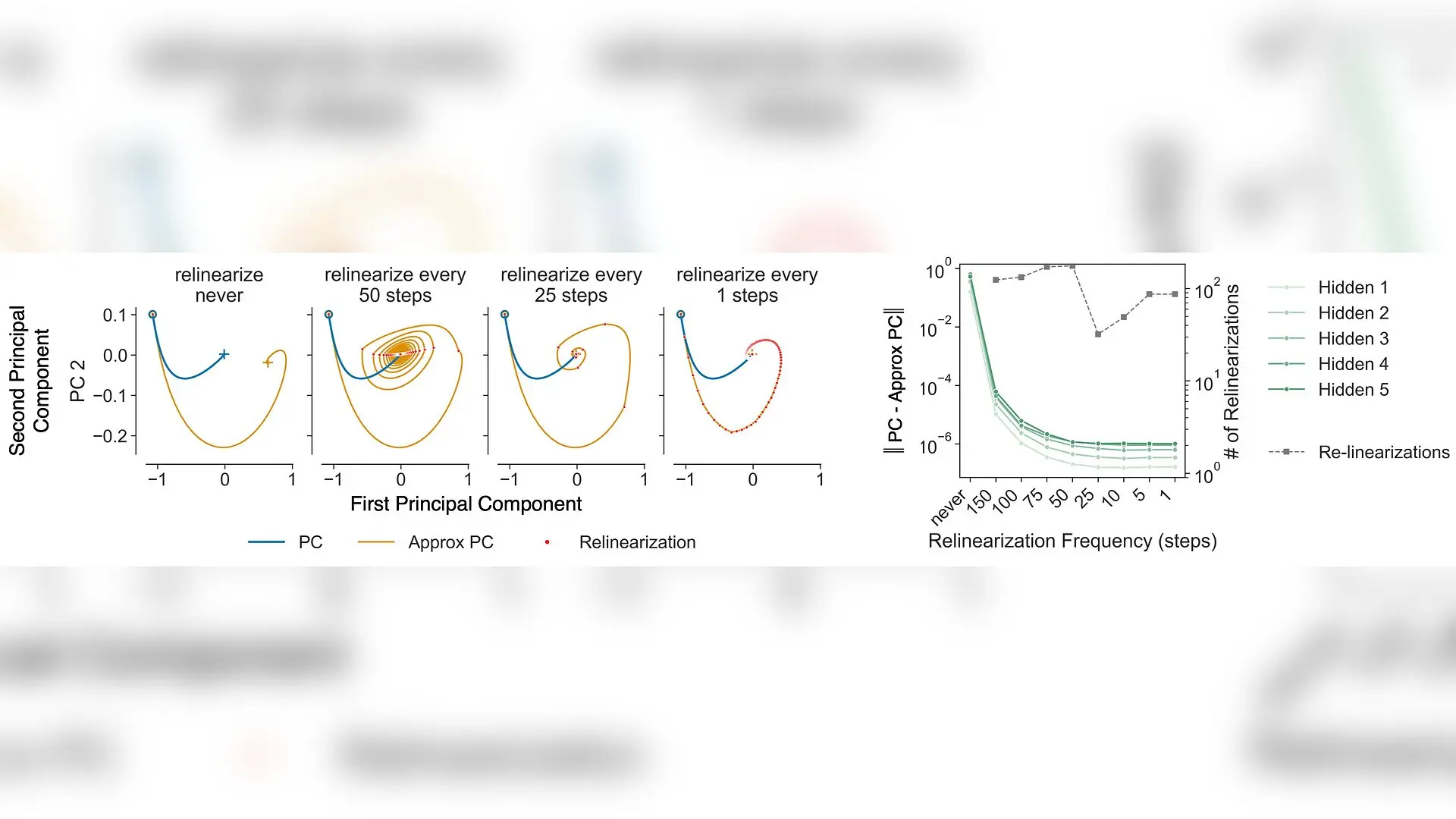
Neural networks trained with a biologically inspired learning method known as predictive coding can be mathematically simplified into a centralized control framework, according to a recent study. Researchers found that deep feedback control operates as a localized approximation of predictive coding near network equilibrium points, bridging two major theories of how biological brains and artificial systems might assign learning credit.
While standard artificial intelligence relies heavily on backpropagation, an algorithm that requires non-local computations and artificial backward passes across layers, neuroscientists and computer scientists continue searching for biologically plausible alternatives. Two prominent models have emerged: predictive coding networks, which minimize local energy mismatch between signals, and deep feedback control, which routes errors through a centralized controller using motor control principles. Until now, the exact relationship between these two frameworks remained poorly understood.
Connecting Two Major Theories Through Network Equilibrium
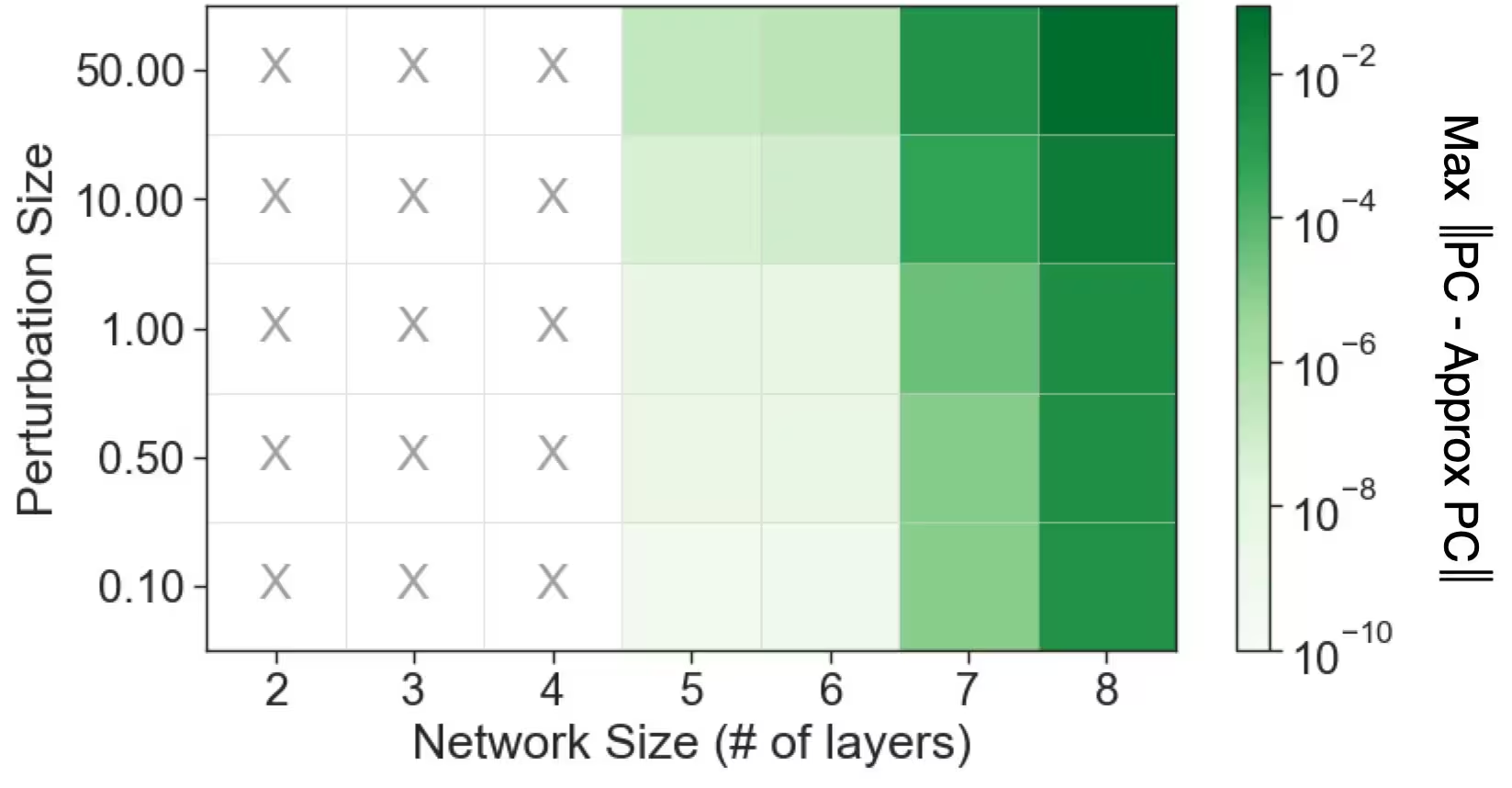
To investigate how these methods relate, researchers analyzed the mathematical activity dynamics of both predictive coding and deep feedback control. The authors report, in a study published on the arXiv preprint server, that deep feedback control arises naturally as a local approximation of predictive coding near fixed points. For shallow linear networks, this equivalence is exact, though systematic deviations appear as network depth and nonlinearity increase.

To make the approximation practical for deeper networks, the team introduced a modified framework called Approx PC. This approach utilizes a centralized feedback controller driven by output errors rather than relying solely on distributed, layer-by-layer error signals.
How Nudging Resolves Residual Approximation Errors
When testing nonlinear networks, the authors observed that standard approximations can accumulate residual errors away from equilibrium points. To overcome this limitation, the researchers developed a multi-stage training algorithm that divides the trajectory toward a target output into a sequence of smaller subgoals, or nudges. After each partial step, the network dynamics are allowed to relax to a new local equilibrium before the next subgoal is computed.
When evaluated on standard image classification benchmarks, including MNIST and FashionMNIST datasets, networks trained with the Approx PC method achieved a final test accuracy of 97.32 percent across five random seeds. Corresponding predictive coding networks achieved an evaluated test accuracy of 97.47 percent across the same seeds. Furthermore, weights learned through the approximate framework transferred directly into standard predictive coding models without requiring additional training.
Implications for Artificial Intelligence and Neuroscience
The findings suggest that the slow inference speeds often attributed to predictive coding stem primarily from its transient network dynamics rather than its underlying energy-based learning principles. By replacing distributed error propagation with a centralized feedback controller broken down into intermediate nudges, networks were able to process information more efficiently per integration step.
From a biological perspective, the research indicates that distinguishing between localized error correction and control-driven dynamics in the brain will require careful analysis of transient activity rather than steady-state behavior. While the current study focused on fully connected architectures, the authors note that future work should expand these principles to larger convolutional networks and explore broader control-theoretic improvements.
The study was posted to the arXiv preprint server on November 19, 2026.
This article has been fact checked for accuracy, with information verified against reputable sources. Learn more about us and our editorial process.
Last reviewed on .
Article history
- Latest version
Reference(s)
- Fayyazi, Ryan. “A Control-Theoretic Approximation to Predictive Coding Dynamics.” arXiv.org <http://arxiv.org/abs/2611.26319v1>.
Cite this page:
- Posted by Hassan Raza