Eighty-Seven Wild Boars Test Negative for Dangerous Tick-Borne Bacterium
New screening of Swedish wildlife questions the role of large mammals in spreading an emerging pathogen that targets human blood vessels.

Eighty-seven wild boars across Sweden tested completely negative for an emerging and potentially dangerous tick-borne bacterium, casting doubt on whether large mammals play a significant role in spreading the pathogen. Researchers analyzed spleen tissue collected from the animals between March 2023 and March 2025 to determine if the species acts as a reservoir host, but found no traces of microbial DNA despite high local tick exposure.
The bacterium in question, Neoehrlichia mikurensis, is an intracellular microbe that targets vascular endothelial cells lining blood vessels. While it often causes mild or asymptomatic infections in healthy humans, it can trigger severe complications such as blood clots and pulmonary embolism in immunocompromised individuals. Although questing ticks in southern Sweden carry an infection prevalence of approximately 6.0 percent, the natural host range of the pathogen beyond small rodents remains poorly understood.
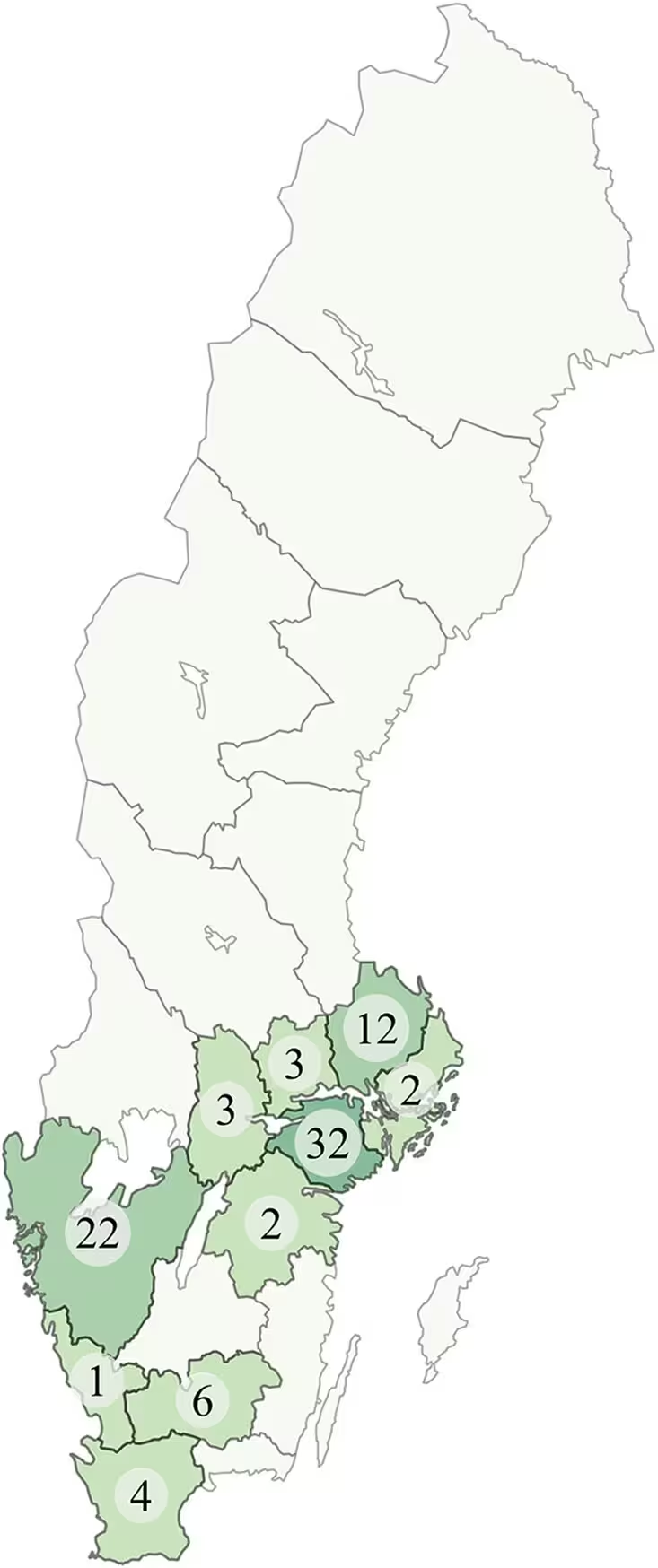
To investigate whether wild boars contribute to the enzootic cycle of the pathogen, participating hunters gathered spleen samples from animals harvested for human consumption across 10 Swedish counties, ranging from Skåne up to Uppsala and Dalarna. DNA extraction and quantitative PCR assays targeting a conserved 131 base pair segment of the groEL gene were carried out, with rigorous controls applied to rule out PCR inhibition or sample degradation. The detailed findings are published in PLOS One, outlining the complete screening results across different age groups and genders.
Why Low Tick Burdens Matter for Disease Transmission
Establishing the true competence of a wildlife reservoir requires three essential criteria: high population density, sufficient tick feeding rates, and the biological capacity for the pathogen to replicate and infect new feeding ticks. While wild boars are abundant and expanding across European landscapes, their average tick burden appears remarkably low compared to other ungulates. Previous systematic surveys in south-central Sweden revealed that wild boars exhibit the lowest infestation rates among local hoofed mammals, with zero larvae found on examined animals in certain studies.
The complete absence of bacterial DNA in the 87 analyzed spleen samples suggests that wild boars do not develop chronic infections. If the animals regularly sustained active infections, acute clinical signs or elevated mortality would likely be noticed by hunters and researchers given the high visibility of the species. Instead, the negative results point to the possibility that wild boars are either entirely insusceptible or experience only transient, non-systemic exposure that fails to establish deep tissue colonization.
Limitations and Future Wildlife Surveillance
While the sample size of 87 individuals is substantial for wildlife pathology, detecting pathogens with extremely low prevalence remains challenging. The researchers noted that host-specific internal DNA integrity controls were not performed on every individual sample, though the extracted material performed successfully in parallel molecular screenings. Furthermore, earlier discoveries of the bacterium in ticks removed from wild boars in other European regions may simply reflect ticks that acquired the infection from an earlier host rather than the wild boar itself.
Understanding the full ecological network of Neoehrlichia mikurensis requires continued surveillance across diverse wildlife populations and broader geographic ranges. Future investigations should incorporate multi-tissue sampling and systematic collection of feeding ticks to map how tick-borne pathogens circulate in nature. As wildlife and human habitats increasingly overlap, pinpointing the true reservoirs of emerging pathogens remains vital for assessing public health risks.
The research was published in PLOS One on November 19, 2026.
This article has been fact checked for accuracy, with information verified against reputable sources. Learn more about us and our editorial process.
Last reviewed on .
Article history
- Latest version
Reference(s)
- Lindell, Hanna., et al. “Neoehrlichia mikurensis, where art thou? A negative analysis of 87 Swedish wild boars (Sus scrofa).” PLOS One, vol. 21, no. 11, November 19, 2026, pp. e0360499 Public Library of Science (PLoS), doi: 10.1371/journal.pone.0360499. <https://doi.org/10.1371/journal.pone.0360499>.
Cite this page:
- Posted by Hassan Raza