Scientists Have Engineered the First Microbe Designed to Build Structures on Mars
A newly engineered organism is sparking debate over the future of life on Mars, pitting hopes for a transformative breakthrough against complex scientific risks.
A nonprofit biotech startup, Pioneer Labs, has unveiled what it describes as the first “microbe for Mars,” a genetically tweaked bacterium intended to transform Martian resources into sustainable construction materials. Known as sPL.001, the organism represents an ambitious, early-stage effort to harness synthetic biology to sustain human outposts on the Red Planet.
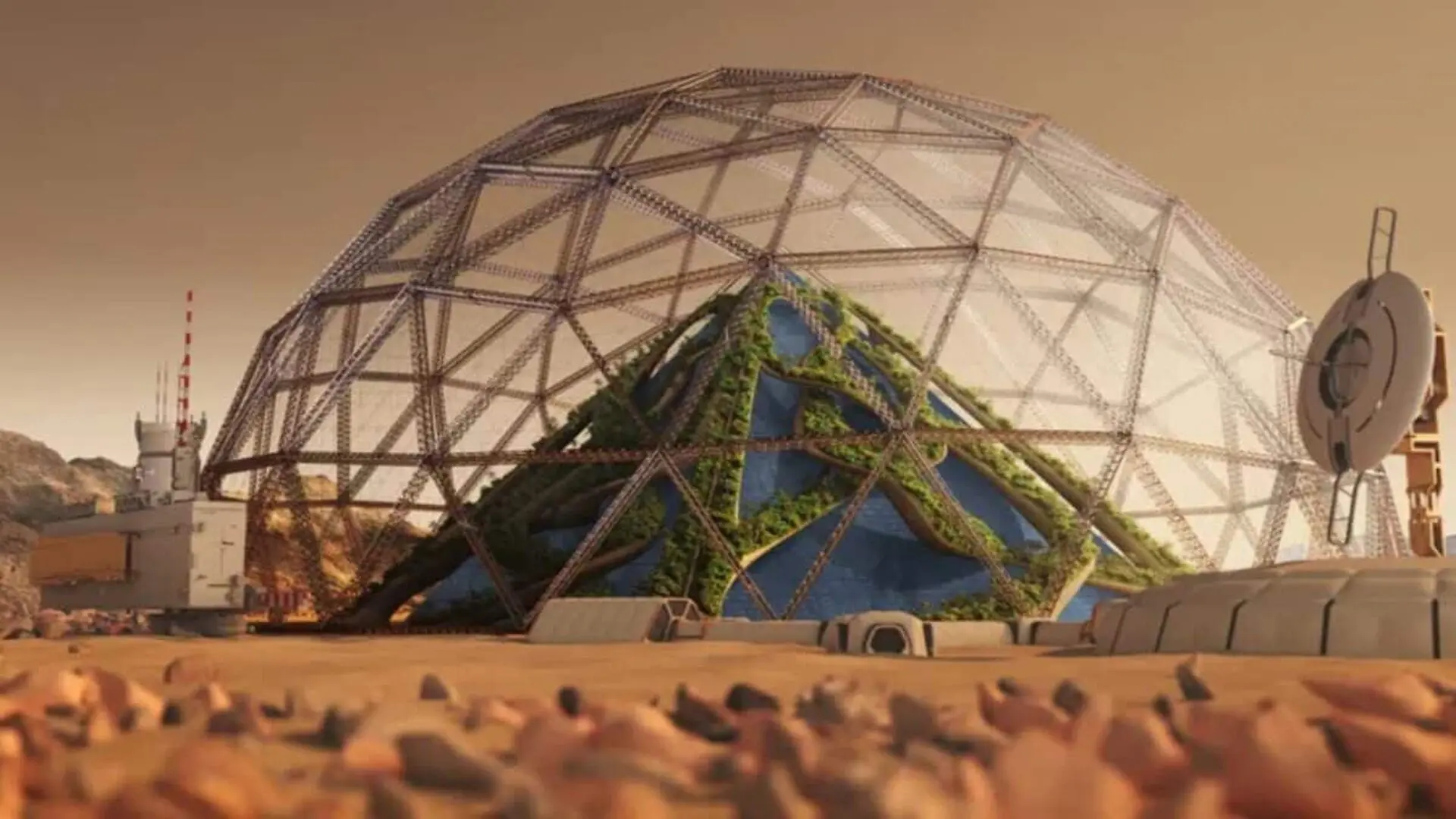
The microbe is a modified strain of Cupriavidus necator, a species already prized in industrial biotechnology for its capacity to synthesize bioplastics. The proposed workflow involves cultivating the bacteria within enclosed bioreactors, feeding them a mixture of Martian regolith, water, and compressed carbon dioxide. The resulting biopolymers could then serve as raw material for 3D-printing habitats and infrastructure.
While the project merges the frontiers of space exploration and synthetic biology, it has also sparked a debate over terminology. Critics are questioning whether a laboratory-bound bacterium justifies the lofty “microbe for Mars” moniker or if the marketing has outpaced the actual biological milestones.
Beyond the Hype: Assessing True Utility
Pioneer Labs CEO Erika DeBenedictis has characterized the development of sPL.001 as an initial move toward long-term terraforming, asserting that humanity must “bring nature with us” as it ventures into the solar system. However, the scientific community remains measured in its appraisal.
Chris McKay, a veteran planetary scientist at NASA’s Ames Research Center, noted to Scientific American that the organism is neither revolutionary nor particularly complex. From his perspective, the project serves as a functional tool for manufacturing feedstock rather than a biological engine capable of altering the Martian environment. “It can only be grown in a bioreactor,” he observed.
Echoing these sentiments, Paul Race of Newcastle University labeled the announcement “rather over the top.” DeBenedictis herself has acknowledged that sPL.001 is merely a component of a much larger vision, suggesting that a total of five distinct engineered organisms may eventually be required to render the planet more hospitable.
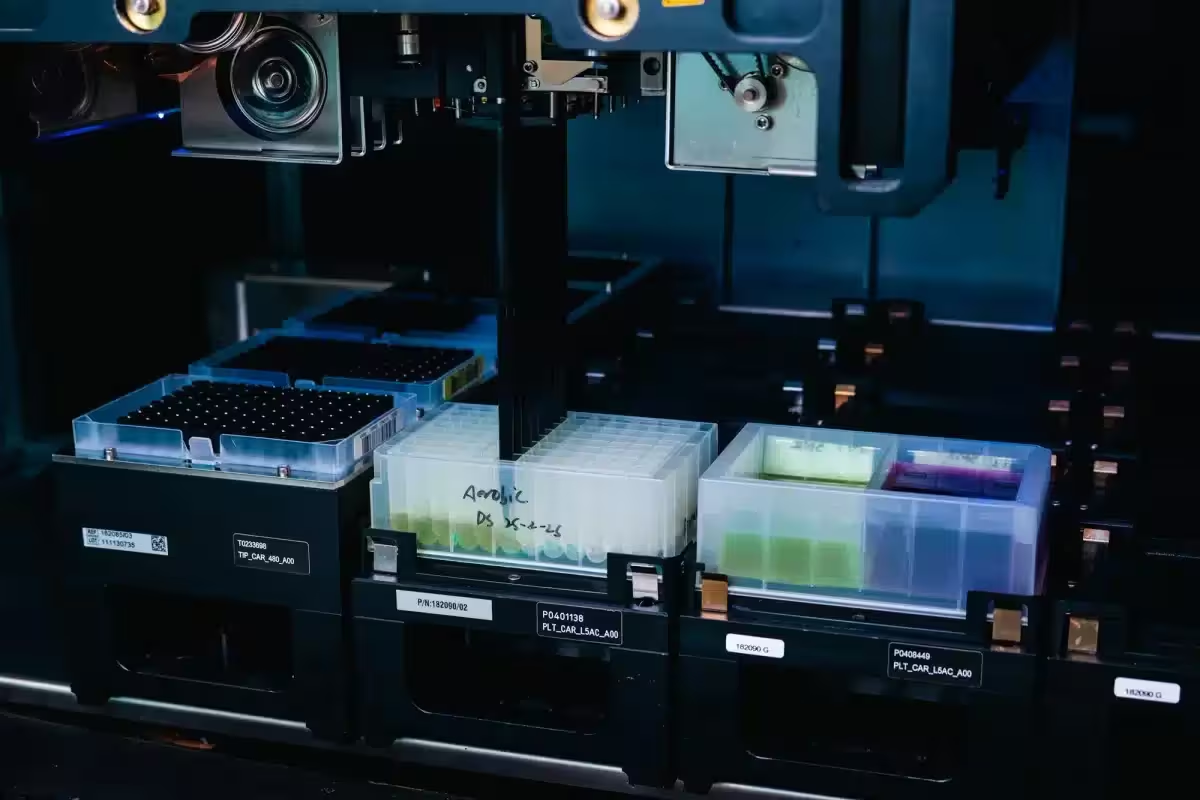
Pioneer Labs uses robotics to test microbes for Mars. Credit: Elijah Collins/Pioneer Labs
The Harsh Reality of the Martian Frontier
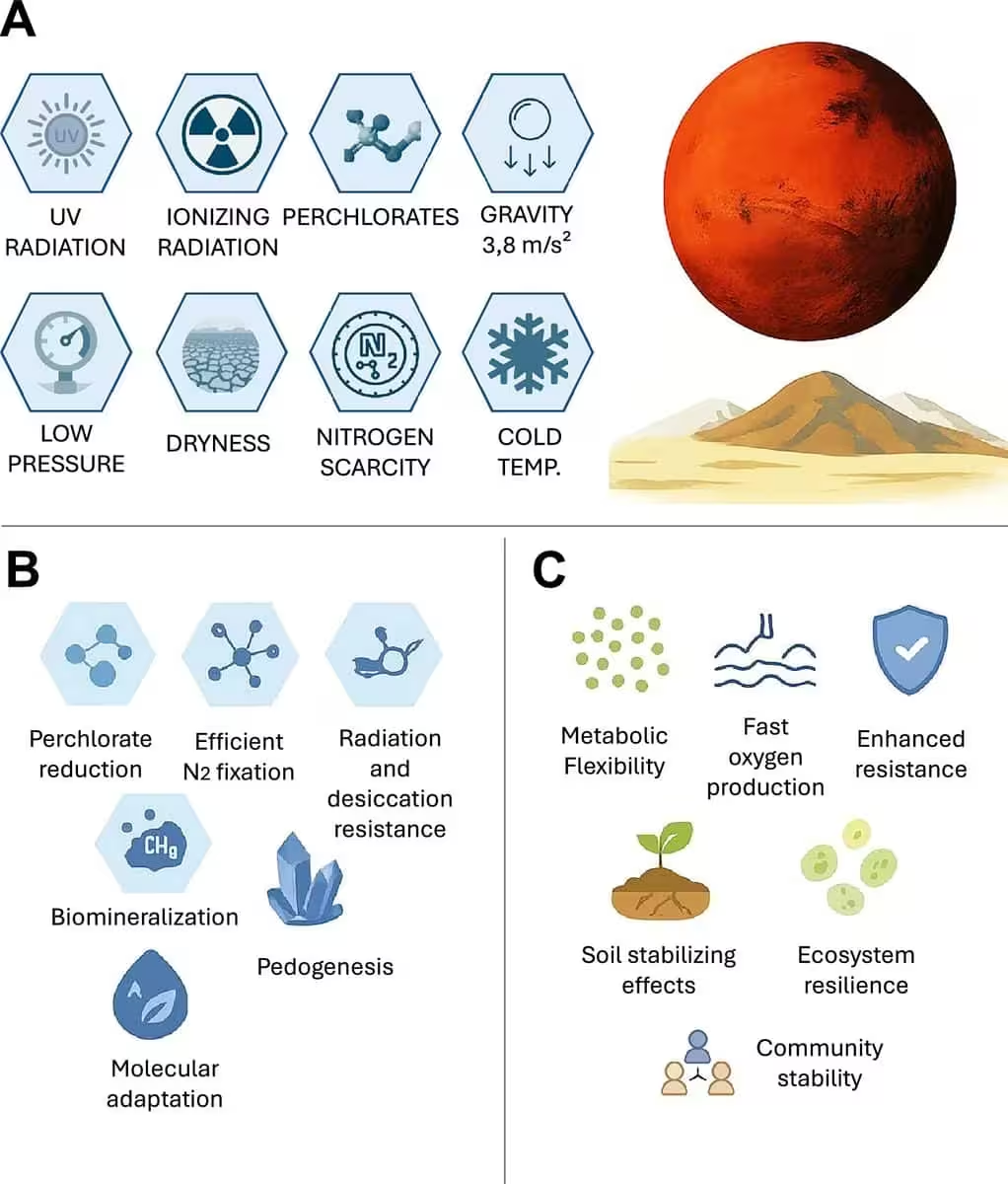
Translating biological success on Earth to the Martian surface presents monumental physical challenges. Mars is defined by extreme radiation, an atmosphere that is merely one percent the density of Earth’s, and diurnal temperature fluctuations that can span 100 degrees Celsius. Furthermore, nitrogen—a vital nutrient for life—is notoriously scarce, a condition identified in a 2025 review as a critical bottleneck for both agriculture and broad-scale terraforming.
Beyond atmospheric and thermal hurdles, the surface itself is potentially toxic. Many regions of the Martian soil are laden with perchlorates, which could contaminate prospective life-support systems. Consequently, researchers draw a firm line between proving an organism’s viability in a sterile, controlled environment and its potential to survive in the wild.
Neveda Naz, an astrobiologist at Tufts University, praised the team’s selection of C. necator, noting that the company has effectively optimized the bacterium for the chemical constraints of a simulated Martian environment. However, she emphasized that “there is an important distinction between showing that Martian regolith can provide biologically useful nutrients and showing that an organism can grow in the Martian environment.”
Overview of microbial roles and benefits for terraforming Mars. Credit: Communications Biology
Containment and Planetary Ethics
To mitigate the risk of biological contamination, Pioneer Labs has implemented a strategy labeled PRIM, or “Propagation Restricted, Inert on Mars.” Experiments have indicated that C. necator cannot reproduce in the absence of specific water and carbon supplies, theoretically ensuring that any mechanical failure or breach of a bioreactor would not result in an ecological catastrophe.
DeBenedictis maintains that even a “catastrophic leak” would remain well within planetary protection safety standards. While Ricard Solé of Pompeu Fabra University agrees that isolating biotechnology from the open environment is the correct approach, the broader international regulatory framework regarding planetary protection remains a complex hurdle that the startup will eventually have to navigate.
Today, Pioneer Labs is announcing our first step towards terraforming Mars.
With equipment that fits in just a single rocket launch, we can convert Martian dirt, water, and air into enough building materials to construct a small city on Mars.
Gallagher, Brian. “Can bioengineered bacteria help terraform Mars?.”, October 2, 2026 Scientific American <https://www.scientificamerican.com/article/can-bioengineered-bacteria-help-terraform-mars/>.
Kumar, Rohan. “Scientists Have Engineered the First Microbe Designed to Build Structures on Mars.” BioScience. BioScience ISSN 2521-5760, 06 October 2026. <https://www.bioscience.com.pk/en/subject/biotechnology/a-startup-wants-to-make-mars-greener-with-five-engineered-microbes-and-the-first-one-is-already-here>.
Kumar, R. (2026, October 06). “Scientists Have Engineered the First Microbe Designed to Build Structures on Mars.” BioScience. ISSN 2521-5760. Retrieved October 06, 2026 from https://www.bioscience.com.pk/en/subject/biotechnology/a-startup-wants-to-make-mars-greener-with-five-engineered-microbes-and-the-first-one-is-already-here
Kumar, Rohan. “Scientists Have Engineered the First Microbe Designed to Build Structures on Mars.” BioScience. ISSN 2521-5760. https://www.bioscience.com.pk/en/subject/biotechnology/a-startup-wants-to-make-mars-greener-with-five-engineered-microbes-and-the-first-one-is-already-here (accessed October 06, 2026).