Scientists Just Discovered A Heat Loving Amoeba That Rewrites The Rules Of Complex Life
New research reveals complex life thrives at higher temperatures than previously thought, expanding the search for eukaryotes on Earth and beyond.
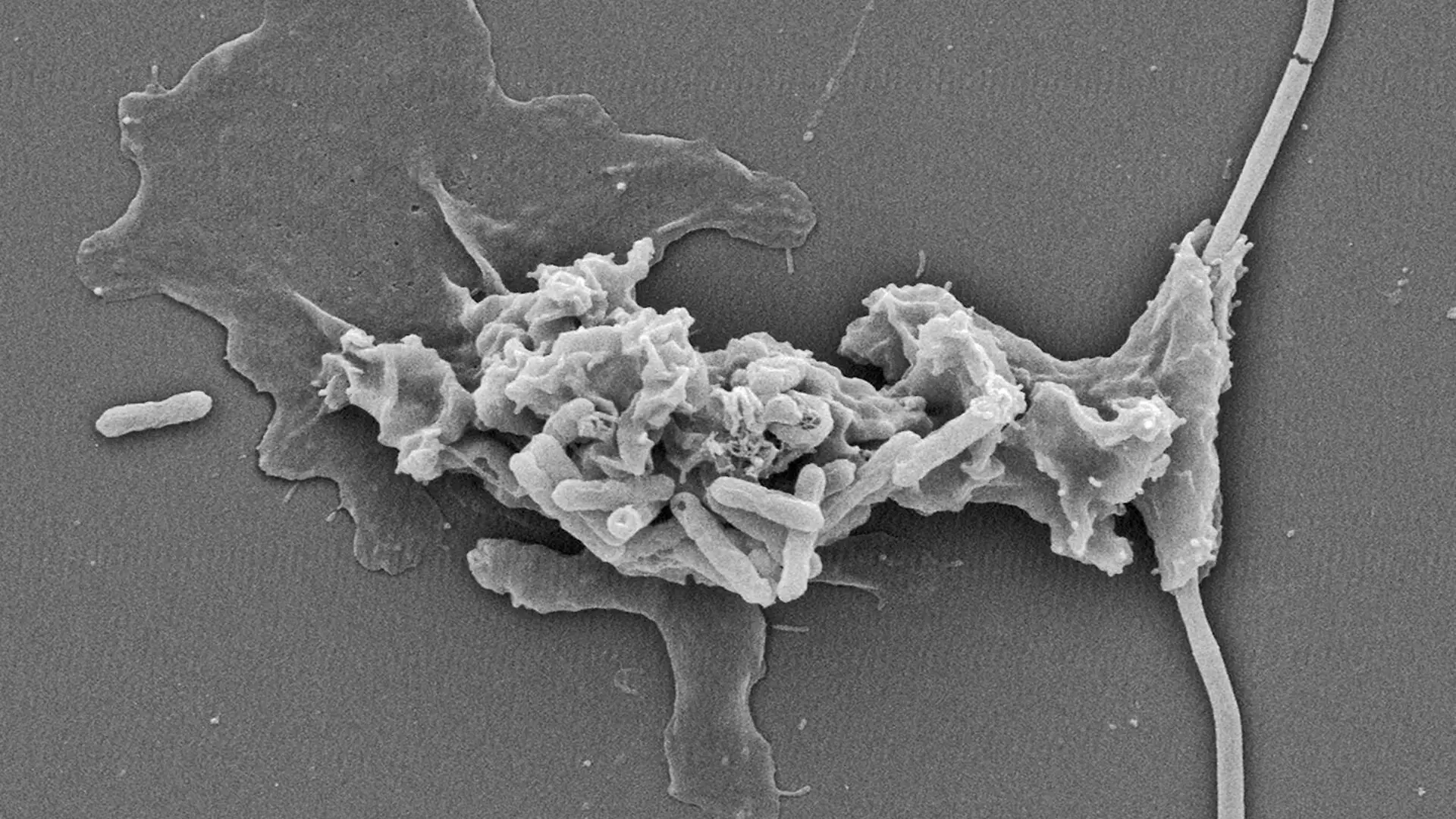
A newly identified organism has shattered long-held biological assumptions about the thermal limits of complex life. Researchers have discovered an amoeba capable of active growth at 63°C (145°F), a milestone that challenges the long-standing scientific consensus that eukaryotic cells—those containing a nucleus and specialized internal structures—could not survive in environments exceeding 60°C (140°F).
The organism, formally named Incendiamoeba cascadensis, or the “fire amoeba from the cascades,” was unearthed in California’s Lassen Volcanic National Park. While the park is world-renowned for its acidic, bubbling geothermal pools, the team—led by researchers from Syracuse University—recovered the resilient microbe from a seemingly unassuming tributary. The findings, published in the journal Cell, suggest that the biosphere’s true limits are far broader than previously modeled.
Pushing the boundaries of survival
For years, biologists have focused heavily on bacteria and archaea when studying extremophiles, largely because these simpler, single-celled organisms are known to thrive in intense heat. Eukaryotes, which represent a more complex branch of life, were thought to be structurally incompatible with such high temperatures due to the fragility of their cell membranes.
Collecting samples in the rugged terrain of Lassen required significant ingenuity. To maintain safety near unstable, superheated ground, the researchers employed specialized long-reach tools, including modified barbecue tongs, to gather samples from tight, high-temperature stream crevices.
Back in the laboratory, the researchers subjected the amoebae to a controlled increase in temperature. The organisms thrived as the heat climbed past 60°C, continuing to divide at 63°C. Even when pushed further, the amoebae demonstrated remarkable resilience: at 64°C, they remained mobile, and at 70°C (158°F), they successfully entered a dormant, encysted state to survive the thermal stress, reactivating once the environment cooled.
Implications for the search for life
The existence of Incendiamoeba cascadensis carries profound weight for astrobiology. By proving that complex cells can endure temperatures once considered lethal, the discovery forces scientists to reconsider the potential for life on other planets and moons previously deemed too hot for eukaryotes.
“What we thought was true is not,” says Angela Oliverio, an assistant professor at Syracuse University and coauthor of the study. “By expanding the known thermal range for complex life, the discovery opens new possibilities for where eukaryotes might exist.”
Beyond the search for extraterrestrial biology, the study hints at significant potential for biotechnology. Insights into how these amoebae stabilize their internal proteins and membranes at such extremes could eventually lead to the development of highly resilient enzymes and innovative, heat-tolerant biomaterials.
The research also suggests that these organisms are far more common than once thought. Students in the Oliverio lab have already begun identifying similar heat-tolerant microbes in human-made settings, such as near steam pipes on university campuses, proving that the search for extreme life does not always require a trip to a volcanic wilderness.
“Seeing organisms that maybe no one has seen before is just an incredible feeling,” says Beryl Rappaport, the study’s lead author and a PhD candidate at Syracuse. For the research team, the discovery serves as a clear directive for the future of microbiology: the boundaries of life are rarely where we expect them to be, and it is time to expand the search.
This article has been fact checked for accuracy, with information verified against reputable sources. Learn more about us and our editorial process.
Last reviewed on .
Article history
- Latest version
Reference(s)
- Rappaport, H. Beryl., et al. “A geothermal amoeba sets a new upper temperature limit for eukaryotes.” Cell, September 1, 2026 Elsevier BV, doi: 10.1016/j.cell.2026.08.043. <https://doi.org/10.1016/j.cell.2026.08.043>.
Cite this page:
- Posted by Rohan Kumar