AI Is Helping Scientists Unlock 4 Billion Years of Biological Data to Fuel New Innovations
AI and biotechnology are revolutionizing biomimicry, allowing us to unlock and apply insights from four billion years of evolutionary experiments.
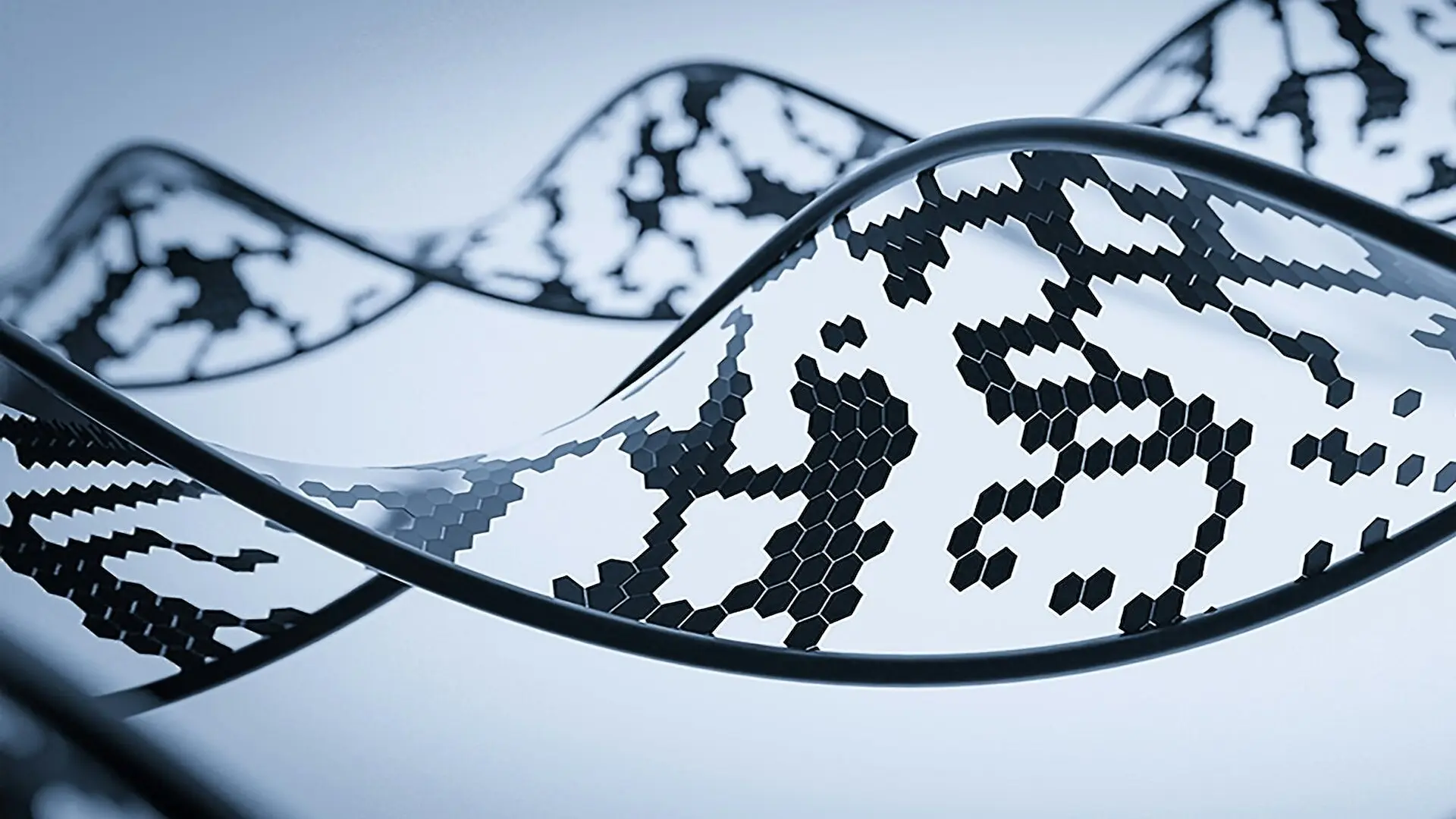
For millennia, humanity has turned to the natural world as a blueprint for engineering and design. From the earliest tools to modern infrastructure, observing how life navigates, heals, and sustains itself has consistently provided the foundational logic for our own technological leaps. While the practice of biomimicry is as old as civilization itself, we have entered a transformative era where the scale and precision of our investigation into biological systems are fundamentally shifting.
Modern breakthroughs in artificial intelligence, bioinformatics, and advanced imaging are allowing us to treat the natural world—a repository of four billion years of evolutionary testing—as a vast, searchable dataset. As detailed in the report Living Tech: The Convergence of Biology and Innovation, we are moving beyond simple observation toward a deep, computational understanding of life’s internal mechanics.
Decoding the Complexity of Life
Biotechnology is no longer restricted to the laboratory; it is rapidly becoming an information science. By sequencing genomes, mapping neural circuits, and monitoring cellular interactions in real time, researchers are converting biological phenomena into high-fidelity data. This shift is best exemplified by AlphaFold, an AI tool that has revolutionized structural biology by predicting protein shapes with unprecedented speed and accuracy, bypassing years of tedious experimental work.
This computational prowess allows scientists to flip the script on traditional innovation. Instead of observing a useful biological trait and attempting a rough mimicry, engineers can now identify a technical challenge and look for evolutionary precedents. Whether it is optimizing transportation networks or managing heat dissipation, nature has likely already solved the underlying constraints, offering elegant, battle-tested solutions to human engineering problems.
Nature as an Engineering Partner
The lessons hidden in biology often appear in unexpected places. Researchers have found that slime mold, despite lacking a central nervous system, can organize its growth into a transport network that rivals the efficiency and resilience of the Tokyo rail system. Similarly, data centers are beginning to look toward biological thermoregulation to solve cooling challenges, while the dense, efficient storage capabilities of DNA are being explored as the next frontier for digital archiving.
Beyond simple inspiration, synthetic biology is enabling us to treat life as a building material. We are reaching a point where we can do more than just imitate; we can incorporate biological systems into our manufacturing workflows. This includes everything from using hyperaccumulator plants to extract metals from soil to utilizing microorganisms as biological factories. In this emerging paradigm, the line between technology and biology begins to blur, creating hybrid systems that defy traditional categorization.
The Humility of Unmatched Complexity
Despite these advancements, it is essential to avoid the trap of assuming that digitization equates to complete mastery. Biology remains profoundly complex. A recent study involving the PigeonBot II highlights this reality: even when using advanced AI to model bird flight, researchers found that synthetic components could not replicate the mechanical performance of actual pigeon feathers. Ultimately, the team had to incorporate biological materials to achieve the desired flight stability.
This humility is a recurring theme in contemporary research. Every time we develop a new, more precise tool to measure a living system, we uncover layers of hidden interaction and signaling that our previous models failed to capture. Evolution’s four-billion-year head start remains a formidable gap, and as our knowledge expands, so too does our awareness of the vast mysteries that remain unsolved.
Biology as a Universal Innovation Platform
The broader takeaway is that biotechnology is poised to become a cross-industry platform, similar to the trajectory of computing or artificial intelligence. Just as software eventually permeated every facet of modern life, biological principles are beginning to inform architecture, material science, infrastructure design, and manufacturing.
By shifting our perspective to view biology as a searchable, programmable, and highly efficient system, we are unlocking new ways to innovate that align more closely with the natural world. Nature has been conducting experiments on a planetary scale for eons, and for the first time in human history, we are finally learning how to read the results.
This article has been fact checked for accuracy, with information verified against reputable sources. Learn more about us and our editorial process.
Last reviewed on .
Article history
- Latest version
Reference(s)
- “Living Tech: The Convergence of Biology and Innovation.” <https://www.su.org/resources/living-tech-the-convergence-of-biology-and-innovation>.
- Abramson, Josh. “Accurate structure prediction of biomolecular interactions with AlphaFold 3 - Nature.”, vol. 630, no. 8016, pp. 493-500. Nature, doi: 10.1038/s41586-024-07487-w. <https://www.nature.com/articles/s41586-024-07487-w>.
- Tero, Atsushi., et al. “Rules for Biologically Inspired Adaptive Network Design.” Science, vol. 327, no. 5964, January 22, 2010, pp. 439-442. American Association for the Advancement of Science (AAAS), doi: 10.1126/science.1177894. <https://www.science.org/doi/10.1126/science.1177894>.
- Chang, Eric., et al. “Bird-inspired reflexive morphing enables rudderless flight.” Science Robotics, vol. 9, no. 96, November 20, 2024 American Association for the Advancement of Science (AAAS), doi: 10.1126/scirobotics.ado4535. <https://www.science.org/doi/10.1126/scirobotics.ado4535>.
Cite this page:
- Posted by Zubair Ali