Anthropic’s New AI Standard Lets Claude Control Laboratory Equipment And Run Experiments Alone
Anthropic’s Claude AI can now autonomously orchestrate complex science experiments by controlling physical lab equipment, marking a leap in AI research.
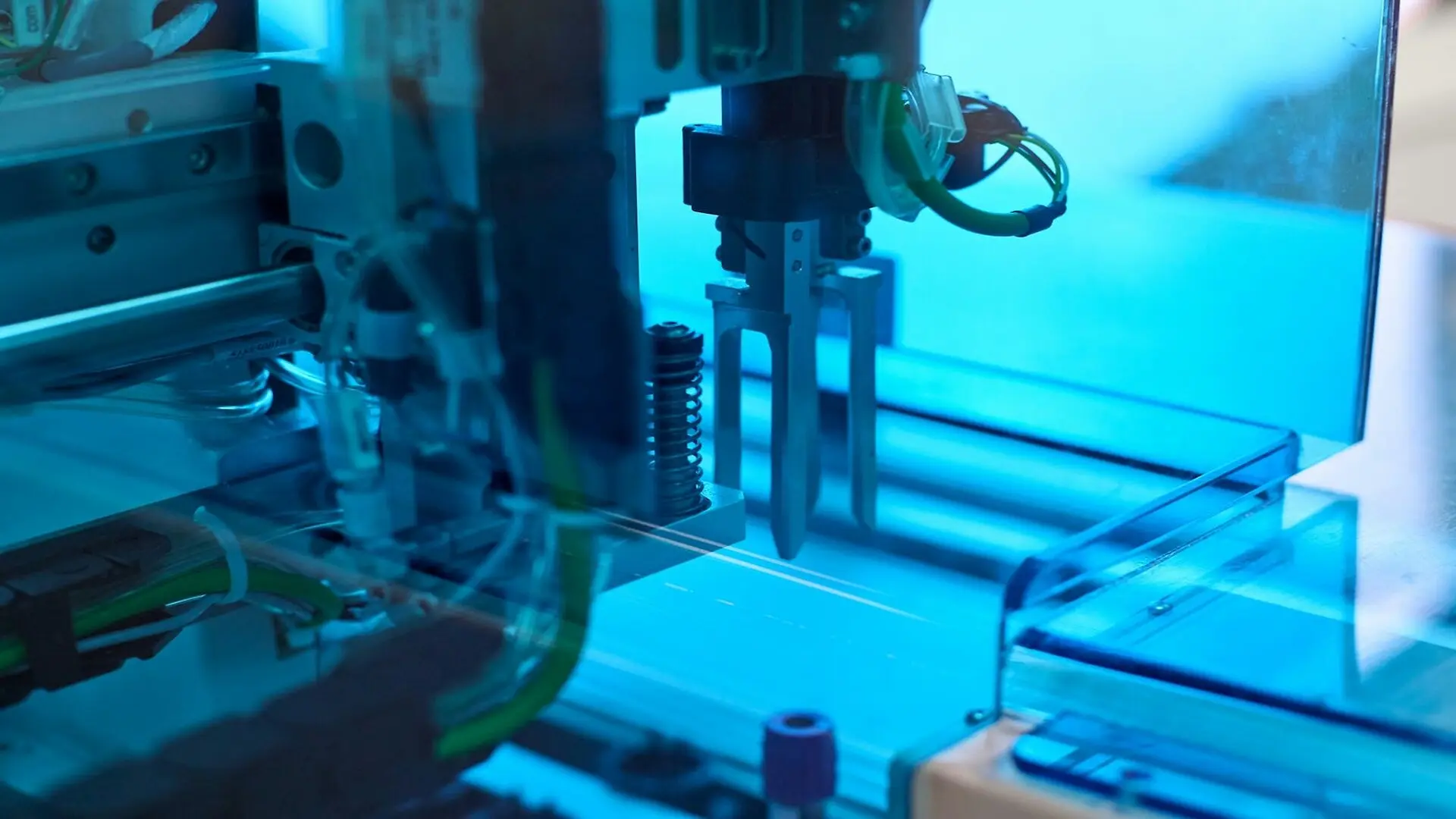
AI Systems Begin Controlling Physical Laboratory Hardware
Anthropic has unveiled a new framework designed to bridge the gap between artificial intelligence and the physical world, enabling AI agents to autonomously manage complex laboratory equipment. By introducing a standardized communication protocol, the company aims to simplify the intricate process of connecting disparate scientific instruments, potentially accelerating the pace of research and discovery.
For decades, the field of laboratory automation has been hindered by fragmented technology. Research facilities typically rely on a diverse array of specialized equipment—from robotic arms to high-precision liquid handlers—that often operate on proprietary, incompatible software. Integrating these devices traditionally requires weeks or months of custom programming by specialized engineers to ensure the machines can communicate effectively.
Anthropic’s new Model Hardware Standard seeks to replace these bespoke software bridges with a universal interface. By implementing a standardized driver, programmable devices can now describe their capabilities directly to an AI agent. This approach uses simple, common commands such as “read” or “write” to perform tasks, allowing equipment to identify itself on a network and exchange data without the need for custom-built translation software.
The system functions similarly to the company’s existing Model Context Protocol, which facilitates AI interaction with software applications, but is specifically engineered for physical hardware. Once a device is integrated, the system generates a reference file—created either by the user or through an interactive interview with the AI—that outlines the machine’s operational parameters, potential adjustments, and safety boundaries.
This capability allows agents like Claude to operate in an exploratory, scientific manner. Anthropic researchers reported that their AI could independently adjust a laser, observe the resulting beam movement via a camera, and iteratively refine the process to achieve a specific experimental goal. In one instance, a scientist observed Claude autonomously manipulating a microscope to locate a precise structure within a living brain tissue sample, a task the AI successfully completed without human intervention.
The implications for laboratory efficiency are significant, yet the move toward autonomous physical control raises valid concerns regarding safety and reliability. Experts have noted that while the proof of concept is highly advanced, the risks associated with AI errors in a physical environment remain a critical hurdle.
“It is an impressive proof of concept, but how do we ensure safety in the physical world? Because small errors can matter here,” noted Kaoutar El Maghraoui, a principal research scientist at IBM, speaking on the Mixture of Experts podcast.
Acknowledging these challenges, Anthropic is currently limiting the release of the standard to a small, curated group of manufacturing and research partners. The company has stated it intends to work closely with these organizations to develop rigorous safety evaluations for AI systems tasked with operating hardware. As reported by the Financial Times, this initiative represents a strategic pivot for Anthropic, moving its AI technology beyond software-based knowledge tasks and into the tangible realm of scientific experimentation.
This article has been fact checked for accuracy, with information verified against reputable sources. Learn more about us and our editorial process.
Last reviewed on .
Article history
- Latest version
Reference(s)
- “Previewing the Model Hardware Standard.” <https://www.anthropic.com/news/model-hardware-standard-research-preview>.
- McConnon, Aili. “Who controls the machine?.”, September 4, 2026 IBM <https://www.ibm.com/think/news/who-controls-machine-anthropic-extends-mcp-physical-world>.
- <https://www.ft.com/content/dd069af7-a2a2-4984-8d9a-5edeaf54f2f8?syn-25a6b1a6=1>.
Cite this page:
- Posted by Zubair Ali