60,000-Year-Old Ostrich Eggshells Reveal Early Human Geometry and Visual Grammar
Ancient ostrich eggshells from southern Africa reveal how early humans designed and arranged visual patterns, shedding new light on prehistoric art.
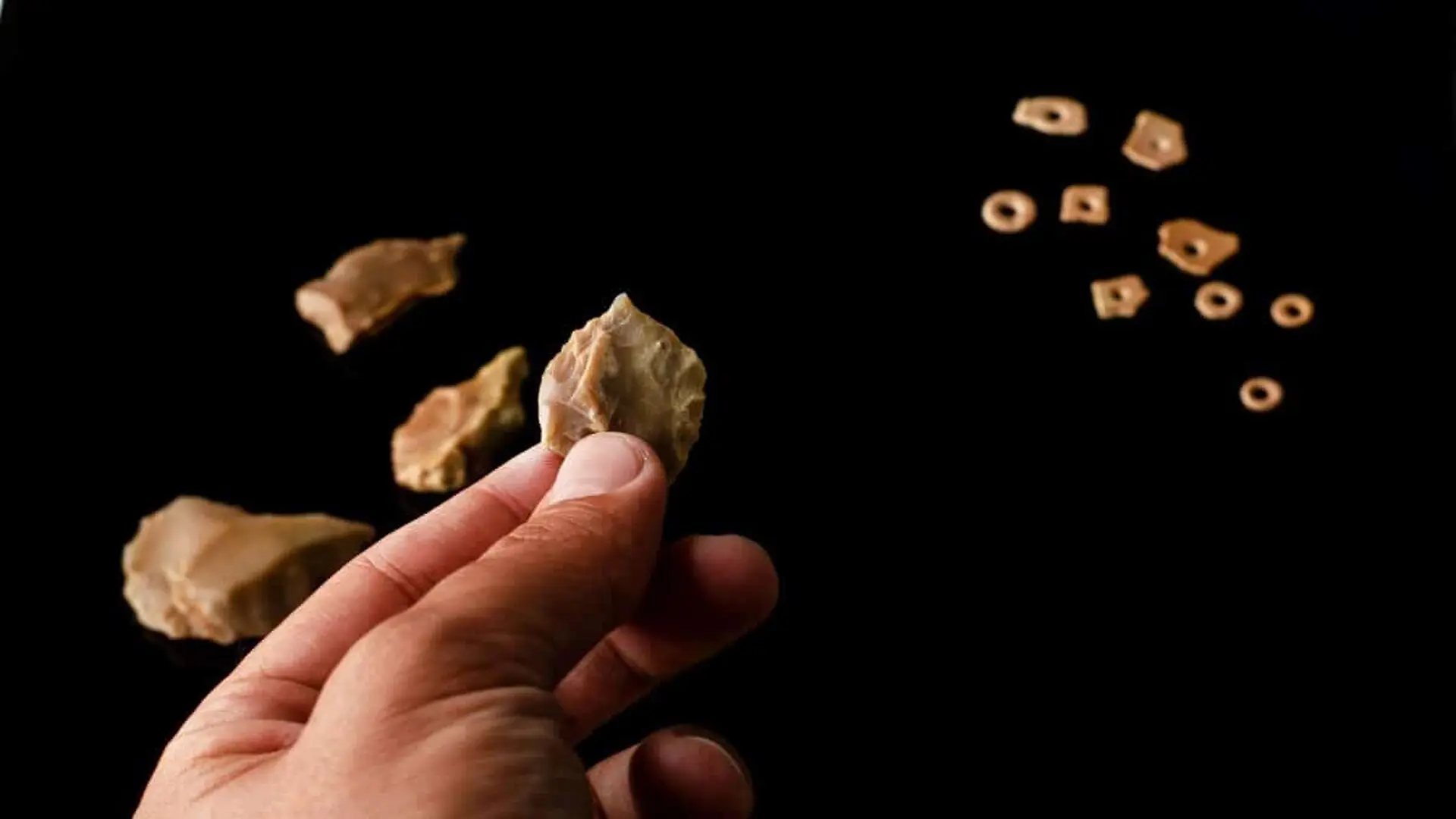
Around sixty thousand years ago, peoples inhabiting southern Africa were already inscribing deliberate geometric motifs onto ostrich eggshells. Recent analysis indicates that these markings were not casual scratches but followed systematic arrangements of lines, angles and shapes.
The findings appear in PLOS One under the title “Earliest geometries: A cognitive investigation of Howiesons Poort engraved ostrich eggshells.” Researchers applied geometric and statistical techniques to uncover the underlying rules governing the designs.
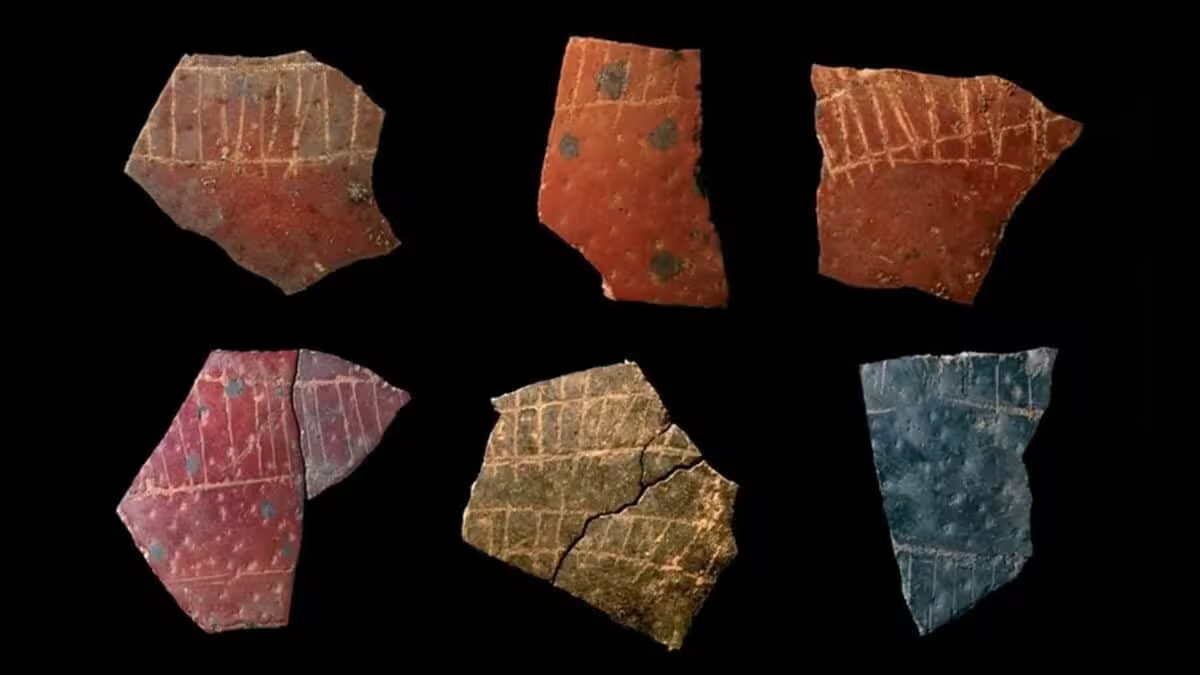
A total of 112 shell fragments were examined, sourced from Diepkloof Rock Shelter and Klipdrift Shelter in South Africa, as well as Apollo 11 Cave in Namibia. By quantifying line orientations, angular relationships and spatial layouts, the team reconstructed the visual logic behind the engravings.
Recurring Geometric Motifs on Prehistoric Eggshells
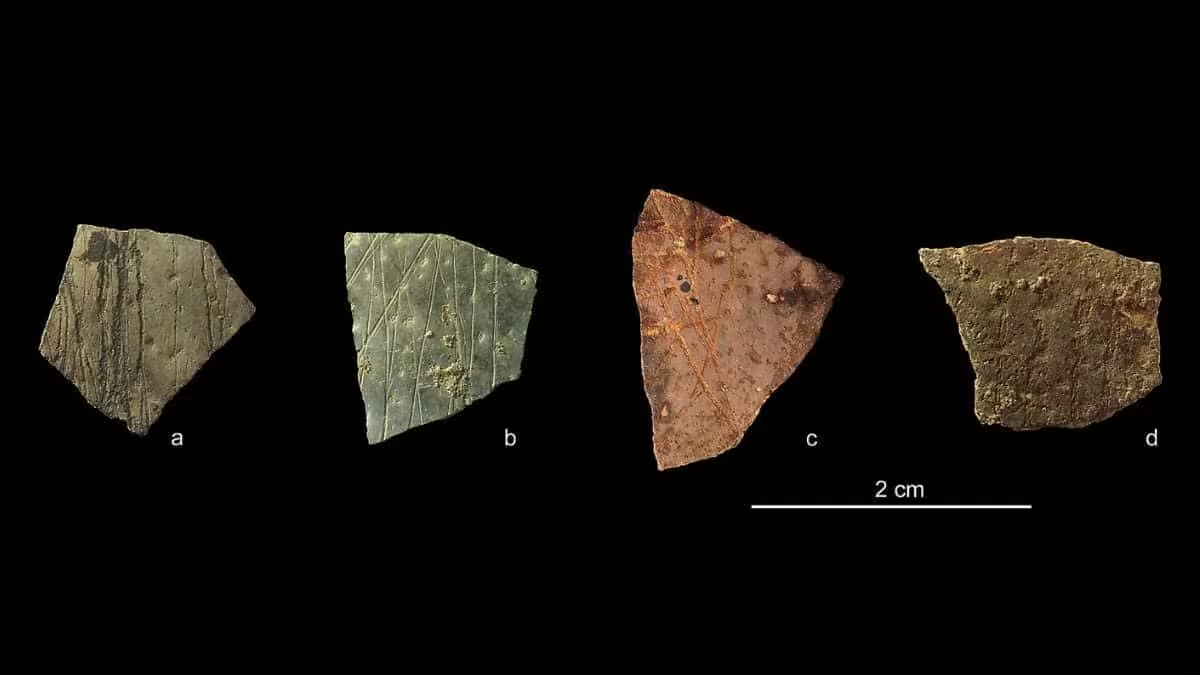
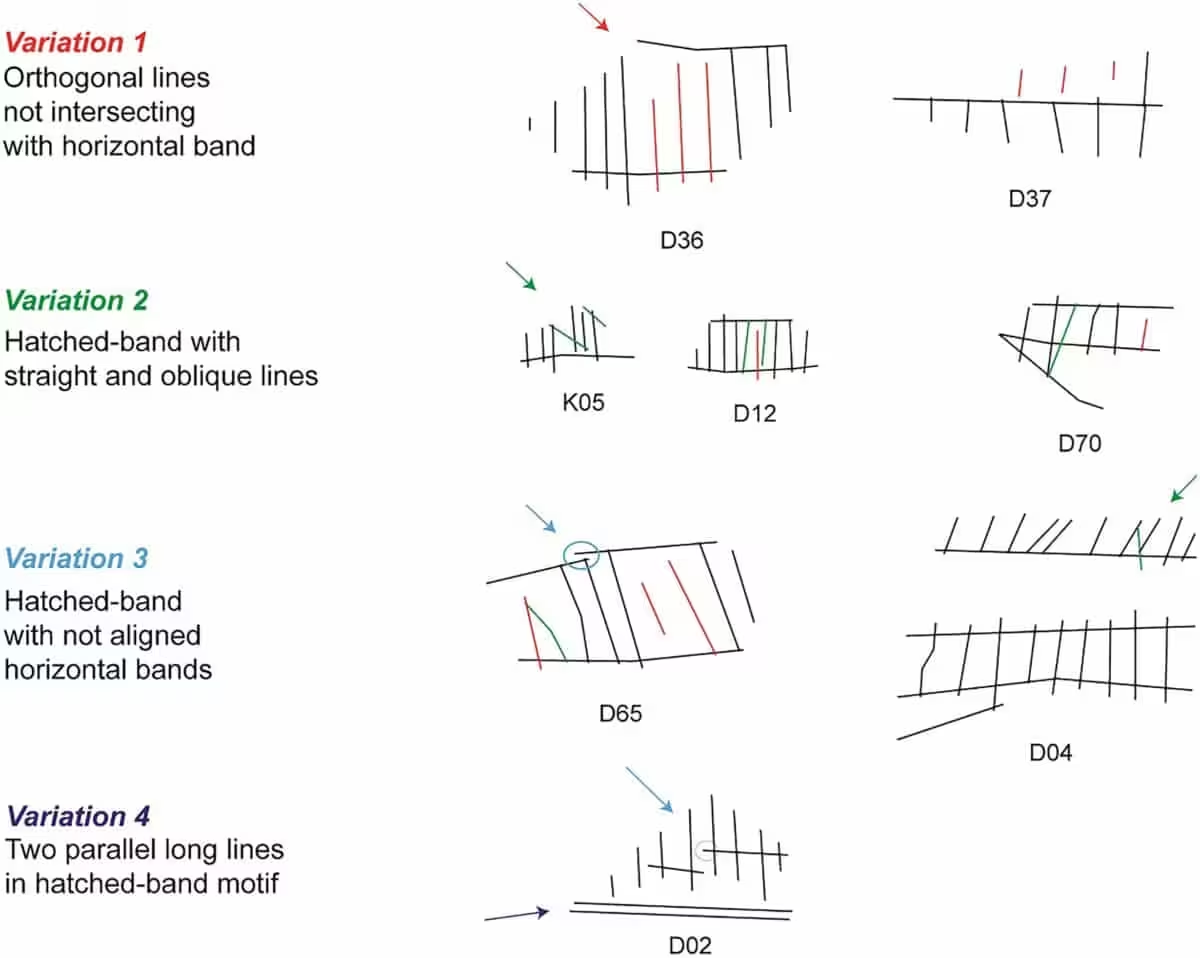
The fragments likely originated from ostrich‑eggshell vessels used to transport or store water. Detailed inspection revealed that more than eighty percent of the incisions adhered to a coherent spatial scheme. Simple motifs such as parallel strokes and near‑right‑angle intersections dominate many pieces, while others display grids, hatched bands or diamond‑shaped configurations.
The study also identified evidence of deliberate techniques, including rotation of patterns, repetitive sequencing and the superimposition of multiple design layers on a single surface.
“These signs reveal a surprisingly structured, geometric way of thinking,” said Silvia Ferrara, professor at the University of Bologna and coordinator of the project. “The engravings were created through parallelisms, grids, rotations and systematic repetitions: a visual grammar in embryo.”
Early Evidence of Abstract Visual Thinking
Beyond their aesthetic appeal, the engravings imply that their makers possessed the capacity to plan and apply shared visual conventions. While the precise meanings of the symbols remain unknown, the systematic nature of the designs suggests that early Homo sapiens could generate abstract visual systems.
Valentina Decembrini, the study’s first author and a PhD candidate at the University of Bologna, emphasized that Homo sapiens sixty thousand years ago already demonstrated the ability to organize visual space using abstract principles. She added:
“Transforming simple forms into complex systems by following defined rules is a deeply human trait that has characterized our history over millennia, from the creation of decorations to the development of symbolic systems and, ultimately, writing.”
Tracing the Roots of Symbolic Expression
The investigation formed part of the FIS Advanced project SAPIENCE (Symbols, Preliteracy and Code Evolution), directed by Silvia Ferrara and conducted in collaboration with Enza Spinapolice of Sapienza University of Rome. By merging archaeological context with mathematical analysis, the team illuminated how these early designs were produced.
Although the engraved shells do not disclose the specific functions of the symbols, they confirm that humans were already generating ordered visual patterns—repeating and combining motifs—long before the advent of formal writing.
This article has been fact checked for accuracy, with information verified against reputable sources. Learn more about us and our editorial process.
Last reviewed on .
Article history
- Latest version
Reference(s)
- Decembrini, Valentina. “Earliest geometries: A cognitive investigation of Howiesons Poort engraved ostrich eggshells.”, vol. 21, no. 2, pp. e0338509, doi: 10.1371/journal.pone.0338509. <https://journals.plos.org/plosone/article?id=10.1371/journal.pone.0338509>.
- “Silvia Ferrara — University of Bologna — Home Page.” <https://www.unibo.it/sitoweb/s.ferrara/en>.
- “Valentina Decembrini — University of Bologna — Home Page.” <https://www.unibo.it/sitoweb/valentina.decembrini/en>.
Cite this page:
- Posted by Zubair Ali