Psychology Says Adults Who Return to Their Childhood Games Aren’t Looking for Fun. They Are Desperately Searching for the Person They Used to Be
The outdated visuals or awkward mechanics aren’t the issue. Instead, emerging psychological studies highlight a much deeper, more individual concern.
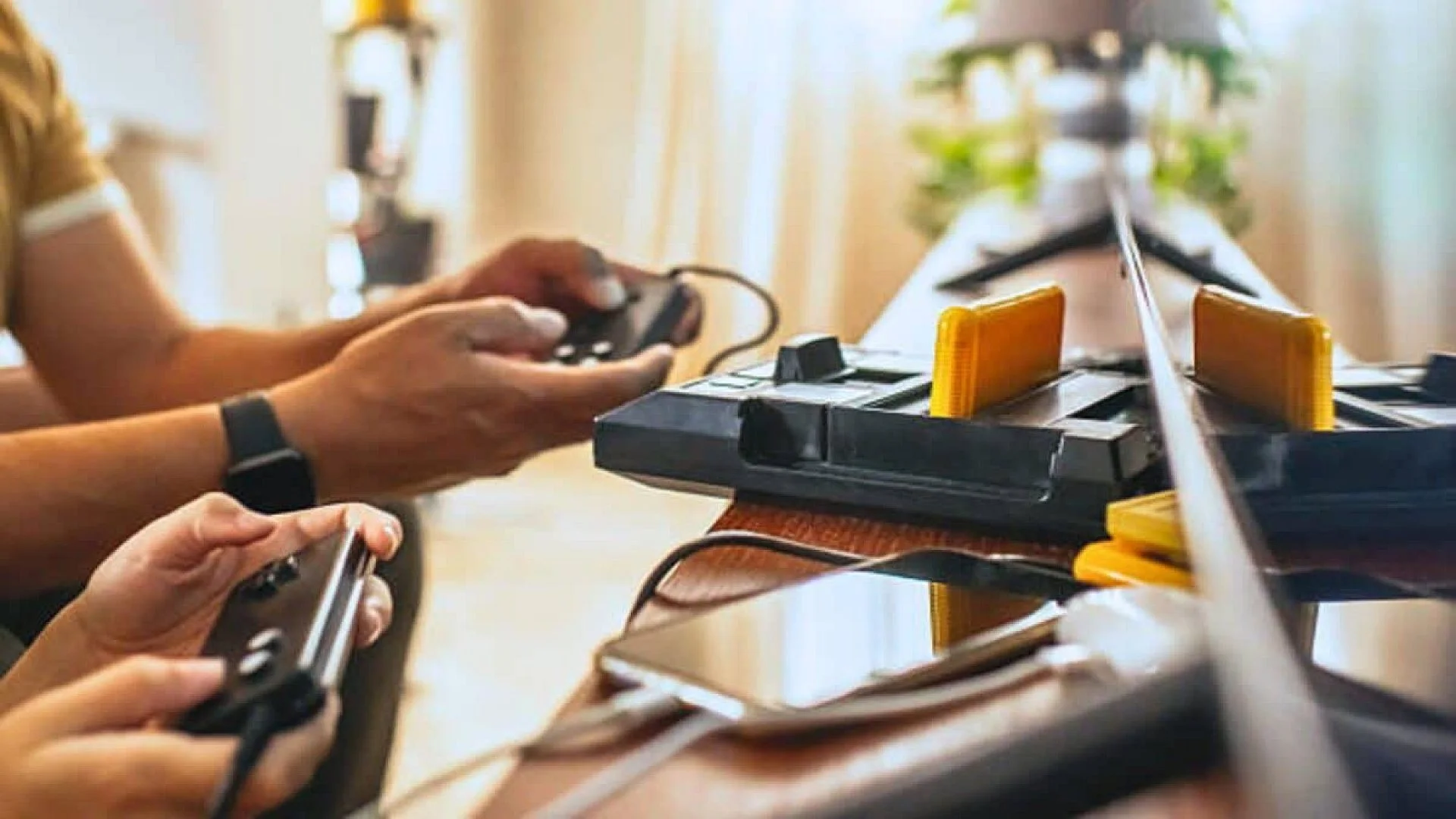
The nostalgic melody kicks in, transporting us back to a bygone era. The title screen glows with an otherworldly light, unchanged for decades. Sitting on the couch, old controller in hand, something stirs within us, a fleeting sense of familiarity.
The magic that once captivated our afternoons now falters, extinguished by the harsh realities of adulthood. Research suggests that the problem lies not in the outdated graphics or clunky mechanics, but in the person holding the controller.
A growing body of work on the psychology of retro gaming reveals that adult players are not seeking entertainment, but rather a connection to a version of themselves that has long since vanished.
The Past Remains Elusive
The ache that draws us to old cartridges is nostalgia, but not the sentimental kind. Cultural theorist Svetlana Boym defined nostalgia as a longing for a home that no longer exists or never existed, a sentiment of loss and displacement that also harbors a romance with one’s own fantasy.
Boym distinguished between two currents of nostalgia: restorative and reflective. Restorative nostalgia seeks to rebuild the lost home, while reflective nostalgia lingers in the longing itself, often with irony or sadness. Retro gaming exists in the tension between these two currents, as players know the past cannot be reassembled, yet the desire to try remains.
The brain distorts the past, deepening the illusion of a bygone era. Psychologists describe the reminiscence bump, a phenomenon where memories from adolescence and early adulthood are encoded with outsized vividness. Identity solidifies during these years, and the emotional charge of that period sears experiences into memory more deeply than events from any other life stage.
For someone replaying a childhood game, the memory of the software merges with the memory of the person who first played it. The brain files down the rough edges, amplifying the triumphs and diminishing the difficulties. The remembered game lands far better than the real one ever was.
The Adult Mind Struggles to Re-Enter the Zone
Memory is not the only thing that changed. The way adults play changed too. As children, players slipped easily into a flow state, a condition of full absorption where time bends and action feels automatic. Psychologist Mihaly Csikszentmihalyi described this experience as a mental state in which a person is completely absorbed by an activity.
Csikszentmihalyi noted that flow depends on a tight match between challenge and skill. Too little challenge, and the mind wanders. Too much, and anxiety spikes. The adult brain breaks this balance from both directions, years of pattern recognition making bosses that once took days to beat now telegraph their moves in seconds.
The mental load of adulthood floods in, a fragment of attention staying fixed on the work deadline, the unpaid bill, the dinner that still needs making. A child could seal out the world. An adult cannot silence the background hum of responsibility for long. Full immersion becomes a struggle, not a given.
The game did not deteriorate. The player aged, and the cognitive conditions that once made childhood gaming so consuming no longer hold.
Knowing and Reliving Are Not the Same Act
Neuroscientist Endel Tulving drew a line between semantic memory and episodic memory. Semantic memory stores facts, while episodic memory lets a person travel backward and relive an experience with its full emotional weight.
Tulving noted that episodic memory rests on three interconnected pieces: a sense of subjective time, autonoetic awareness, the conscious sensation of re-experiencing, and a sense of self. When an adult boots up a childhood game, all three fire together.
The distinction cuts through retro gaming. A player can recall the layout of a dungeon, the name of a weapon, the correct sequence of a puzzle. That is semantic recall. But the deeper pull is episodic. The cartridge becomes a retrieval cue, unlocking not just the game but the Saturday morning it occupied, the friend cross-legged on the carpet, the quality of sunlight through a particular window.
The goal is not really to play. It is to feel, even briefly, like the person who first held the controller.
Memory Is Not a Hard Drive
Memory is a process of encoding, storage, and retrieval, not a flawless recording. Forgetting has an adaptive purpose, helping the brain orient itself in time. Old memories weaken, new ones stay vivid, and that decay provides clues about what happened when.
The childhood game preserved in memory is not the same object stored on the cartridge. Years of affection and selective forgetting have burnished it into something that reality cannot match.
Boym captured the heart of the problem when she wrote that nostalgia “is a mourning for the impossibility of mythical return, for the loss of an enchanted world with clear borders and values.” The game never changed. The player did. No amount of replaying can close that gap.
This article has been fact checked for accuracy, with information verified against reputable sources. Learn more about us and our editorial process.
Last reviewed on .
Article history
- Latest version
Cite this page:
- Posted by Zubair Ali